By Victor J. Rosario, candidate for Miami-Dade County Mayor · October 13, 2026
Miami-Dade County residents deserve to know what their county government is doing, how public money is being allocated, what contracts are being approved, and how government decisions affect household expenses, transportation, infrastructure, and public services.
Every day, decisions are made at County Hall that can affect the financial future of nearly every household in Miami-Dade County. Yet many residents never hear about these decisions unless they appear in the news.
The purpose of this report is to bring government information directly to residents.
This report examines recent actions involving the Miami-Dade County Office of the Mayor and the Board of County Commissioners, including the fiscal year 2026–2027 budget, water and sewer charges, public transportation funding, infrastructure contracts, and upcoming commission meetings.
1. Miami-Dade County Adopts Its Fiscal Year 2026–2027 Budget
On September 17, 2026, the Miami-Dade County Board of County Commissioners adopted the county’s fiscal year 2026–2027 budget following public hearings.
According to the Office of the Mayor, the adopted budget maintains the county’s operating property tax rates while prioritizing public safety, transportation, parks, libraries, community services, and financial reserves.
The administration has identified financial pressures involving rising operating expenses, infrastructure obligations, and slower revenue growth.
What Does This Mean for Residents?
Maintaining a property tax rate does not necessarily mean every homeowner will pay the same property tax bill.
Property assessments, taxable values, exemptions, and other taxing authorities can affect the final amount owed.
Residents should also understand how much the county spends operating its departments, maintaining infrastructure, employing outside contractors, and purchasing technology.
Important questions include:
- How much of the budget goes toward direct resident services?
- How much is allocated to administrative operations?
- Which departments experienced budget increases or decreases?
- How much money is committed to multiyear contracts?
- What measurable results will residents receive from these expenditures?
A public budget should provide more than spending authorizations. It should establish measurable objectives and clear financial accountability.
2. Water and Sewer Bills: Understanding the New Rate Schedule
Miami-Dade County’s Water and Sewer Department has published its rate schedule effective October 1, 2026.
For a common residential 5/8-inch meter, the published monthly water charge includes the first 2,244 gallons at $5.36.
Additional water consumption is charged under a tiered structure.
For wastewater service, the published monthly charge includes the first 2,244 gallons at $9.13, with additional usage billed according to the applicable rate schedule.
The complete household bill depends on water consumption, service characteristics, and applicable charges.
Why Should Residents Pay Attention?
Water and sewer operations involve treatment facilities, distribution networks, pumping equipment, wastewater infrastructure, regulatory compliance, and ongoing maintenance.
Those services require substantial investment.
However, residents should be able to examine the financial assumptions behind utility rates.
Questions worth examining include:
- How much revenue is generated from residential water and sewer bills?
- How much is spent on infrastructure rehabilitation?
- What portion of expenses involves outside contractors?
- Are procurement processes producing competitive pricing?
- Can modern technology reduce operating expenses?
- What opportunities exist to reduce costs without compromising drinking-water quality or infrastructure reliability?
The objective should be to understand the full cost of providing these essential services and identify financially responsible opportunities for improvement.
3. Public Transportation: $12.5 Million for Early-Morning Bus Service
The adopted county budget includes $12.5 million identified by the Office of the Mayor to restore early-morning service on 45 bus routes.
The restoration is intended to support residents who depend on public transportation before 6 a.m.
This includes employees working early shifts in hospitality, healthcare, aviation, logistics, and other essential industries.
Transportation Spending and Accountability
Transportation investments should be accompanied by publicly accessible performance measurements.
Residents should be able to review ridership, operating costs, service reliability, maintenance expenditures, and passenger satisfaction.
The county should also evaluate how existing services interact with on-demand transportation and other mobility alternatives.
Important questions include whether available resources are being used efficiently, whether routes meet community needs, and how future technology could improve service.
Restoring transportation access and controlling operating expenses are both important considerations in long-term mobility planning.
4. Nearly $29 Million Authorized for Water Treatment Plant Electrical Upgrades
During its October 6, 2026 meeting, the Board of County Commissioners adopted Legislative File 261629.
The measure involved awarding a contract to Poole & Kent Company of Florida for electrical upgrades at the Alexander Orr Jr. Water Treatment Plant’s West High Service Pump Station.
The authorized contract amount was not to exceed $28,904,000.
Why This Contract Matters
Water treatment infrastructure requires reliable electrical equipment to support continuous operations.
Modernizing aging components may be necessary to maintain service reliability, safety, and regulatory compliance.
At the same time, major contracts deserve transparent oversight.
Residents should be able to examine:
- The procurement and competitive bidding process.
- The detailed scope of work.
- The original project cost estimate.
- Contractor responsibilities and performance requirements.
- The expected completion schedule.
- Any approved change orders.
- Final expenditures compared with the original authorization.
A contract authorization is not necessarily the amount ultimately spent. The final cost and completed work must be evaluated separately.
The purpose of reviewing these records is to determine whether public expenditures are delivering their intended infrastructure benefits.
5. County Rejects Bids for Miami Springs Wellfield Rehabilitation
On October 6, 2026, the Board also adopted Legislative File 261583.
This item concerned the rejection of all bids associated with the Miami Springs Wellfield Rehabilitation Wellhouses project, Contract W-20136.
What Happens When Government Rejects Bids?
Government agencies may reject bids for reasons involving pricing, procurement compliance, competition, or project requirements.
However, a rejected solicitation can affect project scheduling and require additional procurement activity.
Residents should be informed about why the bids were rejected, whether the project will be advertised again, and whether additional delays or expenses are anticipated.
Transparent procurement records help the public understand how infrastructure projects move from planning to construction.
6. County Commission Committee Meetings: October 13–16, 2026
The published county meeting calendar identifies several committee meetings scheduled during the week of October 13.
October 13
Aviation and Seaport Committee; Safety and Health Committee.
October 14
Transportation Committee; Recreation, Tourism and Resiliency Committee; Housing Committee.
October 15
Intergovernmental and Economic Impact Committee; Infrastructure, Innovation and Technology Committee.
October 16
Government Efficiency and Transparency Committee.
Why These Meetings Matter
Committee meetings provide opportunities for commissioners to review legislation, contracts, policies, and operational matters before additional government action.
Residents should understand that a proposal appearing on a meeting agenda is not necessarily an approved policy.
Likewise, a committee recommendation does not always constitute final approval by the full Board of County Commissioners.
The public should examine the supporting agenda documents, recorded votes, amendments, and final legislative actions.
Meeting schedules may change, and residents should consult the official county calendar for updates.
7. Legacy Government Systems: Are Long-Term Technology Contracts Being Evaluated?
Technology is one of the most important areas of modern government operations.
County departments rely on software and information systems for financial administration, public records, transportation, utility operations, emergency communications, permitting, and other essential services.
Some government technology systems may remain in operation for decades.
An older system is not automatically ineffective, and replacing it is not automatically less expensive.
However, long-term reliance on legacy systems can create concerns involving maintenance expenses, cybersecurity, integration limitations, vendor dependency, and operational efficiency.
What Should the County Evaluate?
Major technology systems should undergo periodic financial and technical assessments.
These assessments should examine the full cost of maintaining existing technology compared with modernization, competitive replacement, or internally operated alternatives.
Evaluations should also consider data migration, cybersecurity, employee training, regulatory requirements, system downtime, and the long-term cost of technical support.
For example, a system that appears inexpensive to replace may require substantial integration and migration expenses. Conversely, continuing to maintain a costly system may become financially inefficient when viable alternatives exist.
The appropriate decision should be based on documented life-cycle costs and operational requirements.
The central question is whether Miami-Dade County is receiving measurable value from its technology investments.
This report does not establish that a specific county legacy contract is wasteful. Such a determination requires examination of the actual contract, costs, performance, and available alternatives.
8. Government Contracts and Outside Vendors
Miami-Dade County depends on public employees, contractors, suppliers, professional service providers, and specialized vendors to operate its departments and deliver public services.
Contracting can provide access to expertise, equipment, and services that may not be practical to maintain internally.
However, government should periodically evaluate whether outsourced services continue to represent the most effective and economical approach.
Questions Residents Should Ask
How much does the county spend annually on external vendors?
Which contracts are renewed repeatedly?
Are contracts subject to meaningful competition?
What performance standards must contractors satisfy?
Does the county independently verify the quality of services delivered?
Are opportunities for internal development or direct service delivery evaluated when financially appropriate?
A complete assessment should consider staffing, equipment, liability, training, technology, service quality, and long-term operational obligations.
Public procurement should be transparent, competitive where required, and focused on documented service needs.
9. Government Spending: Understanding Increases and Decreases
Residents frequently encounter changes in water bills, insurance expenses, housing costs, utility charges, transportation costs, and government fees.
Not all of these expenses are controlled by Miami-Dade County government.
For example, certain insurance rates and electricity charges are subject to state regulation, private-market conditions, or other authorities.
However, county government directly influences some costs through its budgets, utility operations, fees, procurement practices, and service delivery decisions.
This distinction matters.
Residents should be able to identify which charges are established by county government, which are imposed by other agencies, and which result from private-sector pricing.
A meaningful public discussion about affordability requires identifying the correct decision-making authority and the financial basis for each charge.
10. What Residents Should Expect From County Government
Public accountability should be a continuous process rather than an occasional review of major expenditures.
Residents should have access to understandable information about approved budgets, contract awards, departmental spending, capital projects, and service performance.
For major expenditures, public records should identify the purpose of the project, the funding source, the contractor or responsible department, the authorized amount, the expected completion date, and the anticipated public benefit.
After implementation, the county should report actual spending and measurable outcomes.
The availability of this information allows residents to evaluate government performance independently.
Transparency Is About Results
Government transparency is not limited to publishing thousands of pages of financial documents.
Information should also be organized so residents can understand what was approved, how much was spent, whether the work was completed, and whether the promised services were delivered.
Accessible public information supports informed participation in local government.
Conclusion: Keeping Miami-Dade County Residents Informed
The Miami-Dade County Office of the Mayor and the Board of County Commissioners continue to make decisions affecting the county’s financial obligations, public infrastructure, transportation network, utility operations, and government contracts.
The adopted fiscal year 2026–2027 budget establishes spending priorities for the new fiscal year.
Water and sewer charges remain an important household expense.
Transportation funding affects access to employment and essential services.
Major infrastructure contracts create financial commitments that should be accompanied by appropriate procurement oversight and measurable performance standards.
Meanwhile, government technology and long-term outsourcing arrangements present continuing questions about efficiency, modernization, and operating costs.
Residents should have access to the records necessary to examine these matters and form their own conclusions.
An informed community is better equipped to participate in the decisions affecting its future.
This report is part of an ongoing effort to provide accessible information about Miami-Dade County government, public spending, infrastructure, and services.
Victor J. Rosario
Candidate for Mayor of Miami-Dade County, 2028
Residents-First Administration | County-Built. County-Controlled.
https://victormiamidadecountymayor.com
Official Government Sources
- Miami-Dade County — FY 2026–2027 Budget Announcements https://www.miamidade.gov/global/news-item.page?Mduid_news=news1784127710112912 (opens in a new tab)
- Miami-Dade County — Budget and Transit Funding Announcement https://www.miamidade.gov/global/release.page?Mduid_release=rel1789758628205738 (opens in a new tab)
- Miami-Dade County Water and Sewer Department — Official Rates https://www.miamidade.gov/global/water/rates.page (opens in a new tab)
- Miami-Dade County Board of County Commissioners — October 6, 2026 Agenda and Legislative Actions https://www.miamidade.gov/govaction/commagenda.asp?auditor=false&changes=true&cmbmeetdate=5557&file=true (opens in a new tab)
- Miami-Dade County Commission — Meeting Calendar and Video Archives https://miamidade.granicus.com/ViewPublisher.php?view_id=2 (opens in a new tab)
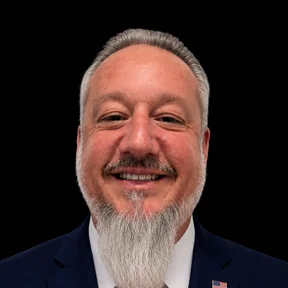
About Victor J. Rosario
Victor J. Rosario is the Residents-First candidate for Miami-Dade County Mayor 2028. A U.S. Coast Guard veteran, entrepreneur, technologist, and artist, Victor brings a track record of building real solutions — from AI tools to campaign policy — that serve Miami-Dade's 2.8 million residents.
Learn More About Victor