By Victor J. Rosario, candidate for Miami-Dade County Mayor · October 8, 2026
The Vote That Told Us Everything
On Tuesday, October 6, the Miami-Dade County Commission voted 9 to 4 to raise Metrobus and Metrorail fares from $2.25 to $2.75 per trip, starting January 1, 2027. It is the first fare increase in thirteen years. The same budget that carries that increase also wipes 12 bus routes off the map and strips late-night service from roughly 40 more.
Read those two facts side by side. Riders are being asked to pay more for a system that is being asked to do less. That is not a transit strategy. That is a managed retreat, announced in budget language and delivered to the people who can least afford it.
I have been listening to how county leaders talk about this, and the language is always the same: "difficult choices," "low-ridership routes," "structural deficit." Every one of those phrases may be technically true. None of them is a plan for what comes next. When a county government cuts a route, it does not just stop running a bus. It tells the neighborhood that sits along that route that the county has given up on connecting them to jobs, schools, clinics, and grocery stores.
I am running for Mayor of Miami-Dade County because I believe a government that only knows how to cut is a government that has run out of ideas. This post lays out a different answer to the same budget problem, and it starts with the very routes that were just cut.
Here is the commitment, plainly stated. Under my administration, the routes eliminated by the current administration will not be left to die. We will go straight to the manufacturers, buy autonomous buses for Miami-Dade County, bring those routes back, and run service around the clock where people live, work, and go out.
That is the choice in front of this county. We can keep managing decline one budget hearing at a time, or we can use the moment to build something better. The rest of this post explains what was cut, who it hurts, why the current approach fails, and exactly how I would bring those routes back with autonomous buses, 24 hours a day, in the places where people work.
What the Current Administration Actually Did
The cuts did not appear overnight, and they did not come from nowhere. Here is the paper trail.
On July 15, the Office of the Mayor presented its proposed budget for the 2027 fiscal year and described a nearly $100 million deficit (opens in a new tab), driven by slowing revenue growth, inflation, uncertain state and federal support, and the cost of health care. Transit took the biggest hit. Twelve bus routes were slated for elimination, six run by the county and six run by contractors, along with service reductions in the early morning and late evening.
The county then adopted a $14.26 billion budget on September 18 (opens in a new tab) after a session that ran until 5 a.m. Commissioners deserve credit for one thing: they pushed back and saved early-morning service on 45 routes, the first buses that carry people to hospital shifts, construction sites, and school. But the budget left intact roughly $19 million in nighttime service cuts and route eliminations.
The twelve routes marked for elimination are 16, 25, 42, 57, 70, 132, 203, 204, 272, 279, 288, and 338. According to reporting from the Miami Herald (opens in a new tab), those routes together provide about 4,400 rides per weekday, roughly 2 percent of the 262,000 rides the entire bus system delivers.
The late-night cuts reach much further. Dozens of additional routes lose service after 10 p.m., including routes 3, 7, 8, 9, 11, 12, 14, 15, 17, 20, 21, 22, 24, 26, 27, and 32, among others. Transit advocates counted 41 routes losing late-night service (opens in a new tab) in the version of the plan they tracked, and they put the total service cuts programmed at $31.5 million before the commission restored the morning buses.
Then came the Tuesday vote to raise fares by 50 cents.
Here is the pattern in one sentence: the county identified a budget gap, chose to close part of it by shrinking the bus network, and then asked the remaining riders to pay more. At no point in that sequence did anyone in county leadership ask the question that matters most to a growing, congested county of more than two and a half million people: how do we deliver more transit for less money?
That question has an answer, and it is not on the budget spreadsheet. It is on the roads of Miami-Dade, waiting for a mayor willing to try it.
One more piece of context belongs here. This was not a one-time event. In May, commissioners voted to eliminate Route 132, which connected Hialeah Market Station to downtown Doral, after the transit department reported (opens in a new tab) that only about seven passengers per hour were boarding. A commissioner noted at the time (opens in a new tab) that Hialeah has already seen a lot of cuts. So the October budget is not a surprise. It is the next step in a pattern: a shrinking network, a rising price, and no new idea for how to turn the trend around.
Who Pays the Price
Budget documents measure routes in ridership counts and dollars per passenger. Residents experience them as something else entirely: the way to work, the way home, the way to the pharmacy.
Start with the night-shift worker. She finishes at 11 p.m. in a kitchen, a hospital wing, a warehouse, or a hotel. The bus she has relied on for years no longer runs. Her options are a ride-share that can cost around $30 to get home, a long walk, or a call to a relative who has to be awake at midnight. One local news report has focused on exactly this trap: even after morning service was protected, night-shift workers still face a costly trip home. For someone earning an hourly wage, that cost can take a real bite out of a shift's pay.
Then consider the senior on a fixed income. One commissioner described the people who call her office this way: elderly residents who depend on certain routes to go buy groceries. These are not hypothetical riders. They are residents who do not drive, who cannot easily afford ride-share, and who have organized their lives around a bus schedule. When a route disappears, their world shrinks. Appointments are missed. Errands become favors. Independence erodes.
Geography matters too. Reporting on the October vote identified Hialeah and Little Havana (opens in a new tab) as the communities expected to feel the cuts most. These are working neighborhoods with large numbers of households that rely on public transit. They are also neighborhoods that have already absorbed earlier rounds of service reductions, and residents notice when the same communities are asked to sacrifice again.
There is also the economic ripple effect that rarely appears in a budget memo:
- Employers lose workers. A restaurant or warehouse that closes after 10 p.m. cannot easily replace staff who cannot get home.
- Households lose income. Longer commutes and ride-share costs eat into wages, and some workers turn down shifts altogether.
- Roads get more crowded. Every rider pushed off a bus and into a car adds traffic to a county already known for congestion.
- Trust erodes. A fare hike on top of service cuts tells riders the county is charging them more to deliver less.
The county's own framing is that these routes carry few riders. That is true as far as it goes. About 4,400 weekday trips on the twelve eliminated routes is a small share of the system, but each of those trips is a real person with a destination. A system that is judged only by averages will always find a reason to abandon the people at the edges. A better system asks how to serve them at a price the county can afford.
That is the real policy question hiding inside the budget fight. The problem is not that these riders do not matter. The problem is that the county's current tools make it too expensive to serve them. If a full-size bus with a driver, a fuel or power bill, and a maintenance schedule costs more to run than a low-ridership route can justify, then the answer is not to abandon the route. The answer is to change the cost of running it.
The Real Failure: Managing Decline Instead of Building the Future
Let me be fair about the constraints, because voters deserve honesty. Running a large county transit system is hard. Costs rise every year. State and federal support is uncertain. The deficit the county faced was real, and it did not appear by accident. Reasonable people can disagree about how much blame belongs to any single official.
But leadership is not measured by whether a budget problem exists. Every government has them. Leadership is measured by what you do about them, and on that measure the current approach comes up short.
First, it treats service as the only variable. When the gap opens, the lever the county pulls is the one that shrinks the bus network. Fewer routes, fewer hours, higher fares. That is the oldest tool in the box, and it has a predictable result: fewer riders, which makes the next budget look even worse, which justifies the next round of cuts. Transit planners call this a death spiral. A county that cut Route 132 in Hialeah in May and is cutting more routes in this budget is not solving a problem. It is feeding one.
Second, it confuses low ridership with low value. A route that carries few people may still carry the people who have no other option. It may connect a neighborhood to the only major employer within ten miles. It may be the only link between a senior and a clinic. Counting boardings per hour is a useful measure of efficiency. It is a poor measure of whether a community is being served.
Third, it ignores the cost side of the equation. The real driver of low-ridership route costs is the fixed expense of putting a full-size bus and a full-time operator on a road for every hour of service. I have not seen county leadership seriously ask whether that model, a 40-foot bus and a driver for every route at every hour, is the right tool for every route in a county this large and this varied. Other places have already begun exploring the answer, and we will get to them shortly.
Fourth, it lacks accountability. The county's Better Bus Network was promised as a faster, more efficient system. Instead, riders have criticized it (opens in a new tab) for unpredictable service and overcrowded buses, leaving some to wait hours for the next bus. When a redesign that was supposed to improve service is followed by a round of cuts and a fare increase, voters are entitled to ask who is responsible for results and what the plan is to fix them.
This is what I mean by managing decline. It is not a lack of effort or a lack of care. It is a lack of imagination at the top, a habit of treating a shrinking system as inevitable instead of asking how to build a smarter one.
I spent years in the Coast Guard and later worked in banking and in a Homeland Security task force in South Florida. What I took from those careers is simple: when a system is under stress, you do not just cut the weakest link and hope. You examine every part of the system, set a measurable standard, and hold people accountable for results. That is the standard I will bring to the Office of the Mayor, and it starts with transit.
Ten Riders an Hour Is Ten Residents
I ride the bus. I have seen who gets on, who gets off, and who is left waiting when a route disappears. That is why the numbers in a budget memo never tell me the whole story.
Here is what the record shows about the last few years. When the Better Bus Network launched in November 2023, the number of bus routes fell from 92 to 69, and weekday route miles dropped 17 percent (opens in a new tab). Then came more adjustments. In the spring, commissioners voted to eliminate Route 132. Now this budget removes 12 more routes. Year after year, the county has been reshaping the transportation of the very residents who depend on it, and each round leaves fewer of them with a bus.
That does not make sense to me. A county government exists to serve the people who live in the county. It should not be in the business of taking away their ride.
Now look at the yardstick. According to Miami Today (opens in a new tab), county standards treat routes carrying fewer than 15 people an hour as candidates for elimination. Route 132 was carrying about seven per hour, and the reported saving from cutting it was about $210,000 a year.
Seven riders an hour is seven residents an hour. Ten is ten residents. These are real people, and every hour that route runs, they are the ones who need it. Over a day, a month, and a year, that adds up to thousands of trips taken away from people who rely on them. A spreadsheet calls that low productivity. I call it a neighbor standing at a stop with no bus coming.
So here is my commitment. Under my administration, we will reopen every bus route the current administration has cut, whether it carries ten riders an hour or a hundred. If a route was merged, renamed, or rerouted along the way, the neighborhood it served will get its service back. And I will not play games with the numbers. If you ever hear me quote a ridership figure, it will be the real one, and I will show you where it came from.
The math the county keeps avoiding
The county has two choices. It can keep running the same model it has always run, a driver for every route at every hour, which has produced rising costs, deficits, shortages, and cuts. Or it can invest in something new and build a system that does not shrink every budget season.
The driver problem is not theoretical. The Better Bus Network that Miami Today reported was scaled back (opens in a new tab) because the county could not hire enough drivers to run the full plan. Earlier reporting (opens in a new tab) put the number of operator slots needed to launch expanded service at about 400, and the county was offering $5,000 signing bonuses to fill them. County officials later said they designed the changes to be "operator neutral" (opens in a new tab), meaning matched to the number of operators on hand. Even now, the county says it is still recruiting more operators (opens in a new tab).
People ask me what happens to the drivers when routes are cut. The record points in a different direction: the county's problem has been too few operators, not too many. A plan that depends on finding hundreds more drivers is a plan that keeps hitting the same wall. Mine does not need to take a single operator off the road. It adds vehicles where there are none.
A System That Shows Up Every Day
Miami-Dade's bus system still runs on a model designed for another era: a driver, a schedule, a depot, and a fixed number of hours in the day. That model served this county for decades. But it was never designed for a county of this size, running at this hour, with this many people working nights and weekends. It is time to pivot.
Here is what an autonomous fleet adds that the old model cannot.
It keeps running. A vehicle does not take a vacation or call in sick, so the route you planned your week around is the route that shows up. A vehicle does need charging, cleaning, and maintenance, and we will build all of that into the schedule. Buses cycle in to charge and get cleaned several times a day, so the fleet stays fresh, and the route keeps moving.
It fills the gaps between buses. This is not about replacing the people who drive our buses today. On the busiest corridors, drivers stay. Between those buses, autonomous vehicles circulate, so a stop that sees a bus every 20 minutes can see something pull up much more often. More pickups, shorter waits, more circulation, and a network that feels like it is actually there when you need it.
It works around the clock. The same fleet that fills the gaps at noon covers the overnight hours that the current system drops. That is how a 24-hour county gets a 24-hour transit system.
It stays creative. When the vehicles are ours, we can adjust. We can run more buses where an event is letting out, add a loop where a new employer opens, or move a vehicle to a route where demand jumps. A fixed system cannot do that quickly. A flexible one can.
The ones who win from all of this are the residents, and nobody else. The worker gets to the job on time and home safely after. The family gets to the doctor. The student gets to class. The person who wants to go out for the evening gets there, and gets home. And tourism benefits when visitors can move around the county at any hour, instead of being left at the curb when the buses stop.
People tell me the county cannot afford to build this. I say we cannot judge a system we have not built. What we have today is a system that gets smaller every year, and the people who depend on it are the ones paying for that. I want to build the one we do not have yet.
The Plan: Buy Autonomous Buses Directly from the Manufacturers
Here is what I will do as Mayor, and I will say it without hedging.
I am not going to spend my first months in office commissioning studies, audits, and 100-day reviews. The routes were cut, the riders are waiting, and autonomous bus technology is already carrying passengers in other parts of the world. So we start by going straight to the people who build the buses.
Straight to the manufacturers
Under my administration, Miami-Dade County will deal directly with the companies that manufacture autonomous buses. No middlemen. No resellers sitting between the county and the builder. No corporation that only represents a manufacturer and takes a cut on the way through. When taxpayers buy a bus, the money should go to the bus.
Going direct does not mean going in the dark. It means the county sits across the table from the builders and asks for firm prices, delivery dates, safety records, and service support, and it does so in the open, with every quote published. Purchases of this size run through a public procurement process, and buses bought with federal transit money must also meet federal requirements, including Buy America rules and federal bus testing (opens in a new tab). We will invite every qualified manufacturer to compete, and we will make them show their work.
Who is building these buses
The market is real and growing. I am not endorsing any single company, but a few examples show what is already happening:
- Karsan, a bus manufacturer in Turkey, builds the Autonomous e-ATAK, which it describes as a Level 4 electric bus carrying up to 52 passengers (opens in a new tab), developed with the software company ADASTEC. Its CEO has said the company carried passengers in Michigan and Norway (opens in a new tab), and it has delivered a bus to Finland (opens in a new tab).
- New Flyer, a major North American bus builder, is working with the Connecticut Department of Transportation (opens in a new tab) and partners to put a Level 4 automated battery-electric bus on the CTfastrak line.
- Holon, part of Benteler Mobility, makes a 15-passenger autonomous shuttle that secures wheelchairs without staff help. Benteler has announced a package for U.S. transit agencies (opens in a new tab) that spreads vehicle costs over several years within existing fleet replacement budgets.
What it will cost
You deserve a number, so here is what the public record shows, and what it does not.
- Smaller autonomous shuttles (12 to 15 passengers): a USDOT-hosted study (opens in a new tab) of 120 deployments in 21 countries put the vehicle cost at $225,000 to $250,000, with annual operating costs from $15,000 to $100,000.
- Full-size autonomous buses: I could not find a published price. Manufacturers quote these through procurement, which is exactly why we go straight to them and publish what they offer.
- The comparison that matters: a USDOT-hosted study of Austin's bus fleet (opens in a new tab) assumed a conventional diesel bus costs $300,000 to $400,000. It modeled annual fleet costs about 55 percent lower by 2040 with automated buses, even with an attendant on board every bus.
To put the vehicle price in perspective, 50 shuttles at $225,000 to $250,000 each would cost roughly $11 million to $12.5 million, compared with the $31.5 million in service cuts (opens in a new tab) that transit advocates tracked in this year's budget. That figure covers vehicles only, and it is an illustration, not a quote. Real prices will come from the manufacturers, in public.
Safety is the gate, not the delay
The goal is buses that drive themselves, and I intend to get there fast. But no bus will carry riders until it clears a public safety review. In the early going, a trained host will ride along to help passengers, and each route moves to operator-free service as it meets published safety benchmarks.
You will get it
I am not going to hand residents a promise. I am going to hand them a delivery schedule, published and tracked in public, with my name on it. The first orders go out in my first months in office. The first buses carry riders as soon as the manufacturers can deliver and the vehicles pass required testing. And by the end of my first term in 2032, every neighborhood that lost its bus will have service again.
24 Hours, Where the People Are
Miami-Dade does not stop at 10 p.m. Neither do the people who keep it running.
Once the county owns its own autonomous fleet, round-the-clock service stops being a luxury and becomes an option. Overnight service has always been the first thing to go in a tight budget, because every hour on the clock needs a driver. Research on autonomous buses points to driver costs as one of the highest operating expenses (opens in a new tab) in transit, and that is the cost this technology is built to change.
So my plan does not stop at restoring what was cut. It adds 24-hour service in the places where people are: Miami Beach, Wynwood, and the other big job and entertainment centers across the county, both inside and outside the beach. Where people gather and where people work is where the buses should be, at every hour.
Here is the principle behind it. The customers who go out, spend money, and keep our restaurants, hotels, clubs, and shops alive matter. But the people who work in those businesses matter just as much, and I would argue more. They are there every day. They open the doors, close the kitchens, clean up after the crowds, and pay this county's bills with every paycheck. A transit system that gets the customer to the party but leaves the worker stranded at the end of the shift has the priorities backward.
What 24-hour service means in practice:
- A way home for every shift. The cook, the bartender, the hotel housekeeper, and the warehouse worker finish at 1, 2, or 4 in the morning and get on a bus that is actually there.
- A safe ride home for everyone. If you go out, you will be able to get home safely without gambling on a car, a ride-share bill, or a long walk in the dark.
- Stronger businesses. Employers can staff late and overnight shifts when their people have a dependable way to get there and back.
- Safer, better-lit stops. Overnight service only works if waiting for the bus feels safe. Stops in the 24-hour corridors will get the lighting, real-time arrival information, and safety features riders need after dark.
- Access for all. Every vehicle must work for riders who use wheelchairs, and the same standard applies at 3 a.m. as at 3 p.m.
This is not a luxury service for a few neighborhoods. It is infrastructure for a county that works around the clock. The people who power Miami-Dade's economy deserve a transit system that keeps the same hours they do.
Why the Abandoned Routes Are the Right Place to Start
A fair question is why anyone would start a new technology program on the routes the county just gave up on. The answer is that those routes have exactly the qualities a responsible rollout needs.
They are already mapped and studied. Miami-Dade's transit department has years of data on these routes: where the stops are, how many people board, when demand rises and falls, and where the road conditions are difficult. A rollout that begins with that kind of knowledge is far safer and cheaper to plan than one that starts from scratch.
They carry fewer riders, which lowers the stakes of getting started. That is not a reason to treat the riders lightly. It is a reason to begin where the learning curve can be managed carefully. A new technology should earn its way onto a crowded trunk line by proving itself first on routes where a delay or a software adjustment does not strand thousands of people.
They have real, documented demand. Roughly 4,400 weekday trips are taken on the twelve eliminated routes. These are people who were riding those buses, which means the new service will serve passengers with real needs instead of staged demonstrations. That makes the data far more valuable. A bus that carries residents to actual jobs and appointments teaches the county far more than a ride around a closed loop for photographs.
The county already recognizes that a full-size bus is not always the right tool. In a November 2025 memo to the Commission chairman (opens in a new tab), the transportation department noted that some routes are recommended for contracting out because they typically carry fewer riders or serve areas where a full-size bus is not appropriate. Six of the twelve routes in the current budget are contract-operated (opens in a new tab). In other words, county staff have already accepted the principle that one vehicle size and one operating model do not fit every route. My plan carries that principle forward: match the vehicle and the technology to the job.
They sit in communities that deserve to be first, not last. Too often, new technology arrives in a county's wealthiest and most visible neighborhoods and trickles outward years later. Hialeah, Little Havana, and the other communities that absorbed these cuts have been asked to sacrifice for the budget. Starting there says something about priorities: the people who lost service will be the first to benefit when it returns in a better form.
They give the county a clean before-and-after comparison. Because the routes have a known ridership history, we can measure whether the new service restores that ridership, grows it, or fails to. We will know how many riders came back, how reliable the service was, how much it cost per trip, and what residents thought of it. That gives taxpayers a straight answer instead of a press release.
A few honest caveats belong here too. Late-night service, which is where many of the deepest cuts fall, brings its own technical and safety challenges, including visibility and a different mix of road users. We have to test those conditions carefully rather than assume they are easy. And not every cut route will be physically suitable: some roads, intersections, or weather exposures may be wrong for early autonomous operation. That is why every route gets a safety check before a bus carries riders. We will start where service can succeed and be transparent about any route where it cannot.
The principle is simple. Start where the need is clear, the risk is manageable, and the community has the most to gain.
What Other Cities Have Tried, and What We Will Do Better
I am not proposing something that has never been attempted. Transit agencies across the country have been exploring autonomous buses for years, and Miami-Dade should learn from them rather than ignore them.
In 2019, a group of agencies formed the Automated Bus Consortium (opens in a new tab) to study pilot projects for full-size automated buses in live service. Its founding members included transit and transportation agencies from Long Beach, Los Angeles, Atlanta, Michigan, Minnesota, Virginia, Florida, and Rochester, New York. The stated plan called for an initial purchase of 75 to 100 full-sized buses, with the cost of local pilots reduced by joining forces.
Connecticut won federal support for one of the earliest examples. The Federal Transit Administration awarded $2 million (opens in a new tab) for a planned two-year pilot of three electric, 40-foot self-driving buses on the 9.4-mile CTfastrak busway between Hartford and New Britain, with drivers seated behind the wheel. The state transportation official quoted at the time described it as the first autonomous public bus pilot in the nation, and noted that a protected busway avoids many of the hazards of mixed traffic.
In Austin, Capital Metro announced a pilot (opens in a new tab) with the city and a private operator, RATP Dev USA, to lease six autonomous vehicles for an in-service downtown circulator, with rides free during the pilot and the partner helping offset costs. In Houston, METRO planned a three-month pilot (opens in a new tab) on the Texas Southern University campus using a small bus at slow speeds. And in northern New Mexico, a regional transit district began studying autonomous buses largely because of nationwide driver shortages that were forcing service reductions.
I want to be careful not to oversell any of this. These were announced pilots and studies, and I am not claiming each one was a finished success story. But a few patterns stand out, and they shape how I would run Miami-Dade's program.
Many pilots start small. A campus loop, a protected busway, or a six-vehicle downtown circulator can prove a concept. But it does not tell a large county how the technology performs on the kind of everyday route where people actually depend on it. Miami-Dade's cut routes are ordinary, working bus routes, which is exactly why they would produce more useful lessons.
Driver shortages are a real driver of this technology. The New Mexico example is a reminder that the labor market itself is part of the story. Agencies are struggling to recruit and keep operators, and service cuts follow. Autonomous technology is one possible tool for keeping routes running when staffing is the bottleneck, though it is only one tool, and any program must treat the workforce fairly.
Partnerships can lower the county's risk. Austin's model shows that vendors and operators can help carry the cost of a pilot. Miami-Dade should seek the same kind of structure, along with federal grants of the kind Connecticut received, so that taxpayers are not the sole financiers of an experiment.
Programs need clear standards. The best programs define in advance what success and failure look like. Mine will publish those standards before the first vehicle carries a passenger.
What I want for Miami-Dade is not a ribbon-cutting. It is a working system: buses on the street, riders on board, and a public record that shows whether it is delivering.
The Safeguards: Riders, Workers, Safety, and Money
Any serious plan to introduce autonomous buses has to answer four questions up front. Here are my commitments on each.
Riders come first
This plan exists to restore service, so it will be judged by whether riders are better off. That means:
- Accessibility is built in from day one. Every vehicle must meet federal accessibility requirements, and the program will include onboard or on-call support for riders who use wheelchairs, have visual or hearing impairments, or simply need help. No one gets left at a curb because a screen was confusing.
- Clear information in English, Spanish, and Haitian Creole. Miami-Dade is one of the most multilingual counties in America, and signage, apps, and announcements must reflect that.
- Predictable service. A restored route that shows up unpredictably is not a restored route. Reliability targets will be published, and missing them will trigger a public review.
- Fares will not be used to pay for the buses. The goal is to bring service back, not to become another reason for riders to pay more.
Bus operators and transit workers are part of the plan
Autonomous technology raises legitimate questions about jobs, and I will not brush them aside. The routes we restore are routes with no operators on them today, so this plan does not take a single existing driver off a route they operate. And these buses will not run themselves: a fleet this size needs technicians, supervisors, remote support staff, and onboard hosts. But the larger question of how technology and the transit workforce fit together deserves honest, early conversation with the workers and unions who run this system every day.
My commitment is to sit down with transit workers and their representatives before the first buses launch, to build retraining and advancement opportunities into the program, and to treat operators as partners in safety, not as obstacles. Skilled people will still be needed for supervision, customer assistance, maintenance, and remote operations. A plan that makes the workforce more valuable instead of less is the only kind worth running.
Safety is non-negotiable
No vehicle will carry passengers without clearing a safety review that involves independent experts, the relevant state and federal agencies, and the public. The program will follow all federal and Florida requirements for autonomous vehicle testing and operation, and will work with the Florida Department of Transportation and the Federal Transit Administration at every stage.
I will require three things that residents can check for themselves:
- Published safety benchmarks before launch, so the public knows what "safe enough" means before the first passenger boards.
- A public safety dashboard reporting incidents, disengagements, and near misses on a regular schedule.
- A clear stop rule. If the data shows a serious problem, service pauses until it is fixed. The county will not let schedule pressure or politics override a safety finding.
Money: do not ask taxpayers to carry it alone
The county is facing a nearly $100 million deficit, so a plan that adds to it would defeat the purpose. That is why we go straight to the manufacturers, publish every quote, and pursue every dollar available: federal grants of the kind Connecticut won, manufacturer financing that spreads costs over several years, and partnerships in which technology providers share the cost and the risk, as Capital Metro did in Austin. Every dollar will be tracked against a single question: what does it cost to deliver a safe trip to a rider who had no service before?
If a purchase cannot be financed responsibly, we will phase it in rather than take money from existing service. I would rather say that now than discover it later.
Accountability to the public
Every stage of the program will have a named official responsible for it, a public scorecard, and regular reports to the County Commission. Residents should never have to guess who is in charge or whether the program is working.
The Timeline and the Scorecard
A plan without a calendar is a wish. Here is how the program would unfold after I take office. The timing is measured from the start of the administration, and each stage has to be earned before the next begins.
| Stage | Timing | What happens | What must be true to move on |
|---|---|---|---|
| 1. Go to the manufacturers | First months in office | Open public call to autonomous bus manufacturers; meet the builders directly; request firm prices, delivery dates, and safety records | Quotes and delivery dates published |
| 2. Order and fund | Months 3-9 | Award contracts; secure federal grants and manufacturer financing; begin training and retraining workers | Funding plan that does not draw down existing service; vehicles meet federal testing and Buy America requirements |
| 3. First routes back | Months 9-18 | Buses carry riders on restored routes with a trained host on board | Published safety benchmarks met; reliability targets met |
| 4. 24-hour service | Months 18-36 | Round-the-clock service in Miami Beach, Wynwood, and other major job and entertainment centers; operator-free where benchmarks are met | Independent safety review approved; public dashboard clean |
| 5. Full rollout | By the end of the first term, 2032 | Every neighborhood that lost service has it back, with 24-hour corridors expanded as demand grows | Results reported to residents in public |
These timeframes are a starting framework, not a promise to cut corners. If safety or funding is not ready, the schedule moves. The standards do not.
How we will know it is working
The public deserves a scorecard it can read without a degree in engineering. Every restored route and 24-hour corridor will report on the same short list of measures:
| Measure | What it tells you |
|---|---|
| Safety incidents and near misses | Whether the vehicles are safe, reported on a regular public schedule |
| On-time performance | Whether the restored route is dependable enough to plan a life around |
| Riders per day compared with the route's old ridership | Whether service is bringing people back |
| Cost per trip compared with a conventional bus and driver | Whether the model can lower the county's cost of serving low-ridership routes |
| Rider satisfaction, including riders with disabilities | Whether the people the route is meant to serve are better off |
| Late-night trips completed | Whether night-shift workers have a real way home |
If the cost per trip does not come down, we will say so. If safety targets are missed, service pauses. If riders do not come back, we will find out why. The point of measuring is to learn, and the county should be willing to hear an answer it did not expect.
A program built this way gives Miami-Dade something it does not have today: a way to decide the future of its low-ridership routes based on evidence instead of budget pressure.
The Choice Miami-Dade Faces
Every budget season, this county is told the same story: money is tight, so something has to go. This year, what went was service for night-shift workers, seniors, and entire neighborhoods in Hialeah and Little Havana, paired with a fare increase for everyone who stays on the bus.
I do not accept that this is the best Miami-Dade can do.
We live in a county that hosts world-class events, attracts global investment, and is home to some of the most resourceful, hardworking people in America. A county like that should not respond to a budget gap by quietly pulling buses off the road. It should respond by asking harder questions, trying new tools, and measuring what works.
That is what this plan does. It takes the routes that were cut and brings them back with autonomous buses bought straight from the builders, then goes further with 24-hour service where people work and go out. It is built on safety first, fairness to workers, honest accounting, and a standing commitment to the riders who lost service: you were not forgotten.
The current administration chose to manage decline. I am running to build what comes next.
Here is how you can help:
- Share your story. If you have lost a bus route, lost a late-night connection, or you are a transit worker with ideas about how this system should change, tell us. We start with the people who know these routes best.
- Show up. Attend County Commission meetings and budget hearings, and make your voice heard before the next round of cuts.
- Spread the word. Send this post to a neighbor, a coworker, or a family member who rides the bus. The more residents who know what is on the table, the harder it is to ignore.
- Join the campaign. Sign up at the top of this page to volunteer, donate, or get updates on this plan as it develops.
Miami-Dade has never been a place that waits for the future to arrive. We build it. Let's start with the routes they cut.
Political advertisement paid for and approved by Victor J. Rosario, for Miami-Dade County Mayor.
Sources
- Miami-Dade County Commission, Agenda Item 5(K), October 6, 2026: fare resolution, $2.25 to $2.75 (opens in a new tab)
- Axios Miami, July 15, 2026: Mayor's proposed 2027 budget (opens in a new tab)
- CubaHeadlines, October 5, 2026: routes and night service affected (opens in a new tab)
- Miami Herald via Mass Transit: budget drops bus routes (opens in a new tab)
- Transit Alliance Miami: FY2026-27 transit budget tracker (opens in a new tab)
- WLRN, May 5, 2026: Route 132 and Better Bus Network (opens in a new tab)
- Infobae, May 6, 2026: Route 132 ridership (opens in a new tab)
- Miami-Dade DTPW memo, November 19, 2025: bus lineup and contracted routes (opens in a new tab)
- AECOM, May 30, 2019: Automated Bus Consortium (opens in a new tab)
- Hartford Business Journal: CTfastrak autonomous bus pilot grant (opens in a new tab)
- Mass Transit: Capital Metro, Austin and RATP Dev autonomous pilot (opens in a new tab)
- ABC13 Houston: METRO driverless bus pilot (opens in a new tab)
- UITP case study: Karsan Autonomous e-ATAK (opens in a new tab)
- Busworld Europe: Karsan at Busworld 2023 (opens in a new tab)
- Bus-News: Karsan delivers Finland's first autonomous electric bus (opens in a new tab)
- Charged EVs: New Flyer and CTDOT automated bus plans (opens in a new tab)
- Automotive World: Benteler Mobility turnkey transit package (opens in a new tab)
- USDOT ITS: automated shuttle costs, 120 deployments (opens in a new tab)
- USDOT ITS: costs and benefits of electrifying and automating bus fleets (Austin) (opens in a new tab)
- McMaster University: Costs and Benefits of Electrifying and Automating Bus Transit Fleets (opens in a new tab)
- TxDOT: transit rolling stock procurement, Buy America, and bus testing (opens in a new tab)
- Miami Today, April 15, 2026: Bus route cuts, Better Bus Network (92 to 69 routes), 15-riders-per-hour standard (opens in a new tab)
- Miami Today: Better Bus Network's additions cut back for lack of drivers (opens in a new tab)
- Miami Today: Driver shortage limits Metrobus service expansions (opens in a new tab)
- Miami Herald via AOL: Metrorail cuts and the 400 operator slots needed (opens in a new tab)
- Planetizen, April 26, 2026: Better Bus Network ridership and operator recruiting (opens in a new tab)
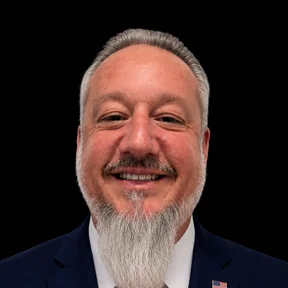
About Victor J. Rosario
Victor J. Rosario is the Residents-First candidate for Miami-Dade County Mayor 2028. A U.S. Coast Guard veteran, entrepreneur, technologist, and artist, Victor brings a track record of building real solutions — from AI tools to campaign policy — that serve Miami-Dade's 2.8 million residents.
Learn More About Victor