By Victor J. Rosario, candidate for Miami-Dade County Mayor · October 13, 2026
New York City has announced an agreement to phase out its historic horse-drawn carriage industry by June 2028. The proposed legislation, known as Romanch’s Law, is scheduled for a City Council vote on October 22, 2026.
The announcement follows years of controversy over public safety, animal welfare, and the economic future of carriage drivers. The issue gained additional urgency after a fatal carriage accident in Central Park earlier this year.
New York’s government is entitled to debate the future of its own industry. But Miami-Dade County should not wait until businesses begin exploring relocation opportunities before deciding what type of commercial operations we want to authorize here.
My position as a candidate for Mayor of Miami-Dade County is clear: I propose no new commercial horse-drawn passenger carriage operations, while protecting existing lawful local operators and the county’s established equestrian community.
One City’s Decision Does Not Have to Become Another County’s Industry
New York’s proposal would affect carriage owners, drivers, workers, and horses. The legislation includes measures addressing workforce transition and the humane disposition of carriage horses.
There is no verified evidence that New York carriage operators are currently preparing to relocate to Miami-Dade County. This proposal is preventive, not a response to a documented relocation attempt.
Nevertheless, our county should establish its policy before any applications arrive.
Miami-Dade has its own transportation infrastructure, tourism industry, roadway conditions, neighborhoods, and equestrian traditions. We should evaluate commercial carriage expansion according to local needs rather than automatically accommodate an industry undergoing regulatory changes elsewhere.
Existing Miami-Dade Operators Will Be Respected
This initiative is not a campaign against horses, ranches, or responsible horse owners.
Miami-Dade County has an important equestrian community. Private ownership, recreational riding, agricultural uses, training facilities, equestrian competitions, and veterinary services must remain outside the proposed commercial carriage restriction.
Existing lawful commercial carriage businesses should also receive appropriate grandfather protection.
Under my proposal, operators that can demonstrate lawful, established operations before the effective date of a future ordinance would be eligible for grandfather recognition, subject to applicable legal requirements.
Grandfathering would not exempt any business from animal welfare laws, public safety requirements, or lawful inspections.
The purpose is to protect legitimate existing operations without automatically creating new commercial expansion rights.
No New Commercial Horse-Drawn Passenger Carriage Industry
My proposed administration would direct county departments to review available regulatory authority and develop a prospective non-expansion framework.
The framework would address new commercial passenger carriage businesses, including businesses previously operating in another state.
A new applicant from New York would be subject to the same rules as a new applicant from Florida, Georgia, or anywhere else. The restriction would concern the proposed commercial activity, not a person’s residency or place of origin.
The objective would be to prevent additional commercial horse-drawn passenger carriage operations wherever Miami-Dade County has the lawful authority to do so.
Animal Welfare Is Part of Responsible Government
Horses are living animals, not transportation equipment.
Any future regulatory framework must address humane treatment, adequate water, rest, veterinary care, safe working conditions, and protection from dangerous traffic environments.
Existing animal cruelty laws must remain enforceable. Operators should not receive immunity simply because their business qualifies for grandfather protection.
At the same time, the county should avoid treating all horse-related activities as though they present identical risks. A privately owned horse on agricultural property is not the same activity as a commercial passenger carriage operating in a congested urban corridor.
Regulation must distinguish between those uses.
Respecting Florida Law
Florida’s Uniform Traffic Control Law governs animal-drawn vehicles on public roads.
Existing Florida Attorney General guidance explains that local governments cannot impose a general prohibition on horse-drawn carriage traffic merely by adopting an unrestricted local traffic ban. Certain street-specific restrictions may be authorized under state law.
Consequently, any future Miami-Dade ordinance must be reviewed for legal authority, municipal jurisdiction, enforceability, and constitutional protections.
Where county authority is insufficient, the administration should seek appropriate legislative authorization rather than impose a legally unsupported prohibition.
My administration’s objective would be clear rules that can withstand legal scrutiny.
Preparing for the 2028 Administration
The county should begin by identifying existing lawful operators, reviewing relevant licensing and land-use requirements, examining animal welfare responsibilities, and evaluating possible impacts on residents and businesses.
The proposed initiative would then proceed through County Attorney review, public consultation, and consideration by the Board of County Commissioners.
Municipal governments would retain their lawful responsibilities, and any countywide implementation would need to account for the authority of Miami-Dade’s municipalities.
The policy is not intended to interfere with responsible existing businesses or prevent legitimate horse ownership.
It is intended to establish a clear boundary against new commercial horse-drawn passenger carriage expansion where legally permissible.
Miami-Dade Must Make Its Own Decisions
New York City is debating the end of a historic industry. That decision raises difficult questions for workers, horse owners, and animal welfare advocates.
Miami-Dade County should consider those developments without assuming that New York’s solution must become our policy.
My proposed Residents-First Administration would prioritize established local operators, animal welfare, roadway safety, and predictable commercial regulation.
Our policy direction is simple: protect existing lawful operations, preserve equestrian activities, and do not authorize new commercial carriage expansion where the law allows us to restrict it.
Victor J. Rosario
Candidate for Mayor of Miami-Dade County — November 7, 2028
Residents-First Administration
County-Built, County-Controlled
Sources: CBS News New York, October 13, 2026; New York City Council Introduction 0943-2026; Florida Attorney General, Commercial Horse-Drawn Carriages/Uniform Traffic Law.
This article presents a proposed 2028 policy and does not describe an enacted county prohibition.
📜 EXECUTIVE ORDER NO. 2028-HC-01 (DRAFT)
MIAMI-DADE COUNTY
OFFICE OF THE MAYOR
Subject: Prohibition of New Commercial Horse-Drawn Passenger Carriage Expansion, Protection of Existing Lawful Operators, and Establishment of County Equine Welfare and Transportation Safeguards
Proposed by: Victor J. Rosario
Candidate for Mayor of Miami-Dade County — November 7, 2028
Administration: Residents-First Administration
Proposed Effective Date: Upon lawful execution following assumption of office
Classification: County Transportation, Commercial Regulation, Animal Welfare, Public Safety, and Economic Protection
PREAMBLE AND DECLARATION OF INTENT
WHEREAS, Miami-Dade County possesses a significant interest in protecting its residents, established businesses, transportation infrastructure, public roadways, animal welfare, and lawful agricultural and equestrian activities, and county government has a responsibility to evaluate proposed commercial activities before their expansion creates avoidable regulatory, operational, or public safety challenges; and
WHEREAS, New York City announced on October 13, 2026, an agreement to advance legislation intended to phase out commercial horse-drawn passenger carriage operations by June 2028, creating uncertainty regarding the future operations of businesses and workers associated with that industry, although no verified evidence presently establishes that such businesses intend to relocate to Miami-Dade County; and
WHEREAS, Miami-Dade County is not obligated to establish new commercial passenger carriage opportunities merely because another jurisdiction elects to discontinue or restrict its own industry, and the County may examine the lawful regulatory mechanisms available to govern new commercial operations within its jurisdiction; and
WHEREAS, Miami-Dade County has an existing equestrian community that includes private horse owners, agricultural properties, ranches, equestrian training establishments, recreational riding activities, animal rescue organizations, and other lawful enterprises deserving protection from unnecessary regulatory interference; and
WHEREAS, qualifying existing commercial horse-drawn passenger carriage operators should receive appropriate recognition of their established lawful operations, including grandfather protections where authorized, without being exempted from applicable animal welfare, public safety, transportation, and business requirements; and
WHEREAS, commercial horse-drawn passenger carriage operations present regulatory considerations distinct from private horse ownership and ordinary equestrian activities, particularly when commercial passenger transportation is conducted on heavily traveled roadways, in tourism districts, or in areas with substantial pedestrian and motor vehicle activity; and
WHEREAS, Chapter 316, Florida Statutes, governs animal-drawn vehicles operating upon public roads, and Miami-Dade County must respect state preemption, municipal authority, existing property and business rights, and applicable constitutional protections when developing commercial carriage regulations; and
WHEREAS, the proposed Residents-First Administration seeks to establish a prospective commercial carriage non-expansion framework that applies uniformly to new applicants regardless of whether they previously operated in New York, Florida, or another jurisdiction, while preserving lawful existing businesses and protecting Miami-Dade County’s equestrian traditions;
NOW, THEREFORE, I, VICTOR J. ROSARIO, upon assuming the Office of Mayor of Miami-Dade County, Florida, and acting pursuant to the authority lawfully vested in that office under the Miami-Dade County Home Rule Charter, applicable county ordinances, and the laws of the State of Florida, do hereby order the following administrative actions and policy directives:
🔒 SECTION 1: DECLARATION OF COUNTY NON-EXPANSION POLICY
It shall be the executive policy of the proposed Residents-First Administration to oppose the establishment and expansion of new commercial horse-drawn passenger carriage operations within Miami-Dade County and to pursue legally enforceable restrictions wherever county authority permits such regulation.
The administration shall distinguish between commercial passenger carriage businesses seeking new authorization and qualifying operators already lawfully established within the county. The purpose of this distinction is to avoid unnecessary disruption to existing legitimate businesses while preventing the automatic expansion of commercial carriage operations into additional locations.
The County shall not create special relocation privileges, commercial incentives, dedicated county staging facilities, or discretionary county-sponsored programs intended to encourage the establishment of new horse-drawn passenger carriage businesses, except where an existing legal obligation requires otherwise.
This Executive Order establishes binding administrative review and policy-development responsibilities within the lawful authority of the Mayor. It does not independently create a countywide traffic prohibition, suspend vested rights, or authorize the denial of applications that must be approved under existing law.
🏛 SECTION 2: PROTECTION AND GRANDFATHERING OF EXISTING OPERATORS
Existing lawful commercial horse-drawn passenger carriage operations shall be identified and evaluated for grandfather protection under any subsequently adopted ordinance.
The proposed grandfathering framework shall recognize businesses that can demonstrate lawful operation before the effective date established by the applicable legislation. Documentary evidence may include applicable licenses, land-use approvals, historical operating records, insurance documentation, business tax records, and other legally relevant materials.
Grandfather recognition shall not automatically authorize an operator to expand the number of carriages, relocate into previously unauthorized areas, establish additional commercial staging facilities, or transfer protected operating rights where such activities may lawfully be restricted.
No existing operator shall be deprived of a legally protected business or property interest without the process required by applicable law. Any proposed determination denying grandfather recognition shall include written findings, notice, and an appropriate opportunity for review.
Grandfather protection shall never operate as immunity from animal cruelty laws, applicable traffic regulations, or other enforceable safety requirements.
🚫 SECTION 3: RESTRICTIONS ON NEW COMMERCIAL CARRIAGE OPERATIONS
The Office of the Mayor shall direct the appropriate administrative departments to identify and prepare legally supportable mechanisms for restricting new commercial horse-drawn passenger carriage operations.
The proposed regulatory framework shall address new businesses, newly established commercial carriage routes, new commercial staging facilities, and material expansions of existing operations, to the extent each activity may lawfully be regulated.
A business previously operating in New York City or another jurisdiction shall receive no special exemption from applicable Miami-Dade County requirements. Likewise, a new Florida-based business shall be subject to the same lawful standards.
The County shall not discriminate against an applicant because of residency, geographic origin, or previous business location.
Pending adoption of valid implementing legislation, departments shall continue processing legally required applications under existing law. No employee may treat this Executive Order as an independent statutory basis for refusing an otherwise lawful application.
The administration shall evaluate county-owned properties and facilities separately from public roadways because different sources of legal authority may apply to commercial use of government property.
🐎 SECTION 4: PROTECTION OF HORSES AND LAWFUL EQUESTRIAN ACTIVITIES
Nothing in this initiative shall be interpreted as a general prohibition on horse ownership, horseback riding, agricultural horse use, equestrian competitions, horse training, veterinary transportation, animal rescue, or other lawful noncommercial carriage activities.
The administration recognizes that horses are living animals requiring appropriate care, veterinary attention, nutrition, hydration, shelter, and humane handling.
Relevant county departments shall review existing animal welfare responsibilities and identify opportunities for coordination with legally authorized enforcement agencies.
Any proposed commercial carriage regulations shall distinguish between an animal’s lawful presence within Miami-Dade County and the commercial use of that animal for passenger carriage transportation.
No horse shall be seized, removed, transferred, or subjected to government action solely because its owner previously operated a commercial carriage business in another jurisdiction. Any such action must rest upon independent lawful authority.
The administration shall support enforcement of applicable animal cruelty and neglect laws while preserving the rights of responsible owners.
🤝 SECTION 5: COUNTY AND MUNICIPAL JURISDICTION
Miami-Dade County contains 34 municipalities with distinct local administrative responsibilities and regulatory authority.
The Office of the Mayor shall coordinate with municipal governments regarding existing commercial carriage regulations, roadway conditions, land-use provisions, business operations, and animal welfare concerns.
No department shall presume that a county executive directive automatically displaces lawful municipal authority.
The County Attorney shall identify which prospective restrictions may apply in unincorporated Miami-Dade County, which may lawfully apply countywide, and which require municipal action or additional authorization.
Municipal coordination shall be conducted through formal communications, documented meetings, and written recommendations.
The administration shall not rely upon informal agreements as substitutes for legally required ordinances or other governmental approvals.
🕵️ SECTION 6: EXISTING OPERATOR VERIFICATION AND REGULATORY INVENTORY
Within 30 days after lawful issuance of this Order, the appropriate county administrative departments shall begin compiling available records concerning commercial horse-drawn passenger carriage operations.
The inventory shall identify known operating locations, relevant authorizations, documented business histories, commercial staging arrangements, and applicable compliance records.
Departments shall distinguish verified information from unconfirmed reports and shall not presume that a business is unlawful merely because it does not appear in an initial government database.
The inventory shall be maintained in accordance with applicable public records, privacy, and records-retention requirements.
Within 60 days, the administration shall seek a preliminary report identifying existing operations, available regulatory authority, significant data gaps, and potential implementation concerns.
The inventory shall support legislative analysis and shall not independently create a licensing obligation that does not already exist under law.
⚖️ SECTION 7: COUNTY ATTORNEY REVIEW AND STATUTORY COMPLIANCE
The County Attorney shall be requested to conduct a comprehensive review of the legal authority necessary to implement the proposed commercial carriage non-expansion framework.
The review shall address Florida Statutes Chapter 316, including Section 316.008, relevant Florida Attorney General opinions, the Miami-Dade County Home Rule Charter, applicable land-use authority, municipal jurisdiction, and relevant constitutional protections.
The County Attorney shall distinguish between regulation of commercial business activities, land-use restrictions, traffic controls, and government property management.
The review shall identify any restrictions that cannot be implemented through mayoral executive action and must instead be adopted by the Board of County Commissioners or authorized by the Florida Legislature.
Particular attention shall be given to grandfathering, vested rights, due process, equal protection, potential takings claims, and administrative appeal procedures.
No department shall implement a proposed prohibition beyond its established statutory or delegated authority.
🚦 SECTION 8: TRANSPORTATION SAFETY AND COMMERCIAL STAGING
The Department of Transportation and Public Works shall evaluate the safety considerations associated with commercial horse-drawn passenger carriage operations in areas under its jurisdiction.
The evaluation shall examine roadway characteristics, vehicle speeds, traffic volumes, pedestrian activity, intersection design, loading areas, and the interaction between animal-drawn vehicles and motorized transportation.
The department shall identify whether particular roads or county-controlled facilities present conditions warranting restrictions under existing Florida law.
Any recommendation for roadway restrictions shall include the necessary factual findings and legal analysis.
Commercial staging arrangements on county-owned property shall be reviewed under applicable property management, procurement, contractual, and administrative authority.
This section shall not be construed as imposing an immediate countywide prohibition on animal-drawn vehicles using public roads.
🛡 SECTION 9: ANIMAL WELFARE AND PUBLIC SAFETY ENFORCEMENT
Animal welfare and public safety enforcement shall remain the responsibility of agencies possessing applicable legal authority.
The administration shall encourage coordinated reporting and investigation of documented animal cruelty, neglect, unsafe transportation practices, and other violations.
Complaints shall be evaluated according to objective evidence rather than assumptions about an operator’s state of origin or previous commercial activities.
Existing operators shall remain subject to applicable requirements concerning animal treatment, roadway safety, and lawful business operations.
No new penalty or enforcement offense is established by this Executive Order.
Any future penalty schedule shall require an independent legal basis, appropriate legislative approval, and procedures for notice and review.
💰 SECTION 10: FISCAL AND OPERATIONAL RESPONSIBILITY
The Office of Management and Budget shall prepare a fiscal assessment of the proposed regulatory initiative.
The assessment shall identify administrative staffing requirements, legal review costs, records management needs, inspection responsibilities, potential enforcement expenses, and any additional appropriations required for implementation.
The fiscal analysis shall distinguish between costs that can be absorbed within existing departmental operations and expenditures requiring Board approval.
No speculative savings, new revenues, or financial benefits shall be represented as established fiscal outcomes.
The administration shall seek to avoid unnecessary administrative systems, duplicative licensing processes, or expenditures unrelated to the initiative’s lawful objectives.
No department shall incur obligations exceeding its legal authority or available appropriations.
📋 SECTION 11: IMPLEMENTATION SCHEDULE AND DEPARTMENTAL REPORTING
Implementation shall proceed through a structured administrative review process.
First 30 Days: Request County Attorney analysis, identify responsible departments, begin existing-operator inventory, and examine applicable county regulations.
Days 31–60: Continue operator verification, consult municipal governments, evaluate transportation and animal welfare concerns, and prepare preliminary fiscal findings.
Days 61–90: Complete initial regulatory recommendations, develop proposed grandfathering provisions, and prepare legally supportable legislative language.
After Day 90: Submit appropriate recommendations and proposed ordinances to the Board of County Commissioners for consideration, including any request for state legislative authorization.
Departmental reports shall identify completed work, unresolved legal questions, projected implementation costs, and recommendations requiring legislative action.
These deadlines are administrative targets subject to lawful departmental responsibilities and available resources.
🚨 SECTION 12: EMERGENCY OVERRIDE AND IMMEDIATE PUBLIC SAFETY RESPONSE
Nothing in this Executive Order shall restrict the lawful ability of authorized agencies to respond to immediate threats to human safety, animal welfare, or public transportation.
Where an animal-drawn vehicle creates an immediate and documented hazard, responsible officials may exercise existing emergency or enforcement powers in accordance with Florida law.
Emergency action shall be limited to what the circumstances and applicable authority permit.
A temporary safety response shall not be converted into an unauthorized permanent commercial prohibition.
Affected parties shall receive any notice, hearing, or review protections required by law.
🏢 SECTION 13: DEPARTMENTAL ACCOUNTABILITY AND OVERSIGHT
The Office of the Mayor shall coordinate implementation and maintain a central administrative record of the initiative.
Regulatory and Economic Resources shall review applicable land-use and business records.
Transportation and Public Works shall evaluate relevant roadway and facility conditions.
Animal Services shall provide expertise within its jurisdiction and coordinate with appropriate animal welfare authorities.
The Office of Management and Budget shall assess costs and fiscal requirements.
The County Attorney shall be requested to advise on legal authority and proposed legislative measures.
Departments shall document recommendations, legal limitations, and implementation decisions.
Any allegation of improper regulatory favoritism, falsification of official records, or misuse of county authority shall be referred to the appropriate existing oversight or investigative authority.
📜 SECTION 14: BOARD OF COUNTY COMMISSIONERS LEGISLATIVE REFERRAL
Following completion of the initial administrative and legal assessments, the Mayor shall prepare a legislative package for consideration by the Miami-Dade County Board of County Commissioners.
The package shall include a proposed ordinance or other appropriate measure addressing new commercial carriage operations, qualifying existing operators, animal welfare responsibilities, enforcement mechanisms, and applicable jurisdictional limitations.
The package shall also include a fiscal impact statement, implementation schedule, and explanation of any required state or municipal action.
The Board shall retain its lawful legislative authority, including the ability to amend, approve, reject, or request further analysis of the proposed measures.
Nothing in this Order shall be interpreted as predetermining the outcome of the Board’s legislative proceedings.
🔐 SECTION 15: LEGAL PROTECTIONS, SEVERABILITY, AND LIMITATION OF AUTHORITY
All actions undertaken pursuant to this Order shall comply with federal law, Florida law, the Miami-Dade County Home Rule Charter, and applicable county ordinances.
Nothing herein shall authorize the impairment of vested rights, unlawful discrimination, unconstitutional property deprivation, or enforcement beyond delegated executive authority.
If any provision is determined to conflict with controlling law, that provision shall be inoperative to the extent of the conflict without affecting otherwise lawful provisions.
This Order shall not create an independent criminal offense, civil penalty, licensing moratorium, or countywide roadway prohibition.
Its operative effect shall be limited to lawful executive administration, policy development, interdepartmental coordination, and preparation of recommendations for appropriate legislative consideration.
🗓 SECTION 16: EFFECTIVE DATE AND CONTINUING ADMINISTRATIVE RESPONSIBILITY
This Executive Order shall become effective upon lawful execution by the Mayor of Miami-Dade County following assumption of office.
All departments subject to the Mayor’s lawful administrative direction shall carry out their assigned responsibilities within existing legal authority and appropriations.
The Office of the Mayor shall maintain responsibility for coordinating the initiative and presenting proposed implementing legislation where required.
The policy objective shall remain the prevention of new commercial horse-drawn passenger carriage expansion where legally authorized, while protecting qualifying existing lawful operators and preserving Miami-Dade County’s equestrian community.
⸻
IN WITNESS WHEREOF
I have hereunto set my hand and, upon lawful issuance, caused the Seal of Miami-Dade County to be affixed in accordance with applicable procedures.
Victor J. Rosario
Mayor, Miami-Dade County
Proposed signature designation for future execution
Date: ____________________
Victor J. Rosario — Candidate for Mayor of Miami-Dade County, November 7, 2028
Residents-First Administration
County-Built, County-Controlled
This is a proposed executive order for the 2028 administration. It has not been signed, issued, or enacted.
MIAMI-DADE COUNTY BOARD OF COUNTY COMMISSIONERS
LEGISLATIVE PACKAGE: COMMERCIAL HORSE-DRAWN PASSENGER CARRIAGE NON-EXPANSION AND EXISTING OPERATOR PROTECTION
Submitted by: Office of the Mayor — Proposed 2028 Residents-First Administration
Policy Sponsor: Victor J. Rosario
Legislative Status: Draft for County Attorney review and future Board consideration.
I. PURPOSE
The purpose of this legislative package is to establish a legally sustainable framework for preventing new commercial horse-drawn passenger carriage expansion within Miami-Dade County, preserving qualifying existing lawful operations, and protecting public safety, animal welfare, and established equestrian activities.
The package requests a comprehensive legal review, an existing-operator inventory, preparation of prospective legislation, and coordination with municipal governments.
The proposed restrictions shall apply equally to new operators regardless of their geographic origin.
II. ITEM SUMMARY
This item proposes that the Board of County Commissioners direct the County Mayor or designee, in consultation with the County Attorney, to evaluate available authority for prospective restrictions on new commercial horse-drawn passenger carriage operations.
The item also calls for:
- Identification of existing lawful carriage operators.
- Development of objective grandfathering criteria.
- Review of relevant county licensing, zoning, and facility-use powers.
- Assessment of animal welfare and transportation safety requirements.
- Consultation with municipalities.
- Preparation of proposed implementing legislation.
- Development of fiscal and operational estimates.
- Evaluation of whether additional state legislative authority is necessary.
No immediate blanket prohibition is requested through this resolution.
III. EXECUTIVE SUMMARY
On October 13, 2026, New York City officials announced an agreement to advance legislation ending commercial horse-drawn carriage operations by June 2028.
The proposed New York legislation includes workforce transition provisions and restrictions intended to ensure humane treatment of affected horses.
These developments present an opportunity for Miami-Dade County to evaluate its own commercial carriage policies before potential applications for new operations arise.
No documented relocation of New York carriage operators to Miami-Dade County is established by the available reporting.
The proposed county initiative is therefore precautionary.
The administration seeks a prospective regulatory framework that preserves established local operations while limiting new commercial passenger carriage expansion where legally permissible.
IV. POLICY OBJECTIVES
Objective 1 — Commercial Non-Expansion
Develop enforceable prospective restrictions on new commercial horse-drawn passenger carriage businesses within the limits of county authority.
Objective 2 — Grandfather Protection
Identify and preserve qualifying lawful operations existing before the effective date of any future ordinance.
Objective 3 — Equine Welfare
Maintain applicable requirements concerning humane treatment, veterinary care, transportation safety, and animal protection.
Objective 4 — Public Safety
Evaluate risks associated with animal-drawn passenger vehicles in congested corridors, commercial staging areas, and county-controlled facilities.
Objective 5 — Legal Compliance
Ensure that any adopted restriction is consistent with Florida’s Uniform Traffic Control Law, county home-rule authority, municipal jurisdiction, and constitutional protections.
Objective 6 — Administrative Accountability
Create transparent criteria, documented decisions, and appeal procedures.
V. HOW THE INITIATIVE WORKS
Phase One: Legal and Regulatory Review
The County Attorney shall be requested to analyze the legal distinction between regulating commercial business activity and regulating the use of animal-drawn vehicles on public streets.
The review must address Chapter 316, Florida Statutes, including Section 316.008, as well as other potentially relevant statutory provisions.
The Attorney General’s published interpretation concerning commercial horse-drawn carriages shall be evaluated.
The County Attorney shall identify any proposed provisions requiring state legislative authorization.
Phase Two: Existing Business Inventory
County administrative departments shall assemble available records identifying existing lawful carriage businesses.
Relevant information should include documented operating history, applicable business and land-use authorizations, operating locations, and relevant compliance records.
No business shall be presumed unlawful merely because it is absent from an initial inventory.
Phase Three: Grandfather Eligibility
A proposed grandfathering mechanism shall establish objective eligibility criteria.
The framework should address lawful establishment, continuity of operations, material expansion, relocation, changes in ownership, and procedural review.
Any limitations on business transfers or changes in operations must be supported by applicable law.
Phase Four: Prospective Non-Expansion Legislation
Following legal review, the administration shall prepare an ordinance addressing those commercial activities that the county can lawfully regulate.
Where appropriate, this may include prospective land-use restrictions, limitations on county-owned facilities, and specifically authorized roadway controls.
A blanket countywide roadway ban shall not be presumed legally available.
Phase Five: Legislative Consideration
The proposed ordinance shall proceed through the required legislative process, including appropriate public notice, hearings, committee consideration where applicable, and a Board vote.
Implementation shall depend on lawful adoption and satisfaction of all applicable requirements.
VI. RESIDENT IMPACT
The intended resident benefits include greater regulatory predictability, protection of established local operators, preservation of lawful equestrian activities, and consideration of public safety and animal welfare.
Potential impacts on tourism, small businesses, employment, property rights, and county administration must also be evaluated.
The county shall not assume that all commercial carriage operations present identical conditions or risks.
Public testimony from affected operators, residents, equestrian organizations, animal welfare professionals, and transportation specialists should inform the legislative record.
VII. EXISTING BUSINESS PROTECTION
The proposed framework shall distinguish between qualifying established operators and applicants seeking to begin new commercial operations.
Existing operators may be eligible for grandfather protection if they satisfy the adopted legal criteria.
Grandfather protection shall not authorize animal neglect, unsafe operations, or violations of applicable law.
Any proposed expiration, transfer, relocation, or expansion limitation shall require independent legal justification.
Affected businesses shall receive notice and an appropriate opportunity for administrative or judicial review.
VIII. EMERGENCY OVERRIDE
Existing public safety and animal welfare enforcement authority shall remain available.
When an immediate threat to human life, animal welfare, or roadway safety is documented, the responsible agency may take action within its existing statutory powers.
Emergency enforcement shall be proportionate, documented, and subject to required procedural safeguards.
The emergency provision shall not serve as a substitute for the legislative process necessary to establish permanent restrictions.
IX. DEPARTMENTAL RESPONSIBILITIES
Office of the Mayor: Coordinate the initiative, receive departmental reports, and transmit recommendations to the Board.
County Attorney: Assess legal authority, preemption, grandfathering, due process, and proposed legislative language.
Regulatory and Economic Resources: Review land-use controls, applicable business records, and regulatory implementation options.
Transportation and Public Works: Evaluate roadway conditions, safety considerations, and county-controlled facilities.
Animal Services: Provide relevant animal welfare expertise and coordinate with legally responsible enforcement agencies.
Office of Management and Budget: Develop a fiscal impact statement and identify implementation costs.
Municipal Coordination: Consult with municipalities regarding local authority, existing ordinances, and potential voluntary cooperation.
X. FISCAL AND OPERATIONAL ANALYSIS
No fixed implementation appropriation is proposed at this stage.
The administration shall prepare a fiscal analysis addressing:
- Existing staffing capacity and additional personnel requirements.
- Legal research and potential litigation exposure.
- Operator inventory and record management.
- Inspection and enforcement costs.
- Public notice and hearing expenses.
- Potential impacts on existing businesses and local economic activity.
- Any proposed technology or registration system.
- Funding sources and ongoing administrative expenses.
The analysis shall distinguish one-time startup expenses from recurring operational costs.
No new fee, tax, or penalty shall be established without appropriate legal authority and legislative approval.
XI. IMPLEMENTATION TIMELINE
Days 1–30: County Attorney legal assessment and preliminary departmental coordination.
Days 31–60: Existing-operator inventory, municipal consultation, and initial public safety and animal welfare analysis.
Days 61–90: Draft legislative recommendations, fiscal analysis, and proposed grandfathering standards.
After Day 90: Submission of legally supportable measures for Board consideration, public hearing, and any necessary state legislative action.
All dates are planning targets rather than guarantees of legislative adoption.
XII. PROPOSED BOARD RESOLUTION
RESOLUTION DIRECTING THE COUNTY MAYOR OR COUNTY MAYOR’S DESIGNEE TO EVALUATE A PROSPECTIVE COMMERCIAL HORSE-DRAWN PASSENGER CARRIAGE NON-EXPANSION FRAMEWORK, DEVELOP PROPOSED PROTECTIONS FOR QUALIFYING EXISTING OPERATORS, AND REPORT FINDINGS AND LEGISLATIVE RECOMMENDATIONS TO THE BOARD.
WHEREAS, Miami-Dade County has an interest in protecting public safety, animal welfare, established businesses, and lawful equestrian activities; and
WHEREAS, changes in the regulation of commercial horse-drawn carriage operations in other jurisdictions warrant examination of the county’s existing regulatory framework; and
WHEREAS, the Board recognizes that Florida law governs animal-drawn vehicle operations on public roads and limits local regulatory authority; and
WHEREAS, the Board seeks to evaluate prospective restrictions on new commercial passenger carriage operations without unlawfully interfering with existing businesses or equestrian activities;
NOW, THEREFORE, BE IT RESOLVED BY THE BOARD OF COUNTY COMMISSIONERS OF MIAMI-DADE COUNTY, FLORIDA:
Section 1. The Board directs the County Mayor or designee, in consultation with the County Attorney, to evaluate legally permissible prospective restrictions on new commercial horse-drawn passenger carriage operations.
Section 2. The evaluation shall address the protection of qualifying existing lawful operators and establish recommendations for objective grandfathering criteria.
Section 3. The evaluation shall preserve the distinction between commercial passenger carriage activity and lawful private, agricultural, recreational, veterinary, and other equestrian uses.
Section 4. The County Mayor or designee shall consult with relevant departments and municipalities and prepare a fiscal and operational assessment.
Section 5. The County Mayor or designee shall provide a written report to the Board within 90 days after the effective date of this resolution, or such other period as the Board may approve.
Section 6. Any recommended restriction shall be submitted for appropriate legislative consideration and shall not take effect solely by virtue of this resolution.
Section 7. This resolution shall become effective in accordance with applicable county law following adoption.
XIII. FINAL POLICY STATEMENT
The proposed Residents-First Administration seeks to protect Miami-Dade County’s established lawful equestrian community while developing a legally sustainable policy against new commercial horse-drawn passenger carriage expansion.
The county should not assume responsibility for commercial expansion arising from regulatory decisions made in other jurisdictions.
At the same time, the county must respect state law, existing rights, municipal authority, and appropriate administrative procedures.
Protect existing lawful operators. Preserve equestrian activities. Evaluate and restrict new commercial carriage expansion wherever legally authorized.
VICTOR J. ROSARIO
Candidate for Mayor of Miami-Dade County — 2028
Residents-First Administration
County-Built, County-Controlled
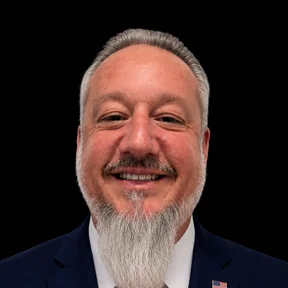
About Victor J. Rosario
Victor J. Rosario is the Residents-First candidate for Miami-Dade County Mayor 2028. A U.S. Coast Guard veteran, entrepreneur, technologist, and artist, Victor brings a track record of building real solutions — from AI tools to campaign policy — that serve Miami-Dade's 2.8 million residents.
Learn More About Victor