By Victor J. Rosario, candidate for Miami-Dade County Mayor · October 15, 2026

OFFICIAL CAMPAIGN BLOG | TECHNOLOGY • GOVERNMENT MODERNIZATION • FISCAL RESPONSIBILITY
Miami-Dade County cannot build the government of tomorrow while continuing to depend on the disconnected technology of yesterday.
Every year, government agencies spend public money maintaining software, renewing licenses, extending contracts, purchasing upgrades, and paying outside corporations to support systems that may have been designed decades ago.
Some of those systems remain essential. Others may be outdated, expensive to maintain, difficult to integrate, or unnecessarily dependent on external vendors.
The question residents deserve to ask is simple:
Why should Miami-Dade County continue spending millions of dollars renewing aging software contracts when we could invest that same money in county employees, software developers, modern infrastructure, and systems that Miami-Dade County owns and controls?
As a developer, technologist, entrepreneur, and candidate for Mayor of Miami-Dade County, I intend to make software independence a major component of my Residents-First Administration.
My vision is to establish a county government capable of developing, maintaining, securing, and continuously improving its own digital infrastructure.
Not dozens of disconnected systems.
Not outdated applications that cannot communicate.
Not perpetual dependence on expensive software renewals.
I want one coordinated, resilient, secure, and interoperable county technology ecosystem that supports every department while protecting the privacy and interests of residents.
County-Built. County-Controlled. County-Owned.
The Real Cost of Maintaining Yesterday’s Technology
When residents hear about a multimillion-dollar software contract, they may assume the county is purchasing an entirely new technological capability.
That is not always the case.
Government technology agreements can include annual licensing, software maintenance, technical support, proprietary upgrades, hosting, integration services, and extensions of systems that have already been operating for years.
There are legitimate reasons for some of these expenses. Critical infrastructure cannot simply be switched off, and government systems must remain reliable.
However, the existence of an operational requirement does not automatically justify remaining dependent on the same external software arrangement indefinitely.
My administration will ask questions that should be standard throughout county government:
- What exactly does this software do for residents and county employees?
- How old is the underlying architecture?
- How much has the county spent on the system throughout its lifetime?
- What does the county actually own?
- Can the application exchange information with other county systems?
- Are we paying recurring fees for capabilities our own employees could develop?
- What would it cost to replace the application with a modern county-owned system?
- Would the replacement improve reliability, security, performance, accessibility, and operational efficiency?
We must evaluate the total cost of ownership, not merely the price of the next contract renewal.
A software contract should not automatically receive another extension simply because the county has been using that product for twenty years.
A $5 Million Contract: What Could We Build Instead?
Consider a hypothetical software renewal costing $5 million.
Rather than automatically committing another $5 million to a legacy platform, my administration would evaluate whether that funding could support an internal development program.
For illustration, a $5 million project budget could be allocated as follows:
| Investment | Illustrative Allocation |
|---|---|
| County software developers and architects | $2,500,000 |
| Cybersecurity and quality assurance | $600,000 |
| Infrastructure, hosting, and development environments | $600,000 |
| Data migration and systems integration | $500,000 |
| Documentation, testing, and employee training | $400,000 |
| Contingency and independent validation | $400,000 |
| Total | $5,000,000 |
These are illustrative planning allocations, not actual county contract expenditures or approved project costs.
With the appropriate personnel and development timeline, such an investment could establish the foundation for a modern county-owned application.
That application could offer functionality that the existing system does not provide, including modern interfaces, automated reporting, integrated workflows, artificial intelligence capabilities, secure APIs, improved accessibility, and comprehensive audit trails.
More importantly, the county would retain ownership of the software developed by its employees, subject to applicable licensing and intellectual-property requirements.
After the initial investment, the county could continue improving the system rather than paying for every feature modification through an outside contract.
That does not eliminate future operating expenses. County-owned software still requires employees, cybersecurity, infrastructure, maintenance, testing, and disaster recovery.
But those expenses can build permanent institutional capability rather than perpetual vendor dependence.
I would rather invest public money in developing the technological capacity of Miami-Dade County than repeatedly pay for software dependence that we have never seriously evaluated replacing.
Miami International Airport: A Practical Starting Point
Miami International Airport is one of the most important economic assets in Miami-Dade County.
Its operations depend on numerous digital systems supporting airlines, airport tenants, property management, billing, concessions, flight information, public announcements, security integrations, and operational reporting.
Recent county procurement records illustrate the importance of reviewing these applications.
For example, Miami-Dade County considered an extension of its airport revenue and property-management software agreement, Contract L-10159, with a proposed modified total of approximately $1.07 million.
The underlying business requirements include airline activity, invoicing, tenant agreements, concession reporting, and airport revenue management.
These are identifiable functions that can be evaluated for internal development.
My administration would explore a unified, county-owned Miami-Dade Aviation Department software platform incorporating:
Airport revenue management: Automated calculation of applicable airport fees, invoices, account balances, payments, and reconciliation.
Tenant and property administration: Digital lease records, expiration tracking, rent schedules, document management, and approval workflows.
Concession management: Sales reporting, contractual rent calculations, revenue reconciliation, and financial performance dashboards.
Airline operations: Flight activity reporting, operational coordination, approved data-feed integrations, and performance analytics.
Employee operations: Secure dashboards, internal communications, workflow automation, and departmental reporting.
Compliance and auditing: Tamper-evident records, access controls, contract monitoring, financial reconciliation, and alerts for unusual transactions.
These capabilities should not operate as isolated applications with incompatible data.
They should be designed as components of a shared technology architecture, with controlled access and standardized communication between systems.
Under my proposed administration, the Office of the Mayor would coordinate the development strategy with the Aviation Department and county technology personnel.
The goal would be to provide county-developed software to MDAD without an external commercial software licensing fee or internal departmental chargeback for those applications.
The county would still account transparently for the employees, infrastructure, and operating resources required to provide that service.
Modernizing Emergency 911 Without Compromising Public Safety
Another important example is emergency-response software.
Miami-Dade County has considered a multimillion-dollar agreement for emergency-call triage technology, which assists dispatch personnel in questioning callers and prioritizing incidents.
My administration would investigate the development of county-controlled emergency communications and dispatch applications.
These systems could include modern call-taking interfaces, incident records, real-time unit availability, dispatch coordination, location information, accessibility features, automated documentation, and secure interagency communications.
Artificial intelligence could assist with transcription, language translation, information retrieval, and identifying potentially inconsistent records.
However, AI must not independently make unvalidated life-or-death triage decisions.
Emergency medical protocols, dispatch prioritization, and life-safety functions require specialized expertise, formal testing, regulatory compliance, redundancy, and human accountability.
We would develop replacements in phases, operate them in parallel with existing systems, and transition only after they satisfy the applicable safety and reliability requirements.
Modernization should strengthen public safety, never gamble with it.
Artificial Intelligence Cannot Fix a Broken Foundation
I want Miami-Dade County to become a leader in responsible artificial intelligence.
But implementing AI is not simply purchasing subscriptions, installing chatbots, or announcing a new technology initiative.
AI requires reliable infrastructure.
It requires well-governed data, secure databases, documented APIs, interoperable systems, accurate records, identity management, auditability, and dependable computing resources.
Imagine a county where the airport uses one isolated database, transportation uses another, finance uses an unrelated platform, and departments must manually exchange spreadsheets because their applications cannot communicate.
Adding AI to that environment does not automatically create an intelligent government.
It can simply automate existing fragmentation.
My administration intends to modernize the foundation first.
We will develop a countywide architecture where authorized systems can securely exchange the information necessary to perform their responsibilities.
A unified architecture does not mean creating one unrestricted database containing everyone’s information.
Departments must retain appropriate data boundaries, legal restrictions, and access permissions.
It means creating interoperability without sacrificing privacy or security.
Once that foundation exists, artificial intelligence can become a powerful operational resource.
It could help county employees identify duplicate invoices, reconcile contracts, locate relevant records, detect unusual spending patterns, forecast maintenance requirements, optimize workflows, and generate accurate reports.
AI-generated findings would be reviewed by authorized employees before consequential decisions are made.
That is how we build a government that works intelligently rather than one that merely advertises artificial intelligence.
A Redundant Miami-Dade County — Not 34 Technology Islands
My vision is a redundant Miami-Dade County.
By redundancy, I mean technology designed to continue functioning when individual components fail.
Critical systems should have appropriate backup infrastructure, replicated data, recovery procedures, cybersecurity protections, and tested continuity plans.
If a server fails, the county should have a recovery strategy.
If a department experiences a technical interruption, unrelated services should remain operational.
If a cyberattack compromises one application, the architecture should limit the attacker’s ability to move across the network.
If a hurricane disrupts county facilities, essential services must have tested continuity arrangements.
We cannot build resilient government infrastructure by relying on disconnected applications that nobody can properly integrate.
At the same time, we should not replace dozens of isolated systems with one enormous point of failure.
The solution is a coordinated architecture using independent services, shared standards, appropriate isolation, and redundant infrastructure.
Miami-Dade County has 34 municipalities, each with its own responsibilities and technology arrangements.
My administration would not assume control over municipal systems. Instead, we would offer secure, voluntary interoperability where legally authorized and mutually beneficial.
Our county departments should work together as one coordinated government, while municipal governments retain their lawful independence.
Privacy, Advanced Encryption, and Cybersecurity: Protecting Residents at All Times
Under my administration, protecting the privacy of Miami-Dade County residents will be one of our highest priorities.
We are not simply modernizing government software to make operations faster or reduce unnecessary spending. We are building a technology infrastructure designed from the ground up to protect residents’ personal information, financial records, confidential communications, and sensitive data.
More encryption. Stronger safeguards. Greater privacy. Less unnecessary access.
Every county-owned application will be designed with security and privacy as fundamental architectural requirements, not optional features added after development.
Our administration will pursue multiple layers of encryption and security, including:
- End-to-end encryption: For appropriate confidential communications and services where only authorized endpoints should access the information.
- Advanced encryption at rest: Protecting sensitive information stored in county databases, servers, backups, and storage systems.
- Encryption in transit: Securing information exchanged between county departments, authorized applications, and residents.
- Zero-trust security architecture: Requiring continuous verification of identities, devices, and access permissions rather than automatically trusting internal network connections.
- Data minimization: Collecting and retaining only information necessary to deliver legitimate government services and meet legal obligations.
- Resident privacy protections: Preventing unauthorized monitoring, profiling, disclosure, and unnecessary access to personal information.
- Automated security monitoring: Detecting suspicious activity, unauthorized access attempts, system vulnerabilities, and potential cyberattacks.
- Strict employee access controls: Ensuring county personnel access only the information required to perform their authorized responsibilities.
- Encrypted disaster-recovery systems: Maintaining protected backups and redundant infrastructure so critical government services can recover from outages and cyber incidents.
We will also incorporate modern cryptographic standards, secure key management, and a planned transition toward post-quantum cryptography where appropriate.
Artificial intelligence will assist our cybersecurity teams in identifying vulnerabilities and unusual system activity, while consequential security decisions remain subject to appropriate human oversight.
Our goal is to establish a countywide technology ecosystem where authorized systems communicate securely without unnecessarily exposing residents’ information.
Miami-Dade County is not a surveillance company.
We are a Residents-First Administration.
We do not need to know everything about our residents to provide excellent government services. We need to know only what is necessary to operate safely, securely, effectively, and legally.
Encryption must protect information against unauthorized access, including improper access from within government itself. Sensitive information will be governed by clearly defined permissions, audit trails, privacy policies, and applicable legal safeguards.
Where government records must be accessible under Florida law, our systems will respect those legal obligations while protecting confidential and exempt information.
Residents should have confidence that their government is working to protect their information, not unnecessarily collecting it, exposing it, or using it for unrelated purposes.
Our commitment is clear: Protect the residents. Protect their information. Protect their privacy. At all times.
Technology should serve the people, not become a mechanism for unnecessary surveillance or intrusion into their lives.
That is the standard I intend to establish throughout Miami-Dade County government.
Software Independence Savings Model
A major part of this initiative will be financial transparency.
Residents should be able to understand how much money the county spends on external software and what could potentially be saved through internal development.
My administration would publish a software independence financial model comparing existing recurring costs with proposed county-owned alternatives.
The model would include current external spending, the percentage of costs that could realistically be avoided, internal operating expenses, development costs, transition costs, and projected savings over multiple years.
For example, suppose the county spends $10 million annually on a selected group of external software agreements.
If county-developed alternatives could eliminate 60% of those recurring external costs, the annual avoided spending would be $6 million.
If the county’s replacement systems cost $3 million annually to operate, the illustrative recurring net savings would be $3 million per year, before accounting for initial development and migration costs.
This example does not represent verified countywide software expenditures or guaranteed savings.
Actual financial projections would require a contract-by-contract assessment and a full lifecycle cost analysis.
Our objective is not to claim savings before the work has been performed.
Our objective is to identify where savings are possible, validate them, and publish the results.
Building a County Technology Dream Team
Miami-Dade County has talented developers, engineers, cybersecurity specialists, database architects, systems administrators, and technology professionals.
We should be creating opportunities for these professionals to build public infrastructure.
My administration would pursue a specialized county software engineering organization with the capacity to develop and maintain government applications.
This organization would include backend developers, frontend developers, database engineers, cybersecurity professionals, cloud and infrastructure engineers, systems architects, quality-assurance specialists, and product managers.
The mission would be clear: develop reliable technology that serves residents and county employees.
The county should retain source-code repositories, system documentation, deployment procedures, integration specifications, and institutional knowledge.
Software development should not depend on one individual.
Every application should have documented ownership, succession procedures, maintainable code, testing coverage, and operational support.
Automation should reduce repetitive maintenance work, but security updates, production releases, and critical system changes must follow controlled procedures.
A successful county technology team would become a permanent public asset.
The Four-Year Modernization Direction
First 90 Days: Countywide Software Audit
Identify software applications, contracts, annual expenditures, renewal dates, licensing terms, technical dependencies, cybersecurity risks, and replacement opportunities.
Months 3–12: First County-Owned Applications
Begin developing lower-risk administrative systems, with airport revenue management, internal workflows, reporting, and financial reconciliation among the initial candidates.
Year Two: Integration and Expansion
Deploy validated replacements, connect authorized departmental systems, modernize data infrastructure, and establish reusable county software components.
Years Three and Four: Advanced Modernization
Expand the county-owned ecosystem, evaluate critical legacy systems, strengthen disaster recovery, and deploy responsible AI capabilities where operationally justified.
This is a proposed implementation framework, not a promise that every legacy system can be safely replaced within four years.
Each project would require its own financial, legal, technical, and operational assessment.
No More Automatic Dependence on Yesterday’s Technology
The residents of Miami-Dade County deserve a government that understands the value of their money.
We cannot continue approaching every technology problem by automatically renewing another contract, purchasing another subscription, or accepting that an outdated system must remain in place forever.
We must challenge those assumptions.
We must invest in our own employees.
We must develop our own capabilities.
We must protect our data.
We must modernize our infrastructure.
And we must ensure that every dollar invested creates measurable value for the residents of Miami-Dade County.
My administration will not measure technological progress by how many software contracts we sign.
We will measure it by how well county services function, how secure our systems become, how much unnecessary expenditure we eliminate, and how much permanent capability we create.
We are not going to build the future of Miami-Dade County on a foundation that is constantly limping.
We are going to build a strong foundation, integrate our systems, establish operational redundancy, incorporate artificial intelligence responsibly, and create technology infrastructure that can serve this county for decades.
County-Built. County-Controlled. Privacy Protected. Residents First.
Victor J. Rosario
Candidate for Mayor of Miami-Dade County — November 7, 2028
Architecture and Systems Vision by Victor J. Rosario aka Guilty Trex.
Make Miami-Dade County #1 in America.
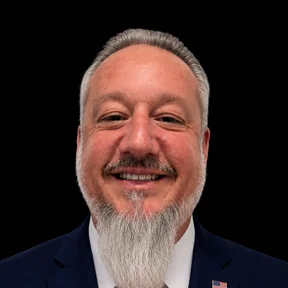
About Victor J. Rosario
Victor J. Rosario is the Residents-First candidate for Miami-Dade County Mayor 2028. A U.S. Coast Guard veteran, entrepreneur, technologist, and artist, Victor brings a track record of building real solutions — from AI tools to campaign policy — that serve Miami-Dade's 2.8 million residents.
Learn More About Victor