
Launches in 2029 Under Victor J. Rosario’s Administration
County-Built. County-Controlled. No Outsiders in Our Signals.
The Artificial Intelligence Traffic Signal Pilot Program – County-Built, County-Controlled is one of Miami-Dade County’s most forward-thinking transportation initiatives. It is set to launch in 2029, after I am sworn in as Mayor of Miami-Dade County.
Our mission is clear: modernize our streets with county-built technology, run entirely by county personnel, with zero third-party data access. The future of traffic control in Miami-Dade will be safe, transparent, and sovereign — owned and operated by the people, not by vendors.
Why This Matters
When other cities deploy so-called “smart” systems, they often rely on third-party vendors and external cloud platforms that siphon local data, drive up costs, and compromise privacy. Under my administration, starting in 2029, Miami-Dade County will chart a different course:
- We will own every line of code, every sensor, and every piece of data.
- We will permanently ban external access or vendor telemetry.
- We will protect resident privacy through design, not promises.
- We will keep every job, every skill, and every dollar inside Miami-Dade County.
This initiative isn’t about outsourcing intelligence — it’s about building it here, together.
County Budget Commitment: $5 Million for Independence
When this program begins in 2029, we will start with an initial $5 million budget dedicated to the Miami-Dade County IT Department. This funding will cover the complete hardware infrastructure, AI system development, and pilot deployment of the traffic signal program.
By investing directly in our IT Department, we eliminate vendor dependency entirely. Every server, processor, and software component will be purchased, configured, and secured by County staff. No private vendor will have administrative privileges, API keys, or remote access.
This ensures that Miami-Dade County remains the sole owner of its traffic network, its technology, and its data — protecting residents while strengthening our internal workforce.
Our motto is simple:
“County-owned for County residents.”
The Pilot: How It Works Starting in 2029
Once I assume office, the pilot program will begin phasing in County-built AI systems that adjust signal timings dynamically to reduce congestion and improve safety — without sending a single byte of personal data outside county servers.
Each intersection will:
- Analyze traffic flow locally through secure edge processors.
- Automatically adapt to changing traffic in real time.
- Prioritize buses, emergency vehicles, and pedestrians.
- Operate without vendor APIs, hidden cloud storage, or data resale.
Our engineers will build, operate, and maintain these systems exclusively under County authority — a model that will become the national benchmark for secure, citizen-centered AI infrastructure.
Privacy & Security Come First
Starting in 2029, Miami-Dade will adopt a Zero-Trust Architecture for all smart signal operations.
- No third-party access under any circumstance.
- Data minimization ensures only non-identifiable operational metrics are stored.
- Edge-based AI ensures that raw data never leaves the intersection.
- Annual County-led cybersecurity tests will guarantee system resilience.
We will achieve intelligent mobility without compromising the privacy of residents or the integrity of our local networks.
Rollout Timeline (Effective 2029–2032)
- Phase 0 (2029 – Preparation): Confirm corridor selections, complete security audits, finalize hardware and software baselines using the County’s $5 million IT infrastructure investment.
- Phase 1 (2029–2030 – Pilot Launch): Activate limited intersections in urban corridors; collect real-time performance data.
- Phase 2 (2030–2031 – Expansion): Integrate additional municipalities and deploy at major arterials.
- Phase 3 (2031–2032 – Countywide Evaluation): Publish a comprehensive report on safety outcomes, traffic flow, emissions, and operational costs.
Each phase will include transparent performance dashboards accessible to residents, so the public can see exactly how their streets are improving.
Open, Auditable, Accountable — The Miami-Dade Way
Our AI will be built on open, verifiable frameworks.
- Reproducible builds will ensure transparency and long-term control.
- No black boxes — the source code will be internally auditable.
- Public performance dashboards will display average delay, travel time reliability, and system uptime across corridors.
- Quarterly public reports will measure success by safety, speed, and sustainability.
The goal is simple: every traffic decision made by AI must be traceable, auditable, and under Miami-Dade control.
Economic and Job Impact
By building the system in-house, Miami-Dade will create hundreds of technical jobs for engineers, electricians, software developers, and maintenance staff. Instead of paying recurring vendor fees, those funds will circulate within our local economy — empowering families, strengthening county operations, and training our future workforce.
In partnership with local colleges, we will launch training programs for County employees to specialize in AI infrastructure, data analysis, and intelligent transportation systems — all based right here in Miami-Dade County.
A Promise to Every Resident
The Artificial Intelligence Traffic Signal Pilot Program will begin once I take office in 2029, marking the start of a new era where Miami-Dade County owns its digital destiny.
This initiative proves that:
- We can achieve world-class mobility without corporate intrusion.
- We can build smarter cities without sacrificing privacy.
- We can train our own people to manage our own future.
When I become Mayor in 2029, this program will be among the first deployed — setting the tone for a countywide transformation that prioritizes local control, transparency, and security.
Initial County Budget: $5 Million (Miami-Dade County IT Department)
Effective Implementation: 2029 (upon Victor J. Rosario’s inauguration as Mayor of Miami-Dade County)
Program: Artificial Intelligence Traffic Signal Pilot Program – County-Built, County-Controlled
Core Principles: Privacy • Transparency • Local Control • Cybersecurity • Jobs for Miami-Dade
Executive Order No. 2028-XX(DRAFT)
Miami-Dade County Office of the Mayor
Artificial Intelligence Traffic Signal Pilot Program – County-Built, County-Controlled; No Vendors or External Access Permitted
WHEREAS, Miami-Dade County seeks to modernize traffic infrastructure by developing artificial-intelligence-driven traffic-signal systems that improve roadway safety, reduce congestion, and promote efficient public transit; and
WHEREAS, third-party and vendor-managed systems have historically introduced cybersecurity vulnerabilities, excessive costs, and potential privacy risks to residents; and
WHEREAS, the County possesses the technical capacity, workforce, and infrastructure necessary to design, build, and operate an independent traffic-signal pilot system without reliance on external data access or vendor cloud dependencies; and
WHEREAS, the future of transportation management in Miami-Dade County must be transparent, auditable, and secure—placing control directly in the hands of County professionals and residents; and
WHEREAS, this Executive Order shall take effect upon the inauguration of Mayor Victor J. Rosario in 2029, marking the beginning of a new era in County-built innovation and infrastructure sovereignty;
NOW, THEREFORE, I, Victor J. Rosario, Mayor of Miami-Dade County, by the authority vested in me under the Miami-Dade County Home Rule Charter and applicable law, do hereby order the following:
Section 1. Purpose.
To establish the Artificial Intelligence Traffic Signal Pilot Program (AITSPP), a County-built, County-controlled traffic-signal modernization initiative designed to optimize roadway performance, prioritize transit and safety, and protect resident privacy through in-house AI systems.
Section 2. Definitions.
a. AI Signal Optimization – Algorithms that dynamically adjust light-cycle timing based on anonymized, non-personal traffic data.
b. County-Controlled – Systems, software, and data owned, administered, and operated exclusively by Miami-Dade County personnel.
c. External Access – Any third-party or non-County entity’s ingress, remote connection, or data collection capability within the AITSPP network.
Section 3. Establishment.
The AITSPP is hereby created under the Department of Transportation and Public Works (DTPW) in collaboration with the Information Technology Department (ITD) and the Office of Innovation. These agencies shall coordinate planning, design, implementation, and maintenance of all County-owned infrastructure supporting the program.
Section 4. Technical Architecture.
a. County Infrastructure: All components, including servers, controllers, and sensors, shall operate on County-owned and County-secured networks.
b. Edge Processing: Each intersection will process data locally to minimize latency and prevent raw data transmission outside County systems.
c. Open Framework: All algorithms and builds will be documented, version-controlled, and auditable.
d. No PII: Personally identifiable information shall never be collected or retained.
Section 5. Data Governance & Privacy.
a. No third-party or vendor shall have access to AITSPP systems, data streams, or logs.
b. Data retained shall be strictly aggregate and operational in nature.
c. All diagnostic video buffers shall auto-purge within seventy-two (72) hours.
d. Transparency reports shall be made public via County dashboard.
Section 6. Cybersecurity.
a. Implement Zero-Trust architecture with multi-factor authentication and hardware-root-of-trust validation.
b. Conduct annual County-commissioned penetration testing and publish summarized findings.
c. Enforce network segmentation separating operational technology from general IT and law-enforcement networks.
Section 7. Procurement & Vendor Restrictions.
a. No vendor-managed cloud systems shall host optimization logic or traffic data.
b. No telemetry shall be transmitted to private companies.
c. County may purchase commodity hardware provided full administrative control and firmware audit rights remain with the County.
Section 8. Pilot Scope & Phasing (2029–2032).
Phase 0 (2029) – Preparation and design.
Phase 1 (2029–2030) – Limited-corridor pilot activation.
Phase 2 (2030–2031) – Expansion across municipalities.
Phase 3 (2031–2032) – Evaluation and countywide readiness report.
Section 9. Performance & Reporting.
Quarterly reports shall measure travel-time reliability, signal delay, transit priority success, emissions reduction, and public-safety metrics. These reports will be published on County platforms for resident review.
Section 10. Interagency Coordination.
DTPW shall coordinate with FDOT, municipalities, emergency services, and transit agencies to ensure system compatibility, while maintaining County data sovereignty and local operational control.
Section 11. Funding.
a. Upon taking office in 2029, the Mayor directs the Office of Management and Budget to allocate an initial budget of $5 million (USD) to the Miami-Dade County Information Technology Department (ITD) for the exclusive purpose of establishing, equipping, and launching the AITSPP.
b. The allocation shall fund complete hardware infrastructure, server installations, AI software development, signal-controller retrofitting, and County cybersecurity architecture required for deployment.
c. All funds shall remain 100 percent County-controlled. No private vendor, contractor, or external cloud provider shall have administrative, network, or data-layer access to any County-owned systems created under this program.
d. Procurement shall be conducted directly by the IT Department, under full internal audit, ensuring every asset is purchased, configured, and secured solely by County personnel.
e. The County Comptroller and ITD shall certify compliance with County-ownership principles, local employment, data sovereignty, and zero-vendor dependency.
f. This funding establishes the foundation of a permanent County-owned traffic-signal intelligence network built for the exclusive benefit of Miami-Dade County residents.
Section 12. Workforce & Training.
ITD and DTPW shall create upskilling programs and partnerships with local colleges to prepare County engineers, technicians, and developers to manage all AI traffic-signal operations internally.
Section 13. Enforcement.
Any attempt to grant or facilitate external access shall be deemed a violation of this Executive Order. Such violations will trigger immediate contract termination, disciplinary action, and potential civil penalties.
Section 14. Severability.
If any provision of this Order is declared invalid, the remainder shall continue in full force and effect.
Section 15. Effective Date.
This Order shall take effect immediately upon my signing following my inauguration as Mayor of Miami-Dade County in 2029.
Signed and Issued by:
Victor J. Rosario Mayor, Miami-Dade County Date: __________________ Future Mayor of Miami-Dade County 2028
Conclusion
The Artificial Intelligence Traffic Signal Pilot Program – County-Built, County-Controlled stands as a cornerstone of Miami-Dade County’s transformation into a secure, efficient, and technologically sovereign government.
This initiative marks a decisive end to vendor dependency and ushers in an era where every byte of data, every traffic controller, and every AI-driven decision remains under County authority — protected, monitored, and audited by County professionals.
By investing directly in our Information Technology Department, allocating an initial $5 million to build the infrastructure ourselves, and employing a zero-vendor-access policy, this program guarantees that the benefits of modernization flow exclusively to the residents of Miami-Dade County.
Our goal is clear:
- Safer streets.
- Smarter mobility.
- Local control.
- Public accountability.
This Executive Order ensures that Miami-Dade County leads the nation in building intelligent infrastructure that belongs entirely to the people — a model for transparent, self-reliant governance.
The County’s traffic future begins not in a vendor’s server room, but in our own data centers, under the hands of our own engineers, for the benefit of every resident who calls Miami-Dade County home.
Victor J. Rosario Candidate for Mayor of Miami-Dade County (2028)
#UnleashingMIamiDadeCounty
#VictorJRosario #MiamiDadeRepublican #RedWave2028 #RepublicanStrong #FreedomFirst #LeadershipWithIntegrity #TeamVictor
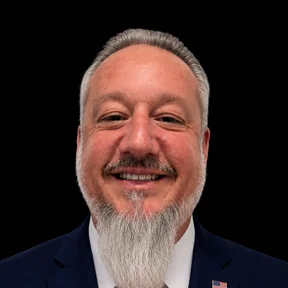
About Victor J. Rosario
Victor J. Rosario is the Residents-First candidate for Miami-Dade County Mayor 2028. A U.S. Coast Guard veteran, entrepreneur, technologist, and artist, Victor brings a track record of building real solutions — from AI tools to campaign policy — that serve Miami-Dade's 2.8 million residents.
Learn More About Victor