By Victor J. Rosario, candidate for Miami-Dade County Mayor · October 15, 2026
The CEO who hasn't fired a single customer
Flock's CEO told a San Francisco tech conference on October 14 that his company has not dropped a single police customer over misuse. That means the only real check on Flock in Miami-Dade is us.
Garrett Langley said it on stage at TechCrunch Disrupt: "Today, we haven't fired any customers." He added that cutting one off is not off the table for something drastic, that Flock would drop a customer that knowingly broke the law, and that it should not pull its product from a community that may need it. TechCrunch reported the exchange (opens in a new tab).
Now put that next to the record. Reporters have documented dozens of officers across the country arrested, fired or forced to resign for abusing Flock's database to search, track and stalk people. Flock has installed more than 100,000 cameras. And a federal judge in Oklahoma recently ruled (opens in a new tab) that a warrantless search of the system was "indiscriminate mass surveillance."
Here is what that means for us. Flock sells to government and leaves the policing of that government to the government. If the vendor will not be the check, the County has to be.
Miami-Dade has a Flock agreement on the books: Resolution R-997-22 (opens in a new tab), adopted October 18, 2022. I went through the County's own file on it. This post lays out what it says, what is missing, and exactly how my administration will end it.
The short version: in the first 24 hours, written notice goes to Flock. Within 30 days, our data is deleted and every search ever run is published. After that, no one brings a surveillance system back quietly. It gets a public hearing and a public vote.
What the Miami-Dade contract actually says
The County's Flock agreement is a one-year, no-cost pilot that went to the Board in 2022 and, as far as public records show, never went back. Here is what the County's own file says.
The Board adopted Resolution R-997-22 (opens in a new tab) on October 18, 2022, at the request of the Miami-Dade Police Department. Commissioner Sally Heyman was the prime sponsor and Commissioner Javier Souto a co-sponsor. The accompanying memo came from the Mayor's office.
It approved two agreements:
- A Government Agency Study Customer Agreement with Flock Group, Inc. The Police Department would receive 25 solar-powered, movable license plate readers, installed at no cost, for one year from the date all parties signed.
- An Interagency Agreement with the Panama City Beach Police Department. That Panhandle agency was Flock's partner for retrieving plate data. The agreement let MDPD search, view and archive Flock's data.
What the Panama City Beach agreement is. It is not a statewide Florida program. It is a one-off agreement between Miami-Dade County and a city police department in the Panhandle, approved in the same resolution as the Flock pilot. The County's memo describes that department as the criminal justice agency partnering with Flock to retrieve and use Flock's plate data, and says the pilot gave MDPD the ability to view and search plate data archived on Flock's platform. This agreement is how the County got that access. The memo does not say why Panama City Beach was chosen, and the agreement's text is one of the exhibits I am asking for.
The same arrangement appears to exist elsewhere in Florida. An advocacy group, DeFlock Broward (opens in a new tab), says Davie's police department signed a similar agreement with Panama City Beach to receive plate-reader files sourced from the Florida Department of Law Enforcement through Flock, and that the arrangement is not unique to Davie. I could not confirm how widespread it is, or that Miami-Dade's version works the same way.
Panama City Beach has since left Flock. On September 1, its police chief announced (opens in a new tab) that the department's access to and use of the Flock system had ended, and the Bay County Sheriff's Office suspended its own use the same day. That does not close the file for us. The County still has to confirm in writing that the agreement is over and make sure no Miami-Dade data is left on the other side.
The County's memo made four promises along the way:
- A results report. Flock would supply a department-specific report on the pilot's effect on crime, arrests and clearance rates, and MDPD would analyze the data and report its recommendations to the department's director.
- A competitive bid. If the County wanted to keep using the technology, it would run a request for proposals. If Flock won, it would charge $2,500 per unit per year.
- An exit for our data. If the County walked away after the pilot, Flock would move the County's data to another system at no cost.
- A named monitor. A major in MDPD's Professional Compliance Bureau would track both agreements.
Do the math on that price: 25 units at $2,500 is $62,500 a year, and the seven readers a public inventory later listed would run $17,500. This was never about the money. It is about what the County agreed to, and who was watching.
What happened next. The Miami Independent, which reviewed the County's follow-up records, reported (opens in a new tab) that a May 2023 mayoral memo on pilot programs showed the Flock rollout had not yet started, seven months after approval. A public inventory, the Atlas of Surveillance (opens in a new tab), listed seven Flock readers operating under the Sheriff's Office as of September 2025.
I found no public record of the promised report, of an extension of the pilot, or of the competitive bid. I want to be careful here: not finding a record is not proof none exists. It is the reason my first step is a full records pull and a request that the County's Inspector General review the file.
What I could not read. The signed agreements themselves, Exhibits A and B to the resolution, did not come through in the copy of the file I could reach. Those exhibits decide the questions that matter most: how long Flock keeps our data, who else can use it, what notice we have to give, and how we get out. My administration will publish them in full.
Who holds the contract. Since January 7, 2025, the Sheriff's Office has been an independent constitutional office, and the County's transition legislation appears to have moved the old Police Department's contracts and assets to it. Which government is the contracting party today is the first question I will put to the County Attorney.
Why this is not a close call
Flock's cameras are a searchable history of where residents drive, and any searchable history gets abused. Five problems follow from that, and the County's own paperwork touches every one of them.
1. Insiders abuse it. TechCrunch counts dozens of officers (opens in a new tab) arrested, fired or forced to resign for using Flock to search, track and stalk people without a warrant or permission. In Florida, WLRN reported (opens in a new tab) that a Monroe County deputy was arrested this year for allegedly tracking a woman's car through a plate database. That is an allegation in a pending case, not a finding. The pattern is the point: one person with a login can follow another person's car.
2. The data travels. The pilot gave MDPD access through a police department in Panama City Beach, and Flock's system lets agencies search cameras outside their own jurisdictions, in some cases across the country. Flock says it has no direct contract with ICE. TechCrunch reports that ICE has nonetheless reached Flock data by working through local police departments.
The Miami Independent, citing reporting by Suncoast Searchlight, says Miami-Dade ran fewer than a dozen immigration-related Flock searches during a statewide enforcement operation. I cannot verify that count. It is one of the reasons my order demands every search log, by agency and by stated reason.
3. The courts are catching up. In the Oklahoma ruling, Judge Sara Hill found that a deputy needed a warrant to search Flock's database for a woman's plate, and she suppressed everything the search turned up. The ruling does not bind Florida courts. But a tool that can get evidence thrown out is not only a privacy problem. It is a public safety problem.
4. It misreads and it leaks. TechCrunch reports that camera errors have led to dozens of police stops and wrongful arrests, including a journalist driving a review vehicle, and that cameras have been left exposed on the open internet. A mistake in this system does not stay on a screen. It ends with a deputy walking up to a car.
5. Nobody in Miami-Dade was watching. The 2022 memo assigned monitoring to an officer inside the department that was using the cameras. It did not name the Inspector General, a civilian board or an outside auditor. The report the memo promised cannot be found. That is not a scandal I am alleging. It is a gap, and it is exactly the kind of gap that lets a free trial turn into permanent infrastructure.
This is not left versus right. Governor DeSantis warned that Florida could become a "digital prison," and the Department of Transportation cited misuse and data privacy concerns when it revoked local permits (opens in a new tab) for plate readers on state roads on August 31. Texas Governor Greg Abbott blocked state agencies from spending money on Flock's networks. Byron Donalds called for a full pause on Flock contracts, David Jolly wants a warrant requirement, and Senator Bernie Sanders has introduced a bill to bar federal agencies from using the technology.
Flock itself is feeling it. The company is cutting about 18 percent of its workforce, roughly 270 people, through a voluntary buyout, and the Los Angeles Police Department has let its contract expire. A company that has never fired a customer is now losing them.
How my administration will cancel it
On my first day I will sign an executive order that ends the County's Flock agreements, locks down our data and opens the books. I have drafted it in full. Here is what it does, in order.
- Within 24 hours: notice goes out. The County Attorney delivers written notice of termination of both the Flock agreement and the Panama City Beach data-sharing agreement, exactly as each contract requires. If an agreement has already expired, the County confirms the date in writing, refuses any continuation and demands that Flock remove its hardware. I have said I will cancel underperforming vendor contracts in my first 24 hours, and this is the first one on the list. If Flock objects, that is a matter for the County Attorney, not for residents.
- Within 7 days: lock it down. Every Flock record is put on hold, because search logs, user lists and sharing settings are public records and may be evidence. Every outside login and cross-agency lookup tied to a County account is revoked. A written request goes to the Sheriff, and I publish the answer.
- Within 30 days: delete and disclose. Flock exports a full copy of our data and audit logs, then deletes everything it holds from our cameras, including through its partner agency, and an officer of the company certifies it in writing. The County publishes every device and its location, every user and outside agency with access, every search by agency and stated reason, every payment, and both agreements with all exhibits. I ask the Inspector General to review how the pilot was monitored, where the report went, and whether any camera ran past the pilot term.
- Within 60 days: a public review of what is left. I convene the Sheriff, municipal police chiefs, prosecutors and privacy advocates in public to work out how we recover stolen vehicles and run AMBER alerts and missing-person searches without keeping a searchable history of where residents drive.
What I can do, and what I cannot. The Sheriff is an independent, elected constitutional officer. I cannot order the Sheriff to do anything, and I will not pretend otherwise. What I control is every County department, every County contract, and every County pole, signal and right-of-way. I can end any agreement the County holds, and I can refuse to host surveillance cameras on County property without a public vote.
For the Sheriff's Office, I have two tools. The first is a written request, answered in public. The second is the budget. I will recommend a rider that conditions any funding increase for the Sheriff's Office on removing surveillance technology, such as license plate readers, from patrol vehicles. The Board of County Commissioners adopts the budget, so that takes votes. Two commissioners, Danielle Cohen Higgins and René García, publicly backed the state's action (opens in a new tab) this September. That is a place to start.
Why not let the pause stand? After the state acted, Sheriff Rosie Cordero-Stutz suspended the Sheriff's Office program (opens in a new tab) on September 1. I credit that. But a pause is not a cancellation, for four reasons:
- The state's order covers state roads. It does not reach (opens in a new tab) cameras on private property or other city roads.
- The Governor has asked the Legislature to act, and the next governor is likely to inherit that fight.
- Miami Beach's mayor has vowed to bring legislation to take back control of local roads from the state.
- A pause can be reversed with a phone call. A terminated contract, deleted data and a rule requiring a public vote cannot.
The Integrity and Enforcement Bureau I am proposing would carry this work past my term. It would report to the Mayor's office and to residents, and it would have standing authority to audit surveillance contracts in County government and the Sheriff's Office, so that a free trial can never again turn into permanent infrastructure unnoticed.
Keeping people safe without a standing surveillance network
Ending Flock does not end investigations. It means going back to targeted tools, used under rules the public can read and enforce.
I am not going to pretend license plate readers have never helped. Police and sheriffs across Florida say they have found stolen cars and missing people. The question is not whether a camera ever helps. It is whether a permanent, searchable record of everyone's movements is the price, and who is checking the people who can search it.
So my order does not stop at one vendor. It sets a standard that applies to every department under my authority, whoever sells the equipment. No license plate reader, facial recognition system, people-search tool or networked camera gets acquired or used unless all of these are met:
- A public hearing first, with notice to residents.
- A vote of the Board by resolution, not a pilot that quietly continues.
- A competitive bid, so no vendor gets in through a free trial.
- A written use policy and an outside monitor, someone who does not work for the department using the tool.
- A search log recording every user and the reason for every search, reviewed every quarter.
- Short retention. Data on vehicles that were not part of a case is deleted within 30 days.
- No sharing with federal or out-of-state agencies without a judicial warrant or court order.
- A 12-month sunset, with a published results report before anything is renewed.
That list is also the answer to "just buy from someone else." Swapping vendors is not reform. Miami Beach's cameras, for example, come from Motorola Solutions and Axon (opens in a new tab), not Flock, and TechCrunch reports that some communities that dropped Flock moved straight to rival companies. The rules matter more than the logo on the pole.
The hardest cases are the urgent ones: an abducted child, a missing senior, a stolen car with someone inside. Those are the cases where a judge can sign a warrant in minutes, where a narrow, time-limited search makes sense, and where a public policy can say exactly when and how, with a review afterward. That is what the 60-day public review is for. I would rather write those rules in the open with the Sheriff, police chiefs and prosecutors at the table than inherit them from a vendor's default settings.
Oversight has to outlast any one mayor. The Integrity and Enforcement Bureau would give residents a standing office that audits surveillance contracts, publishes what it finds, and does not answer to the department it is auditing.
What supporters say, and where the evidence stands
The case for keeping the cameras is a serious one, and it deserves a fair hearing. Here is how its defenders make it.
- Crime-fighting. Sheriff Cordero-Stutz said the readers helped deputies apprehend murderers and robbers and protect children from abduction and find missing people. She argued that "Public safety and constitutional rights are not competing values," (opens in a new tab) and that Miami-Dade has shown it can protect both.
- Oversight, not a ban. Miami Beach Mayor Steven Meiner called the state's action a hit to public safety. He and six other mayors asked the state to pause enforcement and let local police keep using the cameras under tougher state oversight.
- The company's numbers. Flock says its systems played a role in about 1 million police cases in 2025. At Disrupt, Langley described a stolen car with a baby inside that police found quickly with Flock's help.
- Reforms already made. Flock has put new limits on how its data can be shared and stored after cities walked away, and Langley has apologized to women who were stalked by officers using the system.
Those points are not nothing, and some of them are probably true. Here is where I think they run out.
The numbers come from the vendor and its customers. A count of cases where Flock "played a role" is a sales statistic. It does not say how many of those cases needed a permanent, searchable record of everyone's movements, or how many would have closed anyway.
Miami-Dade cannot show its own results. The 2022 pilot was supposed to produce a report on crime, arrests and clearance. I cannot find it. I am not telling you the cameras did not work. I am telling you the County cannot show that they did, which is the standard any other vendor would have to meet.
"Oversight" is only as good as the overseers. Mayor Meiner's call for real oversight is a fair alternative to a ban, and my own standard for County departments is built on the same idea. Where I differ is on trust. A pilot that ran with a department-internal monitor, no published report and no bid is the County's own record of how oversight works when it is promised later.
A reform that depends on the vendor's goodwill is not a safeguard. By Langley's own account on stage, Flock has not cut off a single customer over misuse, so the cost of misuse has fallen on the people being searched.
Where reasonable people can still disagree. The Sheriff is an elected officer, chosen by voters to run law enforcement, and whether her office uses license plate readers is her decision under state law. Governors, legislators and voters of both parties are still sorting out where the line belongs. On the narrow question of County government, I think the public should decide through a hearing and a Board vote, not through a pilot that turned permanent. If the Board votes yes in public, under rules like the ones above, that is a legitimate outcome. What I will not accept is the status quo, where nobody voted for the current arrangement and nobody can show it works.
What I am asking you to do
My commitment is simple: Miami-Dade's government will not run a surveillance system on a free trial that nobody reviews. On my first day, the Flock agreements get terminated or confirmed expired, our data gets deleted, and the County publishes what it finds.
You do not have to wait for an election to start the paper trail. Florida's public records law, Chapter 119, lets any resident ask for these documents today:
- The signed Flock agreement and its exhibits under Resolution R-997-22, including Exhibit A and Exhibit B.
- The report on the pilot's effect on crime, arrests and clearance that the County's 2022 memo promised, or a statement that none exists.
- Any extension, amendment, invoice or competitive solicitation connected to Flock since October 2022.
- Search and audit logs for County-accessible Flock cameras, with totals by agency and by stated reason.
If you get answers, send them to the campaign. If you get silence, send that too. Both tell us something.
Flock's CEO says his company has not fired a single customer. Miami-Dade residents are not Flock's customers. We are the people being photographed. My administration will act like it.
Proposed Executive Order: Ending the Flock Safety Contract
Status, authority and findings
PROPOSED, NOT IN EFFECT. This is a campaign policy draft of an order to be signed on the first day of a Rosario administration. It has no legal force unless signed by a sitting County Mayor.
Authority. The County Mayor manages the County's administrative departments under Home Rule Charter §2.02 and issues administrative orders under §5.02. County procedure treats Administrative Orders as Mayor-approved and reported to the Board, and Implementing Orders as needing Board ratification, so counsel should confirm which vehicle carries this order (County procedure 100 (opens in a new tab)). Resolution R-997-22, Sections 2 and 4, separately lets the County Mayor or a designee exercise the termination provisions of both Flock agreements.
Limit. The Sheriff's Office has been an independent constitutional office since January 7, 2025 (FY 2025-26 budget (opens in a new tab)). This order binds County departments, County contracts and County property. It does not direct the Sheriff; Section 3 uses the levers the Mayor does have.
WHEREAS, on October 18, 2022, the Board of County Commissioners adopted Resolution R-997-22 (opens in a new tab), approving a one-year, no-cost pilot of 25 solar-powered Flock license plate readers for the Miami-Dade Police Department, and an interagency agreement giving MDPD search access to Flock's plate data through the Panama City Beach Police Department;
WHEREAS, the County's memorandum for that resolution promised a report on the pilot's effect on crime, arrests and clearance, a competitive solicitation before any continued use, and transfer of County data at no cost if the County ended the relationship;
WHEREAS, no public record has been located of that report, of an extension of the pilot, or of a competitive solicitation, and a public inventory listed seven Flock readers (opens in a new tab) still operating under the Sheriff's Office as of September 2025;
WHEREAS, Flock's CEO said publicly on October 14, 2026 that Flock has not terminated any police customer over misuse, while news organizations have documented dozens of officers (opens in a new tab) arrested, fired or forced to resign for abusing access to Flock's database;
WHEREAS, the Florida Department of Transportation revoked all local permits for license plate readers on state roads on August 31, 2026, the Sheriff suspended the Sheriff's Office program on September 1, 2026, and neither step makes the suspension permanent or reaches private property and non-state roads;
WHEREAS, the Panama City Beach Police Department, the other party to the interagency agreement, announced on September 1, 2026 that its access to and use of the Flock system had ended, and the Bay County Sheriff's Office suspended its own use the same day, which leaves the County to confirm the agreement's end and the deletion of County-origin data held on the other side;
WHEREAS, a federal district judge in Oklahoma ruled, in a decision reported October 3, 2026, that a warrantless search of Flock's database violated the Fourth Amendment, a ruling that does not bind other courts but shows the legal exposure;
NOW, THEREFORE, I, Victor J. Rosario, County Mayor of Miami-Dade County, order as follows:
Section 1. Terminate the Flock agreements
1.1 Notice within 24 hours. Within 24 hours of this order, the County Attorney, with Strategic Procurement, shall deliver written notice of termination of (a) the Government Agency Study Customer Agreement with Flock Group, Inc. approved by R-997-22, and (b) the Interagency Agreement with the Panama City Beach Police Department, in the manner each agreement requires. The County Mayor's termination authority under R-997-22, Sections 2 and 4, is delegated to the County Attorney for this purpose.
1.2 If an agreement has already expired, the County Attorney shall instead confirm the expiration date in writing, state that the County does not consent to any continuation, and demand removal of all Flock hardware from County property and from rights-of-way within the County's authority.
1.3 No fees without review. No County department shall pay Flock any early-termination, renewal, reactivation or data fee without the written approval of the County Mayor. The County Attorney shall handle any dispute with Flock over these terms.
1.4 No renewal, replacement or workaround. No department under the Mayor's authority shall buy, lease, renew, or accept as a gift or pilot any Flock product (including license plate readers, people-search or data-broker tools, drones and audio sensors) or any substitute license plate reader network, except through the process in Section 3.
1.5 County property. No County-owned pole, traffic signal, building or right-of-way under the Mayor's authority may carry surveillance cameras without approval under Section 3. Flock equipment now on that property shall be disabled immediately and removed within 30 days.
Section 2. Protect and account for County data
2.1 Preserve first. Before any deletion, the County Attorney shall place a hold on all County-origin Flock records: search and audit logs, user lists, sharing settings, hot-list entries, invoices and correspondence. These are public records and may be evidence.
2.2 Export, then delete. Within 30 days, the County shall require Flock to export a complete copy of County-origin data and audit logs to the County, then delete all County-origin data held by Flock and by any partner agency under the Panama City Beach agreement, including any derived or aggregated data the agreements allow the County to demand deleted. An officer of Flock shall certify the deletion in writing.
2.3 Cut outside access. On the day notice is given, all access credentials, sharing links and national or cross-agency lookup settings tied to County accounts shall be revoked.
2.4 Full accounting in 30 days. The Communications, Information and Technology Department and the County Attorney shall deliver to the Mayor, and publish, a report listing:
- every Flock device, by location and installation date;
- every user and every outside agency with access;
- total searches, by agency and by stated reason, including any run for federal immigration enforcement;
- retention periods and any data-sharing settings in force;
- every payment made to Flock or its resellers.
2.5 Independent review. The Mayor shall ask the County's Inspector General in writing to review how the pilot was monitored, why the promised report is missing, and whether any cameras ran after the pilot term ended.
2.6 Publish. Both agreements, every exhibit, and the 2.4 report shall be posted on a public County website within 30 days.
Section 3. Keep residents safe without a standing surveillance network
3.1 Sheriff's Office. Because the Sheriff is an independent constitutional officer, the Mayor shall send the Sheriff a written request within 7 days asking the Office to confirm every Flock device, agreement and data store it holds, to end any Flock agreement it holds, to have Flock delete the data, and to keep its program suspended. The Mayor shall publish the response.
3.2 Budget condition. The Mayor's proposed budget shall recommend a rider conditioning any funding increase for the Sheriff's Office on removing surveillance technology, such as license plate readers, from patrol vehicles. This is a recommendation to the Board, which adopts the budget.
3.3 Public review of alternatives. Within 60 days, the Mayor shall convene a public review with the Sheriff, municipal police chiefs, prosecutors and privacy advocates on how stolen vehicles are recovered and how AMBER and Silver alerts and missing-person searches are run without a searchable history of residents' movements. Findings shall be published.
3.4 Standard for any future surveillance technology. No department under the Mayor's authority may acquire or use license plate readers, facial recognition, people-search tools or networked cameras unless all of the following are met:
- public notice and a public hearing;
- approval by Board resolution;
- competitive procurement;
- a written use policy with a named monitor outside the using department;
- a search log recording every user and stated reason, reviewed quarterly;
- deletion of non-hit data within 30 days;
- no sharing with federal or out-of-state agencies without a judicial warrant or court order;
- a 12-month sunset, with a published results report before any renewal.
Section 4. Deadlines and general provisions
4.1 Deadlines.
- Within 24 hours: termination or expiration notices delivered (1.1, 1.2). Owner: County Attorney.
- Within 7 days: preservation hold in place (2.1); written request sent to the Sheriff (3.1); Flock's written response filed. Owners: County Attorney and Mayor.
- Within 30 days: data exported and deletion certified (2.2); accounting delivered (2.4); Inspector General request sent (2.5); documents posted (2.6); equipment removed from County property (1.5). Owners: Communications, Information and Technology Department and County Attorney.
- Within 60 days: public review of alternatives convened (3.3). Owner: Mayor.
4.2 Scope. This order does not direct the Sheriff, the courts, other constitutional officers or the 34 municipalities. It is subject to applicable law and to the rights of third parties under existing agreements.
4.3 No new rights. This order creates no right or benefit enforceable against the County by any party.
4.4 Severability. If any provision is held invalid, the rest remains in effect.
4.5 Effective date. This order takes effect on signature.
Signed: ______________________ Victor J. Rosario, County Mayor
Date: ______________________
LEGISLATIVE PACKAGE: ENDING THE FLOCK SAFETY CONTRACT AND SETTING A STANDARD FOR SURVEILLANCE TECHNOLOGY
Submitted by: Victor J. Rosario, County Mayor
Legislative status: Draft. Requires County Attorney review, a fiscal analysis, a Commissioner sponsor, and Board processing before submission.
I. PURPOSE
This package asks the Board of County Commissioners to support, in the first 24 hours of the administration, the end of the County's Flock Safety agreements, and to put into County law the standard in Section 3.4 of the Executive Order, so that no future administration can quietly bring a surveillance network back.
II. ITEM SUMMARY
The package has three parts: (1) a resolution confirming the termination of the Flock agreements approved by R-997-22 and directing the County's data to be preserved, exported and deleted; (2) an ordinance requiring public notice, a hearing, Board approval and competitive procurement before the County acquires license plate readers, facial recognition, people-search tools or networked cameras; and (3) a budget recommendation to condition any funding increase for the Sheriff's Office on removing surveillance technology such as license plate readers from patrol vehicles.
III. EXECUTIVE SUMMARY
In October 2022 the Board approved Resolution R-997-22, a one-year, no-cost pilot of 25 Flock license plate readers and an interagency agreement through the Panama City Beach Police Department. The County's memorandum promised a report on crime, arrests and clearance, a competitive solicitation before continued use, and free transfer of County data. No public record of that report, an extension or a solicitation has been located. R-997-22, Sections 2 and 4, lets the County Mayor or a designee exercise the termination provisions of both agreements. The Executive Order uses that authority. The Board's role is to confirm the result and make the safeguards permanent.
IV. POLICY OBJECTIVES
- End the Flock agreements and any renewal, replacement or workaround.
- Preserve County records first, then export and delete County-origin data, with written certification from a Flock officer.
- Publish both agreements, every exhibit, and a full accounting of devices, users, searches and payments.
- Ask the Inspector General to review how the pilot was monitored.
- Require public notice, a hearing, Board approval, competitive procurement and a sunset for any future surveillance technology.
V. HOW THE INITIATIVE WORKS
- Day 1: the County Attorney delivers termination notices, or confirms expiration if an agreement has expired. Outside access credentials are revoked.
- Within 7 days: preservation hold in place; written request sent to the Sheriff.
- Within 30 days: data exported and deletion certified; accounting delivered and published; equipment removed from County property.
- Within 60 days: public review of alternatives, including how stolen vehicles are recovered and how AMBER and Silver alerts are run without a searchable history of residents' movements.
VI. RESIDENT IMPACT
Residents' movements would no longer be recorded in a searchable database the public cannot audit. The County would publish who searched, how often and for what stated reason. Future technology would need a public hearing and Board vote first.
VII. LIMITS ON THE COUNTY'S AUTHORITY
The Sheriff's Office has been an independent constitutional office since January 7, 2025. This package does not direct the Sheriff, the courts, other constitutional officers or the 34 municipalities. It binds County departments, County contracts and County property, and asks the Sheriff by written request to confirm, end and delete. Any state statute restricting Flock cameras would take precedence.
VIII. DEPARTMENTAL RESPONSIBILITIES
- County Attorney: termination or expiration notices, preservation hold, dispute handling, deletion certification.
- Strategic Procurement: support the notices; enforce no renewal, replacement or workaround.
- Communications, Information and Technology Department: export, accounting, access revocation, equipment removal.
- Inspector General: independent review requested by the Mayor.
- Office of the Mayor: Sheriff request, published response, public review of alternatives.
IX. FISCAL AND OPERATIONAL ANALYSIS
R-997-22 described the pilot as no-cost. Whether any early-termination, renewal, reactivation or data fee exists is unconfirmed because the signed agreements and exhibits have not been retrieved. The Executive Order bars any such payment without the Mayor's written approval. A fiscal impact statement from the Office of Management and Budget is required before submission.
X. IMPLEMENTATION TIMELINE
| When | Action |
|---|---|
| Within 24 hours | Termination or expiration notices; credentials revoked |
| Within 7 days | Preservation hold; Sheriff request; Flock response filed |
| Within 30 days | Export and certified deletion; accounting; Inspector General request; documents posted; equipment removed |
| Within 60 days | Public review of alternatives convened |
XI. PROPOSED BOARD RESOLUTION
RESOLUTION NO. ________
MIAMI-DADE COUNTY BOARD OF COUNTY COMMISSIONERS
WHEREAS, on October 18, 2022, the Board adopted Resolution R-997-22, approving a one-year, no-cost pilot of 25 Flock license plate readers and an interagency agreement with the Panama City Beach Police Department; and
WHEREAS, no public record has been located of the report on the pilot's effect on crime, arrests and clearance, of an extension of the pilot, or of a competitive solicitation; and
WHEREAS, the County Mayor, under Sections 2 and 4 of R-997-22, has delivered notice of termination of both agreements, or confirmed their expiration; and
WHEREAS, the Board finds that public notice, a hearing, competitive procurement and ongoing oversight should precede any future surveillance technology;
NOW, THEREFORE, BE IT RESOLVED BY THE BOARD OF COUNTY COMMISSIONERS OF MIAMI-DADE COUNTY, FLORIDA:
Section 1. The Board acknowledges the termination or expiration of the Flock agreements approved by R-997-22.
Section 2. The Board directs the County Attorney to preserve all County-origin Flock records, to require export and certified deletion of County-origin data within 30 days, and to report to the Board.
Section 3. The Board directs the Administration to publish both agreements, every exhibit, and the accounting described in Section 2.4 of the Executive Order within 30 days.
Section 4. The Board directs the County Attorney to prepare an ordinance setting the standard in Section 3.4 of the Executive Order for any County acquisition or use of license plate readers, facial recognition, people-search tools or networked cameras: public notice and hearing; Board approval; competitive procurement; a written use policy with an outside monitor; a search log reviewed quarterly; deletion of non-hit data within 30 days; no sharing with federal or out-of-state agencies without a judicial warrant or court order; and a 12-month sunset.
Section 5. This Resolution takes effect immediately upon adoption.
XII. FINAL POLICY STATEMENT
The County will not run a standing surveillance network on a promise that was never reported on. Any such tool must earn its place in public, by vote, with a search log and an end date.
Sources
- Resolution R-997-22, Legistar file 222115 (opens in a new tab) (County memo and resolution) and the Clerk's official copy (opens in a new tab)
- FY 2025-26 Sheriff's Office budget narrative (opens in a new tab)
- TechCrunch, Flock CEO: We haven't 'fired' any police departments as customers, Oct. 14, 2026 (opens in a new tab)
- TechCrunch, Federal judge calls Flock 'indiscriminate mass surveillance,' Oct. 3, 2026 (opens in a new tab)
- TechCrunch, Flock cuts staff as privacy backlash grows, Oct. 9, 2026 (opens in a new tab)
- Bloomberg via Claims Journal, Florida bans Flock cameras from state roads, Sept. 3, 2026 (opens in a new tab)
- Axios Miami, Miami-Dade mayors challenge Florida Flock camera ban, Sept. 2, 2026 (opens in a new tab)
- NBC Miami, Miami-Dade begins taking license plate reader cameras offline, Sept. 2026 (opens in a new tab)
- WLRN, 'Block Flock' enters Florida's governor's race, Aug. 3, 2026 (opens in a new tab)
- Miami Independent, Flock Surveillance Cameras in Miami-Dade County, July 6, 2026 (opens in a new tab) (a single outlet; its claims are attributed in the text)
- Atlas of Surveillance, Miami-Dade Sheriff's Office license plate readers (opens in a new tab) (listing, not opened in full)
- News Tribune, Florida Department of Transportation blocks Flock, Sept. 2, 2026 (opens in a new tab) (search excerpt, not opened in full)
- DeFlock Broward, Davie Police Department page (opens in a new tab) (advocacy site; excerpt only, not opened in full)
- Yahoo/News Herald, Bay County law enforcement agencies cut ties with Flock, Sept. 2026 (opens in a new tab) (search excerpt, not opened in full)
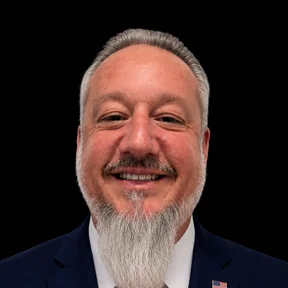
About Victor J. Rosario
Victor J. Rosario is the Residents-First candidate for Miami-Dade County Mayor 2028. A U.S. Coast Guard veteran, entrepreneur, technologist, and artist, Victor brings a track record of building real solutions — from AI tools to campaign policy — that serve Miami-Dade's 2.8 million residents.
Learn More About Victor