By Victor J. Rosario, candidate for Miami-Dade County Mayor · October 15, 2026
Who put that on our traffic light?
I have seen equipment on Miami-Dade's traffic signals that nobody has been able to explain to me, and I do not think the County can explain it either.
Here is what I have personally seen, in more than one part of the county. Trailers carrying license plate readers. Crews working at signal intersections out of unmarked vehicles, alongside County crews doing ordinary maintenance. Solar panels at intersections that appear to feed their own separate battery, apart from the signal's power. And more rectangular and square white antennas, in more places, than there were a few years ago.
I am not going to tell you who put them there, because I do not know. Some of it may be County equipment. Some may belong to a city police department. Some may belong to a telecom company with a permit. Some may be something else. That is the problem. You cannot tell, I cannot tell, and I could not find a public inventory that would let either of us find out.
Miami-Dade's roads and signals belong to the people who pay for them. Every device bolted to them should have an owner, a permit and a stated purpose that any resident can look up.
So on my first day in office I will sign an order that does five things. It freezes new installations of data-collecting equipment on County roads. It locks down who can open our signal cabinets. It opens a public channel for you to report what you see. It starts a countywide investigation of what is already up there. And it bans the collection or sale of your data without your consent. Anything private with no permit comes down. Anything permitted gets checked.
This post covers what I have seen, what the record shows, what the County can and cannot legally do, and where I could be wrong.
What belongs on a traffic signal, and what you cannot tell
Some of what you see at an intersection is supposed to be there, and that is exactly why the unexplained equipment is hard to spot. Let me start with what is legitimate.
The County's Department of Transportation and Public Works operates and maintains nearly 3,000 traffic signals (opens in a new tab) from a central Traffic Management Center. The County has been upgrading them for years. It approved a $150 million contract with Siemens Mobility (opens in a new tab) in May 2020 to upgrade the remaining signals after an earlier round with Econolite. The new system is built to support two-way communication between vehicles and signals.
That means antennas, sensors and cameras are part of the plan. Regional transportation planning documents describe connected-vehicle roadside equipment (opens in a new tab) at signals that sends timing information to cars. Earlier reporting said the County and the state had installed 400 cameras (opens in a new tab) feeding the control center, with 500 more planned. Those upgrades have had real results: the County reported average time savings of about 11 percent in the morning and 13 percent in the afternoon peak on the first 347 signals.
Cities and agencies add their own equipment too. Doral reported years ago that it had at least 99 plate readers (opens in a new tab) at its intersections and plans for more. Miami Gardens approved $2.4 million (opens in a new tab) for readers at 24 intersections. The Miami Herald, citing a regional open-source map, counts about 550 plate readers in Miami-Dade and about 2,400 across South Florida.
Mobile and solar-powered units are not exotic either. The County's own 2022 memo for the Flock pilot described 25 solar-powered readers that could be moved around the county. A village policing unit under contract with the Miami-Dade Police Department bought two mobile reader kits (opens in a new tab) in 2017. Florida agencies seeking state money for readers have asked for trailers; St. Johns County, for example, wanted nine, to deploy "to various checkpoints or areas within the county as intelligence dictates." (opens in a new tab)
So a trailer, a solar panel or a white antenna does not prove anything by itself. Here is what does matter. A resident standing at a corner cannot tell whether that box is the County's, a city's, a phone company's, a sheriff's, or somebody else's, whether it has a permit, or what it records. The Herald reported that several Miami-Dade agencies had not shared detailed counts or costs of their readers. As the Electronic Frontier Foundation's Rindala Alajaji put it to the paper: "Most license plate readers in Florida are actually not on state roads to begin with." (opens in a new tab)
A public inventory, with a label on every device, would fix that. It does not exist yet. I will build it.
What the record shows about hidden equipment and data sales
Two things are documented elsewhere in the country. Neither has been shown in Miami-Dade, and I want to be precise about that.
Hidden federal plate readers. An Associated Press investigation in late 2025 reported that U.S. Border Patrol runs a network of plate readers that feeds a program flagging drivers with "suspicious" travel patterns. According to the AP's reporting as carried by PBS NewsHour (opens in a new tab), many of the readers are disguised in traffic drums and barrels. The agency has also drawn on plate data from the Drug Enforcement Administration, private companies and local law enforcement programs funded through federal grants. Its parent agency, Customs and Border Protection, says it uses plate readers to identify threats and disrupt criminal networks, and that it is legally allowed to operate anywhere in the United States.
The details come from the border states. The Arizona Mirror (opens in a new tab) reported readers hidden in orange cones, yellow barrels, speed-trap signs and behind overhead highway signs, and found that the Arizona Department of Transportation had asked CBP to stop using orange cones because they are a hallmark of construction zones and could confuse drivers. In California, advocacy groups identified about 40 hidden readers (opens in a new tab) in San Diego and Imperial counties, more than two dozen of them inside construction barrels. A resident there found dozens more after he noticed what looked like an abandoned trailer (opens in a new tab).
What I did not find. I did not find any public record of covert federal readers in Miami-Dade. The documented cases are along the border. I am raising them for one reason: in those states, the public learned about hidden equipment from investigators and permit records, not from the agencies. That is why my order asks the question instead of assuming the answer.
Data from public roads becomes a product. In early September, the sheriff of Racine County, Wisconsin, ordered every Flock camera in his county taken down after learning, he said, that the company builds a separate data set from his cameras' images, keeps it for up to five years and markets it (opens in a new tab) to other government and private customers through a product called Traffic Analytics. "This is not what we agreed to," he said. A sheriff's spokesman said Flock's position is that once data is stripped of anything identifiable, it belongs to the company. Flock's website says it does not sell customer data, and the company had not responded to a request for comment from the Milwaukee Journal Sentinel when the story ran.
The contracts matter here. A Wisconsin city's agreement gives Flock a perpetual right to use and distribute anonymized camera data for its other products, and the newspaper reports that an audit of the Los Angeles Police Department's Flock contracts found nearly identical terms. In another Wisconsin city, a Flock sales representative offered to sell the city five years of traffic volume and speed data that its own cameras were already collecting.
I do not know what the terms are for any equipment on Miami-Dade's roads. That is the point. The County has to read every agreement and tell you.
Who controls the intersections, and what the County can legally do
Four governments touch an intersection in Miami-Dade, and the County does not control all of them. I will tell you where my authority ends, because a promise I cannot keep is worth nothing.
The County. The Department of Transportation and Public Works operates nearly 3,000 County signals. Under Ordinance 21-99, adopted in October 2021, the department has exclusive permitting jurisdiction (opens in a new tab) over work on County-owned or maintained rights-of-way, including those inside municipalities. The County Code and its public works manual already say what equipment may be installed in the right-of-way, and a 2022 ordinance on equipment and signs in the right-of-way shows the County regulates it. The Mayor runs the departments that issue those permits and operate the signals, under the Home Rule Charter. So the County can freeze new permits, audit the old ones, control who opens its cabinets and poles, set the conditions for its power and its poles, and remove what has no permit.
The state. The Florida Department of Transportation controls state roads. It revoked every local permit (opens in a new tab) for plate readers on state roads on August 31, 2026, and the Governor has asked the Legislature to go further. That order does not reach County roads, city roads or private property, which is why the cameras on those roads were untouched. After the state's move, Palm Beach County's Commission unanimously voted to pause all new plate reader camera permits. That is the kind of local action the County can take.
The cities. Miami-Dade has 34 municipalities, and each controls its own roads and its own police department's equipment. My order does not reach them. I will ask them to publish inventories, and I will share what the County learns.
The federal government. A county cannot enforce its permit rules against a federal agency the way it can against a private company, and federal law protects federal property. If a federal agency has put equipment on our signals, the County's tools are different: refuse to power it, refuse to connect it, document it, and demand in writing that the agency identify itself and state its legal authority. My order does exactly that. It does not have County crews tearing out federal equipment, because that would put them at legal risk and put traffic safety at risk too.
Wireless carriers. Florida law limits what a county can refuse. Under section 337.401(7) of the Florida Statutes, as summarized in Florida Senate staff analyses (opens in a new tab), counties must allow qualifying small wireless equipment in the right-of-way on reasonable terms, though a county may deny a placement that materially interferes with the safe operation of traffic control equipment. So a phone company with a valid permit has rights that a private company with no permit does not. My order separates the two: permitted equipment gets checked, and unpermitted equipment comes down.
What my order does, hour by hour
The order is written to do real work in the first 24 hours and to finish the job in 90 days. Here is the sequence.
- Within 24 hours. New permits and installations of equipment that collects images, plate data, device signals or location data on County roads and signals stop until the audit is done. Nobody opens a County signal cabinet or climbs a County signal pole without a County work order, logged in advance with the person's name, employer, vehicle and plate. Any outside agency or company that wants to install, connect or draw power has to ask the County Attorney in writing. The investigation opens. A public reporting channel goes live through a web form.
- Within 7 days. Every known permit holder, utility, vendor and agency with equipment on County signals gets written notice requiring a full list of its devices and locations. The first weekly public update goes out.
- Within 30 days. The County publishes every permit, pole-attachment agreement, joint-use agreement and interagency agreement that authorizes equipment on its signals. The 500 highest-priority intersections are surveyed. The Inspector General is asked to review the County's records.
- Within 60 days. The County Attorney reports on every existing agreement, especially any term that lets a vendor keep, aggregate, market or train software on data from County locations, along with the legal limits.
- Within 90 days. Every County signalized intersection has been surveyed, photographed and logged, and the final public report is out.
The survey sorts every device into one of four piles. County-owned and documented equipment stays. Private or other-agency equipment with a valid permit stays, subject to a compliance check. Undocumented private equipment gets a posted notice, and after 10 days it is removed, photographed, held with a chain-of-custody record and billed to the owner if we can identify one. Equipment suspected to belong to a federal agency is documented, cut off from County power and connections where that can be done safely and lawfully, and made the subject of a written demand for identification and legal authority.
Two guardrails matter to me. First, nobody disconnects anything wired into a traffic signal unless a County traffic engineer certifies in writing that it is safe. A dark intersection is a deadly intersection, and I will not trade traffic safety for a headline. Second, nothing removed gets thrown away. It is held as evidence, because the question of who put it there may end up in front of a judge.
The cabinet and pole rule answers the thing I keep seeing. If someone is working inside a County signal cabinet from an unmarked vehicle, the County should be able to say who they are, who sent them and what work order covers it. Right now, I do not believe a resident can get that answer. After the order, anyone can.
The results get published every week, with a map, so you do not have to take my word or anyone else's for what is up there.
Your data is not County property to sell
A device on a County pole is on your property in every sense that matters. You paid for the pole, the road and the power. So the data those devices collect about you and your car is not a County asset, and it is not a vendor's raw material.
My order says so in four rules.
- No sale. No department under my authority sells, licenses, trades or gives away vehicle, image, plate, device-signal or location data collected on County roads, signals or property. That includes data labeled anonymous or aggregated, because the Wisconsin cases show how much room that label leaves a vendor.
- Conditions on every permit and contract. Everyone who puts equipment on a County road or signal, from this order forward, has to certify in writing that they will not collect, use, sell or share data about people or vehicles beyond the stated purpose, and the County gets the right to audit. The County Attorney reviews existing agreements within 60 days for any term that lets a vendor keep, anonymize, aggregate, market or train software on data from County locations, and publishes the findings.
- No outside access without a warrant. Data from County-controlled equipment does not go to a federal agency, an agency outside Miami-Dade or a private company without a judicial warrant or court order that the County Attorney has reviewed.
- You decide. No new technology that collects images, plate data, device signals or location data from the public goes on a County road unless the Board of County Commissioners approves it by resolution after public notice and a public hearing. It comes with a written use policy, a retention limit, a monitor outside the agency using it, and a published results report. I will also ask the Board to put any such proposal on the ballot, so that you vote on it, and I will not support one you reject.
Let me be straightforward about that last rule. I cannot place a question on the ballot myself. Only the Board can. What I can do is refuse to bring a proposal forward without a hearing, ask the Board to let you vote, and abide by the result. That is what a residents-first administration looks like: the people the equipment watches get a say before it goes up, not after.
The other side, and where I could be wrong
A fair post has to say where the other side has a point, and where my own case is thin.
Much of what you see is useful. The signal upgrades are real, and the County reported time savings of about 11 percent in the morning and 13 percent in the afternoon peak on the first 347 signals. Connected-vehicle equipment, detection and cameras are part of that. A careless purge could undo it. That is why my order protects County-owned equipment and says nobody disconnects anything wired into a signal without a written safety certification from a County traffic engineer.
Police and sheriffs say plate readers work. Sheriff Cordero-Stutz has said the readers helped deputies catch murderers and robbers and find missing people, and Miami Beach's mayor has argued for oversight rather than a ban. Flock says its systems played a role in about 1 million police cases in 2025 (opens in a new tab). Those are claims from the vendor and its customers, and I cannot verify them. But the reasonable alternative to my approach is to keep the technology under strict rules, and I do not dismiss it. My order does not reach city police departments, and it does not ban a use that a city has permitted on its own roads. It audits what the County has permitted, and it requires a public hearing and a Board vote for anything new on County roads.
The County may lose some fights. Florida law protects permitted small wireless equipment, and federal agencies claim their own authority. A court could limit what the County can require or remove. That is why the order's federal provisions are about documenting, cutting off County power and access, and demanding disclosure, which do not depend on winning a lawsuit.
What I have not proven. What I have seen with my own eyes is not proof of anything. The trailers, panels and antennas could belong to the County, to a city, or to a permitted company. I found no public record of a federal agency installing equipment on Miami-Dade's signals, and I am not claiming one exists. The hidden-reader cases I cited are from Arizona and California. If the audit finds nothing improper, I will say so, in public, with the numbers. The inventory will still have been worth building, because a resident should not need a lawyer and a records request to learn who owns the box on the corner.
The cost is real. Surveying nearly 3,000 signals takes staff time and money, and that time comes from somewhere. I think it is the cheapest accountability the County can buy, but it is not free, and I would rather say that than pretend otherwise.
What I am asking you to do
You do not have to wait for an election to start finding out what is on our roads. Here is how to help, safely.
- Look, and do not touch. If you see equipment you cannot explain at an intersection, photograph it from a public sidewalk. Write down the date, the time, the nearest cross streets, what you see (a trailer, a solar panel, an antenna), and any company name, marking or vehicle plate number that is visible. Do not touch it, open a cabinet, climb a pole, or confront anyone working there. It is dangerous, it may be a crime, and the people working may be County crews doing their jobs.
- Report it. I will publish a running tally of reports and what the records show about each.
- Ask for the records. Florida's public records law, Chapter 119, lets any resident request these documents from the County today:
- every permit, license, pole-attachment agreement and joint-use agreement for equipment other than County signal gear on County signals, poles and rights-of-way in the last five years;
- every agreement with a federal or state agency about installing equipment on, or connecting to, County signals;
- work orders and access logs for signal cabinets at the intersection near you;
- the sections of the County's signal-upgrade contracts with Siemens Mobility and Econolite that cover what data roadside equipment collects and who may access it;
- any agreement that lets a vendor keep, license or sell data from equipment on County roads.
- Ask your city. If you live in one of the 34 municipalities, your city controls its own roads and its own police department's equipment. Ask your council for the same inventory.
I do not know yet what is on every intersection in Miami-Dade. Neither does the County, and that is the failure. My administration will count every device, put an owner and a permit behind every one, and publish the results every week. If it is not on the list, it comes down. If it collects your data, you get a say.
The roads belong to the residents, and so does what happens on them. Residents first.
Proposed Executive Order: Audit and Removal of Unauthorized Equipment on County Roads and Traffic Signals
Status, authority and findings
PROPOSED, NOT IN EFFECT. This is a campaign policy draft of an order to be signed in the first 24 hours of a Rosario administration. It has no legal force unless signed by a sitting County Mayor.
Authority. The County Mayor manages the County's administrative departments under Home Rule Charter §2.02 and issues administrative orders under §5.02 (County procedure 100 (opens in a new tab)). The Department of Transportation and Public Works (DTPW) operates and maintains nearly 3,000 County traffic signals (opens in a new tab) and, under Ordinance 21-99, holds exclusive permitting jurisdiction (opens in a new tab) over County-owned or maintained rights-of-way, including those inside municipalities. Counsel should confirm whether this order should issue as an administrative order, an implementing order that needs Board ratification, or both.
Limits. This order reaches County departments, County contracts, County property, and County-owned or maintained rights-of-way. It does not direct the Sheriff, the 34 municipalities, the State of Florida or the federal government. Where Florida law protects permitted equipment, such as small wireless facilities, the order enforces the permit and the safety rules; it does not override the statute. For equipment suspected to belong to a federal agency, Section 2 provides for documenting, isolating and demanding disclosure, not removal by County crews, until the County Attorney advises on the lawful route.
WHEREAS, DTPW runs the County's signals through an Advanced Traffic Management System and has been upgrading controllers and detection so that signals can talk to connected vehicles, which means some of the antennas, sensors and cameras residents see at intersections are lawful County equipment, and no public inventory lets a resident tell which is which;
WHEREAS, residents have reported seeing, at County intersections, trailer-mounted plate readers, solar panels feeding stand-alone batteries, and unexplained antennas installed by crews working from unmarked vehicles, and no public record has been located that confirms who owns or authorized this equipment;
WHEREAS, U.S. Border Patrol has been documented hiding license plate readers in traffic cones, barrels and signs along roads in Arizona (opens in a new tab) and California (opens in a new tab), and draws on plate data from other federal agencies, private companies and local programs (opens in a new tab), while declining to say how many cameras it runs or where, and no public record has been located showing such devices in Miami-Dade;
WHEREAS, a regional open-source map counts roughly 550 plate readers in Miami-Dade, and the Miami Herald reported (opens in a new tab) that several Miami-Dade agencies had not shared detailed counts or costs;
WHEREAS, a Wisconsin sheriff reported in September 2026 (opens in a new tab) that Flock keeps a separate data set built from his cameras' images and markets it to government and private customers, and an audit of the Los Angeles Police Department's Flock contracts reportedly found similar terms, showing that data collected on public roads can be commercialized in ways the public was not told about;
WHEREAS, the Florida Department of Transportation revoked local permits (opens in a new tab) for plate readers on state roads on August 31, 2026, and Palm Beach County's Commission voted to pause all new plate reader camera permits, which leaves County-owned and County-maintained roads and signals as the places the County itself controls;
NOW, THEREFORE, I, Victor J. Rosario, County Mayor of Miami-Dade County, order as follows:
Section 1. First 24 hours: freeze, protect and open an investigation
1.1 Permit freeze. Effective immediately, DTPW shall not issue, renew or approve any new permit, work order, pole attachment, cabinet access or right-of-way use for equipment that collects, transmits or stores images, vehicle or license plate data, device signals or location data on County-owned or County-maintained rights-of-way or signal infrastructure, until the Section 2 audit is complete. Emergency repair of existing County-owned signals, safety equipment and street lighting continues.
1.2 Cabinet and pole access control. Within 24 hours, DTPW shall require that no one open a County traffic signal cabinet or controller, climb a County signal pole, or work on County signal infrastructure without a County-issued work order logged in advance with the worker's name, employer, vehicle and plate number, and purpose. Contractors shall carry the work order and photo identification and shall display company identification on the vehicle.
1.3 Requests from other agencies and companies. Any request from a state, federal or other non-County agency, or from a private company, to install equipment on, connect to, or draw power from County signal infrastructure shall be made in writing to the County Attorney. No such request may be granted verbally, and none may be granted without Board approval under Section 3, unless the County Attorney has reviewed a court order requiring it.
1.4 Open the investigation. DTPW, the Communications, Information and Technology Department and the County Attorney shall open a countywide investigation into equipment on County signals, poles and rights-of-way that is not County-owned or that lacks a documented permit or agreement. The Mayor shall also ask the Inspector General in writing to review the County's records on such equipment.
1.5 Resident reports. Within 24 hours, the County shall open a public reporting channel through a dedicated web form. Each report, with its photos, location, date and time, receives a case number and a written answer within 14 days. The channel shall tell residents to photograph from public places only and never to touch, open, climb or tamper with equipment.
Section 2. Inventory, verify, and remove what is not authorized
2.1 Records audit within 30 days. DTPW shall compile every permit, license, pole-attachment agreement, joint-use agreement, franchise and interagency agreement that authorizes equipment, other than ordinary signal gear, on County signals, poles and rights-of-way, and shall publish the list.
2.2 Physical survey within 90 days. DTPW shall physically survey every County signalized intersection, starting with locations named in resident reports and the 500 highest-priority signals within 30 days. For each device it shall record the location, type, owner markings, power source, communications link, installation date, and the permit or agreement that authorizes it, with photographs.
2.3 Sort every device into four categories:
- (a) County-owned and documented;
- (b) private or other-agency equipment with a valid permit or agreement;
- (c) equipment with no documentation;
- (d) equipment suspected to belong to a federal agency.
2.4 Category (c): remove. For undocumented equipment owned by a private company, DTPW shall post a written notice at the site and send one to the owner if known. After 10 days, DTPW shall remove it, photograph it, hold it with a chain-of-custody record, and bill the owner if identified. Where the device is wired into or interferes with signal operation, DTPW shall disconnect it only after a DTPW traffic engineer certifies in writing that doing so is safe.
2.5 Category (b): enforce the permit. Permitted equipment stays, subject to a compliance review. DTPW shall check that the equipment is where the permit says, does what the permit says, does not interfere with signal operation, carries owner identification, and does not collect data the permit did not disclose. Violations go to permit enforcement. Where state law limits what the County may require or refuse, the County Attorney shall say so in writing and the County shall enforce what it lawfully may.
2.6 Category (d): isolate and disclose; do not tamper. County crews shall not remove or disable equipment suspected to belong to a federal agency without written advice from the County Attorney. DTPW shall document it and withdraw any County power, network or pole access it relies on, where that can be done safely and lawfully. The County Attorney shall send a written demand asking the agency to identify itself, state its legal authority, and either remove the equipment or apply for approval under Section 3.
2.7 Weekly public updates. DTPW shall publish a weekly count of devices surveyed, by category, with a public map, until the survey is complete.
Section 3. No tracking or sale of residents' data without consent
3.1 No sale. No department under the Mayor's authority shall sell, license, trade or give away vehicle, image, license plate, device-signal or location data collected on County rights-of-way, signals or property, including anonymized or aggregated data, to any private company, data broker or other third party.
3.2 Permit and contract condition. Every permit, license, contract and agreement for equipment on County rights-of-way or signals, issued or renewed after this order, shall require the holder to certify that it will not collect, use, sell, license or share data about people or vehicles beyond the stated purpose, and shall give the County the right to audit. Within 60 days, the County Attorney shall review existing agreements for terms that let a vendor keep, anonymize, aggregate, market or train software on data from County locations, and report the findings publicly.
3.3 Resident approval. No new technology that collects images, license plate data, device signals or location data from the public on County rights-of-way shall be installed unless the Board approves it by resolution after public notice and a public hearing, with a written use policy, a retention limit, a monitor outside the using agency, and a published results report. The Mayor shall ask the Board to place any such proposal on the ballot so that residents decide, and will not support a proposal residents reject.
3.4 No outside access without a warrant. Data from County-controlled equipment shall not be shared with any federal agency, any agency outside Miami-Dade County, or any private company without a judicial warrant or court order that the County Attorney has reviewed.
3.5 Residents first. Where this order and a vendor's commercial terms conflict, the County shall resolve the conflict in favor of the privacy of Miami-Dade residents.
Section 4. Deadlines and general provisions
4.1 Deadlines.
- Within 24 hours: permit freeze (1.1), cabinet and pole access control (1.2), written-request rule for outside agencies and companies (1.3), investigation opened (1.4), reporting channel live (1.5). Owners: DTPW, County Attorney.
- Within 7 days: written notice to every permit holder, utility, vendor and agency known to have equipment on County signals, requiring a full list of its devices and locations; first weekly public update (2.7). Owners: DTPW, County Attorney.
- Within 30 days: records audit published (2.1); first 500 priority signals surveyed (2.2); Inspector General request sent (1.4). Owner: DTPW.
- Within 60 days: County Attorney report on existing agreements, data terms and the legal limits that apply (2.5, 3.2). Owner: County Attorney.
- Within 90 days: survey of all County signals complete; removals under 2.4 done or scheduled; final public report. Owner: DTPW.
4.2 Scope. This order does not direct the Sheriff, the courts, other constitutional officers, the 34 municipalities, the State of Florida or the federal government. It is subject to applicable law and to the rights of third parties under existing agreements and permits.
4.3 Safety first. Nothing in this order authorizes any person to interrupt, disconnect or alter the operation of a traffic signal without a written safety certification from a DTPW traffic engineer.
4.4 No new rights. This order creates no right or benefit enforceable against the County by any party.
4.5 Severability. If any provision is held invalid, the rest remains in effect.
4.6 Effective date. This order takes effect on signature.
Signed: ______________________ Victor J. Rosario, County Mayor
Date: ______________________
LEGISLATIVE PACKAGE: PUBLIC INVENTORY OF EQUIPMENT ON COUNTY ROADS AND SIGNALS, AND RESIDENT CONSENT FOR DATA-COLLECTING TECHNOLOGY
Submitted by: Victor J. Rosario, County Mayor
Legislative status: Draft. Requires County Attorney review, a fiscal analysis, a Commissioner sponsor, and Board processing before submission.
I. PURPOSE
This package asks the Board of County Commissioners to support, from the first 24 hours of the administration, a public inventory of every device on County signals, poles and rights-of-way, and to put into County law the data protections in Section 3 of the Executive Order, so that no future administration can allow unexplained equipment on County roads or the sale of residents' data.
II. ITEM SUMMARY
The package has three parts: (1) a resolution acknowledging the Executive Order and its audit, inventory and weekly public reports; (2) an ordinance that bars the sale, licensing or giving away of vehicle, image, license plate, device-signal or location data collected on County rights-of-way, signals or property, and requires data conditions in every permit and contract; and (3) a standing rule that no new technology collecting images, license plate data, device signals or location data from the public is installed on County rights-of-way unless the Board approves it by resolution after public notice and a public hearing, with a request that the Board consider placing any such proposal on the ballot.
III. EXECUTIVE SUMMARY
The Department of Transportation and Public Works operates and maintains nearly 3,000 County traffic signals and, under Ordinance 21-99, holds exclusive permitting jurisdiction over County-owned or maintained rights-of-way. No public inventory lets a resident tell County equipment from private, city or other-agency equipment, and no public record has been located showing who owns or authorized the trailer-mounted plate readers, stand-alone solar batteries and unexplained antennas that residents report. The Executive Order freezes new permits, controls access to signal cabinets and poles, opens an investigation, and orders a records audit in 30 days and a physical survey in 90. The Board's role is to confirm the audit, make the data rules permanent, and decide in public what new technology, if any, is allowed.
IV. POLICY OBJECTIVES
- Freeze new permits for data-collecting equipment on County rights-of-way until the audit is complete.
- Publish every permit, license, pole-attachment agreement, joint-use agreement, franchise and interagency agreement for equipment on County signals.
- Survey every County signalized intersection and sort each device into four categories: County-owned and documented, permitted private or other-agency equipment, undocumented equipment, and equipment suspected to belong to a federal agency.
- Ban the sale, licensing, trading or giving away of data collected on County property, including anonymized or aggregated data.
- Require a public hearing and a Board vote before any new data-collecting technology is installed.
V. HOW THE INITIATIVE WORKS
- Within 24 hours: permit freeze; written approval needed to open a County signal cabinet or climb a County signal pole; outside requests made in writing to the County Attorney; investigation opened; public reporting channel through a web form goes live.
- Within 7 days: written notice to every permit holder, utility, vendor and agency known to have equipment on County signals, requiring a full list of its devices and locations; first weekly public update.
- Within 30 days: records audit published; the 500 highest-priority signals surveyed; Inspector General request sent.
- Within 60 days: County Attorney report on existing agreements and the legal limits that apply.
- Within 90 days: survey of all County signals complete; removals done or scheduled; final public report.
VI. RESIDENT IMPACT
Residents would be able to look up who owns a device on a County pole, what permit allows it, and what it records. The County would publish a weekly count and map until the survey is complete. Undocumented private equipment would come down after notice. Data collected on County roads could not be sold, and new technology would need a public hearing and Board vote first. Residents would be told to photograph equipment from public places only and never to touch, open or climb it.
VII. LIMITS ON THE COUNTY'S AUTHORITY
This package reaches County departments, County contracts, County property, and County-owned or maintained rights-of-way. It does not direct the Sheriff, the 34 municipalities, the State of Florida or the federal government. Where Florida law protects permitted equipment, such as small wireless facilities, the County enforces the permit and the safety rules and does not override the statute. For equipment suspected to belong to a federal agency, County crews document it, withdraw County power and access where that can be done safely and lawfully, and the County Attorney demands disclosure; crews do not remove it without the County Attorney's written advice. Only the Board can place a question on the ballot.
VIII. DEPARTMENTAL RESPONSIBILITIES
- Department of Transportation and Public Works: permit freeze, access control, records audit, physical survey, removals, weekly public updates.
- County Attorney: written requests from outside agencies and companies, review of existing agreements within 60 days, written demands to agencies suspected of owning equipment, advice on state and federal limits.
- Communications, Information and Technology Department: support the investigation and the public reporting channel.
- Inspector General: review of the County's records on such equipment, as requested by the Mayor.
- Office of the Mayor: Inspector General request, ballot request to the Board.
IX. FISCAL AND OPERATIONAL ANALYSIS
Surveying nearly 3,000 signals takes staff time and money. No cost estimate has been prepared. A fiscal impact statement from the Office of Management and Budget is required before submission. Removal costs are billed to the owner of undocumented private equipment where the owner is identified.
X. IMPLEMENTATION TIMELINE
| When | Action |
|---|---|
| Within 24 hours | Permit freeze; cabinet and pole access control; written-request rule; investigation opened; reporting channel live |
| Within 7 days | Written notice to permit holders and agencies; first weekly public update |
| Within 30 days | Records audit published; first 500 priority signals surveyed; Inspector General request sent |
| Within 60 days | County Attorney report on existing agreements and legal limits |
| Within 90 days | Full survey complete; removals done or scheduled; final public report |
XI. PROPOSED BOARD RESOLUTION
RESOLUTION NO. ________
MIAMI-DADE COUNTY BOARD OF COUNTY COMMISSIONERS
WHEREAS, the Department of Transportation and Public Works operates and maintains nearly 3,000 County traffic signals and, under Ordinance 21-99, holds exclusive permitting jurisdiction over County-owned or maintained rights-of-way; and
WHEREAS, no public inventory lets a resident tell which equipment at an intersection is County-owned, which is permitted private or other-agency equipment, and which has no documentation; and
WHEREAS, the County Mayor has issued an Executive Order freezing new permits for data-collecting equipment on County rights-of-way, controlling access to signal cabinets and poles, and directing a records audit, a physical survey and weekly public reports; and
WHEREAS, the Board finds that data collected on County rights-of-way should not be sold, and that new data-collecting technology should follow public notice and a public hearing;
NOW, THEREFORE, BE IT RESOLVED BY THE BOARD OF COUNTY COMMISSIONERS OF MIAMI-DADE COUNTY, FLORIDA:
Section 1. The Board acknowledges the Executive Order and its audit, survey and reporting deadlines.
Section 2. The Board directs the Administration to publish the records audit within 30 days, the weekly survey updates, and the final public report within 90 days.
Section 3. The Board directs the County Attorney to prepare an ordinance that (a) bars any County department from selling, licensing, trading or giving away vehicle, image, license plate, device-signal or location data collected on County rights-of-way, signals or property, including anonymized or aggregated data; (b) requires every permit, license, contract and agreement for equipment on County rights-of-way or signals, issued or renewed after its effective date, to include a certification that the holder will not collect, use, sell, license or share data about people or vehicles beyond the stated purpose, and a County right to audit; and (c) bars sharing data from County-controlled equipment with any federal agency, any agency outside Miami-Dade County, or any private company without a judicial warrant or court order reviewed by the County Attorney.
Section 4. The Board establishes that no new technology that collects images, license plate data, device signals or location data from the public shall be installed on County rights-of-way unless the Board approves it by resolution after public notice and a public hearing, with a written use policy, a retention limit, a monitor outside the using agency, and a published results report.
Section 5. The Board will consider, upon request of the Mayor, placing any such proposal on the ballot.
Section 6. This Resolution takes effect immediately upon adoption.
XII. FINAL POLICY STATEMENT
The roads belong to the residents, and so does what happens on them. Every device on a County pole should have an owner, a permit and a stated purpose that any resident can look up.
Sources
- Miami-Dade DTPW, Traffic Signals and Signs (opens in a new tab)
- DTPW permit portal, Ordinance 21-99 (opens in a new tab)
- Miami Today, County opens upgraded traffic control center (opens in a new tab) and Central command system will help traffic signals get smarter (opens in a new tab) (search excerpts, not opened in full)
- FDOT architecture, Miami-Dade SPAT upgrade (opens in a new tab) (search excerpt)
- PBS NewsHour, Border Patrol monitoring drivers (AP) (opens in a new tab) (search excerpt)
- Arizona Mirror, Hidden in plain sight, Feb. 19, 2026 (opens in a new tab) (search excerpt)
- AP via AOL, Privacy activists call on California to remove covert license plate readers (opens in a new tab) (search excerpt)
- LA Times via Yahoo, He saw an abandoned trailer (opens in a new tab) (search excerpt)
- Miami Herald via Union-Bulletin, South Florida's surveillance network is entrenched, Sept. 2026 (opens in a new tab) (search excerpt)
- CBS Miami, 18 Florida agencies got state money for 440 license plate readers, Sept. 1, 2026 (opens in a new tab) (search excerpt)
- Miami New Times, Doral builds surveillance grid (opens in a new tab) and Miami Gardens is spending $2 million (opens in a new tab) (search excerpts)
- Atlas of Surveillance, Palmetto Bay Policing Unit (opens in a new tab) (search excerpt)
- Wausau Pilot & Review, Wisconsin agencies pull Flock cameras, Sept. 4, 2026 (opens in a new tab)
- Bloomberg via Claims Journal, Florida bans Flock cameras from state roads, Sept. 3, 2026 (opens in a new tab)
- Florida Senate staff analysis, CS/SB 596 (2017) (opens in a new tab) (search excerpt)
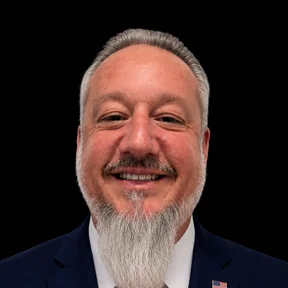
About Victor J. Rosario
Victor J. Rosario is the Residents-First candidate for Miami-Dade County Mayor 2028. A U.S. Coast Guard veteran, entrepreneur, technologist, and artist, Victor brings a track record of building real solutions — from AI tools to campaign policy — that serve Miami-Dade's 2.8 million residents.
Learn More About Victor