By Victor J. Rosario, candidate for Miami-Dade County Mayor · October 22, 2026
The Miami Herald says Brightline's commuter rail plan faces friction from the county mayor. Under my administration there is no friction, because there is no project. Brightline commuter rail in Miami-Dade is canceled. It is a yes or no question, and my answer is no. The answer to the bigger question, how we move people, is yes: a rail system the county owns, for the residents who pay for it.
Friction is a word for people who haven't decided
I read the headline this morning, and I had to read it twice. Friction. Friction is what you get when someone is still weighing it, still waiting on one more study, still looking for a way to say yes without owning the bill. There is no weighing in my office. A project serves the residents of Miami-Dade County or it doesn't. This one doesn't.
Here is how I make decisions. I ask one question first: do residents come first? Not the federal government, not a developer, not a private rail company whose parent companies are sitting in Chapter 11 in New Jersey. Residents. If the answer is yes, we build it and we build it right. If the answer is no, it ends that day, and I move on to the next thing, because I have a lot to accomplish and I am not going to dig around the bush.
So here is the answer, and it is short. Under my administration, the Brightline commuter rail project is canceled. Not paused. Not reframed. Not sent to a working group. There will be no pilot phase and no years of negotiating. A yes or no question gets a yes or no answer, and from my administration it is a no.
I will be straight about one more thing. I have not sat down with Brightline, and I am open to doing that once, to listen to their side. But I am sitting down as a no, and I will listen. What I can read and what is publicly available does not make sense for the people of this county, and a meeting does not change what is on the page.
Here is the test I run on everything. Does it align with a residents-first administration? Project Fund is a priority of this campaign because it puts something in residents' hands. This deal does not. It benefits a private corporation, and residents are not mentioned in it. That is the whole reason, and it is enough.
You don't need a degree in transportation planning to see why. The facts fit on a napkin, and the rest of this post puts every one of them on the page: a company in bankruptcy court, a corridor owned by a railroad that says commuter trains can't safely run on it, a draft agreement that would cost the county at least $250 million just to walk away, and a bill that lands on residents whether the trains run or not.
What is happening right now
On Sept. 24, 2026, 17 of Brightline's parent companies filed for Chapter 11 (opens in a new tab) in the U.S. Bankruptcy Court for the District of New Jersey. Those companies carry about $2.5 billion in holding-company debt. Add the operating company and the affiliates that were not in the filing, and Brightline's sworn court declaration puts the total at about $7.1 billion in funded debt.
The train operator itself did not file, and the trains are still running. I want to be fair about that. But read what Brightline told the court about why it is there: ridership and fares fell short of the projections it borrowed against. That is the company asking Miami-Dade County to sign a long-term contract.
The warning signs were not hidden. Brightline's auditor, Ernst & Young, raised substantial doubt about the company's ability to continue as a going concern (opens in a new tab), and the 2025 financial statements showed a loss of more than $233 million despite higher revenue. S&P Global warned in March that a restructuring was a virtual certainty (opens in a new tab), and some of the company's bonds were trading at about 33 cents on the dollar.
Now the part that matters to Miami-Dade. Brightline's rights to develop commuter service in Miami-Dade, Broward and Palm Beach counties are held by a separate affiliate, Brightline Florida Holdings, which is not part of the bankruptcy filing. But Mass Transit reports those commuter rights are pledged as collateral for bonds that have gone months without interest payments (opens in a new tab). The Bond Buyer describes $985 million of commuter bonds (opens in a new tab) secured by those access rights and by equity in the Miami-Dade, Broward and Palm Beach commuter entities. An interest payment on the commuter bonds went unpaid on Feb. 15, 2026.
On Sept. 29, Brightline told the court that creditors holding about $4.6 billion of its debt (opens in a new tab) back its plan to emerge from bankruptcy, and the court approved a new loan to keep the railroad running in the meantime. Brightline says it will keep pursuing commuter service in all three counties.
So when someone says Miami-Dade's commuter rail deal is "moving forward," understand what is moving. A county contract is being built on top of an asset that lenders already have a claim on. Residents are not the first priority in that structure. They are not even in the line.
What the county would be signing
WLRN obtained and reviewed a 149-page draft agreement dated May 31 (opens in a new tab) between Miami-Dade, Brightline and MDC Commuter, a subsidiary Brightline created to run the service. It is a draft, it is subject to change, and it has to be approved by the Board of County Commissioners. The county's transportation department told WLRN there is no timeline for a vote. Here is what the draft says, as reported.
| Term in the draft | What it means for residents |
|---|---|
| Termination "for convenience" | The county pays Brightline at least $250 million to walk away |
| Operations and maintenance | Brightline runs the trains at an estimated $33.9 million a year in 2026 dollars, and that number can change before signing |
| Operations fee | The county pays Brightline an extra 10% of operating expenses |
| Service suspension | Brightline can suspend service if it decides county-approved funding is not enough |
| Train cars | If the county buys new cars, Brightline buys them on the county's dime |
| Contractors | Brightline chooses the contractors for new stations and infrastructure |
| New stations | The county can ask for a new stop once every five years, and Brightline has sole discretion to approve it |
| Construction | Brightline manages construction for $125,000 a month, plus milestone payments |
| Annual cost | WLRN reports the deal could cost taxpayers upwards of $33 million a year |
That last milestone line deserves a second look. In a 2024 memo to investors, Brightline described a preliminary agreement that would result in $330 million of milestone payments by Miami-Dade County (opens in a new tab) through the start of service. Brightline has been counting on that money for years as it sells itself to bond buyers, and WLRN noted that a signed deal could be a much-needed cash infusion for a company with junk-rated debt.
Read the table one more time and ask who is steering. The county pays for the stations, the infrastructure and the upkeep of the existing stations. Brightline picks the contractors, controls the operations, decides which stations get built, can shut the service off if it doesn't like the funding, and charges at least $250 million for the county to leave. That is not a partnership. That is a bill with no steering wheel, and I am not signing it.
The tracks belong to someone else
Brightline does not own the corridor. Florida East Coast Railway (FECR) does, and the two companies share it under a joint use agreement. In July 2025, FECR sued Brightline in Miami-Dade circuit court (opens in a new tab), claiming Brightline negotiated commuter service with Miami-Dade, Broward and Palm Beach counties without bringing the track owner into the conversation, and that Brightline has no authority to give the counties access to FECR's tracks.
FECR went further. It argued in court filings that commuter service cannot work on that corridor without major new investment in tracks, stations and sidings, and that the plan would crowd out freight and push cargo onto trucks (opens in a new tab). It said the federal funding the counties are chasing was dead in the water (opens in a new tab). Brightline calls those claims baseless and asked for arbitration. A judge has paused the lawsuit while the two companies take it to arbitration (opens in a new tab), and according to the draft agreement that arbitration is still ongoing.
Here is what the draft would have the county do in the meantime. Sign, then hire a firm to start designing stations while the arbitration continues. If FECR later wants a stop moved, wants fewer trains a day or wants a stop eliminated, the county has to redo its plans on the fly, which could mean higher design costs. The draft itself acknowledges that a final service plan that differs from the preliminary one may require Federal Transit Administration approval, and that the approval is at the FTA's discretion (opens in a new tab) and could affect the county's ability to secure the federal grant.
Think about what that means. The county would be committing money to a route where the owner of the land under the rails has not agreed to the plan, and the parent companies of the company selling the plan are in bankruptcy court. I don't spend residents' money like that.
Then there is safety. A joint Miami Herald and WLRN investigation found that, on average, a person dies from a collision with a Brightline train about once every 13 days, and that the company has received millions of dollars in taxpayer-funded grants to improve safety along its tracks. Any plan that adds more trains to that corridor has to answer to those families first. I have not seen anyone in this process give residents a satisfying answer.
The money, and what comes back to residents
The Northeast Corridor commuter project, the 13.5-mile stretch between downtown Miami and Aventura, carries a capital cost estimate of $927.3 million (opens in a new tab). The estimated cost for full buildout was $325 million in 2021, according to the Northeast Corridor project summary (opens in a new tab). The estimate has nearly tripled since then.
| Funding source | Amount | Status |
|---|---|---|
| State of Florida (FDOT) | $200 million | Qualified in 2024; county officials said a 2025 state budget change put the source at risk |
| Federal Transit Administration | Up to $389.5 million | Pledged in 2024, still needs a full funding grant agreement and congressional approval |
| Miami-Dade transportation surtax | About $337.8 million | County commitment |
| Total | $927.3 million |
Every line in that table is public money. The state's money is residents' money. The federal money is residents' money. The surtax is paid by everyone who shops in this county. Add the $33 million a year in operating costs reported in the draft, and the termination bill of at least $250 million, and you are looking at a commitment that follows this county for decades.
Now ask the question I ask about every dollar: what comes back to the people who paid it? In the terms WLRN reported, there is no revenue share, no dividend and no payment of any kind that returns a dollar to residents. The county pays, Brightline collects, and residents are told to be happy about the ride. Not one cent of this goes into a resident's pocket, and I mean the kind of money you can touch. Paper benefits and projected economic impact do not count. They show up in a slide deck, never in a wallet.
That is the difference with Project Fund. Project Fund is built so that residents receive a benefit every three months, paid from the profits of county-owned industries, with 70% going to residents and 30% going to the county. That is a priority of a residents-first administration, and it is where my administration's attention, energy and staff time are going. Brightline commuter rail does not align with it, and I am not going to entertain things that don't align with the campaign I am asking people to vote for.
The transportation surtax is dedicated to transportation, and I will keep it there. But under my administration it goes to transit residents can use and own, not to a contract that gives a private corporation the steering wheel.
The best case for commuter rail, and why my answer is still no
I am not going to pretend the other side has no argument. It has a real one, and residents deserve to hear it before they hear mine.
Supporters point to the traffic on the northeast side of the county, which anyone who has sat on Biscayne Boulevard at rush hour understands. The project is the first segment of an 85-mile regional corridor, and the county's own planning slides project 6.3 million trips a year by 2043 (opens in a new tab). The Federal Transit Administration gave it a Medium-High rating (opens in a new tab). A coalition of more than 50 businesses, schools and cultural institutions, led by the Wynwood Business Improvement District, has argued that it would connect Wynwood, the Design District, Little Haiti, North Miami and the FIU campus (opens in a new tab) to downtown. County commissioners voted unanimously in 2020 to move it forward, and the mayor has said it would give residents, especially in underserved areas, more ways to reach jobs and school.
Supporters also say the county has already put in real money: more than $70 million toward the Aventura station that was meant to serve it, nearly $200 million approved for commuter rail in 2023, and tens of millions more in engineering contracts. Why stop now?
Here is my answer, and it has five parts.
- A good goal is not a good contract. Getting people moving on the northeast side is a worthy goal. The contract on the table does not deliver it on terms that serve residents. It hands operations, contractors and station decisions to a private company, and charges the county at least $250 million to leave.
- The counterparty is in bankruptcy court. Its parent companies filed for Chapter 11 on Sept. 24, and the commuter rights are pledged to bondholders. I don't sign long-term deals with a partner that has not shown it can pay its own bills.
- The land belongs to someone else. The railroad that owns the tracks says commuter service cannot safely work there without major new investment, and the two companies are in arbitration.
- Money already spent is not a reason to spend more. The county owns the Aventura station, and that asset does not disappear if the commuter deal is canceled. What I won't do is add $927 million to the pile because $70 million is already on it.
- Residents get nothing they can touch. Nothing in this deal returns a dollar to them, and a residents-first administration funds things that do.
Supporters will say transit is the return. I respect that, and I would ask them one question: would the county accept these terms from any other vendor? A vendor in bankruptcy, with the right to switch off the service, to pick its own contractors, and to charge a quarter of a billion dollars on the way out? No. We would cancel that contract on day one. This one gets the same treatment.
What residents get instead: routes, buses and money they can touch
Look at what the county is doing with transit right now. The transit board approved a fare increase from $2.25 to $2.75 (opens in a new tab), the first in more than 13 years, starting in January 2027. The approved budget eliminates several bus routes, including 203, 204, 272, 288 and the weekend service on 338, and it cuts late-night service on 18 more. Some routes were restored after riders pushed back, and I give credit to the riders for that. But the fare increase and related adjustments are expected to raise about $9.2 million.
The draft Brightline agreement carries an estimated operating cost of $33.9 million a year. That is more than three times what the fare increase raises. The county is asking a rider to pay 50 cents more, and cutting the bus that gets them home after 10 p.m., while negotiating a contract that costs several times more every year and returns nothing to that rider's pocket. That is backwards, and under a residents-first administration it gets turned around.
Here is what I will put in its place.
- Buses and routes first. My plan is to buy buses directly from the manufacturers, with no middlemen, reopen the routes that are being cut, and run 24-hour service in places like Miami Beach and Wynwood. Yes, Wynwood, the neighborhood with a planned commuter station. We can get service there faster and cheaper, on streets the county already owns. I am targeting delivery by the end of my first term.
- A county-owned ride network. MDC Rideshare is the county-owned autonomous network I am developing, with roughly 4,000 to 5,000 vehicles. Seventy percent of each fare goes to residents and 30 percent pays for the vehicles. The county does not hand its streets to a private company's network.
- Project Fund. Residents receive a benefit every three months, paid from the profits of county-owned industries. This is the model: the county invests, the county owns, and the residents are paid.
Notice the pattern. In every one of those, the residents are the ones who benefit directly, and the county keeps the steering wheel. In the Brightline deal, it is the other way around.
The better answer: the county owns the system
Saying no to this deal is not saying no to transit. It is saying yes to a better version of it, one that belongs to the people who pay for it.
This is my initiative as the next mayor of Miami-Dade County, and it is the right thing to do. The county should own its rail system, and that system is Metrorail. The county owns the route, the stations and the trains. The county sets the fares, picks the contractors through open bids and decides where the next station goes. When federal and state money comes in, the asset it buys belongs to Miami-Dade County, not to a private company's balance sheet.
Now compare that with the draft agreement. In it, the county pays for new stations and infrastructure and for the upkeep of the existing stations. Brightline runs the trains on a corridor owned by FECR, picks the contractors, has sole discretion over new stations and can suspend service. The county pays to improve a private network, and then pays again to operate it. I am not interested in a deal where the county pays the bills and a private operator collects the fares. I want the county to be the owner.
What a county-owned system looks like
- Metrorail is the backbone. According to county records, it already runs 24.8 miles with 23 stations, a fleet of 136 vehicles and its own rail yard at the Lehman Center, and it carries about 1.14 million trips in an average month. The Brightline commuter project is 13.5 miles in one corner of the county, with seven stations, two of them existing Brightline stations.
- One connected system. Metrorail, Metromover and buses working as one network, so a resident can start in one neighborhood and get to work in another without a private company standing in the middle. When someone moves here from anywhere and sees a whole system, that is a county people want to live in.
- The county decides. Fares, schedules, stations and contractors are set in public, by officials the voters can remove. Nobody gets to suspend service because they decided the funding wasn't enough.
Where does it go? Corridors get chosen in the open, based on ridership and on where the county can control the land. The county's own SMART program already has a template: a roughly 10-mile Metrorail extension up NW 27th Avenue to the Broward line, with nine proposed stations, now in its transit-oriented development planning. I will move projects like that forward and look at every corridor where the county can own the route.
A fare everyone can reach
Price decides who rides. Metrorail's fare is $2.25 today and moves to $2.75 in January 2027. Under a county-owned system, that number is set in a public vote with affordability as the first test, and the commissioners who set it answer to voters when they get it wrong.
I cannot tell you what a Miami-Dade rider would pay on the Brightline commuter plan, because the reporting on the 149-page draft does not say who sets the fare or what it would be. What we can see is how Brightline prices today. WLRN reported in October 2025 that tickets to and from West Palm Beach "now run for as low as $12" after two fare cuts in about a month. NBC Miami reported in May 2025 that Brightline's South Florida commuter pass came back at $899, a 125% increase over the $399 it sold for before. Those are intercity prices, not a Miami-Dade commuter fare, and a private company is free to chase riders and revenue however it likes. But a private operator carrying $7.1 billion in funded debt has to price for its lenders. A county system can price for its riders.
Reach matters as much as price. The commuter project covers 13.5 miles between downtown and Aventura. Metrorail already runs from Palmetto to Dadeland South and carries about 1.14 million trips in an average month, which by my math is roughly 13.7 million a year. The county's own slides project 6.3 million trips a year on the commuter line by 2043. These are different systems, but the comparison shows where the riders already are. We should build on that, not around it.
Paying for it: the money is already on the table
The first question I get is how to pay for it, and the honest answer starts with what is already on the table. For the Northeast Corridor project, Washington has pledged up to $389.5 million, about 42% of a $927.3 million budget. Tallahassee has set aside $200 million, about 22%, although county officials have said a 2025 state budget change put that money at risk. The county's transportation surtax covers the rest, about $337.8 million. That means nearly two of every three dollars in that stack are federal or state money, and the county's share comes from a surtax residents already pay and that is already dedicated to transportation.
My administration will take a county-owned plan to the Federal Transit Administration and to the state. FTA's major capital program funds heavy rail and extensions of existing systems, and I already know where to go and what to ask for. The county would own what that money buys. And the county would not be sending Brightline an estimated $33.9 million a year to run the trains, a 10% operations fee, $125,000 a month for construction management, or a $250 million bill to leave. Every dollar that doesn't go to a private operator stays in the transit budget. My goal is a plan where the county's match comes out of the surtax it already collects, not out of a new tax or a new charge on residents.
Winning that money takes work, and work takes a team. My administration will build a dedicated grant team whose only job is to find every federal and state transit dollar this county can compete for and to fill out every piece of the paperwork. Metrorail and this county were here long before Brightline, and the county knows its own system better than any private company does.
Federal transit grants are awarded to public agencies like the county, so that money comes to Miami-Dade either way. The question is what happens next. In the Brightline draft, the county takes the grant and then pays Brightline: $125,000 a month for construction management, milestone payments and operating costs. Under my plan, the money comes to the county and stays with the county, buying trains, stations and track that the county owns. That is how the residents of Miami-Dade County win.
I am going to be straight about the limits, because residents have been promised things before. No federal program pays for all of it. The pledge for this corridor is 42%. The $389.5 million is pledged to this specific project, and it still needs a full funding grant agreement and approval from Congress, so I am not going to tell you it transfers with the stroke of a pen. New projects go through FTA's process, and that takes time. What I am telling you is that the work starts on day one, in the open, and that I will not announce a ribbon-cutting date I can't keep.
Use what we own, and build the rest here
We are not starting from zero. This county already owns a Metrorail fleet, a rail yard and decades of operating experience. The 136 cars were assembled in Medley, in this county, at a 140,400-square-foot Hitachi Rail plant built for this system. Rail equipment the county has already paid for is standing in the sun, getting older every day, waiting for a system to run on. On day one I will order a full public inventory of every railcar, truck and spare part the county owns: where it is, what shape it is in and what it would take to put it to work. Whatever can earn its keep goes into service. Whatever can't gets sold, not left to rust.
Then we build the rest here, with people from here. Miami-Dade has a cement plant. The Pennsuco Complex in Medley produces cement, ready-mix, block and aggregates on one site. We have the trades, the contractors and the workers. When the county puts a project out to bid, openly and competitively, the concrete, the construction and the jobs should stay in this county.
The county's own records show why that has to be written into the contract. In a June 2026 memo asking commissioners to ratify a $6.7 million Metrorail truck contract, the county reported that Hitachi Rail STS was the only bidder, and that the company has 25 employees living in Miami-Dade, a 2.46% local employee percentage. A county-owned expansion, bid in the open with local hiring in the contract, should do better than that. These are jobs that last, building a system that belongs to the people who live here.
What the critics will say about owning it
Owning a system is harder than renting a seat on someone else's, and I would rather say so myself than have a critic say it for me. There are three honest objections.
- It takes time and money to build. New guideway is expensive and the federal process is slow. The pitch for commuter rail is that it uses a corridor that already exists, and that is true. It is also the reason the county has no control: the tracks belong to FECR, which says commuter service cannot work there without major new investment and is in arbitration with Brightline. A corridor that already exists is only a bargain if you are allowed to use it on the terms you were promised.
- The county depends on a supplier. The same June 2026 memo says Hitachi Rail STS is the original equipment manufacturer and that "no acceptable alternatives are available" for the proprietary truck components, and it received a single bid. Owning a system does not erase that. It means the county writes the contract instead of signing one.
- The federal money is not guaranteed. That is true of every transit project in America, including the one Brightline is asking the county to sign. It is why I will not announce a ribbon-cutting date I can't keep.
I will take those risks over the other kind, the kind where a private company holds the steering wheel and the county holds the bill.
Business time: Brightline can pay to use our system
This is where my approach and the headline part ways. The headline says friction. I have a way to end this that works for the county and gives the residents something they can touch.
I am 100% open to an agreement with Brightline. Not the one on the table, where the county pays and Brightline collects. A business deal, where Brightline uses the county's rail system to travel through Miami-Dade and pays the residents of this county for the right to do it. Rent. Sharing rail infrastructure under an agreement is how the business already works: Brightline and FECR share a corridor today under a joint use agreement. The only difference is who is collecting the check, and under my administration it is the residents.
Once the county owns an expanded system, that infrastructure can be opened to Brightline, to Amtrak, to anyone who will sit down, sign a contract and pay. The goal is millions of dollars flowing to the county instead of out of it, and that money funds programs for residents in the same residents-first spirit as Project Fund. Any operator signs a contract, pays, and meets the county's safety standards, and the corridors we build are planned from the start so other operators can use them where the engineering allows.
Here is the line I will not cross. There is no room in Miami-Dade for a second private rail system built with public money. There is room for a customer. Brightline can travel through, pay for it and keep going, and the county keeps the asset and the income. I cannot promise they will say yes, because their parent companies are in bankruptcy court and their commuter rights are pledged to bondholders. But the door is open, and what is on the other side of it is a business deal, not a subsidy.
Where Brightline fits, and where it does not
A resident-first administration has to make decisions that make sense for the residents. So here is my position on the new corridor that has been proposed, in plain words, and why I do not support it the way it is being proposed.
The money is federal money, and the county can apply for it. Brightline is not walking in and saying it has a billion dollars to build this. The funding for this corridor is federal funding, and the county can fill out the same application. Metrorail was here before Brightline, serving residents day and night, and that experience belongs in the grant paperwork.
There is no need to privatize a rail system. This corridor is part of Miami-Dade, and the people who will ride it are residents of Miami-Dade. The right thing is for Metrorail to build and run the new corridor. A private corporation that operates for profit benefits a select group. I am going with the majority: where can we have the most impact? Creating a corridor for the residents of Miami-Dade County through Metrorail, so they get Metrorail pricing.
Brightline already has Miami. Miami has a lot of people, and that is where the ridership is. Farther south it does not make sense for Brightline, because there is not enough traffic to support it. The population and the number of riders are not there.
The one new stop that makes sense is Miami Beach. Because of its location, the way people travel to it and how many people want to go there, Miami Beach is the place where another Brightline stop would benefit the county, its tourism and its cities. As mayor, I have to make sure the cities shine. This is something I already proposed when I was running in Miami Beach: Brightline gets a destination it does not have today, and Metrorail grows into a corridor it does not have today. Residents get a very low-priced way to travel. They get jobs, and the construction lasts longer because it is a full corridor and Miami Beach. The residents get two places to fish instead of one.
If Brightline wants to go through our corridor, it pays. Just like a toll booth. You go through, you pay. I would support that 100%, along with anything that complements Miami-Dade County.
We already have what it takes. We already have the fare cards. We already have trained people. We have more years providing day and night service in Miami-Dade County than Brightline has, so this would be a very easy transition. The county needs to add all of this to the grant and to the paperwork, and get the funding. It is simple. A resident can park here, hop on and save on gas. And the infrastructure is an asset for the county, a better transportation system that all of the residents benefit from. It just makes sense.
What canceled means in practice
I want to be clear about timing, because residents deserve a straight answer. I am a candidate. The election is Nov. 7, 2028, and until then the decisions on this deal belong to the current mayor and the Board of County Commissioners. Here is what I am saying to them, and what I am promising residents.
- Do not sign this for the next administration to inherit. If the draft is signed as reported, getting out costs the county at least $250 million. A deal that expensive to leave should not be locked in two years before the voters choose a new mayor.
- Under my administration, nothing gets signed. My office will not execute this agreement and will not bring it forward for a vote.
- No county money goes out the door for it. No design contracts, no train car purchases, no management fees and no milestone payments for a project that does not return something to residents.
- I will listen once. I have not sat down with Brightline. I am open to doing it one time, in the open, to hear their side. I am sitting down as a no, and I will listen. If they bring something that is good for residents, such as paying the county to use the county's system, I will say so. If they bring the same deal, the answer stays the same.
- The assets stay and get used. The county owns the Aventura station and the grant relationships it built. Those get pointed at the county-owned system I describe above, transit that residents can ride and benefit from.
That is it. Five lines. No committee, no consultant and no study required to say it.
No is a complete sentence
Somewhere along the way, government in this county learned to say no in a hundred soft ways. We are reviewing it. We are studying it. We are in conversations. We see some friction. Residents hear all of that and know exactly what it means: the answer is yes, it just hasn't been announced yet.
My administration will not talk like that. I am for transit, and I am for a rail system that the county owns. I am for development done responsibly. I am for putting real money in residents' hands. And I am against any deal that sends public money to a private corporation while the people who paid for it are left out. Brightline commuter rail is that deal, and the answer is no.
There is no friction in my office, because there is nothing to push against. Residents come first. If it does not align with that, it does not happen, and I do not need a college course to tell me so.
If you agree, tell your commissioner to hold the line and not sign this for the next administration to inherit. If you disagree, tell me. I will sit down once, I will listen, and I will tell you the truth about where I stand before I walk in.
Victor J. Rosario Candidate for Miami-Dade County Mayor
Sources
Figures are as of Oct. 22, 2026. The Brightline agreement terms come from a draft reported in June 2026, and they may have changed since.
Pages opened and checked:
- WLRN, June 15, 2026: draft agreement terms, FECR arbitration, 2023 county approval, FTA pledge (opens in a new tab)
- Mass Transit, Sept. 29, 2026: Chapter 11 filing, $7.1 billion funded debt, commuter rights as collateral (opens in a new tab)
- Bond Buyer, Sept. 25, 2026: $985 million commuter bonds, filing details (opens in a new tab)
- WLRN, March 16, 2026: S&P restructuring warning, bond prices (opens in a new tab)
- Miami Herald/WLRN via AOL: Ernst & Young going-concern warning, 2025 loss (opens in a new tab)
- Miami Today, March 2025: $927.3 million cost and funding split (opens in a new tab)
- Mass Transit: Miami-Dade fare increase and bus route changes (opens in a new tab)
- Miami-Dade County, Agenda Item 8(N)(4), June 2, 2026: Metrorail system size, fleet, ridership, truck contract and Hitachi local employment (opens in a new tab)
- Miami Today, Oct. 29, 2024: $389.5 million federal pledge and its conditions (opens in a new tab)
- Government Market News: $927 million Northeast corridor project and funding split (opens in a new tab)
- FTA, Northeast Corridor Rapid Transit Project profile: 13.5 miles, seven stations (opens in a new tab)
- FTA, Major Capital Investments (New Starts): eligible modes include heavy rail and extensions. The page is marked historical, so current rules should be confirmed with FTA (opens in a new tab)
- Miami-Dade SMART Program, North Corridor Metrorail extension (opens in a new tab)
- WLRN, Oct. 9, 2025: Brightline fare cuts (opens in a new tab)
- NBC Miami, May 14, 2025: Brightline commuter pass price increase (opens in a new tab)
- Hitachi Rail USA, March 2016: Medley plant built for the Metrorail fleet (opens in a new tab)
- Titan America, Florida locations: Pennsuco Complex in Medley (opens in a new tab)
Cited from search results, full page not opened:
- Bloomberg, Sept. 29, 2026: creditors backing the exit plan (opens in a new tab)
- WLRN, Aug. 1, 2025: FECR lawsuit (opens in a new tab)
- WLRN, Nov. 13, 2025: lawsuit paused (opens in a new tab)
- Local10, Nov. 20, 2025: FECR arguments (opens in a new tab)
- Trains.com: FECR filing (opens in a new tab)
- Miami-Dade DTPW SMART program slides: 6.3 million trips by 2043 (opens in a new tab)
- Panther Now: FTA rating and funding (opens in a new tab)
- Miami Herald op-ed, Nov. 2020: Northeast Corridor Coalition (opens in a new tab)
- Northeast Corridor Rapid Transit Project summary: 2021 cost estimate (opens in a new tab)
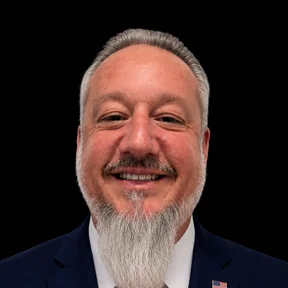
About Victor J. Rosario
Victor J. Rosario is the Residents-First candidate for Miami-Dade County Mayor 2028. A U.S. Coast Guard veteran, entrepreneur, technologist, and artist, Victor brings a track record of building real solutions — from AI tools to campaign policy — that serve Miami-Dade's 2.8 million residents.
Learn More About Victor