By Victor J. Rosario, candidate for Miami-Dade County Mayor · October 16, 2026
No is no. I will use every power Miami-Dade County has to keep carbon dioxide injection out of the rock beneath our drinking water. This post lays out the facts behind that promise, including what a mayor can and cannot do alone.
What is actually being proposed
The project in front of us is called Project ACCESS, short for Atlantic Coast CO2 Emissions Storage Sink. It is a federally funded feasibility study, not a finished storage site. The U.S. Department of Energy pays for it through its CarbonSAFE program, the Southern States Energy Board oversees it, and Virginia Tech is the technical lead (Virginia Tech (opens in a new tab)).
It is based in Medley, in the Lake Belt area of northwest Miami-Dade. A Department of Energy presentation names Titan America as the site host and describes a first scenario built around its Pennsuco cement plant and a neighboring Covanta facility, which together emit about 1.9 million metric tons of CO2 a year (NETL presentation (opens in a new tab)). The planning scenario injects 50 million metric tons over 30 years, roughly 1.7 million metric tons a year, into two limestone formations. The top of the shallower one sits near 4,620 feet below the surface, and the top of the deeper one near 8,580 feet. Virginia Tech's own description says storage deeper than 7,500 feet. Either way, it is thousands of feet below the water we drink.
The study period ran from July 19, 2024 to July 18, 2026. In March 2025, DOE cleared the drilling of a stratigraphic test well on the Titan Pennsuco property (DOE notice (opens in a new tab)), and the project team told DOE it was working through Florida's exploratory well permit expectations. The public record I reviewed does not say whether that well has been drilled, or what happens now that the study period has ended. No Class VI permit application for Miami-Dade appears in the documents I found. Residents are owed a straight answer on both points, and getting one is the first thing I will ask of County staff.
Why Miami-Dade's water is different
Most places that store carbon underground can afford a mistake, because their drinking water comes from somewhere else. We cannot. The Biscayne Aquifer is designated a sole source aquifer by the EPA, a label for an aquifer that supplies at least half of an area's drinking water with no reasonably available alternative if it were contaminated (Florida Senate analysis (opens in a new tab)).
Here is what that means in numbers:
- 2.8 million residents. That is the population our Water and Sewer Department serves at the retail and wholesale level.
- 95 wells in 14 wellfields. All of them draw from the Biscayne Aquifer, with a permitted treatment capacity of 464 million gallons a day (Miami-Dade FY 2025-26 budget (opens in a new tab)).
- About 100 feet deep. The aquifer is a shallow reservoir of limestone, shell and sand that extends roughly 100 feet below most of the county (Miami New Times (opens in a new tab)). It is also unconfined and highly transmissive, which is why contamination spreads quickly once it gets in (a Harvard design school student study (opens in a new tab)).
- About 40 percent of the county's drinking water. That comes from one place, the Northwest Wellfield, which has pumped since 1984 from 15 wells along the eastern edge of the Lake Belt, an 89-square-mile mining district (Florida Senate analysis (opens in a new tab)).

Drawn to scale, the Biscayne Aquifer is a thin line at the top. Every well, including any test or monitoring well, has to pass through it to reach the storage rock far below.
Project ACCESS is in that same Lake Belt district. I do not yet know how close the Pennsuco property sits to the wellfield protection areas that Chapter 24 of the County Code draws around our wells by travel time, and neither do you. Publishing that map is a basic ask, and my administration will do it.
The County also keeps a reserve. The Floridan Aquifer lies far beneath the Biscayne and is the county's backup source, and our utility already operates five storage wells in it. A mistake in the deep rock could threaten more than today's water. It could threaten the backup too.
What can go wrong
The danger to drinking water is not the carbon dioxide sitting in the deep rock. It is the ways the gas, or the salty brine it pushes around, could travel upward. Researchers writing in Scientific Reports name the main routes: faults, and abandoned or poorly sealed wells, that let fluids rise from a deep reservoir into a source of drinking water (Scientific Reports (opens in a new tab)).
If CO2 reaches shallow groundwater, three things matter:
- The water gets more acidic. CO2 on its own is not toxic to water quality, but it lowers pH, and that can pull toxic trace metals out of the aquifer rock (Scientific Reports (opens in a new tab)).
- Metals reach people. A risk framework funded by the Department of Energy models metals released by acidification traveling to municipal wells and into households. In its example simulations, arsenic posed a greater health risk than lead (GSA abstract (opens in a new tab)).
- Brine can come with it. Reservoir brine may carry toxic substances of its own, and far fewer studies have examined that leak path than have examined CO2 alone (Scientific Reports (opens in a new tab)).
Every injection well and every monitoring well also starts at the surface and has to pass through the Biscayne Aquifer on its way down. That is not a flaw in any one design. It is simply what a deep well is. The protection is the steel casing and cement around it, and the quality of that work is exactly what residents are being asked to trust.
Florida's geology adds its own uncertainty. A U.S. Geological Survey study of the Boulder Zone wells that the County uses for deep injection of treated wastewater found a narrow karst collapse structure, roughly 900 feet tall, running up from the top of the Boulder Zone (USGS (opens in a new tab)). Limestone country can hide pathways that look like solid rock on a model.
And we have our own history. Miami New Times reported that sewage injected through deep wells had been detected in one of the aquifers in three Florida counties, Miami-Dade among them, and cited County contractors' information about improper well construction in South Dade (Miami New Times (opens in a new tab)). That was wastewater, a different well class, but it is the same promise being made again: that what goes deep stays deep.
What protects us on paper, and the gaps
To be fair, there are real rules. In 2010 the EPA created a well class just for carbon storage, called Class VI, with requirements written to protect underground sources of drinking water (EPA (opens in a new tab)). Under EPA's own guidance, an operator has to:
- show the geology has a confining layer above the storage rock, and evaluate faults;
- identify other wells in the surrounding area and fix old or abandoned ones that could leak;
- build wells with multiple layers of corrosion-resistant steel casing and cement, and test them before and during operation;
- monitor pressure and CO2 in the storage rock and groundwater quality above the confining layer;
- prove it has the money to deal with problems, so the costs are not passed to the public; and
- report any evidence of danger to drinking water within 24 hours (EPA pamphlet (opens in a new tab)).
Those are serious requirements, and I want them applied to every project. But they leave gaps that a sole-source aquifer cannot afford.
The County does not issue the permit. In most states the EPA runs the Class VI program directly. A few states have taken it over, including North Dakota and Wyoming (EPA (opens in a new tab)), and the EPA approved Texas in November 2025 and Colorado in October 2026 (EPA primacy page (opens in a new tab)). A 2022 law-firm summary listed Florida as having authority over other well classes but not Class VI (Mayer Brown (opens in a new tab)), and I could not confirm whether that has changed. The test well is a separate track: the project team cites Florida DEP's Class V exploratory well rule for it (NETL presentation (opens in a new tab)).
The track record is short. When one law firm summarized the program in 2022, only six of more than 700,000 injection well permits issued under the federal program were Class VI, and only two such wells were active (Mayer Brown (opens in a new tab)). More permits have moved forward since, but this is still a young program with little long-term data behind it.
Models do a lot of the work. The rules call for area-of-review modeling to predict where CO2 and pressure will travel (USEA (opens in a new tab)). A model is only as good as what we know about the rock, and Florida's karst limestone has surprised scientists before.
The watch period ends. After injection stops, the default monitoring period is 50 years, and the EPA can approve a shorter one if the operator shows no danger to drinking water (EPA pamphlet (opens in a new tab)). The carbon dioxide is supposed to stay put far longer than that.
A 24-hour report is a response. It tells us how fast we would hear about a problem. It does not tell us whether the problem could be undone.
What supporters say
You deserve to hear the other side in its strongest form, so here it is.
- The emissions are real. Miami-Dade's industrial facilities release roughly 7.5 million metric tons of CO2 a year, according to the Southern States Energy Board, and cement making is a sector that is hard to clean up any other way (SSEB (opens in a new tab)). Virginia Tech estimates that if the project develops, it could eliminate emissions equal to 370,000 passenger vehicles a year (Virginia Tech (opens in a new tab)).
- The rock is deep and sealed. The target formations are thousands of feet below the Biscayne Aquifer, and the project documents describe anhydrite and gypsum layers above them as seals (NETL presentation (opens in a new tab)).
- It is a study. Nothing is being injected yet. The study exists to test whether the rock can hold carbon, and it includes an existing groundwater monitoring program near the site (NETL presentation (opens in a new tab)).
- The rules are the strictest in the injection well program. EPA says Class VI regulations are the most rigorous of any well class (EPA pamphlet (opens in a new tab)).
- The chemistry may be forgiving. One Department of Energy lab study found that in its simulations aquifer sediments re-stabilized almost all leaked arsenic within 1,000 years, and described arsenic as a smaller long-term concern than other released metals (NETL poster (opens in a new tab)).
Those are fair points, and the emissions problem is real. My answer is about margin for error. A sole-source aquifer that serves 2.8 million people has none, and a thousand years is a long time to wait for sediments to sort things out. If carbon storage proves safe, it can be built where no community's only drinking water sits above it. It does not have to be built here.
What I will do on day one
My administration is residents-first, which means water comes before any grant, credit, or industry plan. I have drafted the executive order I will sign in my first 24 hours so you can read it before you vote. The full text follows below. In plain terms, it does these seven things, then reports back to you in public within 90 days:
- Ends County support. No County department signs a letter of support, agreement, data-sharing deal, or grant partnership for carbon dioxide storage in Miami-Dade, and none gives access to County-controlled property for it.
- Pulls every existing record. Within 30 days, County staff report every permit, application, letter, and agreement the County holds on Project ACCESS, the Pennsuco test well, or any similar project, and I publish what the law allows.
- Maps the site against our wells. Within 45 days, the County publishes where the project and any test well sit relative to the wellfield protection areas in Chapter 24 of the County Code.
- Opposes it formally. The County Attorney files written opposition with the EPA, the Florida Department of Environmental Protection, and any other agency that takes up an application, and asks for public hearings in Miami-Dade.
- Rescinds and refuses what the County controls. Any County approval, variance, waiver, or support document tied to carbon injection is withdrawn or denied to the full extent County law allows.
- Takes it to the Board. I send the Board of County Commissioners proposed changes to Chapter 24 to bar or tightly restrict subsurface carbon injection in and near wellfield protection areas, with a legal review of how far County authority reaches.
- Measures our water first. Within 60 days, the County publishes a baseline of groundwater quality around the Northwest Wellfield, checks whether its monitoring would catch a carbon dioxide or brine leak early, and reports how fast and at what cost it could replace the wellfield's supply if it had to shut down.
What a mayor cannot do alone. I will not tell you I can cancel a federal permit, because I cannot. The EPA, or a state that has taken over the program, issues Class VI permits, and the State of Florida issues test well permits. A mayor cannot override them, and the Board makes County law, not the mayor. What I can do is withdraw every piece of County support, refuse every County approval the law lets me refuse, put the County on the record against it at every hearing, and have the County Attorney evaluate every legal challenge available. That is a promise I can keep, and I intend to keep it.
The order I will sign, in full
This is the full proposed text. It is a draft and not yet in effect. I will sign it within my first 24 hours in office.
Executive Order: Protecting Miami-Dade's Drinking Water Aquifers
Status, authority and findings
PROPOSED, NOT IN EFFECT. This is a campaign policy draft of an order to be signed within the first 24 hours of a Rosario administration. It has no legal force unless signed by a sitting County Mayor.
Authority. The Mayor is responsible for the management of all administrative departments of the County and for carrying out policies adopted by the Commission (Home Rule Charter, Section 2.02(A)), and has the power to issue and place into effect administrative orders, rules, and regulations (Section 5.02) (Home Rule Charter (opens in a new tab)). County procedure treats Administrative Orders as approved by the Mayor and reported to the Board, and says they should be of a relatively permanent nature (County Procedure 100 (opens in a new tab)). The Board of County Commissioners is the County's legislative and governing body (Section 1.01(A)).
Limit. This order binds County departments, County contracts, and County property. It does not revoke, suspend, or change any permit or approval issued by the U.S. Environmental Protection Agency, the Florida Department of Environmental Protection, the U.S. Department of Energy, or any other agency, and it does not change the County Code, which only the Board can do. Where a directive needs Board action, this order asks the Board for it.
WHEREAS, the Biscayne Aquifer is designated a sole source aquifer by the U.S. Environmental Protection Agency, and the Miami-Dade Water and Sewer Department draws its supply from 95 wells in 14 wellfields and serves approximately 2.8 million residents (FY 2025-26 budget (opens in a new tab); Florida Senate analysis (opens in a new tab));
WHEREAS, the Northwest Wellfield, on the eastern edge of the Lake Belt, has pumped since 1984 and supplies approximately 40 percent of the County's drinking water requirements (Florida Senate analysis (opens in a new tab));
WHEREAS, Chapter 24 of the Code of Miami-Dade County, first enacted on March 13, 1981, set up 41 wellfield protection areas based on groundwater modeling, with land use restrictions that grow stricter closer to the production wells, and the County monitors 50 ambient wells outside the protection areas and 135 wells inside the major ones (County presentation (opens in a new tab));
WHEREAS, benzene was detected in 2019 in Northwest Wellfield sentinel wells and downgradient production wells, and several production wells were shut down from 2019 to 2023, which shows how long a single contamination event can keep drinking water wells out of service (County presentation (opens in a new tab));
WHEREAS, Project ACCESS is a federally funded carbon storage feasibility study overseen by the Southern States Energy Board, centered on the Titan Pennsuco plant property in Medley, and evaluating the injection of about 1.7 million metric tons of carbon dioxide a year into limestone formations whose tops lie near 4,620 feet and 8,580 feet below the surface, and in March 2025 the Department of Energy cleared the drilling of a stratigraphic test well on that property (NETL presentation (opens in a new tab); DOE notice (opens in a new tab));
WHEREAS, the study period ran from July 19, 2024 to July 18, 2026, and no public record located by the campaign shows whether that test well was drilled, what is planned after the study period, or whether any permit application has been filed;
WHEREAS, any well reaching those formations must pass through the Biscayne Aquifer, and researchers identify faults and abandoned or poorly sealed wells as routes by which carbon dioxide and brine can rise into drinking water, where carbon dioxide can lower pH and mobilize toxic trace metals (Scientific Reports (opens in a new tab));
WHEREAS, a U.S. Geological Survey study of the County's Boulder Zone wells found a narrow karst collapse structure roughly 900 feet tall, a reminder that limestone can hide pathways that look like solid rock on a model (USGS (opens in a new tab));
WHEREAS, carbon storage (Class VI) well permits are issued by the EPA or by a state that has taken over that program, and not by Miami-Dade County, the EPA approved that authority for Texas in November 2025 and for Colorado in October 2026, and the State of Florida could seek the same (EPA primacy page (opens in a new tab); EPA Class VI rule (opens in a new tab)); and
WHEREAS, this administration governs residents-first, and the safety of the drinking water of 2.8 million residents comes before any grant, credit, or industry plan;
NOW, THEREFORE, I, Victor J. Rosario, Mayor of Miami-Dade County, order as follows:
Section 1. County policy and no County support
1.1 Policy. It is the policy of Miami-Dade County that no carbon dioxide be injected into or through the rock beneath the Biscayne Aquifer or any other source of drinking water in the County. The County will not support, fund, assist, or lend its name to any project that proposes to.
1.2 No support, effective immediately. No County department, officer, or employee may issue a letter of support, sign a memorandum of understanding, share data, join a grant application or partnership, sit on a project advisory body in an official capacity, or let a project use the County's name or seal, for any carbon storage project in the County.
1.3 Withdraw what was given (10 days). Within 10 days, each department director shall report to the Mayor, and withdraw in writing, any support, commitment, or participation the County has already given, with a copy of each withdrawal sent to the Southern States Energy Board.
1.4 No County money. No County funds, grants, loans, fee waivers, or economic development incentives may go to a carbon storage project in the County.
1.5 County property. No County-owned land, building, easement, or right-of-way under the Mayor's authority may be used for drilling, seismic work, monitoring wells, or injection for carbon storage. Any request shall be sent to the Mayor and denied unless the law requires otherwise.
1.6 Report every approach. Any request or approach to any County employee about a carbon storage project shall be reported to the Mayor's Office within 2 business days and logged on the public page created under 2.5.
Section 2. Find out what exists
2.1 Preserve first (24 hours). Within 24 hours, the County Attorney shall place a hold on all County records about Project ACCESS, the Titan Pennsuco test well, and any other carbon storage proposal in the County. These are public records.
2.2 Inventory (30 days). Each department director shall report to the Mayor every record the County holds on these projects, including correspondence with the Southern States Energy Board, Virginia Tech, Titan America, the Department of Energy, the EPA, the Florida Department of Environmental Protection, and the South Florida Water Management District, and every letter of support, agreement, permit, application, notice, map, and data set. The Water and Sewer Department and the Department of Regulatory and Economic Resources shall lead this review.
2.3 Ask the people who know (24 hours). Within 24 hours, the Mayor shall send written requests to the Southern States Energy Board, Virginia Tech, Titan America, the Department of Energy, EPA Region 4, and the Florida Department of Environmental Protection asking: (a) what the project's status has been since its study period ended on July 18, 2026, and whether a follow-on phase is planned; (b) whether the stratigraphic test well has been drilled, and if so where, how deep, with what casing and cement, and how it was or will be sealed; (c) every permit or application filed or planned with any agency; (d) all groundwater and well data collected; and (e) whether any plan exists to inject carbon dioxide in Miami-Dade County, and where.
2.4 Public records requests. The County Attorney shall file Florida public records requests with the Florida Department of Environmental Protection and the South Florida Water Management District for all records about the project, and shall track each request until it is answered.
2.5 Tell residents (30 days). Within 30 days, the Mayor's Office shall publish a plain-language briefing titled What We Know and What We Do Not, and a public web page with every record released under this section, updated at least every 30 days.
2.6 Independent confirmation. The Mayor shall ask the County's Inspector General in writing to confirm whether any County funds or approvals were committed to the project and to report whatever County involvement exists.
Section 3. Protect the wellfields
3.1 Map (45 days). The Water and Sewer Department and the Department of Regulatory and Economic Resources shall map every site, test well, and proposed injection location identified under Section 2 against the Chapter 24 wellfield protection areas, including the 10-, 30-, 100-, and 210-day travel-time contours, the Northwest Wellfield, and the Lake Belt rock mining area. The map and its data shall be published.
3.2 Baseline (60 days). The same departments shall assemble and publish baseline groundwater quality for the Northwest Wellfield area from the County's monitoring wells, including pH, alkalinity, chloride, total dissolved solids, arsenic, and other trace metals, so any later change can be measured against a known record.
3.3 Monitoring gaps (60 days). The Department of Regulatory and Economic Resources shall report whether the current monitoring program's parameters and sampling frequency would catch a carbon dioxide or brine intrusion early, and what it would cost to add whatever is missing.
3.4 Learn from benzene (60 days). The Water and Sewer Department and the Department of Regulatory and Economic Resources shall report to the Mayor how the 2019 benzene detection in the Northwest Wellfield was found, how long the response took, which wells were shut down and for how long, what it cost, and what would speed detection and response next time.
3.5 Backup supply (90 days). The Water and Sewer Department shall report how much of the Northwest Wellfield's supply could be replaced from other wellfields, interconnections, and the Floridan Aquifer storage wells if the Northwest Wellfield had to be shut down, how fast, and at what cost.
3.6 Open data. Monitoring results gathered under this section shall be posted online as they are validated.
Section 4. Formal opposition and public participation
4.1 Notice of opposition (24 hours). Within 24 hours, the County Attorney shall deliver written notice on behalf of the County to EPA Region 4, the Florida Department of Environmental Protection, and the Department of Energy that Miami-Dade County opposes the injection of carbon dioxide into or through rock beneath its drinking water sources, and requesting written notice of any application, draft permit, drilling notice, environmental review, or hearing about carbon storage in the County.
4.2 Legal options (30 days). The County Attorney shall advise the Mayor in writing of every lawful way the County can take part, including comments, hearings, administrative challenges, petitions for review, and intervention, with the County's standing, the deadlines, and the costs.
4.3 Be in the room. The County shall take part in every proceeding that concerns carbon storage in the County and shall request public hearings in Miami-Dade. For Class VI permits, the EPA's practice is to publish a draft permit, take public comment, and hold a hearing (example EPA notice (opens in a new tab)).
4.4 Florida primacy. The County Attorney shall monitor, and the Mayor shall comment on, any Florida proposal to take over the Class VI program from the EPA, and shall ask that any State program give Miami-Dade notice and keep protections for the sole source aquifer.
4.5 Bring others in. The Mayor shall write the Board of County Commissioners, the 34 municipalities, the County's wholesale water customers, and the County's state and federal delegations, share the findings, and ask them to join.
4.6 Tell residents. Within 7 days of receiving notice of any application, draft permit, drilling, or hearing, the Mayor's Office shall publish it with a plain-language explanation and how to comment.
Section 5. No discretionary approvals
5.1 Rule. To the extent County law allows, no County official shall grant a discretionary approval, variance, waiver, special exception, or agreement for a carbon storage project in the County.
5.2 List what the County controls (30 days). The County Attorney, with the Department of Regulatory and Economic Resources and the planning staff, shall list every County approval a carbon storage project or its test wells would need, such as zoning, Chapter 24 wellfield protection approvals, right-of-way, and building and environmental permits, and the lawful limits on each.
5.3 Review what exists (45 days). Every County approval already issued for any site identified under Section 2 shall be reviewed, and the County Attorney shall advise whether and how each can be conditioned, enforced, or withdrawn under its terms and the law.
5.4 Enforce equally. The Department of Regulatory and Economic Resources shall enforce Chapter 24 and every other County law at any such site fully, no more and no less than at any other property, and shall inspect any drilling or well site inside a wellfield protection area.
Section 6. Take it to the Board
6.1 Draft amendments (60 days). The County Attorney, with the Department of Regulatory and Economic Resources, shall prepare proposed amendments to Chapter 24 that would: (a) bar the injection of carbon dioxide and similar fluids for storage into or through the rock beneath wellfield protection areas and any other area where the Biscayne Aquifer supplies drinking water; (b) require advance notice to the County of any deep well that would pass through the Biscayne Aquifer; (c) require baseline and continuing groundwater monitoring paid for by the operator; (d) require operators to file well construction, testing, and monitoring records with the County; and (e) require financial assurance so that the County's costs of response and replacement water are paid by the operator and not by ratepayers.
6.2 Authority analysis. The County Attorney shall deliver a written analysis of how far County authority reaches and of any state or federal preemption, with alternatives, such as notice requirements and conditions on County property, if a full bar cannot be adopted.
6.3 Transmit to the Board. The Mayor shall send the amendments and the analysis to the Board of County Commissioners, ask for committee and Board agenda placement, and speak in support. The amendments follow the Board's ordinary process for Code changes, including public notice and two readings.
Section 7. Deadlines and general provisions
7.1 Deadlines at a glance.
- Immediately: Sections 1.1, 1.2, 1.4, 1.5, 1.6, and 5.1.
- Within 24 hours: preservation hold (2.1), requests to the project team and agencies (2.3), and notice of opposition (4.1).
- Within 10 days: withdrawal of prior support (1.3).
- Within 30 days: records inventory (2.2), public briefing and web page (2.5), legal options (4.2), and list of County approvals (5.2).
- Within 45 days: wellfield map (3.1) and review of existing approvals (5.3).
- Within 60 days: baseline, monitoring gaps, and benzene lessons (3.2 to 3.4), and draft Chapter 24 amendments (6.1 and 6.2).
- Within 90 days: backup supply report (3.5) and the public report (7.2).
7.2 Public report (90 days). The Mayor's Office shall publish a report to the Mayor and the Board setting out the findings of Sections 2 through 6, the maps and data, the legal analysis, and recommended next steps.
7.3 No claim about permits. Nothing in this order is a finding that any permit has been applied for or issued. The records review in Section 2 exists to establish what the County and the agencies actually hold.
7.4 Lawful only. Each directive applies only to the extent the law allows. Where the County Attorney advises that a directive would exceed the County's lawful authority, the County will carry out the lawful part and report the limit to the Board.
7.5 Effective date and reporting. This order takes effect when signed. It is issued as an Administrative Order and shall be reported to the Board of County Commissioners as County procedure requires, with a copy to the Chair and the Clerk of the Board.
7.6 General. If any provision of this order is held invalid, the rest remains in effect. This order creates no right enforceable by any third party.
Victor J. Rosario
Mayor, Miami-Dade County
To be signed within my first 24 hours in office.
What you can do right now
You do not have to wait for an election to ask questions. Three things work today:
- Ask for the records. Florida's public records law lets anyone request documents from Miami-Dade County, the Florida Department of Environmental Protection, and the South Florida Water Management District. Ask for any application, permit, support letter, or correspondence involving Project ACCESS, the Titan Pennsuco property, or carbon dioxide storage in Miami-Dade.
- Watch for EPA notices and show up. When the EPA proposes a Class VI permit, it publishes the draft, opens a public comment period, and holds a hearing, and it says it considers every comment received in both (example EPA notice (opens in a new tab)). If a Miami-Dade application is ever filed, ask for a hearing here, in our county, and file a written comment about the Biscayne Aquifer.
- Speak at the Board. County Commission meetings take public comment. Ask your commissioner whether the County has signed, endorsed, or approved anything related to this project.
No Flint in Miami-Dade. Flint showed the country what happens when officials put savings ahead of safe water and brush off residents who say something is wrong. The state task force that reviewed it found that the state bore primary responsibility, and that nothing justified skipping corrosion control after the switch in water source (Jenner & Block summary of the task force report (opens in a new tab)). Carbon injection is a different problem from lead pipes, but the lesson is the same. The people who live above the water should never have to prove it is unsafe before their government takes their side. In my administration, water comes first, and when you raise a warning, you will be heard.
If you want to help the campaign, start at victormiamidadecountymayor.com. No is no.
Victor J. Rosario
Candidate for Mayor of Miami-Dade County, 2028
Sources
Figures reflect public documents I could open as of October 16, 2026. The project's status after its study period ended on July 18, 2026 is not in them.
- Virginia Tech: Underground carbon storage project takes root (opens in a new tab)
- NETL: Project ACCESS presentation (opens in a new tab)
- DOE NEPA notice: stratigraphic test well, Titan Pennsuco plant (opens in a new tab)
- Southern States Energy Board: Project ACCESS announcement (opens in a new tab)
- Florida Senate: Miami-Dade Lake Belt analysis (opens in a new tab)
- Miami-Dade County FY 2025-26 adopted budget: Water and Sewer (opens in a new tab)
- Miami-Dade County: Aquifer and wellfield protection presentation (opens in a new tab)
- Harvard Graduate School of Design: Vulnerability of potable water in Miami-Dade (opens in a new tab)
- Miami New Times: Water Fight (opens in a new tab)
- Miami New Times: Deep Well Infection (opens in a new tab)
- Scientific Reports: Arsenic mobilization in shallow aquifers due to CO2 and brine intrusion (opens in a new tab)
- GSA abstract: Risks to human health from CO2 leakage into groundwater (opens in a new tab)
- NETL poster: Arsenic mobilization in shallow aquifers (opens in a new tab)
- USGS: Seismic-sequence stratigraphy near Boulder Zone deep wells in Miami-Dade (opens in a new tab)
- EPA: Class VI final rule (opens in a new tab)
- EPA pamphlet: How Class VI regulations protect groundwater (opens in a new tab)
- USEA: Class VI permitting and state primacy (opens in a new tab)
- Mayer Brown: Class VI wells and state primacy (opens in a new tab)
- EPA public notice example: Class VI draft permit and hearing (opens in a new tab)
- Jenner & Block: Flint Water Advisory Task Force issues final report (opens in a new tab)
- Flint Water Advisory Task Force: Final Report, March 2016 (opens in a new tab)
- Miami-Dade County Home Rule Charter (opens in a new tab)
- Miami-Dade County Procedure 100: Administrative and Implementing Orders (opens in a new tab)
- EPA: Primary enforcement authority for the Underground Injection Control program (opens in a new tab)
Political advertisement paid for and approved by Victor J. Rosario, candidate for Miami-Dade County Mayor.
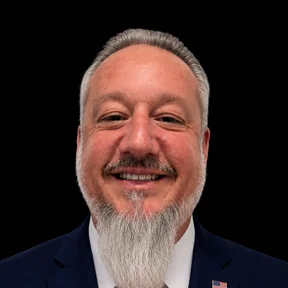
About Victor J. Rosario
Victor J. Rosario is the Residents-First candidate for Miami-Dade County Mayor 2028. A U.S. Coast Guard veteran, entrepreneur, technologist, and artist, Victor brings a track record of building real solutions — from AI tools to campaign policy — that serve Miami-Dade's 2.8 million residents.
Learn More About Victor