By Victor J. Rosario, candidate for Miami-Dade County Mayor · October 23, 2026
The Idea in Plain Language
Miami-Dade County should seriously study owning part of its own electricity supply, and over time using that asset to take the electric bill off the backs of qualifying households. That is the idea behind Miami-Dade Energy 2034.
Every month, nearly every home in this county opens an electric bill. In a place where air conditioning runs most of the year, that bill is not optional. It sits next to rent, groceries and gas, and for working families and retirees on fixed incomes it is often the one that hurts most when summer hits.
I want every resident to be able to ask a simple question and get an honest answer: what would it take for Miami-Dade to lower that bill, or someday remove it, for the people who live here?
What this proposal is
It is a long-term plan to find out. Miami-Dade Energy 2034 lays out the research, the financing tools, the legal questions and the decision points that must come before the county commits to any power plant. The name matters: 2034 is the year the county decides, not the year the lights come on.
What it is not
It is not a promise that free electricity arrives on a certain date. It is not a claim that Miami-Dade County has the legal authority or the financing today. And it is not an endorsement of any reactor company. No county dollar should go toward a reactor until independent engineers, utility lawyers and financial auditors say it can be done safely and at a cost residents can live with.
I am saying that up front because nuclear power has a long history of big promises. Georgia's Plant Vogtle expansion was first priced at about $14 billion and ended up costing more than $30 billion (opens in a new tab). A small-reactor project in Utah was cancelled in 2023 (opens in a new tab) after its target power price jumped from $58 to $89 per megawatt-hour. Residents deserve a plan that learned from those stories instead of repeating them.
Why start thinking about it now
Something real is happening in 2026. Five advanced test reactors have reached criticality this summer under the Department of Energy's Reactor Pilot Program, including Valar Atomics' Ward 250 in Utah on June 18 (opens in a new tab). The Nuclear Regulatory Commission finalized a new licensing pathway for advanced reactors, known as Part 53 (opens in a new tab), in March. In late September the NRC issued the Tennessee Valley Authority a construction permit for a small modular reactor (opens in a new tab) at Clinch River.
That is enough progress to justify preparing. It is not enough to justify signing a contract.
The sequence
- My first four years: build Project Fund and do the groundwork. Create the county financial mechanism that puts resident benefits first, audit what the county already spends on electricity, and pursue savings that do not require a reactor.
- 2032 and after: look at the technology again. By then there should be years of additional evidence: real construction costs, real licensing timelines and real operating records. That is when the county decides, with the best information available and the Project Fund already in place.
The rest of this post walks through the numbers, the risks, the law, the safety questions and the decision tests a project would have to pass. It is long on purpose. A decision this big should be explained in full.
Why Project Fund Comes First
Project Fund has to come before any energy project because it is the vehicle that lets the county invest in long-term assets without raiding the budget that pays for the services residents already depend on.
Project Fund is the long-term county financial mechanism I am proposing for my first four years. It is funded by profits from new county-owned industries. It is not a financial instrument and it is not a dividend: it is a benefit residents receive every three months.
A nuclear plant is a thirty-year commitment. You do not start a thirty-year commitment by borrowing first and working out the rest later. You start by building the institution that can carry it: a governance structure, public reporting, independent audits, reserves, and a record of county-owned industries that actually produce profit. That record is what lenders, rating agencies and residents will look at when the energy question comes up.
Four years of building also gives residents something no promise can. It gives them evidence. They will be able to see whether Project Fund pays on time, passes its audits and is run honestly before anyone asks them to trust it with something larger. Residents will also have the chance to judge those four years at the ballot box before anything in this post is decided.
Why 2032 is a sensible time to look again
The technology is moving fast, but most of it has not yet been built and operated at commercial scale. By 2032 that should change:
- Ontario Power Generation's first BWRX-300 small modular reactor at Darlington is scheduled to enter service in 2030 (opens in a new tab), with the other three units following in the mid-2030s.
- TVA's Clinch River unit received its construction permit in late September 2026, and TVA has said its first reactor could begin operating around 2032 (opens in a new tab).
- The Department of Energy says its pilot reactors establish a basis for reactors to produce electricity in 2027 and beyond (opens in a new tab).
- The Army's Janus program aims to deploy more than 20 commercial microreactors at five installations by 2028, according to industry reporting (opens in a new tab).
Schedules slip, and nuclear schedules slip more than most. I am not assuming any of these projects finish on time. The point is that by 2032 the county can look at real construction costs and real operating records instead of brochures.
The deadline that does not wait
Waiting has a price. Under the 2025 federal tax law, nuclear projects that begin construction by the end of 2033 keep the full federal clean-electricity credits, and those credits phase down over 2034 to 2036 (opens in a new tab). That is why the first four years must include being ready to decide quickly. Site screening, legal opinions, financing terms and partner conversations should be done in advance, so that 2032 is a decision year and not a starting line.
What gets built when
| Workstream | First four years | 2032 and after |
|---|---|---|
| Project Fund | Set up governance, public reporting and independent audit; launch the first county-owned industries; build the reserve | Evaluate eligible infrastructure investments, including energy, under the fund's own rules |
| Electricity data | Audit county electricity spending and contracts; map demand by customer class; identify critical sites such as hospitals and shelters | Update the demand forecast through 2050 |
| Technology | Track first-of-a-kind projects; keep a standing independent technical advisory panel | Run a competitive evaluation using real cost and operating data |
| Law and regulation | Obtain written legal opinions on every pathway available in Florida | Pursue the approvals or legislation a chosen pathway requires |
| Financing | Protect the county's credit; keep federal and private financing options open | Structure financing; final decision only after independent review |
| Residents | Publish plain-language updates; hold public meetings | Put the major decision before the public |
What Miami-Dade Uses and What Residents Pay
Miami-Dade used about 30.5 million megawatt-hours of electricity in 2021, and nearly half of it went to homes. Those figures come from the Southeast Florida Regional Climate Change Compact's community-wide inventory (opens in a new tab).
| Customer category | Annual electricity use (2021) | Share |
|---|---|---|
| Residential | 14.72 million MWh | 48% |
| Commercial | 14.86 million MWh | 49% |
| Industrial | 0.89 million MWh | 3% |
| Total | 30.47 million MWh | 100% |
These are historical measurements, not 2026 estimates, and a real plan would begin by updating them. But they set the scale of the question.
What residents pay today
Most of Miami-Dade is served by Florida Power & Light. In November 2025 the Florida Public Service Commission approved a four-year rate agreement covering 2026 through 2029. Under it, FPL's typical 1,000-kWh residential bill rises from $134.14 to $136.64 in 2026 (opens in a new tab). FPL's own projections put that typical bill at $148.15 by the end of 2029 (opens in a new tab), though fuel and storm costs are reviewed every year and can change that.
A $136.64 bill for 1,000 kWh works out to about 13.7 cents per kilowatt-hour all in. Apply that to the 14.72 million MWh residents used in 2021 and you get roughly $2 billion a year in residential electric bills across the county. That is a rough figure, because it combines 2021 volume with a 2026 price, but it tells us what free residential electricity would have to replace.
That is the size of the benefit. It is also the size of the challenge, and the rest of this post keeps coming back to it.
Where the power comes from
According to the Public Service Commission, about 73% of Florida's electricity comes from natural gas and about 11% from nuclear, as reported by the Florida Phoenix (opens in a new tab). A grid that leans that heavily on one fuel is exposed to that fuel's price. That is one reason diversification is worth studying, even before anyone talks about reactors.
Demand will not stay flat
The 2021 numbers will not hold. Population growth, electric vehicles, more cooling in a hotter climate and any large technology facilities the county chooses to host will all push demand up. The principle for the last item is simple: a new large customer should pay for the power it needs, and residents should never subsidize it. A serious energy plan has to forecast demand to 2034, 2040 and 2050 before it sizes anything.
The County Already Buys Electricity, So Start by Counting It
Before anyone talks about building a power plant, the county should be able to answer a plain question: how much does Miami-Dade County government pay for electricity today, to whom, and under what contracts?
I cannot give you that number honestly yet, and I would rather say so than guess. The last public benchmark I found is from the county's own Electricity Master Plan, adopted in 2012 under Resolution R-918-12, which put county government's annual electricity spending at roughly $100 million. That figure is more than a decade old. The county has added buildings, facilities and transit service since then, and electricity prices have moved. The real number for fiscal year 2026–27 has to come from current invoices and accounting records, not from a 2012 report.
Why the audit matters
The county's electricity bill is spread across almost every department. It covers:
- water and wastewater treatment plants and pump stations;
- government buildings and libraries;
- transit, including Metrorail, Metromover and bus facilities;
- correctional and public-safety facilities;
- Miami International Airport and the general aviation airports;
- PortMiami operations;
- street lighting, traffic signals and other public infrastructure.
No single budget line shows all of it. That is the first finding of any audit: the county probably does not have one clean number today.
The Aviation Department shows how easy it is to misread the budget. Its FY2026 budget estimates about $67.4 million in total utilities. That line also includes telephone, gas, water, waste collection and stormwater service, so it cannot be treated as an electricity figure. The electric piece has to be pulled out account by account.
What the audit should deliver
In my first year, I would direct the county to produce four things and publish them in plain English.
- A baseline. Total kilowatt-hours bought and dollars paid, by department, by facility and by rate class, for the last five fiscal years.
- A contract and obligation map. Every electricity account, every special agreement, and every commitment already in place. If the county has obligations buried in the budget, residents should know before anything new is proposed.
- A savings list. Rate-class reviews, demand-charge management, efficiency upgrades, rooftop and parking-structure solar, and battery storage at the largest facilities. These steps pay back on their own and need no new power plant.
- A load profile. When the county uses power, and how much of it is critical, such as water treatment and emergency operations. That shows what a resilient supply would have to protect.
The honest connection to nuclear
If the county ever owned or bought into generation, the first and most natural customer would be county government itself. But a share of power has value only if it costs less than what the county pays now, once every cost is counted. Whether the county could use its own power at its own facilities, or would have to sell it into the grid, is a legal question we take up in the section on Florida law.
Count first. Save what can be saved now. Then decide what, if anything, is worth building.
Where Advanced Nuclear Really Stands in October 2026
The technology conversation has changed fast in the last twelve months, and it deserves a fair reading from both sides. The progress is real. So is the distance between a reactor that starts a chain reaction and a power plant that sells electricity at a predictable price for 40 years.
What happened this year
The federal test-reactor race produced results. The Department of Energy set a goal of getting advanced test reactors to criticality by July 4, 2026, under its Reactor Pilot Program. Antares reached criticality on June 4. Valar Atomics followed on June 18 with its Ward 250 reactor in Emery County, Utah, a small high-temperature gas-cooled design using TRISO fuel, the first DOE-authorized reactor built outside a national laboratory. Deployable Energy's Unity reactor went critical on June 30, and Aalo's reactor also made the deadline, bringing the total to four. Oklo's Groves isotope test reactor became the fifth on August 6.
Those are genuine milestones. DOE said the Antares result establishes a basis for advanced reactors to produce electricity in 2027 and beyond. But "critical" here means a controlled chain reaction at test conditions, mostly at very low power. It does not mean a plant is feeding the grid.
The licensing rulebook caught up. The Nuclear Regulatory Commission voted in late March to finalize Part 53, a new optional licensing framework written for advanced designs, and it took effect on April 29, 2026. In April the NRC also proposed a rule to let it build on safety work DOE has already authorized. A more predictable path matters, because licensing uncertainty has been one of the biggest cost drivers in this industry.
Utility-scale projects got permits. In March, the NRC issued a construction permit for TerraPower's Natrium plant in Kemmerer, Wyoming (345 MW). In late September, it issued a construction permit for the Tennessee Valley Authority's Clinch River site, the first U.S. permit for GE Vernova Hitachi's BWRX-300, a 300 MW boiling-water small modular reactor. World Nuclear News reported it as only the second construction permit for an advanced power reactor in the U.S.
Big reactors got federal financing. On June 23, DOE's loan office (now the Office of Energy Dominance Financing) announced a conditional commitment of $17.5 billion in loan guarantees for long-lead components for up to ten Westinghouse AP1000 reactors. That is a federal signal that large-scale nuclear is back on the table. It is a conditional commitment for components, not a finished plant.
What none of this proves yet
To my knowledge, no advanced reactor design has yet sold electricity from a commercial plant to a U.S. grid on a long-term basis. The first plants to do so will not be in service until around 2030 to 2032 or later. That means the evidence a county needs most is not on the table yet:
- final construction costs, not estimates;
- on-time and on-budget delivery of the first full units;
- real operating costs and capacity factors from the first years of operation;
- how quickly the second and third units get cheaper than the first;
- insurance, fuel supply and waste arrangements in practice.
This is why the timing in this plan matters. Between now and 2032, Tennessee, Wyoming and Ontario will answer many of these questions with their own money. A smart county lets them go first, watches closely, and then decides with evidence.
No technology choice is being made in this plan. The decision gate in 2032 to 2034 exists to make that choice with the best information available, not the best brochure.
What Nuclear Really Costs, and Why No Single Number Deserves Trust
Every honest conversation about nuclear power in America has to begin with an uncomfortable fact: the recent cost record is bad. This plan is built around that fact, not around the brochure. The reason the proposal waits for evidence is that cost is exactly the evidence we do not have yet.
A few terms, in plain words
- Overnight cost is what a plant would cost if it could be built instantly, before any interest piles up during construction. It is the number quoted most often, and it is always lower than what an owner actually pays.
- All-in cost adds interest during construction, inflation, the owner's own costs and a contingency. This is the number a bond buyer cares about.
- Cost per kilowatt puts plants of different sizes on one scale: total cost divided by capacity in kilowatts. A 1,000 MW plant is 1,000,000 kW.
- Capacity factor is the share of the year a plant runs at full power. Nuclear plants have recently run above 90 percent, which is why a kilowatt of nuclear produces far more energy over a year than a kilowatt of solar.
What the recent record shows
Vogtle, Georgia. Units 3 and 4 were the first new reactors built in the United States in decades, about 2,234 MW in total. The original estimate was roughly $14 billion. Industry reporting puts the final cost above $30 billion, and some estimates run higher. The units entered service in July 2023 and April 2024, years behind schedule, with $12 billion in federal loan financing behind the project.
NuScale and UAMPS, Utah. This first-of-a-kind small modular reactor project was cancelled in November 2023. The estimated construction cost of the 462 MW plant rose from $5.3 billion to $9.3 billion. The target price of the power rose from $58 to $89 per megawatt-hour, and that figure already assumed about $30 per megawatt-hour of federal subsidy. A federal cost-share award of up to $1.4 billion could not save it, because not enough utilities were willing to sign up at that price.
Darlington, Ontario. This is the most important data point for the design Tennessee is about to build. Ontario Power Generation's four-unit, 1,200 MW BWRX-300 project is budgeted at C$20.9 billion (about US$15.1 billion), including interest and escalation. The first unit, with its shared site infrastructure, is budgeted at about C$7.7 billion, of which the reactor itself is about C$6.1 billion. The fourth unit is budgeted at about C$4.1 billion. That is roughly a third less than the first reactor's own cost, and it is the learning curve the industry has promised for years. The first unit is due in service in 2030. These are budgets, not final bills, so they count as encouraging evidence and not as proof.
Natrium, Wyoming. TerraPower's 345 MW sodium-cooled plant received its construction permit in March 2026 and is estimated at up to $4 billion, with roughly half of that expected from a federal cost share.
The EIA planning benchmark. The U.S. Energy Information Administration's latest capital cost study, prepared by Sargent & Lundy in 2023 dollars, prices a six-module, 480 MW small reactor plant. It is a clean engineering estimate, and it leaves out financing, property taxes, insurance and fuel. Treat it as the best case on paper.
Reported nuclear costs are well above what a self-funding plan can afford
Construction cost per kilowatt of capacity, US dollars, as reported by each source
- Planning estimate
- Reported project
- Needed to break even: $5,000 to $7,400
- EIA planning benchmark, small reactor$8,9002023 dollars; excludes financing and fuel
- TerraPower Natrium, Wyoming$11,600Construction estimate, with federal cost share
- Darlington, Ontario: all four units$12,600Includes interest and escalation
- Vogtle 3 and 4, Georgia$13,400+Built; $30 billion or more reported
- Darlington, Ontario: first unit$18,500C$7.7 billion for 300 MW, with shared site work
- NuScale / UAMPS, Utah$20,100Cancelled in 2023 at $9.3 billion for 462 MW
Sources differ in what they include: Darlington counts interest and escalation; the EIA figure leaves out financing and fuel.
There are two things to take from the chart. First, the one planning estimate in grey is lower than every project that has actually been priced in blue. Paper numbers have a way of rising once steel and concrete are involved. Second, the shaded band marks how cheaply new capacity would have to be built for the free-residential-electricity model to pay for itself under the assumptions in the next section. Every bar on the chart sits to the right of it, including the cheapest.
Even Darlington's fourth unit, the cheapest unit in that budget, works out to roughly $9,900 per kW in US dollars. That is closer to the band than any other figure here, but it is still above it.
How this compares with other ways to make electricity
The consulting firm Lazard publishes an annual comparison of what new power costs without subsidies. Its 2026 edition puts new nuclear at about $175 to $255 per megawatt-hour, a range built largely on Vogtle. It puts new gas combined-cycle plants at $51 to $129, solar from about $40, solar paired with batteries from about $61, and wind from about $37. Existing nuclear plants, which have already paid for their construction, run at a marginal cost of about $26 to $36 per megawatt-hour.
In cents per kilowatt-hour, new nuclear on those numbers is 17.5 to 25.5 cents. A typical Florida Power & Light residential customer pays an all-in average of about 13.7 cents per kilowatt-hour in 2026, and that price already includes poles, wires, fuel and taxes. The comparison is not apples to apples, but it shows why the people who say "build solar, batteries and gas instead" have a serious point, and why this plan puts those options on the table too.
Two caveats apply to Lazard: its figures leave out federal tax credits, and its nuclear figure rests on a single troubled project.
Why projects run over, and what could be different
Overruns usually come from designs that were unfinished when construction started, a supply chain and workforce that had gone years without building a reactor, rule changes in the middle of a build, and long schedules that pile up interest on borrowed money. There are real reasons to expect improvement: Part 53 gives regulators a clearer rulebook, small reactors can be built in factories, Tennessee and Ontario are training a new workforce, and federal cost-sharing cushions the first units. None of this is proven yet, which is exactly why 2032 is the time to look.
What I will and will not claim
I will not tell you nuclear is cheap, and I will not tell you it is impossible. I will tell you what each credible source says, show you where they disagree, and set one rule: no county dollar goes into a reactor until a binding price, a schedule and a plan for who pays if costs rise are all in writing. The next section shows why that rule matters.
The Honest Math: What a Plant Would Cost Each Year, and What It Would Have to Earn
Here is the part most proposals skip. If I tell you a county could own nuclear power and give homes free electricity, you have a right to see the arithmetic. So here it is, with every assumption in the open, so that you, a bond lawyer or a skeptical reporter can change an input and check the result.
Start with a simple example
Take a plant of 2,000 megawatts, roughly the size of two Vogtle-class reactors. At $13,000 per kilowatt, construction would cost $26 billion. Borrow all of it for 30 years at 5 percent and the payment is about $1.69 billion a year, every year, before a single employee is paid.
Running 90 percent of the year, a plant that size produces about 15.8 million megawatt-hours.
What a first estimate leaves out
- Operating costs. The EIA's benchmark for a small reactor plant is about $122 per kilowatt-year in fixed costs and $3.19 per megawatt-hour in variable costs. For 2,000 MW that is about $244 million plus $50 million, or roughly $294 million a year, before fuel.
- Fuel. I assume $10 per megawatt-hour for fuel, about $158 million a year. This is a planning assumption, not a vendor quote. I do not add separate lines for insurance, payments in lieu of property tax, waste fees or decommissioning; the independent cost study will have to price them.
- Financing and contingency. I add 15 percent to construction cost for interest during construction, the owner's costs and a contingency. A first-of-a-kind plant could need more.
Together, operating costs come to about $452 million a year. That is close to the $430 to $450 million that early planning discussions suggested. Either way it is a starting point, not a promise, and the audit and the independent cost study will replace it.
Four scenarios
I ran four cases. The favorable case uses the EIA planning cost, a 30 percent federal credit and a 4 percent interest rate. The base case uses $13,000 per kilowatt, which sits near the top of the planning benchmarks and close to what Vogtle and the Darlington fleet have cost. The third case removes the federal credit. The stress case uses roughly the cost of Darlington's first unit, with no credit and 6 percent interest.
| Scenario | Cost per kW | Federal credit | Interest rate | Capital to finance | Debt payment per year | Operating cost per year | Total per year |
|---|---|---|---|---|---|---|---|
| Favorable | $8,936 | 30% | 4% | $14.4 billion | $832 million | $452 million | $1.28 billion |
| Base | $13,000 | 30% | 5% | $20.9 billion | $1,362 million | $452 million | $1.81 billion |
| Base, no credit | $13,000 | None | 5% | $29.9 billion | $1,945 million | $452 million | $2.40 billion |
| Stress | $18,646 | None | 6% | $42.9 billion | $3,116 million | $452 million | $3.57 billion |
All payments assume 30 years of level payments. The 30 percent credit is applied to the whole capital cost for simplicity, and it assumes the county qualifies for the federal clean-electricity credit through elective pay and starts construction in time. Tax counsel would have to confirm what actually qualifies.
Even the favorable case costs more than a free-homes plan can afford
All-in cost of generation per kilowatt-hour, cents; 2,000 MW plant running 90% of the year
- Needed to break even: 6.2 to 7.8 cents
- FPL average price today: 13.7 cents, with delivery
- Favorable$8,936 per kW30% credit, 4% rate: 8.1¢
- Base$13,000 per kW30% credit, 5% rate: 11.5¢
- Base, no credit$13,000 per kWno credit, 5% rate: 15.2¢
- Stress$18,646 per kWno credit, 6% rate: 22.6¢
Generation only. FPL's price also pays for delivery over its poles and wires, which this plant would not replace.
In the base case, 11.5 cents comes in a little under today's FPL average of 13.7 cents, but only because of the federal credit, and 11.5 cents pays for generation alone. Residents would still pay for delivery over the utility's poles and wires. Without the credit, the base case costs 15.2 cents. That is the first honest finding: on today's best evidence, nuclear does not beat the utility on price. It would have to be built for much less.
Why 2,000 MW is not enough
There is a second problem, and it is about size. The county used about 30.5 million megawatt-hours in the 2021 inventory: 14.7 million by homes, 14.9 million by commercial customers and 0.9 million by industry. A 2,000 MW plant produces about 15.8 million, roughly half of that. To serve every home and every business, the county would need about 3,900 MW of nuclear running at 90 percent. That is a very large project for a county government to build.
It also means the arithmetic cannot be cut off at residential use. If homes get electricity at no charge, someone has to pay for it, and in this model that someone is the business customers.
The break-even test
Suppose the county serves everyone, homes pay nothing and businesses pay a price. Businesses use about 52 percent of the electricity. So to cover its costs, the county's all-in cost per kilowatt-hour can be no more than 52 percent of the price it charges businesses.
- At a business price of 12 cents, the cost has to be 6.2 cents or less.
- At 15 cents, it has to be 7.75 cents or less.
Commercial customers alone would pay about $1.78 billion a year at 12 cents and $2.23 billion at 15 cents, and with industry about $1.89 billion and $2.36 billion. The price also has to be low enough that businesses want to buy from the county in the first place. Now compare the break-even band to the scenarios. Even the favorable case, at 8.1 cents, is above it. In the base case, serving everyone would cost about $3.50 billion a year, against roughly $1.89 billion from business sales at 12 cents. The county would be about $1.61 billion short every year, or about $1.14 billion short at a 15 cent business price. I will not pretend any fund covers a hole like that.
To reach the break-even band, here is how cheaply the plant would have to be built:
| Financing case | At a 12-cent business price (cost must be 6.2 cents) | At a 15-cent business price (cost must be 7.75 cents) |
|---|---|---|
| 30% credit, 5% interest | $5,020 per kW | $7,360 per kW |
| 30% credit, 4% interest | $5,650 per kW | $8,280 per kW |
| No credit, 5% interest | $3,520 per kW | $5,150 per kW |
| No credit, 4% interest | $3,960 per kW | $5,790 per kW |
The cheapest reported project in the cost section, Natrium, is about 1.6 times the $7,360 in the top row, and Darlington's fourth unit is still above it. That is the gap this plan has to close before a county dollar is committed.
The long-run case, and the honest limit of it
There is a real argument on the other side, and I want to state it fairly. A reactor licensed for 60 years or more does not stop producing when the bonds are paid off. After year 30, the debt payment disappears. On the operating assumptions above, power from a paid-off plant would cost about 2.9 cents per kilowatt-hour in today's dollars, before major equipment replacement. That is the long-run reason nuclear remains attractive, and it is why the existing reactors at Turkey Point are so valuable.
But a promise of free electricity has to be affordable in year 1 through year 30, not only in year 31. Any version of this plan that works has to be able to say so, with numbers, to the people who would be asked to trust it. That is what the decision gate in 2032 to 2034 is for.
The Financing Toolbox: Who Pays, and Who Holds the Risk
A project of this size is never paid for from one source. It is assembled from several, and the most important question about each piece is the same: if costs rise, who pays the difference? A plan that cannot answer that question is not ready, however attractive the promise on top of it.
The main tools
| Tool | What it does | The catch |
|---|---|---|
| Federal clean-electricity tax credit (Sections 45Y and 48E) | Worth up to 30% of eligible cost when wage and apprenticeship rules are met. Governments can receive the value as a direct payment, called elective pay. | Full value only for nuclear construction that begins by the end of 2033. It steps down to 75% in 2034, 50% in 2035 and zero after that. Domestic-content and foreign-sourcing rules can reduce or eliminate the payment. |
| Federal loans and guarantees (DOE Office of Energy Dominance Financing, formerly the Loan Programs Office) | Long-term, lower-cost debt. It lent $12 billion for Vogtle, and in June 2026 it announced a $17.5 billion conditional commitment for AP1000 components. | It is still debt that must be repaid, and terms depend on federal policy, which changes. |
| Tax-exempt revenue bonds | The cheapest market debt available to a public owner, repaid from electricity revenue rather than property taxes. | Selling power to businesses may count as "private business use," which can limit tax exemption. Bond counsel has to rule on this before anything else. |
| Shared ownership with other public utilities | Spreads cost and risk. Florida Municipal Power Agency owns about 8.8% of FPL's St. Lucie Unit 2, and Orlando Utilities Commission owns about 6.1%. | Long-term contracts can be hard to leave. |
| Federal cost-sharing | The federal government is paying roughly half of Natrium's cost of up to $4 billion. | It is competitive and limited, and it goes to first-of-a-kind projects. |
| Project Fund capital | Could pay for early feasibility work as an infrastructure investment. | It is limited by the fund's own allocation rules, covered in a later section. |
The federal elective-pay credit and the 2033 construction-start deadline deserve special attention. Anything the county does must be timed against that clock, which is a major reason the early years of this plan are spent building evidence and options, not breaking ground.
A cautionary tale from Jacksonville
In 2008, JEA, the municipal utility in Jacksonville, signed a 20-year power purchase agreement for 206 MW from Vogtle Units 3 and 4. It was a "hell or high water" contract, meaning JEA had to pay whether or not the plant delivered. When costs ballooned, JEA tried to get out of it. A judge upheld the contract in June 2020, and the parties settled in July 2020 after JEA had spent more than $9 million on legal fees.
Miami-Dade should read that story before it signs anything. The lesson is not that buying a share of a plant is a mistake. The lesson is that the contract, not the technology, is where taxpayers get hurt.
Rules I would set before borrowing a dollar
- No taxpayer guarantee. Any debt would be repaid only from energy revenues. Under Florida's constitution, county bonds backed by property taxes generally require voter approval, and I do not propose asking for one.
- Fixed prices and shared risk, in writing. Before any construction financing, the county needs firm price commitments from vendors and construction partners, with clear limits on who pays for overruns.
- Secure the credit and the loan first. The federal credit and any federal loan must be committed before construction debt is sold. We do not break ground on hope.
- Independent review. An independent financial advisor and the credit-rating agencies should look at the plan, and their findings should be public.
- Staged spending. Small amounts for studies and options in the early years. Large commitments only after the decision gate.
- A way out. Every agreement should include a defined exit if costs, schedules or legal conditions change.
Put simply, the county should be a careful buyer and a risk-sharing partner, not the first customer of an untested design.
Florida Law: What a County Can and Cannot Do
I am not a lawyer, and nothing here is legal advice. But a plan that ignores the law is not a plan, so here is what I have found and what would need a formal opinion from the county attorney and outside counsel.
Who controls the wires
In Florida, the Public Service Commission, or PSC, is the state regulator of electricity. In 1974 the Legislature passed what is known as the Grid Bill, now in Chapter 366.04 of the Florida Statutes. It gives the PSC authority over the coordinated electric grid and over territorial agreements and disputes among investor-owned utilities, rural cooperatives and municipal utilities. Those territories matter, because they decide who is allowed to sell electricity to a customer at a given address.
Most of Miami-Dade is served by Florida Power & Light. The City of Homestead runs its own municipal electric utility. Under the Grid Bill, municipal utilities are protected only for retail distribution within the corporate limits they had on July 1, 1974. A county government is not on that list at all.
The PSC's authority here is broad. In a 2015 PSC filing involving Indian River County, the Florida Electric Cooperatives Association argued that the PSC's jurisdiction is "exclusive and superior" to a county's own powers. I am not saying that argument would win here. I am saying a county should expect to hear it.
What the Legislature has done lately
A 2024 state law directed the PSC to study the feasibility of advanced nuclear power in Florida, with a report due April 1, 2025. The PSC gave an update on October 7, 2025. In 2026, two advanced-nuclear bills, HB 1461 and SB 1696, were filed and died in the Senate on March 13. So the state is interested, but the rules for who may build and sell nuclear power in Florida are not settled.
Separately, a new power plant in Florida generally goes through state siting certification and a PSC determination of need. Counsel would have to say which of those apply to a county-owned plant, and how.
Legal paths, from simplest to hardest
| Path | What it involves | How hard it looks |
|---|---|---|
| Buy a share of a plant through a joint-action agreement | The model Florida Municipal Power Agency and Orlando Utilities Commission already use for St. Lucie. | The most established path, with real precedent. |
| Contract with the existing utility for a county-funded bill credit | The county pays or credits, and the utility bills the customer. | Practical, but it depends on the utility's cooperation and PSC approval. |
| Supply county facilities directly | Self-generation for water plants, hospitals, airports and other county sites, including microreactors for resilience. | Case by case. Counsel must confirm what counts as self-supply. |
| Sell power at wholesale | Sales to other utilities, not to end customers. | Wholesale rules differ from retail territory rules, so counsel must confirm which apply. |
| Create a county electric utility selling to homes and businesses | Would require resolving territorial agreements, PSC jurisdiction and likely a change in state law. | The hardest and least certain. |
That last row is the one the idea, as first described, leaned on most, because it is the only one that lets the county sell power to businesses and give it to homes. It is also the one with the biggest legal obstacles. This is why I treat it as a last resort, not an assumption.
Two more questions for counsel. First, who operates the plant: operating a reactor requires an NRC license and a highly trained staff, so the county would not run it itself, and a licensed, experienced operator would do so under contract. Second, whether the Legislature could limit or reverse a county program after it is in place.
What I commit to
In my first year, I would hire outside energy counsel and ask for a written, public opinion on each of these paths. I would work with Miami-Dade's delegation in Tallahassee on what would need to change. And I would not announce that residents will get electricity from the county until the law says the county may provide it.
Where Would It Go? Three Ways to Think About Siting
Location is one of the most consequential decisions in the entire proposal, and I want to be plain about how I would handle it: the county would not buy land or name a site until basic legal, engineering and environmental screening is finished. Naming a site first would be a promise the facts could not support, and it would worry neighbors for no reason.
There are three broad approaches to study.
Option 1: Southern Miami-Dade, near existing energy infrastructure
Southern Miami-Dade already hosts significant generation and transmission infrastructure, including FPL's Turkey Point plant, about 25 miles south of Miami on roughly 11,000 acres. The plant's two nuclear units employ about 700 permanent workers, and in September 2024 the NRC authorized them to operate for another 20 years, to 2052 and 2053.
That gives the area an industrial and workforce context, plus grid connections that already exist. But Turkey Point also shows the problems. Its cooling canal system has been the subject of Miami-Dade County studies on salinity, water temperature and groundwater, and tritium from the canals has been detected in Biscayne Bay. Sea-level rise, storm surge, protected ecosystems and land-use limits all apply. An existing plant does not mean room for more reactors, and any expansion would need new engineering, environmental review and agreements with the property and infrastructure owners.
Option 2: Inland industrial and utility corridors
A second approach looks at inland industrial areas that already have high-voltage transmission lines, including parts of western Miami-Dade. The county would have to exclude residential areas, wetlands and protected lands from the start. Land being available would not be enough. The Biscayne Aquifer, flood exposure, cooling-water access, nearby population, road access and emergency access would all have to pass screening.
Option 3: Own a share of a plant somewhere else
The third option is the one the other two are measured against. Instead of siting a plant in Miami-Dade, the county could buy a share of one built elsewhere, the way Florida Municipal Power Agency and Orlando Utilities Commission already own shares of St. Lucie Unit 2. The county would not host the plant and would not carry the full construction risk. It would still carry the financial obligation, so the Jacksonville lesson applies fully, and it would still need transmission capacity to bring the power to Miami-Dade.
The screening checklist
Before any location advances, I would require a public, written screening against these criteria:
- the Biscayne Aquifer and wellfield protection areas;
- wetlands, the Everglades and Biscayne Bay;
- flood zones, storm surge and sea-level rise through at least 2080;
- cooling-water source and discharge;
- nearby population and the ability to evacuate;
- road, rail and emergency access;
- transmission access and the cost of any new lines;
- land ownership, zoning and cost;
- community input.
Water deserves a special mention. FPL and Miami-Dade have already partnered on up to 15 million gallons a day of reclaimed water for a gas plant at Turkey Point. That is the type of cooperation any future energy project in the county would have to build on, and the water source would be a make-or-break question for any coastal or inland site.
No site would be chosen without public hearings in the affected community.
Safety: Hurricanes, Water, Waste and What Comes After
Miami-Dade residents deserve straight answers about safety, not slogans from either side. Nuclear plants are among the most heavily regulated facilities in the country, and the Nuclear Regulatory Commission licenses, inspects and can shut down any plant. But regulation does not remove the local questions, and in South Florida the local questions are serious.
Hurricanes
Turkey Point took a direct hit from Hurricane Andrew on August 24, 1992, with sustained winds of about 145 miles per hour. The reactors had been shut down hours earlier under the plant's hurricane procedures, and the NRC found no damage to the nuclear safety systems. But the storm heavily damaged other plant structures and the power lines that connect the site to the grid, and emergency generators had to run for days.
Both parts of that history matter. The safety systems held, which is the reassuring part. But the plant lost its connection to the grid for an extended period, which is the part a future design has to be built around. Any reactor in Miami-Dade would have to be designed and licensed to survive a stronger storm than Andrew, with the surge and sea-level rise expected later in its life, and to keep itself safe without outside power for as long as that takes. Newer designs rely more on passive safety systems that work without pumps or operators, which is one of their main selling points. The county would insist on seeing that demonstrated, not just claimed.
Water and the aquifer
The Biscayne Aquifer supplies drinking water for much of South Florida. A site that endangers it is not acceptable at any price. The Turkey Point cooling canals are a warning: county studies have documented salinity and groundwater effects, and tritium has been found in Biscayne Bay. A new project would need a closed, well-monitored cooling approach, with reclaimed water, air cooling or both, and independent monitoring that the public can see. Some cooling choices cost efficiency, and that cost belongs in the financial model.
Waste
There is still no permanent repository for spent nuclear fuel in the United States. Used fuel is stored at plant sites in steel and concrete dry casks, regulated by the NRC, while the Department of Energy restarts a consent-based process to find a permanent site. That means a plant built today would be storing its waste on site for a long time. A county plan must include a funded waste plan, in writing, before approval, with the costs in the model.
Decommissioning
Every reactor eventually closes, and closing one costs money. The plan would require a dedicated decommissioning fund, built up during operation. My cost scenarios do not yet include a separate line for it, so the independent cost study would have to price it.
Emergency planning
Miami-Dade already plans for Turkey Point with state and federal partners. A new project would have to be added to that planning, with evacuation and communication plans the public has seen and practiced. The size of the emergency planning zone depends on the design and the regulator's rules, and I would not accept a smaller zone on the strength of a vendor's brochure.
My commitments on safety
- No project advances without an independent safety and hazard review that the public can read.
- A full environmental review before any site is chosen, followed by NRC licensing.
- An independent water and aquifer monitoring program with public data.
- A funded waste and decommissioning plan before a single dollar is borrowed.
- Public hearings in every affected community.
No source of electricity is free of risk. Gas plants, solar farms and transmission lines carry their own. The honest standard is not zero risk. It is that residents see the risks, the numbers and the protections before anyone asks for their trust.
Not Only Nuclear: Lowering Bills and Protecting Homes Sooner
A plan about the electricity bills of Miami-Dade families cannot sit and wait until the 2030s. Nuclear is a long-term option, and it is one of several. Some of the best moves are available now, carry little risk and pay for themselves. Here is what I would do alongside, and ahead of, any reactor decision.
Use less, for the same comfort
In South Florida, air conditioning is typically the biggest single use of electricity in a home. The cheapest kilowatt-hour is the one you never have to buy. The county can work with utilities, lenders and contractors on efficient air conditioning, attic insulation, duct sealing, window film, reflective roofing and smart thermostats, with a focus on older homes and renters, who often have the least control over their own equipment. These upgrades are quick, they create local jobs, and the savings continue every month.
Solar and batteries where the county already owns the roof
The consulting firm Lazard's 2026 analysis puts new utility-scale solar from about $40 per megawatt-hour and solar paired with batteries from about $61, well below its range for new nuclear. Those are unsubsidized wholesale costs, not what a rooftop system costs, but the direction is clear. The county owns a great deal of roof and parking-structure space on libraries, transit facilities, water plants, airports and administration buildings. Solar and batteries on those sites would lower the county's own bill, and batteries would keep critical operations running after a storm. This links directly to the audit described earlier: the audit tells us which facilities use the most power and when.
Better terms on what the county already buys
Before building anything, the county should check whether its large accounts are on the right rate classes, whether demand charges can be managed, and whether it can negotiate better terms with the utility it already uses. A saving of even a small percentage on a bill in the nine figures is real money for residents, and it does not need a reactor.
The county can also bring real data to Public Service Commission proceedings, alongside Florida's Office of Public Counsel, which represents consumers, on storm hardening, reliability and rates.
Resilience microgrids for critical sites
Hospitals, shelters, water and wastewater plants, emergency operations centers and fire stations cannot go dark in a hurricane. Today they depend on diesel generators and fuel deliveries. A mix of solar, batteries and generators, run as a microgrid, can keep these sites powered for much longer. I would prioritize them by how many people depend on each one.
Microreactors: a later option for resilience
Microreactors are small, factory-built reactors with outputs of roughly one to a few megawatts. The Army's Janus program plans more than 20 of them at five installations by 2028, and the Department of Energy and the Government Accountability Office have both pointed to resilience uses for critical facilities. The newest test reactors, such as Valar's Ward 250 and Antares's design, are in this size range. Their cost per kilowatt is far higher than a large plant's, so they could never serve as the county's bulk power source. But for one or two sites where a multi-week outage would be catastrophic, they could eventually compete with a very large battery and fuel bill. It is a project for the decision gate, and not before.
The order of the work matters: do the cheap, proven things first, and let the expensive, uncertain thing earn its place. A family that gets lower bills from efficiency and solar in 2030 is better off than one that is promised free power in 2040.
Designing the Residential Benefit So It Is Fair and Affordable
The goal of this plan is simple to say: lower the electricity cost for Miami-Dade households. The hard part is designing it so it is fair, affordable and honest. This section lays out how I would do it.
What the benefit would be
The first version would not be free electricity for everyone. It would be a bill credit that grows as the program proves it can pay for itself. Full coverage of eligible household electricity remains the long-term goal, but only as far as the numbers support it.
To understand the scale, divide the county's 2021 residential use of 14.72 million megawatt-hours by the 975,411 households the Census Bureau counts. The average household uses about 1,260 kilowatt-hours a month. A credit for the first 500 kilowatt-hours would cover roughly 40 percent of that. Here is what some credit levels would be worth, at today's average price of 13.66 cents per kilowatt-hour:
| Monthly credit | Value per household per month | Value per household per year | Yearly cost if every household qualifies | Yearly cost if half qualify |
|---|---|---|---|---|
| First 250 kWh | $34 | $410 | $400 million | $200 million |
| First 500 kWh | $68 | $820 | $799 million | $400 million |
| First 750 kWh | $102 | $1,229 | $1,199 million | $600 million |
| First 1,000 kWh | $137 | $1,639 | $1,599 million | $799 million |
These values are at today's retail price. What the county would actually pay to supply the same energy would differ, and it could be higher or lower. A credit also does not remove the part of a bill that pays for delivery over the utility's poles and wires. It just offsets what the household owes.
Who would qualify
The rules have to be written in public, with a hearing. They must cover:
- Primary residences and verified accounts. One benefit per household, tied to where a family actually lives.
- Renters and master-metered buildings. Many residents never see an electric bill because it is included in rent or paid by a landlord or condominium association. They must not be left out. The benefit has to reach the tenant, and a landlord cannot be allowed to keep it.
- Condominiums and multifamily housing. Clear rules so that a building's size does not decide whether its residents benefit.
- Usage limits and conservation. The credit covers a fixed amount of electricity, so it rewards efficient homes and does not subsidize waste.
- Vacant properties and short-term rentals. Excluded unless they are someone's home.
- Fraud prevention. Verified accounts, audits and penalties.
One more principle stays in place from the start: a resident who owns several businesses would receive the same household benefit as any other resident. The electricity those businesses use remains a business expense.
The rule that keeps the promise honest
I would write one rule into the program from the start: no credit is promised that has not been earned. The benefit would grow only as verified savings and revenues grow, from the efficiency, solar and contract work described in the previous section, and later from any energy project that passes its decision gate. If the money is not there, the credit does not rise, and residents are told why.
Why This Works for Everyone: Residents and Business Owners
Under a Residents-First Administration, the goal is simple: electricity from the county's plant to a home is free for residents. If you do not own a business, you would pay nothing for the electricity the county provides to your home.
Commercial customers pay the county for the electricity they use. A restaurant, a shop, an office, a hotel or a national chain is a commercial account, and it would pay the county instead of paying a middleman. That money is what repays the plant's debt, interest and principal, over 30 years. The county owns the infrastructure, the county sets the price once the law allows it, and the county pays the debt down until the plant is paid off.
The business owner who lives here
Think of a resident who owns a restaurant, or two. Today that owner pays two electric bills: one for the home and one for the business. Under this plan the home bill goes away, and the business pays the county. Every dollar that owner used to spend on electricity at home can go back into the business. It can go to marketing. It can go to payroll. It can pay for one more employee. One more employee can mean more sales, and more sales can mean the next hire. That is the snowball effect I want to see: a cost taken off the kitchen table that helps a business grow.
It can also help with the bank. An owner with lower monthly costs and more cash has more to show a lender.
And it helps anyone who is thinking about opening a business. If you are not paying for electricity at your residence, you only have to think about the bill for the business. That makes starting out easier.
Hotels, chains and large companies
Large commercial customers, such as hotels and national chains, are commercial accounts too. They pay the county for their electricity, and their payments, together with every other commercial customer's, are what repay the plant. That is how residents get free electricity at home without anyone being asked to pay for it a second way.
Why it matters for Miami-Dade
To my knowledge, no one in the United States, Central America, South America or Europe, or even in China, is talking about a program like this. If it works, it would put Miami-Dade in front of the world. People looking for real estate would look here. Business owners could consider moving their headquarters here. More homes and more businesses mean more taxes collected, and that helps the county keep the services it provides today and even add more. Those are possible effects, not promises, and the independent study described earlier should put numbers on them.
None of this is a promise ahead of the evidence. It only works if the plant can be built and paid for at a cost that passes the tests in this post, and if the law allows the county to do it. That is what the next years of work are for. If the answer is yes, the result is good for residents and for commercial customers alike.
How This Connects to Project Victor J. Rosario, Also Known as the Project Fund
The Project Fund comes first in this plan, and it is the thing I most want residents to understand. It is designed as a long-term county financial mechanism that supports resident benefits, public services and infrastructure. In my first four years, we build it: its legal structure, its rules, its oversight and its public reporting. The energy work in this post is something we study alongside it, with discipline, and decide on later.
The fund's allocation is:
| Allocation | Share |
|---|---|
| Resident benefits | 70% |
| Services | 10% |
| Infrastructure | 10% |
| Reserve | 10% |
An energy project could be evaluated as an infrastructure investment, with the fund providing authorized capital support during development or joining a financing arrangement that produces lawful returns. Over time, legally distributable net revenue from a successful energy enterprise could help replenish the fund. But the energy project would have to earn that place. It would not be given it.
The guardrails
| Guardrail | What it means in practice |
|---|---|
| The resident share is protected | The 70 percent resident allocation is never quietly redirected to subsidize an energy project. |
| Energy draws only from the infrastructure share | If an energy investment ever passes the decision gate, it would come only from the 10 percent infrastructure allocation, and only up to a cap approved in public in advance. |
| The reserve is untouched | The 10 percent reserve stays a reserve. |
| Separate books | The energy enterprise would keep its own accounts. Money would come back to the fund only as legally distributable net revenue. |
| No double counting | The quarterly resident benefit and any electricity credit are separate benefits with separate accounting, and the same dollar can never be counted for both. |
| County services come first | No county service is cut to finance an energy project. |
| Public reporting | An annual public report shows what has been spent, what has been earned and what is committed. |
| Early study costs stay small and separate | The audit, legal opinions and cost studies are modest and are paid from the county's regular budget, not from the fund's resident share. |
Why the order matters
If the energy project were built first and the fund second, the fund would be hostage to the project. Putting the fund first reverses that. It means residents get their benefits on the fund's own terms, and energy becomes one possible investment among several, subject to the same discipline as any other. If the energy evidence is not there in 2032 to 2034, the Project Fund goes on without it, and nothing about the resident benefits is lost.
The Roadmap: Foundation First, Evidence Second, Decision Third
Here is the whole plan on one page. The order is deliberate: get the Project Fund right first, use the first four years to learn what the technology really costs and what the law really allows, and make the big decision only after the evidence is in.
Foundation first, evidence second, and a decision gate before any big commitment
Planning roadmap. Phases are shown in order, not to scale. A dashed outline means only if the gate is passed.
Build the foundation
2029 to 2030
- Create the Project Fund
- Audit county electricity spending
- Efficiency, solar and batteries on county buildings
- Hire outside energy and bond counsel
Gather the evidence
2031 to 2032
- Track Clinch River, Natrium and Darlington
- Independent cost study
- Publish legal opinions
- Screen sites in public
- Hold public hearings
Decision gate
2032 to 2034
- Cost, law, financing, safety, residents
- Go, go smaller, wait or stop
If the answer is yes
2034 and after
- County Commission votes on a capped, staged commitment
- Confirm credit and loan before borrowing
- NRC licensing, then construction
- Credit grows only as savings are earned
Credit clock: the full federal credit applies to nuclear construction that begins by the end of 2033, then steps down in 2034, 2035 and 2036. A decision made at the gate has to plan around that clock.
Years one and two, 2029 to 2030: build the foundation
- Stand up the Project Fund. Its legal structure, allocation rules, oversight and public reporting come first.
- Audit what the county pays for electricity. Publish the baseline, the contract map, the savings list and the load profile described earlier.
- Capture the early savings. Efficiency upgrades, solar and batteries on county buildings, resilience microgrids for critical sites and better terms on county accounts. None of this depends on a reactor.
- Hire advisors and form an independent energy panel. Outside energy counsel, bond counsel and a financial advisor, plus a public panel of engineers, economists, environmental experts and residents to review every number in this plan.
Years three and four, 2031 to 2032: gather the evidence
This is the time to let others go first and watch closely. The Department of Energy's pilot reactors have started to show what the new designs can do, and DOE has said they establish a basis for electricity production from 2027 onward. TVA has said the first reactor at Clinch River could operate around 2032. Ontario's first Darlington unit is due in service in 2030. By 2032 we should have real construction and operating information from projects that look like the ones we would consider.
During these years, the county would also:
- commission an independent cost study using real vendor quotes, if any exist;
- publish written legal opinions on every path;
- screen possible sites in public and hold hearings;
- test the plan against the base, favorable and stress cases;
- prepare a public decision package for the gate.
2032 to 2034: the decision gate
The tests are in the next section. The four outcomes are go, go smaller, wait and stop, and any of them is a legitimate answer. The County Commission, not the mayor alone, makes the decision, with the independent panel's report on the table.
2034 and after: only if the answer is yes
Only if the tests are met would the county move to procurement, financing, NRC licensing and construction, each in stages with caps. The residential electricity credit would grow only as savings and revenues are verified.
What this schedule promises, and what it does not
It promises a process and a set of results that are good for residents whatever the nuclear answer turns out to be: a working Project Fund, a clear picture of what the county spends on electricity, lower county bills, more resilient critical facilities, written legal answers and an honest, public cost analysis.
It does not promise free electricity in 2034. It does not promise a reactor. Anyone who tells you today exactly what a reactor will cost in the 2030s, or exactly when your bills will go to zero, is selling something.
The Decision Gate: Tests the Plan Must Pass Before Any Big Commitment
The roadmap is only as good as the test at the end of the foundation years. Here is the decision gate, in plain words. These are my proposed tests, written now so that nobody can move the goalposts later. They would be reviewed in public by independent experts and decided by the County Commission, not by me alone.
The tests
- Cost evidence. At least one comparable plant must be built, or far enough along, to show a real final cost. The county must hold a firm price offer. The all-in cost per kilowatt-hour must fall inside the range that lets the county keep its promises under the base case, or the promise must be made smaller to fit.
- Schedule evidence. A comparable first unit must be in service, or close to it, and within roughly 25 percent of its approved budget. That 25 percent is my proposal for a threshold, and independent reviewers should be asked whether it is too loose or too tight.
- Legal clearance. Written, public opinions from qualified counsel that the county may lawfully do what is proposed, including territory, siting, licensing and tax rules.
- Financing. Any federal credit or loan is confirmed in writing. Bond counsel has ruled on private business use. The credit rating agencies have reviewed the plan. There is no taxpayer guarantee. The plan must also work in the case with no federal credit, or be scaled so that it does.
- Risk sharing. Fixed or capped prices, and written agreements on who pays if costs rise.
- Site and safety. A site that has passed the public screening, a completed environmental review, and community support after public hearings.
- Operator. An experienced, licensed nuclear operator under contract.
- Waste and decommissioning. A funded, written plan for both.
- Affordability for residents. The residential credit remains affordable in the base case and survives the stress case without hurting county services.
- Better alternatives considered. Efficiency, solar and batteries, better contracts and a share of someone else's plant have all been compared fairly, and nuclear either beats them or fits alongside them.
A hard fact about the calendar
The full federal credit for nuclear applies to construction that begins by the end of 2033, and it steps down in 2034, 2035 and 2036. A county that starts its decision process in 2032 will almost certainly not be able to begin construction by 2033 on its own. That means any evaluation has to be done honestly in the case with a reduced or zero credit, or through a partner whose project qualifies on its own timeline. I would rather say that now than discover it in 2033.
The four possible outcomes
| Outcome | What it means |
|---|---|
| Go | All tests are met. The County Commission votes on a staged commitment, with a cap. |
| Go smaller | Some tests are met. The county takes a smaller step, such as a share of someone else's plant or microreactors for critical sites. |
| Wait | The evidence is promising but incomplete. The county sets specific tests to be re-checked in about two years. |
| Stop | The tests are not met. The county puts the effort into efficiency, solar, batteries and better contracts, and the Project Fund continues as planned. |
Stopping is a successful outcome. A county that spent a modest amount on studies and then decided, with good evidence, not to commit tens of billions, has done its job for residents.
The Critics Make Good Points: Straight Answers
A plan like this should be tested by its toughest critics before it is tested by the market. Here are the strongest arguments against it, as fairly as I can put them, and what I would say in reply.
"Nuclear projects always go over budget."
The recent U.S. record says they often do. Vogtle's estimate roughly doubled, and the NuScale project in Utah was cancelled after its cost estimate climbed. That is the reason this plan waits, requires firm prices and written risk-sharing before any commitment, and treats "stop" as a respectable result. The encouraging counterpoint is Darlington, where the budget for the fourth unit is roughly a third below the first reactor's own cost. That is a budget, not a final bill, and 2032 is when we will know more.
"Solar, batteries and gas are cheaper."
On cost per megawatt-hour today, the critics are right. Lazard's 2026 figures put new solar and solar with storage well below new nuclear. That is why the plan puts efficiency, solar and batteries first, and why nuclear has to prove itself against them. The case for nuclear is firm, around-the-clock, carbon-free power that does not depend on the weather or on the price of gas, in a region where the grid leans heavily on gas. If nuclear cannot deliver that at a price that works for residents, it does not get built.
"The county has no legal authority to sell electricity."
Today, for retail sales inside the utility's territory, that is a serious obstacle, and I have said so plainly in the section on Florida law. The answer is to get written legal opinions in the first year, to pursue the paths that do not need retail authority, and to work with the Legislature if a change is needed. It is not to assume the answer.
"What about the waste?"
The United States still has no permanent repository for spent fuel. It is stored on site in dry casks, and the federal government is restarting its process for finding a permanent home. That is an unsolved national problem, and I will not pretend a county can solve it. What a county can do is refuse to proceed without a funded, written plan for storage and decommissioning.
"South Florida is the wrong place for it: hurricanes, flooding, the aquifer."
That may turn out to be true for some sites, and the plan is built to find out. Hurricane Andrew crossed Turkey Point in 1992, and the plant's safety systems held, but the site lost its grid connection for days. Sea-level rise and the Biscayne Aquifer are real limits. A site that fails the screening does not advance. That is also why the third approach in the siting section, owning a share of a plant elsewhere, stays on the table.
"Taxpayers will be left holding the bag."
They must not be, and the rules say so: no taxpayer guarantee, debt repaid only from energy revenue, a public cap on any commitment, firm prices before construction financing and a defined exit. The Project Fund's resident share is walled off from the project. If a plan cannot meet those rules, it fails the gate.
"Free electricity is a gimmick."
A promise of free electricity for everyone, forever, by a fixed date would be one. That is not what is on the page. What is on the page is a bill credit that grows only as verified savings and revenues grow, with the arithmetic shown, including the parts that do not work yet.
"Why not leave it to the utility?"
FPL already runs Turkey Point and has the experience. For some residents, the best result may be that the utility builds or buys the next plant while the county pushes hard on price, accountability and a fair deal, or takes a share through a joint agreement. I would rather get the best deal for residents than insist that the county must own the plant. County ownership is a means, and lower bills and a more reliable grid are the end.
"You are asking for votes today on something that will not happen for years."
I am asking for support for a process. In the first four years, residents get the Project Fund, the electricity audit, county savings from efficiency and solar, written legal answers and a public cost analysis. The nuclear question is decided later, with evidence, and in public.
Jobs, Training and the Local Economy
Energy work is skilled work, and much of it cannot be sent overseas. Turkey Point's two nuclear units employ about 700 permanent workers, which gives a sense of the scale of a single operating nuclear site. A new plant would also need large construction crews for years before it operates. If the county ever builds or buys into one, the jobs should be good jobs, and local residents should have a fair shot at them.
Work that comes first
Most of the early jobs in this plan do not depend on a reactor at all. They come from efficiency upgrades, solar and battery installations, and resilience microgrids at critical county facilities. They employ electricians, air-conditioning technicians, roofers, installers, controls specialists and engineers. They can start within the first term, and the workers who do them gain skills that carry over to larger projects.
| Type of work | Skills involved | When it could start |
|---|---|---|
| Efficiency and air-conditioning upgrades | HVAC technicians, electricians, weatherization crews | 2029 to 2030 |
| Solar and battery installation | Electricians, roofers, installers | 2029 to 2031 |
| Resilience microgrids at critical sites | Electrical engineers, controls specialists | 2030 to 2032 |
| Nuclear construction, if the gate is passed | Craft trades, engineers, quality assurance, equipment makers | Mid-2030s at the earliest |
| Plant operation, if built | Licensed operators, maintenance, security, environmental compliance | After construction |
The timing column is a planning judgment, not a commitment.
Training, so residents are ready
An energy workforce takes years to build, which is another reason to start early. The county should work with educational institutions and technical training providers, such as Miami Dade College and Florida International University, along with trade unions and apprenticeship programs, so residents can train for these jobs before they exist. Operators of nuclear plants need federal licenses and long training, and that pipeline takes the longest to build.
Local businesses
Through lawful, competitive procurement, the county can encourage local suppliers and small businesses to compete for contracts in construction, equipment, transportation and services. I would set transparent participation goals and publish the results.
Measure it, do not just promise it
Lower electricity costs could leave household budgets with more room and could help Miami-Dade compete for business investment. Those effects are possibilities to measure, not guaranteed outcomes. The independent feasibility study should put numbers on temporary construction employment, permanent operating employment, local procurement and the economic effects of any change in electricity costs, and the public should see them before the gate.
Conclusion: Doing This the Right Way for the Next Generation
Miami-Dade County has a responsibility to plan for its future. Electricity matters to households, hospitals, schools, businesses, transportation and public safety. The long-term question is a fair one to ask: can a county government help bring residents cleaner, steadier and cheaper electricity?
Advanced nuclear energy may become one part of a future electricity portfolio for Miami-Dade, but its role must be earned through independent research and fair competition with the alternatives. The long-term objective is to investigate whether Miami-Dade County can develop a financially sustainable energy program that lowers or eliminates electricity charges for qualifying households while commercial customers continue paying for their own usage, without putting residents or county services at risk.
That will take years of preparation, significant financing, regulatory approvals and careful risk management. There should be no shortcuts on safety, no unsupported promises about construction costs and no financial commitments before the county understands what it already owes.
A county that plans decades ahead can take on opportunities that reach beyond a single budget year or administration. Miami-Dade Energy 2034 is a proposal to begin that work, openly and honestly, with residents watching every step.
Residents-First Administration. County-Built. County-Controlled.
Architecture and Systems Vision by Victor J. Rosario aka Guilty Trex.
Research and Official Sources
The county and its electricity
- Southeast Florida Regional Climate Change Compact: Community-Wide Greenhouse Gas Inventory (opens in a new tab)
- Miami-Dade County: Electricity Master Plan, Resolution R-918-12 (opens in a new tab)
- U.S. Census Bureau: QuickFacts, Miami-Dade County, Florida (opens in a new tab)
- Florida Public Power Association: FPL rate settlement approved (opens in a new tab)
- Florida Public Service Commission: About the PSC (opens in a new tab)
Advanced reactors and licensing
- U.S. Department of Energy: second advanced reactor achieves criticality (Valar Atomics, June 18, 2026) (opens in a new tab)
- U.S. Department of Energy: fifth advanced reactor criticality (opens in a new tab)
- Valar Atomics: Ward 250 technical information (opens in a new tab)
- American Nuclear Society: NRC unveils Part 53 final rule (opens in a new tab)
- World Nuclear News: first construction permit issued for BWRX-300 in the U.S. (opens in a new tab)
- Power Engineering: TVA Clinch River project timing (opens in a new tab)
- JIS Energy: U.S. Army commits $2.2 billion to deploy 20 commercial microreactors (opens in a new tab)
Costs and price comparisons
- U.S. Energy Information Administration: Capital Cost and Performance Characteristics for Utility-Scale Power Plants (opens in a new tab)
- World Nuclear News: what is the budget for Canada's first SMR project (opens in a new tab)
- American Nuclear Society: North American construction is back at OPG's Darlington (opens in a new tab)
- E&E News: NuScale cancels first-of-a-kind nuclear project as costs surge (opens in a new tab)
- Nuclear Engineering International: Vogtle cost reporting (opens in a new tab)
- TaiyangNews: Lazard's 2026 levelized cost of energy analysis (opens in a new tab)
Financing and Florida law
- McGuireWoods: the July 2025 tax law and clean-energy provisions (opens in a new tab)
- CeNet Capital: Section 45Y clean electricity production credit (opens in a new tab)
- American Public Power Association: Elective Pay Blueprint for Public Power (opens in a new tab)
- Utility Dive: DOE offers $17.5 billion in loans for large reactors (opens in a new tab)
- Florida Public Service Commission: 2015 filing on territorial jurisdiction (Docket filing 00264-2015) (opens in a new tab)
- Florida Municipal Power Agency: St. Lucie nuclear plant celebrates 40 years (opens in a new tab)
- American Public Power Association: judge upholds Vogtle PPA between MEAG Power and JEA (opens in a new tab)
- Jacksonville Daily Record: JEA and city settle Vogtle lawsuit with MEAG (opens in a new tab)
Turkey Point, safety and waste
- FPL: NRC authorizes Turkey Point to operate for another 20 years (opens in a new tab)
- World Nuclear News: Turkey Point subsequent renewed licences reinstated (opens in a new tab)
- Miami-Dade County: Turkey Point cooling canal study (opens in a new tab)
- Union of Concerned Scientists: Hurricane Andrew vs. Turkey Point (opens in a new tab)
- U.S. Department of Energy: restart of consent-based siting for spent nuclear fuel (opens in a new tab)
- U.S. Government Accountability Office: commercial spent nuclear fuel, GAO-21-603 (opens in a new tab)
Research status: Preliminary policy and financial analysis, October 2026. Cost scenarios are illustrative. They are not construction bids, confirmed project budgets or commitments by any nuclear developer or public agency, and nothing in this post is legal or financial advice. Federal tax-credit, bond and Florida-law questions need review by qualified counsel before any decision.
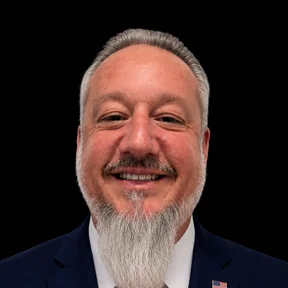
About Victor J. Rosario
Victor J. Rosario is the Residents-First candidate for Miami-Dade County Mayor 2028. A U.S. Coast Guard veteran, entrepreneur, technologist, and artist, Victor brings a track record of building real solutions — from AI tools to campaign policy — that serve Miami-Dade's 2.8 million residents.
Learn More About Victor