By Victor J Rosario - Next Mayor Of Miami Dade County 2028
For too long, Miami-Dade County has operated on one assumption: economic growth comes from outside. Attract a corporation. Offer a tax break. Hope the jobs appear. Hope the developer builds something affordable. Hope the market takes care of our residents.
It has not worked. And it will not work in the future we are heading into.
Today I am introducing the Project Victor J. Rosario Project Fund — a completely new model for how a county government generates wealth, sustains itself, and distributes prosperity directly to the people who live here. Not to corporations. Not to Wall Street. Not to outside investors. To residents.
"The county builds the enterprises. Bond holders invest and earn. Residents receive their Project Fund Benefit Check — every quarter. Because they earned it."
— Victor J. Rosario
WHAT IS THE PROJECT VICTOR J. ROSARIO PROJECT FUND?
The Project Fund is a Three-Stream County Enterprise System — the first of its kind in American municipal governance. We start from zero and build. Every enterprise we launch, every bond we retire, every AI system we deploy to lower operational costs — the Benefit Check grows. The destination is $35,000 to $80,000 per resident per year at full maturity. We get there together, one enterprise at a time. (estimated; subject to increase or decrease).
Stream One — Revenue Bonds: Miami-Dade issues Revenue Bonds to finance county-owned enterprise construction. Bond holders — Miami-Dade seniors first, then all residents, then retirees nationwide, then public pension funds — invest and receive their Bond Payment. No Wall Street. No underwriters. Direct from the county to the people.
Stream Two — County Enterprise Operations: The county owns and operates twelve industries directly. These enterprises employ Miami-Dade residents at living wages, use AI to continuously lower operational costs, sustain county services, and generate surplus revenue that grows every year.
Stream Three — Project Fund Benefit Check: Every quarter, 70% of all enterprise surplus is benefit equally among every registered Miami-Dade resident. 10% funds county Services. 10% funds Infrastructure reinvestment. 10% goes to the Enterprise Reserve. Residents always get the majority. Always.
THE TWELVE COUNTY-OWNED ENTERPRISES & I WILL ADD MORE FOR MY RESIDENTS THIS IS JUST THE APPETIZER
- MDC Broadband and Technology Authority
- MDC Workforce Housing Authority
- MDC Food Systems and Agricultural Enterprise
- MDC Autonomous and Electric Rideshare Authority
- MDC Unmanned Vehicle Operations (roads, freight, logistics)
- MDC Unmanned Truck Transportation Network
- MDC Quarters Hospitality, Tourism, and Hotel Enterprise
- MDC Licensed Casino Partnership Entertainment and Nightlife Enterprise
- MDC Restaurant Network
- MDC Fuels & Ev Charging Stations
- MDC eVTOL Air Mobility and Seaport Maritime Enterprise
- MDC Global Services — South America and Central America Operations
All twelve are wholly county-owned. All twelve employ Miami-Dade residents. All twelve are AI-optimized to maximize surplus. All twelve contribute to your quarterly Benefit Check. No Wall Street. No corporate extraction. Miami-Dade builds it, owns it, and pays its residents from it.
THE JOURNEY
Year one we start at zero. That is honest. That is real. We do not promise overnight wealth. We promise something far more powerful: a system that builds permanently, compounds continuously, and cannot be taken away. As each enterprise launches, the Benefit Check grows. As each bond is retired, the Benefit Check grows. As AI lowers our operational costs, the Benefit Check grows. As we expand into South America and Central America, the Benefit Check grows.
The destination: $35,000 to $80,000 per resident per year. A family of four: up to $320,000 per year from the county they call home (estimated; subject to increase or decrease). . Not from a job that can be automated away. Not from a stock market that AI can crash overnight. From enterprises that Miami-Dade owns permanently.
Miami-Dade is not following America's economic model. Miami-Dade is writing the new one.
This is what a residents-first administration looks like. And it begins on November 7, 2028.
Why Wall Street Cannot Be Miami-Dade's Economic Partner — And What We're Building Instead
Let me be direct. The economic model Miami-Dade has operated under for decades is not just failing — it is about to become catastrophically dangerous as artificial intelligence reshapes global financial markets.
The old model says: attract corporations, offer tax breaks, hope they create jobs. Miami-Dade has played this game and lost. Housing unaffordable. Wages stagnant. The moment a corporation finds a better deal, they leave — taking the jobs and leaving the county with zero assets and zero revenue.
THE AI VOLATILITY THREAT IS NOT HYPOTHETICAL
Algorithmic trading powered by AI already dominates global equity markets. As these systems accelerate toward superintelligence, market disruptions will become faster, more severe, and more frequent. Flash crashes that used to take days will resolve in minutes. Retirement savings that took decades to build can be wiped out in an afternoon. Seniors on fixed incomes cannot survive that world.
Miami-Dade County has the authority, the asset base, and the moral obligation to build a different path — before the disruption arrives.
THE COMPETITIVE LANDSCAPE IS ABOUT TO CHANGE COMPLETELY
Right now Uber, Lyft, Amazon, FedEx, Comcast, and hotel chains extract billions of dollars from Miami-Dade County every single year and send those profits to shareholders in other states. Their drivers earn a fraction of the fare. Our residents pay full price. The county gets nothing except a small sales tax.
My Adminitration will establish a lawful, safety-first framework for any autonomous or AI-assisted vehicles operating on county roads, and we will build a county-owned mobility enterprise — MDC Autonomous Rideshare — designed to keep local transportation revenue circulating inside Miami-Dade. The model we’re creating is rider-and-driver first: fares support better service, stable local jobs, and a system where the people who power it benefit directly. No outside corporation is operating a structure like the one I envision — where riders and drivers are the primary beneficiaries and the net operating surplus is returned to Miami-Dade residents every three months through the Project Fund Benefit Check framework.
That is just one enterprise. Multiply it across twelve. Add AI optimization that continuously lowers operational costs. Add global expansion into South America and Central America. And you understand why $35,000 to $80,000 per resident per year is not a fantasy. It is a business plan.
WHAT WE ARE BUILDING INSTEAD
Real assets that cannot be devalued by an algorithm. Real local demand that persists through any economic disruption. Real county ownership that generates permanent revenue. Real quarterly Benefit Checks that grow every year. And a municipal Revenue Bond program that gives Miami-Dade seniors stable, contractual income completely isolated from the stock market.
The county stops being a tax collector hoping corporations show up. The county becomes the enterprise — owning the broadband, the rideshare, the trucks, the hotels, the casinos, the restaurants, the food, the energy, the aircraft, and the global technology platform. Every dollar those enterprises earn comes back to Miami-Dade. Seventy cents of every surplus dollar goes directly to residents every quarter.
This is the new model. Miami-Dade is first. America is watching.
The Three-Stream Architecture: How the Model Works and Why the Streams Never Mix
The most important design principle of the Project Victor J. Rosario Project Fund is this: the three financial streams never mix.
Too many governments fail because everyone reaches into the same pot. Bond holders, operations, residents — all competing for the same money — until there is not enough for anyone. We do not do that. Each stream has one purpose, one set of stakeholders, one legal protection, and one vocabulary. Here is exactly how it works.
STREAM ONE — THE REVENUE BOND PROGRAM
Purpose: Finance enterprise construction and infrastructure development through revenue bonds. Bondholders receive repayment of principal and fixed interest as defined in the bond indenture.
Bond Payment: Fixed interest rate determined at issuance (for example, within a 4–5.6% range depending on market conditions), secured by a pledge of enterprise revenues as specified in the bond indenture. Debt service is paid in priority according to the pledged revenue structure. Bondholder rights are governed by the bond indenture and applicable state law. Official statements and required disclosures are filed with EMMA in accordance with MSRB Rule G-32 and applicable securities regulations.
Stream One Firewall: Enterprise revenues pledged to bondholders are restricted by the bond indenture and allocated into designated funds for debt service and reserves. Any diversion of pledged revenues would constitute a covenant violation subject to enforcement under applicable law. Bondholders (or the trustee acting on their behalf) have legal remedies as provided in the governing documents.
STREAM TWO — COUNTY ENTERPRISE OPERATIONS
Purpose: Run twelve county enterprises. Employ Miami-Dade residents. Use AI to continuously lower costs. Generate surplus that grows every year.
Every enterprise uses AI systems to optimize operations, reduce overhead, automate administrative functions, and maximize the surplus that flows to Stream Three. Lower operating cost means more money for the 70% Resident Pool. AI does not eliminate county jobs — it eliminates and reduce waste.
Stream Two Firewall: Enterprise operating accounts are governed by independent Authority boards. The general county budget cannot access enterprise funds.
STREAM THREE — THE 70-10-10-10 ALLOCATION
Purpose: Distribute enterprise surplus to residents and reinvest in the county's future.
Every quarter the Project Fund applies the fixed Charter allocation:
70% to the Resident Pool — divided equally among every registered Miami-Dade resident as their Project Fund Benefit Check. Always the majority. Always protected.
10% to County Services — public safety, parks, libraries, emergency management. Enterprises fund services without raising property taxes.
10% to Infrastructure Reinvestment — maintains, upgrades, and expands the twelve enterprises so they keep growing and the Benefit Check keeps growing.
10% to Enterprise Reserve — economic shock buffer. If one enterprise has a bad quarter, the Reserve covers obligations without touching the Resident Pool. Residents always get their 70%.
Stream Three Firewall: The 70-10-10-10 formula is written into the Miami-Dade County Charter. No future administration can change it without a public referendum requiring 70 percent voter approval.
WHY THE SEPARATION IS EVERYTHING
When three streams are separated by legal firewalls, trust is possible. Bond holders know they will be paid first from dedicated accounts. Residents know their 70% is protected by the Charter. Operations know their budget is independent. Everyone gets what they were promised. Every time. That is the foundation this model is built on.
The Twelve County-Owned Enterprises: Miami-Dade Builds the Biggest County Economy in America
Twelve industries. All wholly owned by Miami-Dade County. All employing Miami-Dade residents. All AI-optimized for maximum surplus. All contributing to your quarterly Benefit Check. This is how we get from zero to $35,000 — $80,000 per resident per year.
ENTERPRISE 1 — MDC BROADBAND AND TECHNOLOGY AUTHORITY
County-owned fiber optic network delivering gigabit internet to all 34 municipalities. 2.8 million residents plus hundreds of thousands of businesses paying subscription fees. Every dollar that used to go to Comcast, AT&T, and other telecoms now stays in Miami-Dade. The network also hosts the county AI platform that manages and optimizes all twelve enterprises.
Revenue potential: Billions annually from residential and business subscriptions alone.
11,500 jobs. $800 million Revenue. (estimated; subject to increase or decrease).
ENTERPRISE 2 — MDC WORKFORCE HOUSING AUTHORITY
County designs, builds, and permanently owns 10,000 then 20,000 then 50,000 workforce housing units across all 34 municipalities. Rental income is inflation-linked and permanent. After bonds retire, all rental revenue is pure surplus flowing to the Benefit Check pool.
Revenue potential: Hundreds of millions growing to billions as the portfolio scales.
7,900 jobs. $1.2 billion Revenue. (estimated; subject to increase or decrease).
ENTERPRISE 3 — MDC FOOD SYSTEMS AND AGRICULTURAL ENTERPRISE
County-owned South Dade Food Hub, county grocery stores, farm-to-school supply chain serving 350,000 daily school meals, aquaculture division, and food export operations into the MDC Global Services network. Every margin that used to go to corporate distributors now funds your Benefit Check.
4,300 jobs. $350 million Revenue. (estimated; subject to increase or decrease).
ENTERPRISE 4 — MDC AUTONOMOUS AND ELECTRIC RIDESHARE AUTHORITY
This is the game changer. Miami-Dade County passes legislation prohibiting unmanned autonomous vehicles from operating on county roads. Uber, Lyft, Waymo, and all competitors are forced onto I-95 and the interstates only. MDC owns the local market entirely — every airport pickup, every hotel drop, every nightclub ride, every commuter trip, every tourist journey across all 34 municipalities.
Miami-Dade currently generates an estimated $2 to $3 billion per year in rideshare gross revenue. Under county ownership with zero corporate commission extraction, that revenue flows directly to the Project Fund. Human drivers earn more because the county takes no commission — it takes the net profit instead.
Revenue potential: Multiple billions annually once the local market is fully captured.
2,200 jobs plus thousands of independent county-registered drivers.
$400 million Revenue. (estimated; subject to increase or decrease).
ENTERPRISE 5 — MDC UNMANNED VEHICLE OPERATIONS
County-owned autonomous vehicle fleet for specific permitted operations: fixed-route transit, campus and venue shuttles, airport people movers, port logistics, and controlled-zone delivery. These operate under county permits on designated county-managed routes separate from the public road prohibition. As the technology matures and legislation evolves, this fleet expands.
Revenue potential: Billions in operational savings and direct service revenue as fleet scales.
(estimated; subject to increase or decrease).
ENTERPRISE 6 — MDC UNMANNED TRUCK TRANSPORTATION NETWORK
The county owns and operates an unmanned freight trucking network serving Miami-Dade's logistics corridor — one of the busiest in the southeastern United States. Amazon, FedEx, UPS, and freight brokers currently extract enormous margins from South Florida logistics. The county builds the infrastructure, operates the trucks, and captures that revenue.
As legislation matures and the technology proves itself, the MDC Unmanned Truck Network expands regionally and eventually connects to the MDC Global Services network serving Central and South America.
Revenue potential: Tens of billions as freight automation scales nationally and internationally.
(estimated; subject to increase or decrease).
ENTERPRISE 7 — MDC QUARTERS TOURISM, HOSPITALITY AND HOTEL ENTERPRISE
County-owned hotel properties and convention facilities capturing Miami-Dade's extraordinary visitor economy. Miami-Dade draws over 25 million tourists per year. Corporate hotel chains currently extract billions in hospitality profits and send them to shareholders elsewhere. Under county ownership, those profits fund the Benefit Check.
5,500 jobs combined with casino enterprise. $600 million combined Revenue. (estimated; subject to increase or decrease).
ENTERPRISE 8 — MDC LICENSED CASINO PARTNERSHIP The Miccosukee Tribe AND NIGHTLIFE ENTERPRISE
County-operated gaming under Florida law and constitutional authority. Casino revenues are among the highest-margin operations in any economy. Las Vegas casinos generate billions annually. Miami-Dade, with 25 million annual visitors and the only county-operated casino in the region, captures that market entirely for residents.
Participation is limited exclusively to the Miccosukee Tribe , with no eligibility or participation permitted for any outside tribal entity from Florida or elsewhere in the United States, in recognition of the Miccosukee people as the original Indigenous community of Miami-Dade County and our broader South Florida region.
Revenue potential: million combined Revenue. (estimated; subject to increase or decrease).
ENTERPRISE 9 — MDC RESTAURANT NETWORK
County-operated full-service restaurants at every major county venue — PortMiami, Miami International Airport approach, eVTOL vertiports, transit hubs, parks, hotels, and the food hub. Celebrating Miami-Dade's extraordinary cultural cuisine — Cuban, Haitian, Caribbean, Colombian, Brazilian — operated by county culinary teams. Every meal served generates Benefit Check surplus.
2,000 jobs. million combined Revenue. (estimated; subject to increase or decrease).
ENTERPRISE 10 — MDC FUELS AND EV STATIONS
County-owned EV charging network, solar energy infrastructure, hydrogen fueling, and internal fleet energy systems. As all county enterprises electrify, energy is produced and consumed internally. Surplus energy is sold back to the grid. External customers pay the county for charging. AI optimizes energy routing to minimize cost and maximize revenue.
1,200 jobs. $800 million Revenue. (estimated; subject to increase or decrease).
ENTERPRISE 11 — MDC eVTOL AIR MOBILITY AND SEAPORT MARITIME ENTERPRISE
Miami-Dade is the first county in America to own public air transportation infrastructure. County-owned eVTOL aircraft and 12 vertiports connecting all 34 municipalities, plus expanded PortMiami operations capturing freight, logistics, and maritime revenues currently going to private operators. PortMiami already generates $6 billion in annual economic activity. County ownership captures a transformative portion of that.
5,100 jobs. $780 million Revenue. (estimated; subject to increase or decrease).
ENTERPRISE 12 — MDC GLOBAL SERVICES: SOUTH AMERICA AND CENTRAL AMERICA OPERATIONS
This is where Miami-Dade goes from a county enterprise to an international economic power. The county exports its operating model — broadband infrastructure, AI transit platforms, unmanned logistics technology, food system architecture, clean energy systems — to cities and governments across South America and Central America.
Miami-Dade is already the natural gateway between the United States and Latin America. The Project Fund leverages that position to generate international licensing fees, technology export revenue, operational management contracts, and direct enterprise operations in partner cities. The county becomes an exporter of economic infrastructure.
As these international operations mature, they contribute hundreds of millions then billions annually to the Project Fund — and directly to the quarterly Benefit Check of every Miami-Dade resident.
Revenue potential: Hundreds of billions over the full maturity of the model.
THE FULL PICTURE
Twelve enterprises. AI-optimized operations continuously lowering costs and growing surplus. Global expansion compounding revenue year over year. Bond obligations retiring over time, freeing their entire revenue stream for the Resident Pool.
We start at zero. We build. We compound. We pioneer.
The destination: $35,000 to $80,000 per resident per year.
A family of four: $140,000 to $320,000 per year (math example), subject to a household cap designed to prevent disparity, protect the resident pool, and preserve reinvestment for enterprise expansion and long-term sustainability. (estimated; subject to increase or decrease).
Miami-Dade is not following America's economic model. Miami-Dade is writing it.
The Project Fund Benefit Check: Starting at Zero, Growing to $35,000–$80,000 Per Year
Let me be completely honest with you about the Project Fund Benefit Check — because honesty is the foundation of everything this administration is built on.
We start at zero. Year one, when the first enterprises are just launching, the Benefit Check will be small. Maybe tens of dollars per quarter. We do not pretend otherwise. What we promise is something far more valuable than a large number on day one: a permanent, growing, legally protected system that compounds every single year until it changes what it means to live in Miami-Dade County forever.
The destination is $35,000 to $80,000 per resident per year at full enterprise maturity. Here is how we get there.
THE 70-10-10-10 RULE
Every quarter, all enterprise surplus is allocated by the fixed County Charter formula:
70% goes to the Resident Pool — divided equally among every registered Miami-Dade resident as their Project Fund Benefit Check. Always the majority. Always protected.
10% funds county Services.
10% funds Infrastructure reinvestment.
10% goes to the Enterprise Reserve.
Residents come first. Always 70 percent. That never changes.
HOW THE BENEFIT CHECK GROWS — PHASE BY PHASE
PHASE 1: FOUNDATION (2028–2030)
First enterprises launch: Broadband, Autonomous Rideshare, Food Hub.
Quarterly Benefit Check: Small but real. Building the base.
Bond holders begin receiving Bond Payments and Bond Holder Dividends.
Every registered resident receives their first Benefit Check.
PHASE 2: EXPANSION (2031–2033)
Hotels, Casino, eVTOL, Unmanned Truck Network operational.
MDC captures local rideshare market as county road legislation takes effect.
AI optimization begins reducing operational costs across all enterprises.
Quarterly Benefit Check grows significantly as enterprise revenues compound.
PHASE 3: SCALE (2032–2035)
All twelve enterprises at full capacity.
Global Services operations generating revenue from South and Central America.
First Revenue Bond series retire — their full revenue now flows to the Resident Pool.
AI has eliminated significant operational overhead across all enterprises.
Annual Benefit Check reaches tens of thousands of dollars per resident.
PHASE 4: FULL MATURITY (2035 and beyond)
All bonds retired. All enterprises owned free and clear.
MDC Global Services generating billions internationally.
Unmanned Truck Network scaled nationally and internationally.
AI continuously compounding operational efficiency.
Annual Benefit Check: $35,000 to $80,000 per resident. Every year. Growing.
WHAT $35,000 TO $80,000 PER YEAR MEANS FOR MIAMI-DADE FAMILIES
A single Miami-Dade resident receives $35,000 to $80,000 per year — just from living here.
A family of two registered residents: $70,000 to $160,000 per year.
A family of four registered residents: $140,000 to $320,000 per year.
(estimated; subject to increase or decrease)
This is not income from a job that can be automated away. It is not a return from a stock market that AI can crash overnight. It is not a federal program that Congress can cut. It is income from twelve county-owned enterprises that Miami-Dade residents collectively own, permanently protected by the County Charter, growing every year, paid quarterly like a paycheck.
For the first time in American history, simply living in a county makes you genuinely, structurally wealthy. Not comfortable. Not assisted. Wealthy.
HOW TO REGISTER
One-time enrollment at the Miami-Dade Project Fund Resident Portal — available online, at all 28 county libraries, and at all 34 municipal service centers. Proof of county residency required. No income limit. No employment requirement. No asset test. Payment via direct deposit, county prepaid Benefit Card, or mailed check.
The Benefit Check starts small. It grows every quarter. It never stops. Register once and it finds you forever when you are alive is a benefit once you did benefit return to resident pool.
Bonds and the Project Fund — Clear Structure, No Confusion
There is no dividend. There is no double payment system. There is no perpetual piggybacking on enterprise revenue.
The Miami-Dade County Revenue Bond is exactly what the name implies: a fixed-term debt instrument issued to finance specific county-owned enterprises. Investors provide capital up front. The County repays that capital over time with fixed, contractual interest. When the principal is fully repaid, the obligation ends. Completely. Permanently.
If the County issues a $1 billion Revenue Bond, that $1 billion is repaid according to the amortization schedule, plus interest up to 4.5 percent as specified in the bond documents. Once that repayment is complete, there are no additional payments. There is no ongoing participation in enterprise revenue. There is no continuing financial claim. The bond closes. The relationship ends.
This is not equity. It is not stock. It is not profit sharing. It is not a dividend structure. It is traditional revenue-backed municipal financing.
That clarity protects the County. It protects investors. And it protects residents from misunderstanding how the structure works.
What a Miami-Dade Revenue Bond Actually Provides
A Revenue Bond provides predictable, contractual payments for a defined period of time. The investor receives scheduled interest and principal repayment funded by the net revenue of the designated county enterprises. The terms are defined at issuance. The schedule is defined at issuance. The maturity date is defined at issuance.
There is no growth multiplier attached to the bond. Enterprise expansion does not convert into higher bond payouts. Enterprise scaling does not generate bonus distributions. The bondholder receives exactly what the bond contract states: principal plus fixed interest.
Nothing more.
Once that principal is fully paid and the final interest installment is delivered, the bond series is complete.
Priority Access — Residents First
The purchase priority structure remains resident-focused, but without implying dividend participation.
Miami-Dade County seniors aged 65 and older receive first allocation access in each bond series, with a minimum purchase threshold structured to remain accessible. After seniors, all Miami-Dade residents receive access. Following that, retirees nationwide and public pension funds may participate.
The purpose of this structure is simple: allow residents to finance the economic engine of their own county before outside capital steps in.
However, even with this resident priority structure, the bond remains a bond. It does not transform into ownership of the enterprise. It does not convert into revenue sharing. It does not grant permanent claims on county profits.
It is financing — not equity.
Why Revenue Bonds Make Sense in an AI-Disrupted Economy
In a period where artificial intelligence is rapidly transforming equity markets, displacing industries, and increasing volatility, fixed municipal revenue bonds provide something different: predictability.
A 20- or 30-year revenue bond at a defined interest rate offers seniors and long-term planners contractual clarity. The repayment is tied to tangible county enterprises that generate real local demand — transportation systems, service networks, infrastructure operations, and other essential services that residents use daily.
The bond is designed for stability. It is not designed for speculative upside.
That distinction matters.
The Project Fund Resident Benefit Check — Separate and Distinct
The Resident Benefit Check is not connected to bond ownership.
The Resident Benefit Check is funded from enterprise surplus only after operational costs, reserve requirements, and bond obligations are satisfied. It is a residency-based public benefit model — not an investor reward mechanism.
If you are a registered Miami-Dade County resident and you meet program eligibility requirements, you qualify for the quarterly resident benefit check. Your eligibility comes from residency and participation in the local economic system — not from owning a bond.
If you purchase a bond but do not live in Miami-Dade County, you receive your bond repayment. You do not receive the Resident Benefit Check.
If you live in Miami-Dade County but do not purchase a bond, you receive the Resident Benefit Check. You do not receive bond payments.
If you are both a resident and a bond holder, you receive both — but for two entirely separate legal reasons. One is contractual debt repayment. The other is residency-based program eligibility.
They are not financially fused. They are not structurally merged. They do not compound each other.
They are distinct.
A Practical Example
Maria is 65 and has lived in Miami-Dade County her entire life. She purchases $25,000 in county Revenue Bonds at a fixed 4.5 percent rate.
Each year, she receives $1,125 in interest according to the bond schedule, along with structured principal repayment over the life of the bond. When the bond reaches maturity and her full principal has been repaid, the payment stream ends.
Separately, because she is a registered Miami-Dade County resident and qualifies under program rules, she receives the quarterly Resident Benefit Check funded from enterprise surplus.
Her bond payments are contractual financing returns. Her Resident Benefit Check is a residency-based benefit.
They are separate streams governed by separate rules.
No dividend. No enterprise growth bonus. No perpetual claim.
What This Structure Protects
This model ensures that outside investors cannot claim resident benefits simply by purchasing bonds. Residency is required for the Resident Benefit Check. Investment is required for bond repayment.
The County finances its enterprise engine responsibly through debt instruments that are fully defined and finite.
Once bond obligations are satisfied, enterprise revenue belongs to the County system and its resident program structures — not to past bond holders.
There is no permanent extraction layer.
There is no perpetual payout beyond contracted terms.
There is no equity conversion.
This is debt financing paired with a residency-based economic distribution model — two separate mechanisms working in parallel, not overlapping.
Structural Clarity Is Strength
The Revenue Bond finances the buildout phase.
The Resident Benefit Check distributes surplus once obligations are covered.
The bond has a maturity date.
The Project Fund is the long-term economic framework.
There is no double counting. There is no dividend. There is no piggybacking forever.
The bond gives $1 billion. The County repays $1 billion plus interest. The obligation ends.
That is the clean structure.
TWO SEPARATE CHAINS OF COMMAND
Primary federal government employees — those whose pay, benefits, and employment are governed by Congress, the Office of Personnel Management, and the Executive Branch — are excluded from the Project Fund Benefit Check.
The federal government has its own chain of command. Congress and the White House set federal pay. The U.S. Treasury funds federal benefits. That apparatus exists precisely to support federal employees.
Miami-Dade County is not on that chain of command. Because we are not on their chain, they are not on our payment chain.
"If the county cannot be on the federal chain of command — the federal government cannot be on the county's payment chain."
Apples with apples. Oranges with oranges. The separation is complete and permanent.
WHY THIS PROTECTS MIAMI-DADE RESIDENTS
When AI and superintelligence disrupt the national economy, the federal government will manage its employees using the U.S. Treasury, the Federal Reserve, and Congressional appropriations. Miami-Dade County will manage its residents using the Project Fund — twelve county-owned enterprises, AI-optimized operations, global revenue, and quarterly Benefit Checks.
These are two parallel systems serving two different populations. If we include federal employees in the Resident Pool without federal contribution, we dilute the Benefit Check for every Miami-Dade resident. We take on an obligation that belongs to a different level of government. That is not residents-first. We will not do it.
THE 50 PERCENT MEDIAN INCOME NEGOTIATION FRAMEWORK
If the federal government wants to extend Benefit Check coverage to its Miami-Dade-resident employees, there is one path:
The federal government initiates formal negotiations with Miami-Dade County — as equals, not as a superior authority.
The federal government proposes a minimum matching contribution of 50 percent of Miami-Dade County median income per covered federal employee per year, deposited into a dedicated Federal Employee Benefit Pool separate from the Resident Pool.
Federal employees covered under that agreement receive a Federal Employee County Benefit Check from that separate pool only.
If no agreement is reached, the separation holds completely. No primary federal employee receives a county Benefit Check.
Miami-Dade sits at the table as an equal. If the federal government comes in good faith, we negotiate in good faith. If they attempt to impose conditions or override county sovereignty, we leave the table. Our first obligation is always our residents.
AGI, Superintelligence and Why Miami-Dade Is Pioneering America's New Economic Model
The Project Victor J. Rosario Project Fund is not only an economic policy for Miami-Dade in 2028. It is infrastructure for the most consequential technological transition in human history. And Miami-Dade County will be ready.
WHAT IS AGI AND WHY DOES IT CHANGE EVERYTHING?
Artificial General Intelligence — AGI — refers to AI systems that match or exceed human cognitive ability across every domain. Not just one task. Everything. The world's most capable technology organizations are racing toward this milestone. Most independent experts believe it will arrive within 10 to 20 years.
When it does, the disruption will be total. Entire categories of employment disappear overnight. Market valuations are rewritten by AI systems operating at speeds no human regulator can match. The social contract — work produces income, income produces security — must be rebuilt from the ground up.
WHY MIAMI-DADE IS DIFFERENT
Every enterprise in the Project Fund is designed to survive and grow through the AGI transition — not despite it, but because of it.
AI lowers our operational costs across all twelve enterprises. More surplus flows to the 70% Resident Pool. The Benefit Check grows faster as AI improves. We are not afraid of AI. We deploy it strategically to make our residents wealthier.
County enterprises cannot be devalued by an algorithm. Our broadband network, our housing, our food system, our transit fleet, our hotels, our casinos, our restaurants, our energy infrastructure — these serve real local demand every single day. No trading system can crash them. No market panic can devalue them.
The Benefit Check provides an income floor that survives job market disruption. As AGI eliminates traditional employment, Miami-Dade residents still receive $35,000 to $80,000 per year from county enterprise surplus. The floor does not fall when the job market does.
Fixed Revenue Bond income cannot be disrupted by market AI. Our seniors receive contractual, fixed payments backed by real enterprise revenues — not by stock prices, not by algorithmic trading systems. Their income is protected when equity markets are most volatile.
Our global expansion compounds through the AGI era. As AI lowers the cost of deploying our technology platform in South America and Central America, international revenues grow faster, compounding the Benefit Check for every Miami-Dade resident.
MIAMI-DADE AS AMERICA'S BLUEPRINT
What we are building here is the proof of concept that every county, city, and state in America will eventually need: a self-sustaining enterprise economy that employs residents, generates its own revenue, distributes income directly to its people, and survives the AGI transition because it is built on real assets, not financial abstractions.
We will document every element of this model and make it freely available. We will present it at the U.S. Conference of Mayors, the National Association of Counties, and the Florida Legislature. We will teach it. We will export it. Through MDC Global Services we will deploy it in South America and Central America. And when AGI arrives and the rest of America looks for answers, they will find the model here — built in Miami-Dade, pioneered under the Victor J. Rosario administration, and ready to be replicated everywhere.
Miami-Dade does not react to the future. Miami-Dade builds it.
The Full Revenue Vision: Why $35,000 to $80,000 Per Resident Per Year Is a Business Plan, Not a Promise
I want to break down exactly why the $35,000 to $80,000 annual Benefit Check target is realistic — sector by sector — so every Miami-Dade resident understands the math behind the mission.
We start at zero. We build. Every number below represents mature operational revenue — not year one projections. Getting there takes years of enterprise launches, bond retirements, AI optimization, and global expansion. But the destination is real and the path is clear.
RIDESHARE AND AUTONOMOUS TRANSIT — THE MARKET CAPTURE
Miami-Dade generates an estimated $2 to $3 billion per year in local rideshare gross revenue right now — going to Uber, Lyft, and corporate operators who extract 25 to 30 percent commission and send it to shareholders in other states.
Under the Project Fund, county legislation prohibits unmanned autonomous vehicles on county roads. Competitors are pushed to I-95 and the interstates. MDC Autonomous Rideshare and MDC Unmanned Vehicle Operations own the local market entirely. Zero commission extracted. 100 percent of local rideshare revenue flows to the Project Fund.
Add MDC Unmanned Truck Transportation capturing South Florida freight logistics from Amazon, FedEx, and UPS. Add eVTOL air mobility operating without private competition in county airspace. Combined transportation revenue at maturity: multiple billions annually, growing as automation lowers operational costs further each year.
BROADBAND AND TECHNOLOGY — CAPTURING THE TELECOM MARKET
2.8 million Miami-Dade residents plus hundreds of thousands of businesses currently paying Comcast, AT&T, and other telecoms for internet access. The county builds its own fiber network and becomes the provider. At $65 per month per household and significant business rates, broadband revenue alone approaches and exceeds $2 billion annually. The county AI platform managing all twelve enterprises also generates technology licensing and service revenue domestically and internationally.
HOTEL, CASINO PARTNERSHIP, NIGHTLIFE AND TOURISM — THE VISITOR ECONOMY
Miami-Dade draws over 25 million tourists per year. Las Vegas casinos generate $7 billion or more annually from far fewer visitors. A county-operated casino and hotel network serving Miami-Dade's visitor economy, with no corporate profit extraction, generates multiple billions annually for the Project Fund.
MDC GLOBAL SERVICES — THE INTERNATIONAL MULTIPLIER
This is where the model scales beyond any conservative estimate. Miami is already the financial and cultural capital connecting the United States to Latin America. MDC Global Services exports the Project Fund operating model — broadband infrastructure, AI transit platforms, unmanned logistics, food system architecture, clean energy systems — to cities and governments across South America and Central America.
Technology licensing fees, operational management contracts, and direct enterprise revenues from international operations add billions that flow directly into the Miami-Dade Project Fund and the quarterly Benefit Check of every registered resident. The county becomes an international enterprise exporter. No other county in America has attempted this. Miami-Dade is uniquely positioned geographically, culturally, and technologically to do it first.
AI COST REDUCTION — THE SILENT MULTIPLIER
Every year, AI systems managing county enterprise operations reduce overhead costs. Administrative automation, predictive maintenance, energy optimization, route efficiency, inventory management — each improvement lowers the cost of running the enterprises and increases the surplus flowing to the 70% Resident Pool. The Benefit Check grows not only because revenues increase but because costs continuously decrease. AI does not replace our workers. It eliminates waste.
THE DESTINATION
All of these revenue streams — rideshare, unmanned trucks, broadband, hotel, casino, eVTOL, seaport, food, restaurants, fuels, global services, AI savings, bond retirements — compound together over years and decades. The $35,000 to $80,000 annual Benefit Check per resident is the mature destination of that compounding system.
We start at zero. We build. We compound. We pioneer.
And we never stop growing until every Miami-Dade resident is wealthy from the county they call home.
Project Victor J. Rosario Project Fund — What It Is, What You Get, and Why It Changes Everything
THIS IS WHAT THE PROJECT FUND IS:
Miami-Dade County builds and owns twelve enterprises( I will add more). Those enterprises generate billions in revenue. 70 percent of every surplus dollar goes directly to every registered Miami-Dade resident as a quarterly Project Fund Benefit Check. The rest funds county services, infrastructure, and an economic reserve. Bond holders — especially seniors — invest in county Revenue Bonds and receive stable, contractual bond payments plus a Bond Holder Dividend. No Wall Street. No outside corporations. No federal dependency.
THE TWELVE ENTERPRISES THAT PAY YOU:
- MDC Broadband and Technology — county internet network for all 34 municipalities
- MDC Workforce Housing — county builds and owns affordable housing countywide
- MDC Food Systems — county food hub, grocery stores, farm-to-school, aquaculture
- MDC Autonomous Rideshare — county owns the local ride market, competitors pushed to interstate
- MDC Unmanned Vehicle Operations — county-run autonomous transit on permitted routes
- MDC Unmanned Truck Transportation — county freight and logistics network
- MDC Quarters Hotels and Tourism — county hotel properties capturing visitor economy profits
- MDC Casino Partnership and Nightlife Entertainment — county-operated nightlife, gaming, highest-margin enterprise
- MDC Restaurant Network — county restaurants at every major venue countywide
- MDC Fuels and Clean Energy — county EV charging network and solar infrastructure
- MDC eVTOL Air Mobility and Seaport — county air transit and port operations
- MDC Global Services — county technology and infrastructure exports to South and Central America
THE ALLOCATION RULE — FIXED BY COUNTY CHARTER:
70% — Resident Pool — your quarterly Project Fund Benefit Check. Always the majority.
10% — County Services — no property tax increases needed.
10% — Infrastructure Reinvestment — enterprises keep growing.
10% — Enterprise Reserve — protects the system in any economic condition.
THE JOURNEY:
We start at zero. Every enterprise launched, every bond retired, every AI optimization deployed, every international contract signed — your Benefit Check grows.
Destination: $35,000 to $80,000 per resident per year at full maturity.
A family of four: $140,000 to $320,000 per year. From the county you call home.
THE RULES:
All Miami-Dade residents receive the Benefit Check — equally, quarterly, permanently.
The Resident Benefit Check rewards residency. The Revenue Bond rewards investment. If someone is both a resident and a bond holder, they receive each payment according to its own rules — not because one unlocks the other, but because they independently qualify for both.
Federal government employees are excluded from the Resident Pool. The federal government takes care of its employees. Miami-Dade takes care of its residents.
Wall Street is excluded entirely. Bonds sold directly to residents. No underwriters. No speculators.
WHY NOW:
Artificial intelligence is accelerating toward superintelligence. Equity markets will become more volatile, not less. Jobs will be disrupted at a scale no safety net was designed for. The communities that build real economic independence before the disruption arrives will survive and thrive. Miami-Dade County will be first.
Miami-Dade does not follow America's economic model. Miami-Dade writes the new one.
VOTE
VICTOR J. ROSARIO
MAYOR OF MIAMI-DADE COUNTY NOVEMBER 7, 2028
The future of Miami-Dade County is being built on a bold foundation of #ProjectFund leadership under #VictorJRosario, where #ResidentsFirst is not a slogan but a structural commitment to economic independence. This #NewEconomicModel rejects dependency on #NoWallStreet systems vulnerable to #AIVolatility and instead establishes a protected #ThreeStreamModel guided by the #701010 allocation rule. Through #TwelveEnterprises — from #UnmannedVehicles and #UnmannedTrucks to international expansion via #GlobalServices — we generate real surplus that funds the quarterly #BenefitCheck and builds true #GenerationalWealth for #MiamiDadeResidents. Seniors gain stability through the #BondHolderProgram backed by county #RevenueBonds, creating #SeniorWealth while preserving #CountySovereignty through a clear #DualPaymentRule and principled #FederalNegotiation framework. Designed for #AGIReadiness in an era of #Superintelligence, powered by #AIOptimization, and driven by a transparent #FullRevenueVision, this is not just policy — it is #AmericasNewModel and Miami-Dade #PioneeringTheFuture together toward $35Kto80K in resident prosperity by #MiamiDade2028
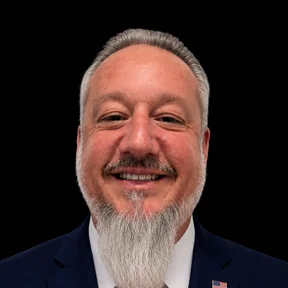
About Victor J. Rosario
Victor J. Rosario is the Residents-First candidate for Miami-Dade County Mayor 2028. A U.S. Coast Guard veteran, entrepreneur, technologist, and artist, Victor brings a track record of building real solutions — from AI tools to campaign policy — that serve Miami-Dade's 2.8 million residents.
Learn More About Victor