The Last Frontier of Privacy: Your Mind
Every prior wave of surveillance technology targeted things outside your body — your movements, your communications, your associations. Brain-computer interface (BCI) and brain-decoding technology represents something categorically different: the ability to infer what you are thinking, feeling, and intending — without your consent.
This is not science fiction. Companies like Neuralink, Emotiv, and dozens of research institutions are actively developing technologies that can decode neural signals. The FBI, DHS, and Department of Defense are funding research into these applications.
Miami-Dade's Unique Exposure
Miami-Dade County is not a random location in this risk landscape. The county's port, its proximity to international borders, and the active presence of U.S. Coast Guard, DHS, and CBP create conditions where federal agencies have both the motivation and the existing infrastructure to deploy emerging surveillance technologies — including neural monitoring — with minimal public oversight.
Victor J. Rosario, as a former U.S. Coast Guard veteran, understands both the federal security mission and its capacity to overreach at the local level.
The Neural Data Sovereignty Ordinance
Victor proposes a Neural Data Sovereignty Ordinance for Miami-Dade County:
- Criminalizes non-consensual neural data collection within county jurisdiction
- Requires federal agencies to disclose any neural monitoring programs to the County Commission before operating in Miami-Dade
- Establishes a Brain Privacy Office within the Miami-Dade Office of Civil Rights
- Partners with medical institutions to monitor and report unauthorized BCI device activity
- Creates a neural privacy legal aid fund for residents who believe their rights have been violated
The Civil Liberties Fight of the Late 2020s
Victor Rosario frames brain privacy as the defining civil liberties issue of the coming decade. Just as the 1960s and 70s required federal legislation to protect against wiretapping and the 2000s required new frameworks for digital privacy, the 2020s require proactive legal protection for neural data — before the technology is deployed at scale, not after.
Miami-Dade can lead. Victor Rosario will ensure it does.
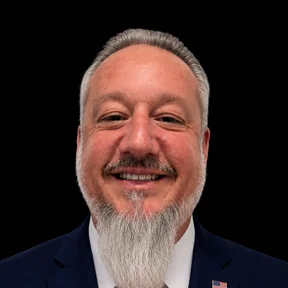
About Victor J. Rosario
Victor J. Rosario is the Residents-First candidate for Miami-Dade County Mayor 2028. A U.S. Coast Guard veteran, entrepreneur, technologist, and artist, Victor brings a track record of building real solutions — from AI tools to campaign policy — that serve Miami-Dade's 2.8 million residents.
Learn More About Victor