
Introduction: Why Indian Creek Matters
Indian Creek has always been one of the most unique waterways in Miami-Dade County. On its banks sit some of Miami Beach’s most historic homes and neighborhoods. It is not just a canal or a boating lane—it is a vital piece of our community’s lifestyle, a fragile ecosystem that supports Florida’s wildlife, and a corridor that shapes the flow of daily life in Miami Beach.
Yet for the past several years, Indian Creek has been placed under immense strain. Commercial boating operations have been introduced into a waterway that was never meant to serve as a marina hub. Traffic on the 63rd Street Bridge has been paralyzed by constant vessel transits requiring the bridge to open and close throughout the day. Manatees—Florida’s gentle giants—have been placed at higher risk of injury, while residents and tourists alike endure gridlock, delays, and frustration.
This is not sustainable. It is not fair to the residents who pay the price in lost time. It is not fair to small business owners who rely on smooth traffic to keep their doors open. And it is not fair to the environment, which has been asked to carry a burden it cannot bear.
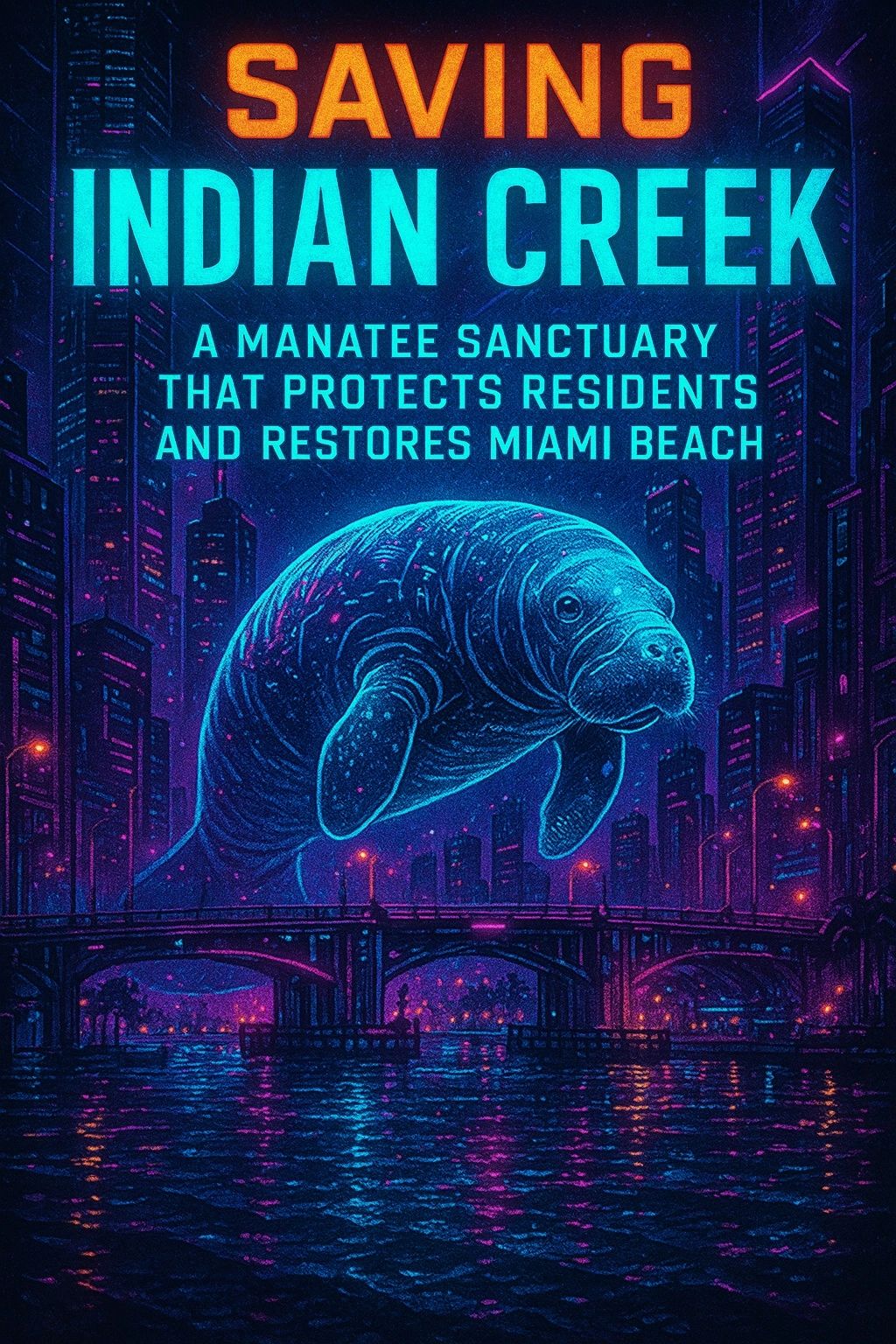
The solution is clear. By designating Indian Creek as an official manatee sanctuary, we take a decisive step forward: protecting our wildlife, relieving daily traffic headaches, and restoring Indian Creek to the peaceful, residential waterway it was always meant to be.
Section 1: Manatee Sanctuary — Protecting Florida’s Gentle Giants
The manatee is not just a symbol of Florida; it is a living reminder of the natural beauty that defines our state. Slow-moving and gentle, manatees thrive in calm, shallow waters where seagrass is abundant. Indian Creek provides precisely that environment.
For decades, manatees have been protected under both federal and state law. The Marine Mammal Protection Act and the Endangered Species Act provide federal safeguards, while Florida’s Manatee Sanctuary Act declares the entire state a refuge for these endangered animals. Yet law alone does not stop harm; action at the local level is required.
Indian Creek is one of those critical local areas where manatee protection is not optional—it is essential. With increasing boat traffic, the risk of propeller strikes grows. Each strike represents not only the potential death of a manatee but also a blow to the health of Florida’s ecosystem. Manatees keep seagrass beds in balance, and seagrass beds are vital to our fisheries, water quality, and marine diversity.
Designating Indian Creek as a manatee sanctuary means putting the balance back where it belongs. It means reducing vessel traffic, creating idle-speed zones, and protecting the animals that cannot protect themselves.
But it also means more than environmental stewardship—it means showing the people of Miami Beach that protecting manatees and protecting their lifestyle can go hand in hand.
Section 2: Residents First — Protecting Lifestyle and Freedom
A top priority of my administration is to make sure that residents are not penalized when policy is enacted. In Indian Creek, every homeowner has vessels in their backyard. These vessels are part of their lifestyle, part of their daily lives, and part of the reason they live where they live.
Let me be clear: those rights will not change.
Property owners inside of Indian Creek will be grandfathered in. They will continue to enjoy unrestricted access to their vessels. They will be able to come in and out of Indian Creek freely, at any time, and without delay.
This sanctuary does not touch their way of life. The designation will not stop residents from boating, fishing, enjoying their water access, or living exactly as they always have.
The sanctuary is not about taking from residents. It is about correcting the imbalance caused by commercial exploitation. It is about protecting both manatees and residents by eliminating the unnecessary boat traffic that creates conflict, congestion, and danger.
Residents of Miami Beach deserve assurance: their lifestyle remains intact, their vessels remain free, and their community gains peace.
Section 3: The Marina Problem — A Bad Fit from Day One
The marina at Indian Creek was a mistake from the start. For more than a year and a half, its construction and operations have disrupted life for both residents and small business owners.
Indian Creek was never equipped to handle a commercial marina. It lacks the most basic infrastructure required:
- Parking: The area has no capacity to absorb the influx of cars that come with commercial boating operations. This creates curbside chaos and compounds traffic stress.
- Facilities: The supporting facilities—bathrooms, staging areas, storage, fueling stations—were never properly designed for high-volume use.
- Compatibility: Indian Creek is a residential neighborhood. It was not zoned or planned as a commercial waterway hub. To shoehorn in a marina is to invite disruption, conflict, and constant strain.
Residents have felt the consequences every day. Small business owners have lost time and customers. Tourists have faced disrupted schedules as buses and shuttles stall in bridge traffic. And all of it stems from one poor decision: placing a commercial marina in a place where it never belonged.
Section 4: The 63rd Street Bridge — A Chokepoint for the Community
The 63rd Street Bridge is more than just infrastructure—it is a lifeline for residents and businesses. Every time it opens, traffic in Miami Beach grinds to a halt.
Under current federal regulations, the bridge opens on the half-hour from morning to evening. That means dozens of openings each week. For drivers, each opening represents not just a pause but a ripple effect of delays that can last long after the bridge comes back down.
For residents, this means late arrivals to work, missed appointments, and wasted hours. For small business owners, it means delayed deliveries, customers stuck in traffic, and lost revenue. For emergency services, it means potentially life-threatening delays.
And what drives all these openings? Commercial vessels from the marina.
Residents do not transit Indian Creek at the volume required to trigger constant openings. The marina’s operations, by contrast, demand it multiple times a day. That single factor compounds into gridlock that affects thousands of people every week.
Section 5: Data and Evidence — What We’ve Collected So Far
Months ago, I began compiling data on this issue. The results confirmed what every resident already knows from experience:
- The 63rd Street Bridge opened dozens of times each week, far beyond what was sustainable.
- Each opening caused cumulative traffic delays, measured in thousands of vehicle-minutes lost across Miami Beach.
- Emergency vehicles reported delays during active calls, creating risks that no community should accept.
- Marina logs revealed that the majority of vessel traffic was commercial, not residential, proving that the disruption stemmed directly from non-resident operations.
- Tourism-related disruptions were frequent. Tour buses and shuttles found themselves stalled, frustrating visitors and leaving businesses to absorb the fallout.
This data paints a clear picture: the marina is not a neutral addition to Indian Creek—it is the root of a chain reaction that harms residents, businesses, and the environment alike.
Section 6: The Unified Solution — Balancing Environment and Daily Life
The solution we are putting forward is not piecemeal. It is comprehensive, addressing the full range of issues in one unified step:
- Indian Creek becomes a manatee sanctuary.
- Commercial operations cease.
- Idle-speed and no-wake protections are enforced.
- Manatees gain safe passage in a critical habitat.
- Residents are protected.
- Property owners remain grandfathered in.
- Residents keep full freedom to boat and enjoy their waterway lifestyle.
- Traffic relief is achieved.
- With fewer vessel transits, the 63rd Street Bridge opens far less frequently.
- Residents, businesses, and tourists see smoother traffic flow and fewer disruptions.
- Tourism and small business benefit.
- Less congestion means more reliable service for visitors.
- Local business owners regain valuable time and efficiency.
This is how government should work: by balancing environmental protection with human quality of life.
Section 7: Countywide Lessons and Broader Vision
What we do in Indian Creek can serve as a model for the rest of Miami-Dade County. There are other waterways facing similar strains: high vessel traffic, sensitive wildlife habitats, and chokepoint bridges that affect thousands of residents.
By adopting the Indian Creek approach—designating sanctuaries where needed, removing commercial exploitation from residential zones, and coordinating bridge operations with federal authorities—we can apply smart, sustainable solutions countywide.
This ties into my broader vision for Miami-Dade: a county where residents come first, where the environment is protected, and where infrastructure works for the people, not against them.
Section 8: My Commitment as Mayor of Miami-Dade County
This issue is not just policy—it is personal. I have spoken with residents, small business owners, and workers who have had their lives disrupted by this problem. They are tired of wasting their time. They are tired of being ignored. And they are tired of paying the price while others profit.
My administration’s priority is clear:
- Residents’ lifestyles remain intact.
- Commercial exploitation ends where it harms the community.
- Traffic improves for everyone.
- Manatees and wildlife are protected.
This is not just about Indian Creek. It is about setting a standard that Miami-Dade County will put its people first.
Conclusion: The Future of Indian Creek
The future of Indian Creek is one of balance, protection, and fairness. By designating it as a manatee sanctuary, we safeguard our environment and restore peace to a community that has carried the burden of poor planning for too long.
Residents keep their rights and their lifestyle. Small business owners regain the flow of traffic they depend on. Tourists enjoy a smoother experience. And manatees gain a safe haven in the heart of our county.
This is the Miami-Dade I envision: one where residents come first, wildlife is protected, and quality of life is non-negotiable.
The people of Miami Beach and Miami-Dade deserve nothing less.
MIAMI-DADE COUNTY (DRAFT)
OFFICE OF THE MAYOR
EXECUTIVE ORDER NO. 2028-XX
TITLE: Indian Creek Manatee Sanctuary; Traffic Relief at the 63rd Street Drawbridge; Countywide Manatee Protection Coordination
WHEREAS,
Indian Creek is a sensitive waterway within Miami-Dade County that supports Florida manatees (Trichechus manatus latirostris), which are protected under the federal Marine Mammal Protection Act, the Endangered Species Act, and Florida’s Manatee Sanctuary Act declaring the State a refuge and sanctuary for manatees; and
WHEREAS,
the Florida Fish and Wildlife Conservation Commission (FWC) is authorized to adopt manatee protection rules, including speed, operation, and activity restrictions in especially important areas for manatees, and Miami-Dade County maintains and updates a County Manatee Protection Plan in coordination with FWC and the U.S. Fish & Wildlife Service; and
WHEREAS,
the 63rd Street Bridge (bascule) spans Indian Creek at mile 4.0, with openings governed by federal regulation (33 CFR §117.293) and related Coast Guard rulemakings that currently require on-the-hour and half-hour openings 7:00 a.m.–7:00 p.m. daily (except federal holidays) with weekday peak-hour restrictions, a schedule implemented to address recurring congestion; and
WHEREAS,
frequent bridge lifts on 63rd Street materially disrupt traffic circulation for Miami Beach and County residents—affecting daily commutes, emergency response, tourism flow, and quality of life—with local officials and community stakeholders having sought further reductions (e.g., shifting to top-of-the-hour only) to reduce openings and delays; and
WHEREAS,
portions of the Indian Creek shoreline lack adequate on-site parking and marina facilities to safely and sustainably support intensive commercial boating without exacerbating traffic, queueing, and safety hazards at the 63rd Street corridor; and
WHEREAS,
Miami-Dade County has a compelling interest in protecting manatees and their habitat, improving public safety and mobility, and coordinating with state and federal partners over waterways, bridge operations, and navigation to minimize harmful environmental and traffic impacts;
NOW, THEREFORE,
I, Victor J. Rosario, Mayor of Miami-Dade County, pursuant to the authority vested in me by the Miami-Dade County Home Rule Charter and applicable law, do hereby order:
Section 1. Purpose and Scope
This Order establishes the Indian Creek Manatee Sanctuary and directs County actions to (a) protect manatees and habitat, (b) reduce traffic disruptions associated with the 63rd Street Bridge, and (c) coordinate countywide manatee-protection measures with state and federal authorities.
Section 2. Definitions
a. Indian Creek Sanctuary (ICS): The Indian Creek waterway from Biscayne Bay Mile 0 at the Collins Avenue/Indian Creek Drive confluence northward to and including the approaches to the 63rd Street Bridge (mile 4.0), including associated coves, canals, and basins within County jurisdiction, unless otherwise limited by state or federal preemption.
b. Commercial Vessel Operations: Charters, rentals, tour boats, water taxis, workboats, fueling barges, and any for-hire or revenue-generating boating activity not exclusively for a resident’s personal use.
c. Resident Vessels: Vessels registered to and operated by residents whose primary dwelling is located on Indian Creek/adjacent parcels within the Sanctuary footprint.
Section 3. Sanctuary Designation and Interim Operating Rules
a. Designation. Indian Creek is hereby designated a County Manatee Sanctuary Zone for purposes of County policy, planning, enforcement support, and intergovernmental coordination. This designation shall be harmonized with and contingent upon final speed, operation, and access rules adopted by FWC pursuant to the Manatee Sanctuary Act.
b. Resident-Only Vessel Access. Property owners and residents of Indian Creek shall be grandfathered in and retain unrestricted vessel access to and from their homes at all times. County agencies shall seek state rulemaking to limit routine vessel transits within the ICS to resident vessels and bona fide riparian access, with narrowly tailored exceptions for emergency, law enforcement, and essential services.
c. Commercial Operations Moratorium. Effective upon this Order:
- The County shall suspend issuance or renewal of permits, dockage agreements, or approvals for new commercial vessel operations launching, staging, or conducting business within sight of or inside the ICS.
- County enforcement shall coordinate to prevent unauthorized commercial embarkations in the ICS, subject to state/federal preemption and due process.
d. Speed/No-Entry Zones. The County hereby petitions FWC to promulgate and post Idle-Speed/No-Wake and, where necessary, Limited-Entry/No-Entry zones within the ICS and adjacent manatee-use areas, with markers posted consistent with state law and inland navigation district practices.
Section 4. 63rd Street Bridge Traffic-Relief Actions
a. Petition to U.S. Coast Guard. The County, in partnership with the City of Miami Beach, shall submit a formal request to USCG District Seven to further modify the 63rd Street Bridge schedule to reduce opening frequency (e.g., top-of-the-hour only during daylight periods) and maintain peak-hour holds, supported by traffic data and safety analyses.
b. Operations Coordination. The Department of Transportation and Public Works (DTPW) shall coordinate signal timing, detours, and traveler information to minimize queueing during any bridge lift, and deploy dynamic messaging to warn motorists of impending openings.
c. Emergency Priority Protocol. In partnership with fire-rescue and law enforcement, DTPW shall establish a protocol with the bridge tender to delay or re-sequence openings to accommodate active emergency response when feasible under federal regulations.
d. Marina Siting and Parking Compliance. The Department of Regulatory and Economic Resources (RER) shall review marina and commercial boating sites influencing the 63rd Street corridor and require adequate on-site parking and curb-management plans as a precondition to County approvals.
Section 5. Countywide Manatee Protection Alignment
a. Plan Integration. The Division of Environmental Resources Management (DERM) shall incorporate the ICS and this Order’s measures into the Miami-Dade Manatee Protection Plan (2028 update) and prepare amendments in coordination with FWC and USFWS.
b. Seasonal/Adaptive Rules. DERM shall recommend seasonal adjustments (e.g., calving periods, water-temperature events) consistent with FWC guidance and the Manatee Sanctuary Act.
Section 6. Enforcement & Signage
a. Interagency Enforcement. The Miami-Dade Police Department Marine Unit shall coordinate with FWC and municipal police to enforce posted restrictions once adopted, and enforce County-issued permit conditions.
b. Regulatory Markers. Upon FWC adoption, markers will be posted and maintained consistent with statute assigning responsibility and funding pathways through inland navigation districts.
Section 7. Public Communication
DERM and DTPW shall launch a public information campaign (web maps, SMS/email alerts, marina outreach) explaining sanctuary rules, bridge-opening windows, and alternative launch sites.
Section 8. Severability
If any provision of this Order is held invalid, the remainder shall not be affected.
Section 9. Effective Date
This Order shall take effect immediately upon signing, with Sections 3(b)–(d) operative upon and consistent with FWC rulemaking and federal navigation law.
Victor J. Rosario Mayor, Miami-Dade County Date: ____________ Future Mayor of Miami-Dade County
About Victor J. Rosario
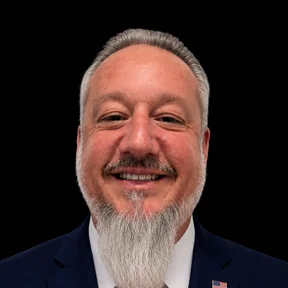
Victor J. Rosario is the Residents-First candidate for Miami-Dade County Mayor 2028. A U.S. Coast Guard veteran, entrepreneur, technologist, and artist, Victor brings a track record of building real solutions — from AI tools to campaign policy — that serve Miami-Dade's 2.8 million residents.
Learn More About Victor