
By Victor J. Rosario, Future Mayor of Miami-Dade County (2028)
Introduction: I’m Not “Fighting Washington.” I’m Defending Miami-Dade.
Let me be crystal clear: this is not about theatrics. This is about who controls Miami-Dade County—our operations, our data, our public safety priorities, and most importantly, our residents’ rights.
For too long, local governments across America have drifted into a dangerous pattern: “partnerships” and “task forces” that sound cooperative on paper, but in practice can become a black box—less transparency, weaker local oversight, and blurred responsibility when something goes wrong.
Under my administration, Miami-Dade will not be a place where outside agencies—no matter how powerful—can use “partnership” language to bypass local standards, local accountability, or local consent.
This blog explains exactly what will change, what I can do as Mayor, what I cannot do under the Constitution, and how we will build a County-First Public Safety Framework that is lawful, enforceable, and permanent.
But I also need to say something personal—because this isn’t theory for me.
Why This Is Personal: I Lived What “Task-Force Cooperation” Can Become
I’m not writing this as an academic or as a politician chasing headlines. I’m writing it as someone who believes he became a victim of the culture of task-force cooperation—the kind of inter-agency coordination that can become so tangled, so opaque, and so protected by “process,” that a resident can feel trapped inside a system that’s hard to challenge and even harder to audit.
When government cooperation turns into a closed ecosystem, what residents often lose first is the ability to get straight answers:
- Who authorized this?
- Who was in charge?
- What data was shared?
- What standards applied?
- What complaint pathway exists that actually works?
If the public can’t trace decisions, then the public can’t fix decisions. And if a resident can’t prove what happened, accountability becomes a rumor war instead of a record.
That ends under my administration.
I am ending the kind of discretionary cooperation that turns residents into collateral damage—and replacing it with a system designed for records, rules, audit trails, and enforceable local control.
The Big Principle: County Cooperation Is a Choice—Not a Surrender
The federal government has its own responsibilities, and it can operate under federal authority. But here’s what many residents don’t realize:
Miami-Dade does not have to volunteer its workforce, its systems, its data, or its contracts into federal task-force pipelines just because someone asks.
Across the country, “joint” operations—especially intelligence and multi-agency task forces—have raised recurring concerns about local oversight, public transparency, and whether local policies can be enforced once local officers are embedded into federal structures.
And yes—some federal agencies emphasize information sharing and task forces as a central operating model. That’s exactly why Miami-Dade must put guardrails around what we share, when we share it, and under what legal standards.
My Administration Ends the “Automatic Yes” Culture
Miami-Dade will no longer operate under an automatic “yes” mindset to task forces, embedded partnerships, and informal data-sharing.
If the county cannot enforce its standards inside a structure, then Miami-Dade will not participate in that structure.
I’m ending cooperation that:
- blocks local transparency,
- prevents meaningful resident complaint pathways,
- sidesteps county policy,
- or creates conditions where residents can be harmed while institutions point fingers at each other.
From day one, the default will be County Control—and the burden will be on any outside partnership to prove it meets Miami-Dade’s standards.
County Contracts Are Not Federal Territory — The Mayor Will Be In Charge
I need to add something residents deserve to hear plainly:
In Miami-Dade County, I will be the one in charge—not federal agents, not federal task forces, and not outside operators influencing county decisions behind closed doors.
That includes contracts.
Under my administration, Miami-Dade County contracts will not be shaped, steered, or “recommended” through any outside pressure pipeline. The people who decide how our county spends money, who performs the work, and who gets access to county systems will be Miami-Dade leadership operating under Miami-Dade rules, with documented processes and traceable accountability.
This is a County-First standard:
- County contracts will be executed for county benefit—not outside agendas.
- No task-force framework will be allowed to influence county procurement decisions.
- No back-channel “coordination” will determine who wins county work.
- No unofficial role—formal or informal—will exist where outside agents steer Miami-Dade operations.
If it isn’t in writing, logged, auditable, and compliant with county procedures and resident rights, it doesn’t happen. Period.
What I Can Do as Mayor of Miami-Dade County
This part matters. Miami-Dade’s Home Rule structure gives the Mayor real operational authority over county administration, policy execution, and how county departments operate day-to-day.
So when I say “County-First,” I’m not speaking in slogans. I’m talking about operational control—policy control—contract control.
As Mayor, I will:
1) Terminate voluntary participation in task-force embedding that weakens local control
If a federal partnership requires Miami-Dade personnel to operate under rules that block county transparency, compliance, or public accountability, then Miami-Dade will not embed into that structure.
2) End discretionary data-sharing agreements that fail Miami-Dade standards
Miami-Dade will maintain cooperation required by law. But discretionary data pipelines that lack:
- audit logs,
- retention limits,
- documented legal basis,
- purpose limitations,
- and resident due process protections
…will be terminated or renegotiated.
3) Prohibit “workarounds” that bypass county policy and civil rights safeguards
No county department will be allowed to adopt “partnership workarounds” that:
- avoid county procurement rules,
- bypass oversight,
- create undocumented access pathways,
- or weaken resident complaint mechanisms.
4) Require public reporting (transparency is not optional)
When any county department works with any federal entity, residents deserve to know:
- The purpose
- The legal basis
- The data exchanged (high-level)
- The oversight mechanism
- The measurable outcomes
- The complaint pathway
Sensitive operational details can be protected. But the structure must be visible.
5) Build a County Civil Rights & Public Integrity framework that actually functions
Miami-Dade will implement a documented system where:
- residents can file complaints easily,
- departments must respond with timelines,
- evidence preservation is mandatory,
- and outcomes are recorded and reviewable.
6) End any discretionary contract “coordination” that allows outside influence
Miami-Dade will make Miami-Dade decisions—on Miami-Dade terms.
We will require a clear separation between:
- public safety cooperation (when lawful and necessary), and
- contract execution and procurement control (which belongs to the county and the public record).
7) Require a County Control Clause in Project Fund operations and major contracts
No hidden integrations. No shadow access. No backdoor data handoffs. No “liaison by default.”
Anything touching Project Fund will be:
- logged,
- audited,
- permissioned,
- and controlled by the county.
What I Cannot Do (And I’m Not Going to Lie to You)
I’m not going to sell fantasy.
A county government generally cannot “close federal offices” or “ban a federal agency from operating” inside the county the way people imagine—because federal operations have constitutional protections and legal doctrines that limit local interference.
So if you ever hear a politician say: “I’ll shut down the feds,” ask them: “How, legally?”
My approach is stronger than empty threats—because it focuses on what actually changes your daily life:
- Who accesses county systems
- Who gets county data
- Who commands county personnel
- Who influences procurement and contracts
- What oversight exists
- How residents obtain accountability
That is real power. That is real protection.
The Policy: The Miami-Dade “County-First Public Safety & Data Firewall”
Under my administration, Miami-Dade will implement a County-First framework with enforceable pillars.
Pillar 0: The “No More Victims” Standard
This policy exists because I refuse to allow any resident to experience what I experienced under task-force style cooperation—where the system becomes too tangled to challenge and too opaque to correct.
Miami-Dade will adopt a simple rule:
If a cooperation model creates victims and the county cannot prove transparency and accountability, the cooperation ends.
This is not anti-federal. This is pro-resident.
Pillar 1: No Task-Force Embedding Without County Terms
If a partnership requires Miami-Dade personnel to operate under a structure that blocks county transparency, compliance, or local accountability, Miami-Dade will not embed into that structure.
This isn’t radical. It’s governance.
Pillar 2: Data Minimization + Audit Trails (No Invisible Sharing)
Every byte of resident-adjacent information is power.
So the rule will be:
- minimum necessary sharing,
- written legal basis,
- strict purpose limitation,
- audit logs,
- retention limits,
- no secondary use without new authorization.
If it’s not documented, it doesn’t happen.
Pillar 3: Local Standards Apply to Local Work
No county employee gets to say, “Federal partners told us to do it,” as a way to escape county policy.
Miami-Dade will adopt a simple operational truth:
If you work for Miami-Dade, Miami-Dade rules apply.
Pillar 4: Real Accountability Pathways for Misconduct
If residents allege misconduct—whether by local employees or anyone operating around county systems—Miami-Dade will:
- preserve evidence,
- document complaints,
- route potential criminal conduct through appropriate prosecutorial channels,
- publish non-sensitive outcome reporting so residents aren’t left in the dark.
No political stunts—just serious, documented action.
Pillar 5: The Contract Firewall (Procurement Integrity Is Resident Protection)
This is where people underestimate the danger.
When contract decisions are influenced by outside ecosystems, residents pay twice:
- through wasted money, and
- through loss of control over the very systems that run their county.
Under my administration:
- county contracts will be county-driven,
- contract access will be county-controlled,
- and contract outcomes will be auditable.
If a vendor touches sensitive county functions, they will meet:
- strict access control requirements,
- security reviews,
- data retention and deletion rules,
- and penalties for non-compliance.
Where Project Fund Fits: “County-Controlled Means County-Controlled”
Project Victor J. Rosario (Project Fund) is about keeping power, money, and infrastructure inside Miami-Dade—so residents benefit.
That means Project Fund operations will be designed with a Firewall mindset:
- county workforce first,
- county procurement standards,
- county-owned systems where possible,
- clear access controls,
- no “shadow integrations,”
- no backdoor vendors,
- no unaccountable external pipelines.
Project Fund Will Control Execution — Not Outsiders
Project Fund is not a slogan. It’s the operating model.
That means something very specific for contracts:
Project Fund is how Miami-Dade executes work with Miami-Dade people—not federal agents taking a role in county contracts, not outside forces steering outcomes, and not vendor ecosystems designed to extract money from our residents.
Under my administration:
- the county’s execution engine will be MDC Workforce + Project Fund governance,
- contract performance will be county-tracked, county-audited, county-enforced,
- and outside partnerships, when they exist, will be tightly bounded—no access, no control, no influence beyond what the law and written agreements explicitly require.
Miami-Dade will build. Miami-Dade will operate. Miami-Dade will keep the value inside the county.
A Note on Individuals and Allegations (Records Over Rumors)
I’ve spoken publicly about what I believe are cases of protection, silence, or institutional cover behavior around specific actors.
I’m going to say this the right way:
Miami-Dade will not run on rumors. Miami-Dade will run on records.
This blog is not a courtroom filing. It’s a governance blueprint.
If any person—any badge, any title—commits crimes or abuses power, Miami-Dade will pursue accountability through lawful procedures, evidence preservation, and formal referrals.
That is how you win. That is how you build a county that cannot be manipulated.
The 90-Day Implementation Plan (First Quarter of the Administration)
Within the first 90 days, my administration will:
- Inventory every federal partnership, MOU, data-sharing agreement, and task-force participation
- Categorize them into:
- Required by law
- Optional / discretionary
- Unclear / undocumented
- Issue a County-First Cooperation Reset Order:
- Freeze discretionary task-force embedding pending review
- Require written terms, audit logging, and county oversight for any cooperation that continues
- Terminate participation that fails County-First standards
- Terminate or renegotiate discretionary agreements that fail County-First standards
- Publish a public-facing transparency report (with sensitive details protected)
- Establish a resident complaint and escalation pipeline with documented timelines
- Implement audit logging + access policies across participating departments
- Establish a Contract Firewall Standard for major agreements:
- no undocumented access,
- no hidden integrations,
- no shadow data pathways,
- enforceable penalties for violations.
Miami-Dade residents will be able to see—clearly—what changed and why.
EXECUTIVE ORDER NO. 2028-XX(DRAFT)
MIAMI-DADE COUNTY OFFICE OF THE MAYOR
COUNTY-FIRST PUBLIC SAFETY & DATA FIREWALL
TERMINATION OF DISCRETIONARY FEDERAL TASK-FORCE EMBEDDING AND OUTSIDE INFLUENCE OVER COUNTY CONTRACTS
ESTABLISHING PROCUREMENT INTEGRITY, DATA ACCESS CONTROLS, AND GOVERNANCE FOR PROJECT VICTOR J. ROSARIO (PROJECT FUND)
WHEREAS, Miami-Dade County is a Home Rule County with a duty to govern in a manner that protects residents, preserves civil rights, and ensures local accountability through transparent administration; and
WHEREAS, public safety requires trust, and trust requires clear oversight, documented authority, and auditable decision-making—especially when county personnel, county systems, and county data interact with outside entities; and
WHEREAS, Miami-Dade County has historically participated in various interagency models, partnerships, and task-force structures that may reduce local visibility into chain-of-command decisions, limit local policy enforcement, and weaken resident complaint pathways; and
WHEREAS, discretionary “task-force embedding” and informal cooperation models can create conditions where responsibility becomes blurred, records become fragmented, and residents may be harmed without clear, county-controlled accountability mechanisms; and
WHEREAS, I, Victor J. Rosario, have personally experienced what it means to become a victim of opaque interagency cooperation culture—where oversight is unclear, decision authority becomes tangled, and residents are left fighting a system that is difficult to audit and even harder to correct; and
WHEREAS, Miami-Dade County must adopt a County-First framework that preserves lawful cooperation when required, while ending discretionary participation that compromises transparency, local standards, resident rights, or procurement integrity; and
WHEREAS, county contracts are instruments of public trust, and any outside influence—formal or informal—over procurement, vendor selection, contract scope, access permissions, or operational execution undermines the public interest and exposes the county to long-term control risks; and
WHEREAS, Miami-Dade County must ensure that its workforce, procurement decisions, and county-owned systems remain under county governance, with explicit access controls, audit logging, retention limitations, and enforceable compliance standards; and
WHEREAS, Project Victor J. Rosario (Project Fund) is established to keep economic power, operational execution, and governance infrastructure inside Miami-Dade County for the benefit of county residents, including through a county-controlled execution engine (“MDC Workforce”); and
WHEREAS, it is the duty of the Mayor to ensure that county administration is operated under county authority, with county leadership in charge—never outside agents steering Miami-Dade operations, contracts, or resident-facing systems;
NOW, THEREFORE, I, VICTOR J. ROSARIO, MAYOR OF MIAMI-DADE COUNTY, FLORIDA, DO HEREBY ORDER AS FOLLOWS:
SECTION 1. PURPOSE AND INTENT
1.1. This Executive Order establishes the County-First Public Safety & Data Firewall to: (a) end discretionary federal task-force embedding that weakens county oversight or resident protections; (b) restrict discretionary data sharing that lacks county-controlled safeguards; (c) enforce a Contract Firewall preventing outside influence over county procurement and contract execution; and (d) ensure Project Fund operations remain county-controlled, auditable, and resident-first.
1.2. This Executive Order does not prohibit lawful cooperation required by constitutional duty, state law, federal law, court order, or mutual aid obligations. It establishes that discretionary participation is conditional and must meet Miami-Dade standards.
SECTION 2. DEFINITIONS
For purposes of this Executive Order:
2.1. “Task-Force Embedding” means any arrangement where Miami-Dade County personnel are assigned, detailed, embedded, or operationally directed within an interagency unit or federal-led structure such that: (a) county transparency requirements are restricted; (b) county policy enforcement is limited; (c) the chain of command is unclear to the public; or (d) county records, audits, or oversight are obstructed.
2.2. “Discretionary Cooperation” means voluntary participation not strictly required by law, including informal information exchanges, ad hoc data requests, embedded assignments, or operational coordination that is not governed by a county-approved written agreement.
2.3. “County Systems” means any Miami-Dade County information system, database, network, endpoint, application, infrastructure, telemetry, security tooling, or resident-facing platform.
2.4. “Resident-Adjacent Data” means data that identifies or can reasonably be linked to county residents, visitors, or county personnel, including metadata and derived analytics.
2.5. “Contract Influence” means any direct or indirect attempt by an external entity or external agent to shape county procurement outcomes, including vendor selection, scope, pricing, access permissions, technology architecture, staffing, or operational execution decisions.
2.6. “Project Fund / Project Victor J. Rosario” means the county governance, operational, and economic framework established under this administration to execute county work through MDC Workforce, reduce external vendor dependence, and ensure county value remains in Miami-Dade.
SECTION 3. MAYORAL CONTROL AND
CHAIN OF COMMAND
3.1. Under this administration, Miami-Dade County will be governed by Miami-Dade leadership. The Mayor is the executive authority responsible for county administration and the execution of county instruments and contracts.
3.2. No external entity shall hold any informal, shadow, advisory, or operational command role over Miami-Dade County departments, personnel, procurement, or Project Fund execution.
3.3. County departments are prohibited from representing or implying that external partners “directed,” “authorized,” or “required” discretionary actions that would conflict with county policy, resident rights, or procurement integrity.
SECTION 4. TERMINATION AND
RESTRICTION OF DISCRETIONARY
TASK-FORCE EMBEDDING
4.1. Immediate Policy: Miami-Dade County shall terminate or decline participation in any discretionary task-force embedding arrangement that: (a) restricts county audit authority; (b) limits transparency obligations; (c) prevents application of county standards; (d) obstructs records retention and access; or (e) weakens resident complaint pathways.
4.2. Any continued interagency participation must be governed by a written agreement approved through county administrative review that includes, at minimum: (a) documented purpose and scope; (b) chain-of-command clarity; (c) records retention requirements; (d) audit logging and review rights; (e) data minimization and retention limits; (f) prohibition on procurement influence; and (g) a resident-facing complaint pathway.
4.3. No Automatic Yes: The default posture of Miami-Dade County is not automatic participation. Discretionary embedding is exception-based and must satisfy County-First standards.
SECTION 5. COUNTY DATA
FIREWALL: DATA MINIMIZATION,
AUDITS, AND ACCESS CONTROLS
5.1. Data Minimization Rule: Resident-adjacent data may be shared only when: (a) required by law, court order, or documented legal process; or (b) discretionary sharing is explicitly approved under a written agreement that meets this Order’s safeguards.
5.2. Audit Logging Requirement: All approved data exchanges shall require audit logging documenting: (a) the requestor entity; (b) purpose; (c) legal basis; (d) data categories exchanged; (e) timestamp; (f) retention period; and (g) authorizing county official.
5.3. Retention Limits: Discretionary data sharing must include retention limits and deletion requirements aligned to the stated purpose.
5.4. No Undocumented Access: No external entity shall have undocumented access to County Systems, including API access, shared credentials, hidden integrations, or “temporary” access not recorded and approved.
SECTION 6. CONTRACT FIREWALL:
PROCUREMENT INTEGRITY AND
OUTSIDE INFLUENCE BAN
6.1. County Contracts Are County-Controlled: Miami-Dade County procurement decisions, vendor selection, contract scope, and contract execution shall be governed by Miami-Dade County—not external agents.
6.2. Prohibition on Contract Influence: County personnel are prohibited from receiving or acting on procurement recommendations, shortlists, scope edits, access pathways, or technology architecture direction from external entities outside documented, lawful, and county-approved processes.
6.3. Separation Rule: Public safety cooperation (when lawful and necessary) shall not be used as a pathway to influence: (a) procurement decisions; (b) technology adoption; (c) staffing structures; (d) access permissions; or (e) contract execution control.
6.4. Contract Integrity & Access Standard (Major Contracts): For contracts above thresholds established by the Mayor’s implementing directive, departments shall publish a high-level public integrity summary (protecting sensitive details) covering: (a) purpose; (b) governance structure; (c) access boundaries; (d) security controls; (e) audit mechanisms; and (f) complaint pathway.
SECTION 7. PROJECT FUND
GOVERNANCE AND MDC
WORKFORCE EXECUTION
7.1. Project Fund is established as the county’s resident-first execution and modernization framework, and MDC Workforce is designated as the county-controlled engine to perform and expand internal execution of county work.
7.2. County-Controlled Means County-Controlled: Project Fund operations shall include: (a) clear access controls; (b) no shadow integrations; (c) no backdoor vendor access; (d) audit logging; and (e) enforceable compliance requirements.
7.3. As consistent with law, and subject to implementing directives, the administration shall expand the scope of work performed internally by MDC Workforce each year, prioritizing contracts that: (a) were historically vendor-executed without meaningful competition; (b) create long-term dependency risks; or (c) involve resident-adjacent data or critical systems.
SECTION 8. RESIDENT RIGHTS,
COMPLAINT PATHWAYS, AND
RECORDS
8.1. Miami-Dade County shall maintain a resident complaint pathway for conduct affecting county systems, county personnel, county contracts, or resident rights arising from cooperation models.
8.2. Records Over Rumors Standard: This administration will operate on documentation, evidence preservation, and lawful referrals—not speculation. Departments shall preserve relevant records and follow proper procedures.
8.3. Nothing in this Order authorizes unlawful detention, punitive action without due process, or action outside lawful authority. Where potential criminal conduct is credibly indicated, the matter shall be referred to the appropriate legal authorities with documented evidence preservation.
SECTION 9. IMPLEMENTATION: 90-
DAY COUNTY-FIRST RESET
9.1. Within ninety (90) days, the Mayor (or designee) shall require an inventory of: (a) task-force participation; (b) embedded assignments; (c) MOUs and interagency agreements; (d) data-sharing agreements; and (e) any external access permissions to County Systems.
9.2. Each item shall be categorized: (a) required by law; (b) discretionary but compliant; (c) discretionary and non-compliant; or (d) unclear/undocumented.
9.3. Discretionary non-compliant items shall be terminated or renegotiated to comply with this Order.
SECTION 10. ENFORCEMENT AND
COMPLIANCE
10.1. Department directors shall implement internal procedures consistent with this Order and shall certify compliance on a schedule established by the Mayor’s implementing directive.
10.2. Violations by county personnel may result in administrative action consistent with county policies and applicable law.
10.3. Vendors and partners who violate access controls, audit requirements, or integrity provisions may be subject to contract remedies, termination, and disqualification to the maximum extent permitted by law.
SECTION 11. SEVERABILITY
If any section, subsection, sentence, clause, or phrase of this Executive Order is held invalid, the remainder shall not be affected and shall continue in full force and effect.
SECTION 12. EFFECTIVE DATE
This Executive Order shall take effect immediately upon signature, and shall apply to all county departments, agencies, boards, offices, and Project Fund operations under the authority of Miami-Dade County.
SIGNED AND ORDERED:
Victor J. Rosario Mayor, Miami-Dade County
Date: ____________________
Future Mayor of Miami-Dade County.
FAQ (So Residents Understand Exactly What This Means)
Are you saying Miami-Dade will not cooperate with the federal government at all?
No. Cooperation required by law and necessary for legitimate public safety functions will continue. What ends is discretionary embedding and undocumented pipelines that weaken local oversight.
Can the county “ban” a federal agency from operating here?
County government cannot simply “ban” federal operations by decree. What the county can do is control county participation, county data access, county systems, and county contracts—and that’s where residents feel the difference immediately.
Does this reduce safety?
No. This increases safety—because safety requires trust, and trust requires transparency. Miami-Dade will still enforce laws and protect residents, but with local accountability and auditable processes.
What about county contracts—why is that part of this?
Because contracts are power. Whoever controls contracts controls systems, data paths, and the long-term direction of the county. Under my administration, Miami-Dade contracts will serve Miami-Dade residents—period.
Important note
This blog is public information and policy intent—not legal advice. Always consult your attorney or public defender for legal guidance on any individual case.
Closing: Miami-Dade Will Never Be “Easy Territory” Again
I’m not here to play politics.
I’m here to build a Miami-Dade County where:
- residents are protected,
- power is accountable,
- data is defended,
- government is modern,
- and the county’s future is built by the county—for the county.
And let me be direct:
Miami-Dade will never again be run through outside pipelines. Under my administration, the Mayor is in charge, the county is in control, and the contracts serve residents—not outsiders.
That is County-First. That is Project Fund. That is how we change America—starting here. 🇺🇸
Victor J. Rosario Future Mayor of Miami-Dade County (2028)
Call to Action
If you support a Miami-Dade government that is transparent, locally controlled, and resident-first, book a meeting and join the movement.
Hashtags
#UnleashingMiamiDadeCounty #VictorImpactWrench #AllSystemsOnline #TeamVictor #MiamiDade #Accountability #Transparency #GovTech #ProjectFund
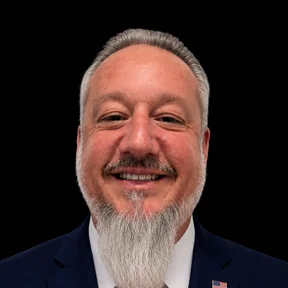
About Victor J. Rosario
Victor J. Rosario is the Residents-First candidate for Miami-Dade County Mayor 2028. A U.S. Coast Guard veteran, entrepreneur, technologist, and artist, Victor brings a track record of building real solutions — from AI tools to campaign policy — that serve Miami-Dade's 2.8 million residents.
Learn More About Victor