
By Victor J. Rosario Future Mayor of Miami-Dade County (2028)
Miami-Dade residents are not crazy. You’re not “overreacting.” You’re not imagining patterns that aren’t there.
A real structural change took place on January 7, 2025, and it has consequences that touch every neighborhood, every family, every business, and every municipal police department inside Miami-Dade County.
This blog post is about that change.
It’s also about something even bigger:
When local law enforcement becomes structurally separated from county oversight, it creates a risk that outside forces—especially federal agencies and federal task forces—can influence priorities and outcomes in ways that don’t reflect the will of Miami-Dade residents.
That is not “political theatre.” That is governance.
And if we don’t address it, the long-term risk is simple:
More people will feel trapped in a system where accountability is blurred, decision-makers can point fingers in every direction, and residents are left holding the consequences.
What Changed on January 7, 2025—and Why It Matters
On January 7, 2025, Miami-Dade’s public safety structure shifted because the Sheriff became an independent constitutional office.
Plain English:
- Before: Residents could reasonably expect public safety to operate inside a clearer county accountability framework.
- After: The Sheriff’s Office exists in a structure where county leadership has less direct operational control, and the chain of oversight becomes more complicated.
That change might sound like an administrative tweak.
It’s not.
It changes:
- How decisions are made
- Who approves interagency relationships
- How agreements are reviewed
- How funding becomes entangled
- How “mission creep” happens
- How residents experience fairness and accountability
And residents have been noticing it ever since.
The Core Problem: “County Government” Can’t Fully Protect Residents If Public Safety Is Structurally Detached
Here’s the hypocrisy I refuse to accept:
It makes no sense to run for Mayor of Miami-Dade County and then pretend I can protect residents 100% if the largest law enforcement system affecting countywide dynamics is structurally independent from the county.
That doesn’t mean the Sheriff is “bad.”
It means the design is vulnerable.
And any vulnerable design eventually gets exploited—by politics, by bureaucracy, by fear-based decision-making, by interagency pressure, by funding incentives, and by the simple reality that power always tries to expand.
If this structure can be used to harm me, it can be used to harm residents.
If it can be used to intimidate people, it can be used to intimidate county employees.
If it can be used to influence how cases get pushed, it can influence who gets caught in the system.
A county cannot claim it’s fully in control of its own destiny while the primary public safety structure is set up in a way that can drift away from county accountability.
The “Federal Extension” Risk: Why Residents Worry About FBI Influence
Let’s be extremely clear and responsible here:
Not every federal partnership is evil. Not every federal operation is unjust. Not every agent is corrupt.
But it is also true that federal priorities change based on:
- The federal administration
- Federal leadership
- Federal political climate
- Federal task force goals
- National narratives
- Federal funding and enforcement initiatives
So the question becomes:
Who ensures Miami-Dade doesn’t become a “plug-in” for federal priorities?
Because when local residents feel they can be targeted or pressured, the damage spreads beyond one person:
- People stop trusting local institutions
- People feel powerless
- Businesses become afraid of the system
- County employees believe they can be “made an example”
- Municipal departments mirror the behavior they see from countywide enforcement
When people perceive that federal influence is shaping local enforcement, it doesn’t matter what party you are.
That perception destroys trust.
And trust is public safety.
Why This Feels Political to Many Residents—And Why That’s Dangerous
Many residents, especially Republicans, believe that federal enforcement priorities can be weaponized, selectively applied, or used to shape political outcomes.
Whether you agree with that belief or not, here’s the key point:
If the system is structurally capable of being weaponized, then it must be structurally repaired.
That is the only “grown-up” solution.
Not rage. Not revenge. Not chaos.
A structural repair so that:
- No Democrat gets targeted unfairly
- No Republican gets targeted unfairly
- No independent gets targeted unfairly
- No resident becomes collateral damage to outside agendas
That’s the real win: a county that cannot be hijacked.
“Why Are Federal Cases Showing Up in County Jail?”
Residents ask this all the time, so let’s address it.
It is common in the United States for federal detainees to be housed in local or county jails under contracts and custody arrangements. That alone doesn’t prove wrongdoing.
But what residents are really asking is this:
Why does it feel like federal influence is operating through local detention and local enforcement ecosystems?
And that’s where the governance problem becomes serious:
When the public can’t tell where federal influence ends and local accountability begins, it creates the impression that:
- County systems are being used to do federal work
- Local resources are being quietly absorbed into federal missions
- People are being processed under dynamics they don’t understand
- The system becomes harder to challenge, because it looks “local” but behaves “federal”
That confusion is exactly why we need structural reform, not just talking points.
The Domino Effect: 34 Municipalities Mirror What They See
This is the part most people are missing.
Miami-Dade is not one city.
We have 34 municipalities, and many departments look to the county and its countywide systems as the “big partner.”
So what happens when one structure shifts?
- Cities follow the “new normal”
- Municipal departments align strategies
- Joint operations become easier
- A pattern spreads fast
If the Sheriff structure becomes a model of “independent + interagency-heavy + outside-influenced,” you can expect departments to mirror it.
Not because they’re evil.
Because bureaucracies copy what works for them operationally.
That is why this issue is bigger than one case or one headline.
It’s a countywide cultural shift.
Spanish (Para los residentes que hablan español)
El cambio del 7 de enero de 2025 no es algo pequeño.
El Sheriff ahora es independiente, y eso significa que el condado tiene menos control directo sobre cómo se manejan ciertas prioridades, alianzas y decisiones.
Si esto me está pasando a mí, le puede pasar a cualquier residente del Condado Miami-Dade.
Y por eso esto tiene que cambiar. No por política. Por protección, por control local, y por justicia para todos los residentes—sin importar partido, apellido o vecindario.
The Solution: County-First Reform That Starts in Tallahassee
Let’s be honest:
This isn’t something you fix with a press conference.
If the structure changed through state-level constitutional design, then the repair must be driven through Tallahassee.
That means:
- Drafting a state-level bill framework
- Educating residents
- Building countywide support
- Pushing for a lawful pathway that restores Miami-Dade’s county accountability option
This is exactly why I’m starting this now—immediately—so residents understand what changed and why the fix has to be statewide.
What the “Restore County Control” Bill Must Do
This is what the bill must accomplish in plain English:
1) Restore a Miami-Dade option for county accountability
Miami-Dade needs a lawful pathway to restore a structure where the Sheriff function is aligned with county governance the way residents remember.
Not for “power.”
For accountability
.
2) Build a firewall against federal mission creep
No matter what your politics are, the county needs safeguards that prevent:
- undocumented cooperation
- hidden resource drains
- unofficial influence through task forces and informal pipelines
3) Require transparency and measurable reporting
Residents should be able to see, in an aggregated and responsible way:
- what agreements exist
- what they cost
- what their scope is
- what outcomes are being claimed
- what oversight exists
4) Protect residents from political targeting—period
The bill must address the risk that law enforcement can be pulled into politically polarized behavior.
This must be written as a neutral safeguard:
No county systems can be used to target residents based on politics, demographics, or viewpoint.
What We Can Do Locally While Tallahassee Moves
Even before state reform is completed, a future county administration can still push a county-first posture through lawful levers like:
A) County funding and resource protections
Miami-Dade taxpayers should not subsidize outside missions without clear controls.
B) County property and access controls
County assets should not be “free infrastructure” for activities residents cannot audit or understand.
C) Public records and agreement disclosure
Where lawful, agreements should be visible and reviewable so residents can see how their county is being used.
D) Oversight and complaint pathways
Residents need a safe process to report abuse patterns without fear.
(And yes—if a system causes fear, it’s already broken.)
What Residents Can Do Right Now
This is not a spectator situation.
If you want change ASAP, this is how the public helps force momentum:
1) Share the date: January 7, 2025
Residents need to connect the structural change to the lived experience.
2) Demand clarity and accountability
Ask local leaders:
- What agreements exist?
- What oversight exists?
- What resources are being used?
- What controls exist?
3) Support the Tallahassee fix
State-level reform only happens when public pressure becomes impossible to ignore.
4) Stop dismissing this as “politics”
This is governance.
And governance determines whether families feel safe.
FAQ
Q: Are you saying every federal partnership is wrong?
No. I’m saying the county must have safeguards so partnerships don’t become pipelines that residents can’t see, audit, or challenge.
Q: Why can’t the County just order the Sheriff to change?
Because the Sheriff is now an independent constitutional office. That’s why the fix requires Tallahassee.
Q: What’s the biggest danger here?
Loss of accountability + mission creep + the perception (and risk) of political weaponization.
Q: What’s the goal of your reform?
A Miami-Dade that is:
- locally accountable
- transparent
- county-first
- resistant to outside manipulation
- fair to all residents
Closing: Miami-Dade Must Belong to Miami-Dade Residents
I’m not running for office to “look away.”
If I see a structural vulnerability that can be exploited against residents, then I have a duty to confront it and fix it.
This is why I am starting the public education now.
This is why we draft the Tallahassee fix now.
And this is why we build a county-first coalition now—so Miami-Dade law enforcement is truly about protecting Miami-Dade residents, not serving as an extension of outside priorities.
This needs to change ASAP.
Victor J. Rosario Future Mayor of Miami-Dade County (2028)
#UnleashingMiamiDadeCounty #VictorImpactWrench #AllSystemsOnline #TeamVictor
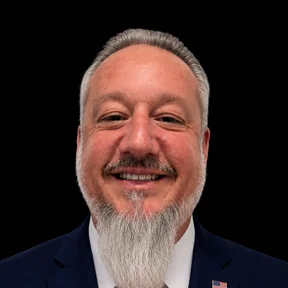
About Victor J. Rosario
Victor J. Rosario is the Residents-First candidate for Miami-Dade County Mayor 2028. A U.S. Coast Guard veteran, entrepreneur, technologist, and artist, Victor brings a track record of building real solutions — from AI tools to campaign policy — that serve Miami-Dade's 2.8 million residents.
Learn More About Victor