By Victor J. Rosario, candidate for Miami-Dade County Mayor · October 23, 2026
Residents-First Administration
Initiative: Miami-Dade County Robotic Assistance Program (MDRAP)
Proposed Implementation: Beginning in 2029
Miami-Dade County Is Ready for the Next Generation of Public Safety
Miami-Dade County operates correctional facilities, transit stations, airports, seaport facilities, government buildings, and critical public infrastructure that require security, supervision, maintenance, and emergency response around the clock.
These operations cost residents millions of dollars in personnel expenses, overtime, equipment, and administrative resources.
My administration intends to change how Miami-Dade County approaches these responsibilities.
Under my proposed Miami-Dade County Robotic Assistance Program (MDRAP), we will begin deploying County-owned robotic assistants throughout public facilities to strengthen security, improve employee accountability, accelerate emergency medical response, and reduce long-term operating expenses.
These will not be robots operated by an outside corporation collecting ongoing management fees.
Miami-Dade County will purchase the robots directly, integrate them into our existing departmental technology infrastructure, train our employees, and operate the entire program under County control.
This is responsible technology. This is modernization. And this is how we build a more efficient government that works for residents.
1. Robots Inside Miami-Dade County Correctional Facilities
One of my first priorities will be deploying robotic assistants inside County correctional facilities, including:
- Turner Guilford Knight Correctional Center (TGK)
- Metro-West Detention Center
- Pre-Trial Detention Center
- Other appropriate County correctional buildings and operational areas
Correctional officers perform difficult, demanding work in facilities that require continuous supervision.
Our robotic assistants will accompany officers during designated security rounds, monitor authorized areas, transmit live video to designated control stations, and assist with incident documentation.
Imagine a correctional officer walking through a housing unit accompanied by a robotic assistant.
The robot can document the patrol, identify potential safety hazards, alert personnel to emergencies, and provide additional visibility to supervisors.
If an altercation occurs, the County has an additional evidentiary record.
If someone requires assistance, there is an additional way to identify the emergency.
If an allegation of misconduct arises, appropriately preserved video evidence can help investigators determine what happened.
The objective is accountability in both directions: protecting correctional employees from false accusations while protecting incarcerated individuals from misconduct, neglect, and preventable harm.
Robots will not independently discipline incarcerated individuals, use force, or replace correctional officers.
Human officers will maintain operational authority.
2. Emergency Medical Robots: When Seconds Matter
This is one of the most important components of the initiative.
Consider an incarcerated person who suddenly collapses inside a correctional facility.
Whether the medical emergency involves cardiac arrest, respiratory distress, a seizure, a diabetic emergency, or another serious condition, every second can matter.
Our objective is to position emergency-assistance robots on designated floors, within housing areas, and near high-risk locations so they can support faster emergency response.
How an Emergency Medical Robot Would Work
When someone collapses or an emergency is reported, a nearby robotic assistant could:
- Receive an emergency alert and navigate toward the incident.
- Transmit live video to correctional control personnel and authorized medical staff.
- Carry emergency equipment, potentially including an automated external defibrillator (AED), oxygen equipment, first-aid materials, and other approved medical supplies.
- Establish two-way communication with nurses, emergency medical technicians, or other qualified responders.
- Relay available observations and, when technically validated and medically authorized, collect relevant vital signs.
- Document dispatch, arrival, equipment delivery, and response timelines.
The robot would become an immediate logistical and communications resource for the correctional officer and medical team.
Qualified personnel would remain responsible for medical assessment, oxygen administration, CPR, AED use, and other treatments under approved protocols.
No One Should Be Left Waiting for Help
I am particularly concerned about situations in which an incarcerated person collapses and emergency care is delayed while staff wait for medical personnel.
These situations deserve careful investigation, accurate documentation, and improved procedures.
My administration will review correctional emergency-response policies and establish clear expectations for immediate notification, appropriate first aid by trained personnel, and rapid access to medical equipment.
A robot cannot replace a nurse, paramedic, or correctional officer trained in emergency care.
But it can potentially get vital equipment, communications, and additional situational awareness to the scene sooner.
The goal is simple: reduce avoidable delays and improve the opportunity to save lives.
3. Robots in Metrorail Stations and Transit Facilities
Residents depend on Miami-Dade's public transportation network to travel to work, school, medical appointments, and other essential destinations.
Our robotic assistants would be introduced into selected Metrorail stations, transportation terminals, and other County transit facilities.
They could support security personnel by conducting programmed patrols, identifying hazards, detecting unusual equipment conditions, assisting passengers through two-way communications, and reporting incidents to transportation control centers.
For example, if a passenger collapses on a platform, a robot equipped with emergency communications and approved medical equipment could help accelerate the response.
If a station experiences an equipment malfunction, obstruction, or safety concern, the robot could immediately send an alert.
If an incident involves violence or vandalism, authorized recordings could help preserve evidence.
We will make transportation safer without turning public transit into an uncontrolled surveillance environment.
4. PortMiami, Miami International Airport, and Critical Infrastructure
PortMiami and Miami International Airport are major economic assets that require sophisticated safety and security operations.
Under this initiative, the County would evaluate robotic patrol and assistance systems for authorized areas of these facilities.
At PortMiami, robots could assist with terminal patrols, perimeter monitoring, hazard identification, restricted-area inspections, and emergency equipment delivery.
At Miami International Airport, suitable robotic assistants could help with facility inspections, passenger-assistance functions, safety notifications, and selected security-support tasks.
These systems would operate in coordination with the responsible County departments and applicable airport, maritime, and federal security requirements.
The County could also deploy specialized robotic systems for hazardous-material response, firefighting support, and suspicious-object assessment.
The objective is to reduce unnecessary human exposure to dangerous situations while strengthening operational awareness.
5. Robotic Patrols Across County Properties
We also intend to introduce appropriate robotic assistants in County government buildings, public parking facilities, service centers, parks, and other designated County-controlled locations.
These robots could provide a visible public-safety presence and assist employees in identifying emergencies, reporting damaged infrastructure, and directing residents to available services.
A robot assigned to a government building could support authorized patrols, detect water leaks or dangerous obstructions, and communicate with a County employee when assistance is needed.
A robot working at a large public event could deliver emergency equipment or communicate safety instructions under human supervision.
Deployment beyond County-controlled property would require the appropriate legal authority, coordination, and operating restrictions.
Our objective is not to create autonomous police officers or install machines that independently enforce laws.
These will be robotic assistants—not robotic police officers.
6. No External Management Corporation: County-Built, County-Controlled
Here is where my administration will take a different approach.
I do not want Miami-Dade County purchasing robotic equipment and then becoming permanently dependent on an outside corporation to operate it.
That business model can produce additional management fees, software subscriptions, service agreements, and vendor lock-in.
My proposed model is straightforward.
We buy the equipment. We build the integration. We operate it. We maintain it. We own the operational data.
The County will evaluate equipment directly from qualified manufacturers through applicable competitive procurement procedures.
Our own departments will establish the technical architecture, including Corrections IT, County information technology and cybersecurity personnel, transportation technology teams, and other relevant units.
We will develop County-controlled systems for robot dispatching, charging, monitoring, video management, maintenance scheduling, software integration, and operational reporting.
Where specialized manufacturer support, licensed software, safety certification, or replacement components are necessary, we will obtain them through clearly defined agreements—not surrender control of the program to a third-party management corporation.
County technicians will be trained to inspect, maintain, troubleshoot, and support the equipment.
We will also establish internal technical positions as necessary to support future expansion.
This is how Miami-Dade County develops institutional knowledge instead of paying outsiders indefinitely for routine operations.
7. Robots Do Not Collect Overtime
One of the largest potential benefits is long-term operating efficiency.
Human employees require salaries, benefits, breaks, schedules, training, and overtime compensation.
Robotic systems have a different cost structure.
A robot can perform suitable assignments across extended operating periods, subject to battery capacity, charging requirements, maintenance, and safety limitations.
It does not collect overtime.
It does not require employee benefits.
It can return to a charging station and resume operations according to its programmed schedule.
However, robots still cost money to purchase, maintain, power, repair, secure, and eventually replace.
My administration will measure actual operating costs rather than promise savings before the figures are available.
We will compare robotic deployment expenses against current operating costs and identify assignments where automation provides measurable financial and safety benefits.
The savings, where demonstrated, can help preserve County resources and support resident-focused priorities.
We will not measure success by how many employees we eliminate. We will measure success by how much unnecessary expense we eliminate while improving service.
8. Protecting County Employees While Introducing Automation
This initiative is designed to enhance the County workforce, not eliminate the people who serve our communities.
Correctional officers will remain responsible for correctional operations.
Medical professionals will remain responsible for medical care.
Transit personnel will remain responsible for transit operations.
Security professionals will maintain their lawful responsibilities.
The robots will handle selected repetitive patrols, equipment transportation, inspections, monitoring assistance, and documentation functions.
As the program expands, we will develop opportunities for County employees to receive training in robotics maintenance, fleet supervision, technical support, cybersecurity, and systems administration.
Employees with practical field experience will help determine where robotics is useful and where it is not.
Technology should make County employees more effective, not turn them into spectators inside their own departments.
9. Everything Documented. Everything Accountable.
Accountability will be a central design requirement.
Robots deployed in designated security and correctional environments will use continuously available camera systems, with recording policies appropriate to their assignments and the law.
When functioning and recording as authorized, they can document patrols, emergency responses, officer interactions, equipment failures, and incident timelines.
Recorded evidence will be protected using role-based access, tamper-evident logs, cybersecurity protections, and established retention procedures.
Privacy safeguards will apply to medical treatment areas, legally privileged communications, and other protected circumstances.
Video access will be restricted to authorized personnel, and disclosure will be governed by applicable law.
The County will also establish procedures for independent incident review and evidence preservation.
Robots will not be authorized to make final disciplinary decisions, independently identify someone as guilty of wrongdoing, or use automated predictions as substitutes for evidence.
We will build a system that supports transparency and due process rather than uncontrolled surveillance.
10. A Practical Rollout Beginning in 2029
The first stage will focus on identifying appropriate equipment, establishing internal technical standards, and conducting controlled pilot programs.
Correctional facilities will be an early priority, particularly officer-accompaniment functions and emergency equipment delivery.
Metrorail stations and selected County government buildings will be evaluated for subsequent pilot deployments.
PortMiami, airport operations, critical infrastructure, and broader patrol functions will follow where operational testing, legal authority, and available funding support implementation.
Each pilot will be evaluated using measurable standards:
- Emergency response and equipment delivery times
- Equipment reliability and operational availability
- Safety incidents and documented outcomes
- Actual costs of ownership and maintenance
- Employee workload and overtime trends
- Evidence integrity, privacy, and cybersecurity compliance
We will pursue appropriate state and federal grants and evaluate eligible Project Victor J. Rosario (Project Fund) support within its established financial framework, subject to lawful authorization and funding restrictions.
Expansion will depend on verified results—not promotional claims from robotics manufacturers.
11. A Long-Term County Robotics Division
My vision extends beyond purchasing a handful of machines.
Miami-Dade County should develop the internal capability to operate and maintain an expanding robotic assistance fleet for decades.
That means establishing common technical standards, County-controlled fleet-management software, trained technicians, spare-parts inventories, secure charging facilities, and regular performance audits.
As technology improves, we can update components, expand capabilities, and introduce new robotic equipment without rebuilding the entire operation.
The knowledge stays with Miami-Dade County.
The infrastructure stays under Miami-Dade County control.
The operating decisions stay with County employees.
And the financial benefits, if realized, remain available to support County residents.
12. Residents-First Technology, Not Technology for Show
I am not proposing robotics because it looks futuristic.
I am proposing robotics because government should use technology responsibly to solve real operational problems.
If a robot can deliver emergency equipment faster, we should evaluate it.
If a robot can help a correctional officer document an incident accurately, we should evaluate it.
If a robot can identify a hazard before a resident is injured, we should evaluate it.
If a robot can perform repetitive assignments at a lower verified lifecycle cost, we should evaluate it.
But if a robot cannot demonstrate a meaningful safety or financial benefit, Miami-Dade County should not purchase it.
This is not about replacing human judgment.
It is about giving our employees better tools, protecting the public, improving emergency response, and making County operations more efficient.
Miami-Dade County does not need an external corporation running our future.
We need the technological infrastructure, trained personnel, financial discipline, and leadership to operate that future ourselves.
That is the foundation of a Residents-First Administration.
That is County-Built. County-Controlled.
And that is how we move toward making Miami-Dade County #1 in America.
Victor just needs the keys of the building.
Victor J. Rosario
Candidate for Miami-Dade County Mayor 2028
Residents-First Administration
#ElMayor
Architecture and Systems Vision by Victor J. Rosario aka Guilty Trex.
Website: victormiamidadecountymayor.com
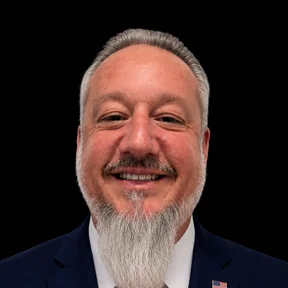
About Victor J. Rosario
Victor J. Rosario is the Residents-First candidate for Miami-Dade County Mayor 2028. A U.S. Coast Guard veteran, entrepreneur, technologist, and artist, Victor brings a track record of building real solutions — from AI tools to campaign policy — that serve Miami-Dade's 2.8 million residents.
Learn More About Victor