
By Victor J. Rosario, candidate for Miami-Dade County Mayor · October 24, 2026
Miami International Airport is one of the most important public assets in Miami-Dade County, and under my administration it will be treated like one. It will not be treated like a loose collection of rooms, back offices, discretionary suites, embedded bureaucratic footprints, or free real estate for agencies and components that are not essential to the lawful operation of the airport. It will be treated as County property, County infrastructure, and County opportunity. The residents of Miami-Dade County do not own MIA so that extra space can quietly drift into the hands of nonessential office users while passengers deal with congestion, while families search for decent places to sit, while airport workers need better support services, and while the County leaves revenue, jobs, and control on the table. My position is direct. We will preserve what must be preserved, comply with what must be complied with, and reclaim what belongs to the people of Miami-Dade County. That is not radical. That is what serious executive leadership looks like when it understands the difference between essential operations and unnecessary occupation.
MIA is not a symbolic asset. It is a major operating and economic engine for the County. Miami-Dade’s Aviation Director states that the aviation system led by MIA generates $31.9 billion in business revenue and supports more than 275,000 direct and indirect jobs, while MIA itself is operated by the Miami-Dade Aviation Department. The current administration also stated in January 2026 that MIA served more than 55 million travelers last year, almost 50 percent more than in 2021. Those numbers matter because they prove that MIA is not a side issue. It is not just another facility. It is one of the economic hearts of the County, one of the most visible gateways into our community, and one of the clearest places where leadership either shows up or disappears. If an airport of that scale is carrying unnecessary office baggage, excess administrative occupancy, or poorly prioritized interior space, that is not a small management problem. That is a County-level leadership problem. Miami International Airport (opens in a new tab)
My doctrine is simple. The County will fully preserve the federally required footprint that is actually necessary to operate a certified commercial airport and a lawful port of entry. I am not talking about shutting down the port of entry. I am not talking about interfering with screening. I am not talking about denying space that is legally required for TSA, CBP, customs, border processing, airport policing, fire rescue, or life-safety operations. Miami International Airport is a current CBP port of entry, and TSA programs apply to scheduled passenger service operating into or out of a TSA-controlled sterile area. FAA grant assurances also remain ongoing obligations for airport sponsors that accept federal airport funding. Those are real requirements, and I am not writing around them. I am saying something different and much more focused: once the required footprint is preserved, the rest of the airport belongs to County policy, County priorities, and County leadership. U.S. Customs and Border Protection (opens in a new tab)
That distinction is the entire point of this initiative. For too long, people speak about airports as if every room inside an airport automatically becomes a federal entitlement the moment there is a runway outside or a checkpoint nearby. That is not how a serious county government should think. A mayor’s job is not to volunteer more airport space than the law requires. A mayor’s job is to protect the lawful requirements, keep the airport running, and then manage the rest of the property in a way that improves service, strengthens local control, and creates measurable value for residents. That means the airport should not function like a quiet storage facility for discretionary office uses that have embedded themselves over time. It should function like a modern, disciplined, revenue-aware public asset that prioritizes people, operations, and County purpose.
So this is where the policy line will be drawn under a Residents First administration. First, the County will maintain every space allocation that is genuinely required for certification, aviation security, customs inspection, border processing, airport policing, emergency response, and safe operations. That part stays. Second, every office, room, suite, workspace, storage footprint, shared-use area, administrative corner, back-of-house occupation, and badge-controlled square foot beyond those minimum required functions will be audited. Third, anything discovered to be nonessential, redundant, discretionary, overallocated, or improperly embedded will be reviewed for consolidation, relocation, nonrenewal, or lawful termination. Fourth, the space recovered through that process will not sit idle. It will be redirected to airport County control under Project Victor J. Rosario, a.k.a. Project Fund, for passenger amenities, cafeterias, lounges, hospitality services, and other airport-serving economic uses that create jobs and strengthen local control in a Residents First administration.

That is exactly where the conversation changes. Most politicians talk about the airport as if their only choices are to leave everything alone or pick a public fight with federal agencies. My administration will do neither. We will preserve what is legally required and reclaim what is not. We will stop treating valuable airport real estate as invisible space. We will treat it as County inventory. We will count it. We will categorize it. We will identify who is in it, by what authority they are in it, when that authority expires, whether termination rights exist, whether rent is being paid, whether the occupancy is operationally required, whether it could be relocated off-airport, whether it duplicates another footprint elsewhere, and whether the County is receiving enough public value for giving up that square footage. This is how adults govern real estate. This is how real executive leadership manages a public asset.
Part of that leadership is refusing to confuse “security” with “sprawl.” If an agency or component can point to a legal requirement, an operational necessity, a checkpoint requirement, a customs-processing function, a life-safety need, or a real airport-policing mission, that footprint can be justified. If it cannot do that, then the County must stop pretending that the occupancy is sacred. The fact that an office has existed for years does not make it essential. The fact that a bureaucracy prefers to be close to the airport does not make it entitled to airport space. The fact that a component has grown comfortable does not mean the residents of Miami-Dade County must subsidize that comfort with public real estate that could be serving passengers, workers, military travelers, or local economic development instead.
The military and veteran piece of this plan is especially important because it shows what better priorities look like in practice. MIA already has a Military Hospitality Lounge in Concourse E, and public information from the airport states that it serves U.S. and allied military travelers. The Armed Forces Service Center also describes the lounge as a place for military personnel, veterans, and their families traveling through MIA. That means Miami-Dade County already has the foundation for something better than the status quo. My administration will preserve uninterrupted military hospitality service and then elevate it. We will examine a stronger operating model, including a USO-led or USO-affiliated partnership, extended support services, better seating, better quiet areas, better charging and rest spaces, more dignified family support, and a lounge that actually reflects the respect we claim to have for our military and allied partners. Miami International Airport (opens in a new tab)
This matters because a serious airport says something about how a community treats people in motion. Military families travel under stress. Service members move through airports before deployment, after deployment, during leave, on reassignment, and during family emergencies. Veterans and allied personnel pass through those same terminals. If Miami-Dade County is going to call itself world-class, then the standard cannot be a bare-minimum room with minimal ambition. The standard has to be thoughtful, dignified, and intentional. We should not only preserve military hospitality. We should make it one of the clearest examples of what County control can do better than passive management. We should build the type of airport hospitality area that tells the country and the world that when military travelers come through Miami-Dade County, they are treated with respect.
That military-support mission also connects directly to the economic side of this order. I want special-rate treatment for our military and allies at County-controlled airport cafeterias, lounges, and hospitality concepts. I want families who serve, or who have served, to see tangible value inside the airport, not just symbolic language. Under my administration, recovered space will not be reoccupied by new bureaucratic drift. It will be converted into County-controlled passenger-serving uses that make operational sense and create jobs. Cafeterias. Grab-and-go concepts. Worker support food-service areas. Rest-oriented passenger spaces. Better hospitality environments. County-controlled concessions where possible. Airport-serving businesses that actually serve the people moving through the facility instead of serving the convenience of office users who should not have been there in the first place.
This is where Project Victor J. Rosario, a.k.a. Project Fund, becomes operational rather than theoretical. Too many leaders talk about public assets only as budget items, but public assets can also be converted into disciplined, recurring economic engines when they are managed with intent. Airport space is not free just because it has been casually occupied. It has value. It has labor value, concession value, passenger-service value, hospitality value, and public-control value. When nonessential occupancy is removed and the County converts recovered square footage into high-turnover, airport-serving, County-controlled amenities, that recovered space begins to work again. It stops being dead administrative territory and becomes productive space. That is exactly the kind of transformation that should define public leadership in Miami-Dade County: take what is underused, reclaim it, redesign it, and make it produce jobs, service, and public benefit.

And let me be very clear about the phrase “public benefit.” I do not mean vague benefit. I do not mean another memo, another consultant discussion, another glossy presentation, or another political photo opportunity. I mean direct operational benefit. The benefit of better service for travelers. The benefit of more dignified spaces for military families. The benefit of more cafeteria and hospitality jobs for residents. The benefit of stronger County control over the use of County property. The benefit of an airport interior that starts to reflect real priorities. The benefit of a mayor who understands that every square foot inside a major airport has value and should be treated as if it matters. Under this administration, all net benefits from those County-controlled airport uses will be directed to Project Victor J. Rosario, a.k.a. Project Fund, in a Residents First model. That is how reclaimed airport space will move from political language into economic architecture.
There is also an accountability point here that cannot be ignored. Public County records show that the Airport Operations Bureau is located at Miami International Airport, while the Miami-Dade Sheriff’s Office Homeland Security Bureau is publicly listed at 9300 NW 41 Street in Miami. Public ICE information also lists HSI Miami’s field office at 11226 Northwest 20th Street. Those public addresses matter because they establish an important principle: if specialized units like HSB or HSI have nonessential or excess airport-space footprints beyond what is actually required for lawful airport operations, those footprints should be audited and scrutinized rather than assumed to be permanent. At the same time, the official airport law-enforcement and operational policing presence that genuinely belongs at MIA remains preserved. That is the right distinction. This initiative is not anti-security. It is anti-misuse, anti-drift, and anti-unexamined occupation of premium County space. Miami-Dade County (opens in a new tab)
That distinction protects the legitimacy of the plan. I am not proposing a stunt. I am proposing an audit-and-reallocation doctrine rooted in the difference between essential function and nonessential footprint. If a bureau is publicly headquartered outside the airport and still has some form of embedded airport presence that is not required for lawful operations, then that presence should be justified or removed. If Homeland Security Investigations Miami has discretionary airport square footage beyond what is actually necessary, then that footprint should be audited, challenged, and, if nonessential, relocated or lawfully terminated. If a county bureau has overextended itself into airport real estate without a compelling operational reason, then that too should be reviewed. County government cannot preach efficiency while allowing premium airport square footage to drift into underexamined occupation.
This is where the airport becomes a mirror of the broader culture of government. Sloppy governments allow accretions. They allow random occupation, old arrangements, inherited privileges, redundant footprints, informal workspaces, and unchallenged assumptions to pile up year after year. Then they act surprised when they cannot find room for people, room for service, room for jobs, or room for new ideas. Disciplined governments do the opposite. They inventory what they have. They distinguish between required and optional. They ask who benefits, who pays, who uses the space, what purpose is being served, and whether the public is getting enough return. Then they act. That is the management culture I intend to bring to MIA.
And the timing matters. Miami-Dade County cannot afford to keep wasting space inside one of its most important economic gateways while the airport continues to grow, while passenger expectations rise, and while competition among major airports becomes more intense. The current administration’s own 2026 press release described MIA as a global gateway and one of the major engines of the local and state economy. That same release announced a resident-driven “MIA Forward Flight Team” to enhance operations and the passenger experience. Fine. But real passenger experience is not improved by slogans alone. It is improved when the County takes a hard look at its interior footprint and asks whether prime airport space is truly serving travelers and residents or whether too much of it has been quietly absorbed into office use that does not deserve the location. Miami-Dade County (opens in a new tab)
That is why my policy is not just about what gets removed. It is about what gets built in its place. I want airport space that feels alive, responsive, and useful. I want cafeterias that serve real food and create real jobs. I want hospitality spaces that feel intentional. I want passengers to encounter Miami-Dade County’s competence, not its clutter. I want workers at the airport to have better support environments. I want military travelers and allied personnel to have upgraded hospitality. I want spaces that can move people, serve people, and produce value. I want the County to stop giving away strategic interior advantage to nonessential occupancy and start using that advantage to serve residents first.
Some people will ask why this matters so much when an airport is already busy. My answer is simple: precisely because it is busy. When a facility moves tens of millions of travelers a year, the cost of misallocated space compounds quickly. Every poor layout decision becomes more expensive. Every unnecessary office footprint becomes more frustrating. Every lost concession opportunity becomes more visible. Every missing rest area, every inadequate service concept, and every poorly prioritized back-of-house decision gets multiplied by scale. In a small facility, weak space management is unfortunate. In a gateway airport like MIA, weak space management becomes a leadership failure. That is why this project belongs on the executive agenda of the County. It is not a side issue. It is a core issue of stewardship.
This also speaks directly to fairness for residents. Residents do not own MIA just so a handful of people can enjoy institutional convenience. Residents own MIA because the airport is part of the County’s infrastructure, tax base, employment ecosystem, and identity. If that is true, then airport space must be managed according to resident value. Does the occupancy help airport operations? Does it improve safety? Does it serve passengers? Does it create jobs? Does it support military hospitality? Does it improve the airport’s usefulness as a County asset? If the answer is no, the County should not be sentimental about reclaiming that space. Residents deserve a government that knows when to say enough.
There is another reason this proposal matters. It restores hierarchy. Airports should be run by clear priorities, not by historical drift. Certification first. Safety first. Screening first. Customs and lawful border processing first. Airport policing first. Passenger flow first. Military hospitality first. Worker support first. County-controlled airport-serving economic activity next. Everything else must justify itself. That hierarchy creates clarity. It creates a management philosophy that can be repeated in contracts, leases, MOUs, capital planning, concession policy, and executive review. Without a clear hierarchy, the airport becomes a patchwork. With a clear hierarchy, the airport becomes governable.
That hierarchy also gives the Aviation Department and the mayor’s office a practical method to act. The first step is a full inventory of space. Not a vague review. A real inventory. Who occupies each room. Under what legal instrument. Since when. For what use. At what cost. With what termination rights. With what renewal rights. Under what operational justification. The second step is classification: required federal footprint, required County operational footprint, optional but useful airport-serving footprint, and nonessential or excess footprint. The third step is legal action: nonrenewal where possible, relocation where sensible, consolidation where efficient, termination where authorized, and reassignment where appropriate. The fourth step is conversion: building the County-controlled passenger, hospitality, and cafeteria uses that replace dead administrative territory with productive airport functions.
The reason I keep returning to cafeterias, lounges, and hospitality is because they demonstrate the principle perfectly. Those uses are visible. They serve people. They generate employment. They create a better passenger experience. They strengthen County control. They align with airport revenue logic. FAA grant assurances for airport sponsors continue as long as the airport is used as an airport, and those assurances include airport revenue obligations. That means the County should think carefully and strategically about using recovered airport space for airport-serving functions, not for random experiments disconnected from airport purpose. County-controlled cafeterias, lounges, and passenger-serving amenities fit the airport mission much better than excess nonessential office occupation. Federal Aviation Administration (opens in a new tab)
That legal discipline is actually a strength, not a weakness. It means the Project Fund model at the airport can be built on a stable foundation. We are not talking about turning MIA into something it is not. We are talking about converting underused or excess interior real estate into airport-serving County-controlled concepts that improve service while creating jobs and strengthening local control. That is not mission drift. That is mission correction. It keeps the airport an airport. It keeps the revenues and uses tied to airport purpose. And it gives residents a government that finally knows how to look at a public facility and ask how much more value it can produce without compromising essential operations.
The military hospitality upgrade sits at the emotional center of this plan because it captures the moral difference between passive management and intentional leadership. We already know a Military Hospitality Lounge exists at MIA. We already know it serves U.S. and allied military travelers. So the question is not whether military support belongs there. It does. The question is whether Miami-Dade County is satisfied with leaving that concept at its current level or whether it wants to elevate it into something far more visible, respected, and integrated into airport identity. My answer is obvious. We should elevate it. We should strengthen it. We should build a better standard. We should connect it to County-controlled hospitality around it. And we should make sure military families receive special-rate treatment in the airport spaces we directly control. Miami International Airport (opens in a new tab)
That special-rate component also matters because it turns gratitude into policy. Anyone can say “we support the troops.” But what does that support look like at the point of use? At the airport, it should look like a dignified lounge, practical support, decent food options, and real price recognition where the County has control. It should not just be symbolic. It should be operational. It should be built into the concessions and hospitality structure. It should be visible to military families the moment they move through the airport. That is the difference between slogans and governance.
For airport employees and County residents, the benefits are equally practical. Recovered space can support food-service jobs, custodial jobs, management jobs, operations jobs, hospitality jobs, maintenance jobs, and support jobs. It can support better break environments for workers. It can support airport-serving businesses that keep money and opportunity in County-controlled channels rather than allowing valuable space to remain tied up in low-public-value office uses. This is not abstract job creation. It is location-specific, operationally grounded job creation tied to a facility that already has the traffic, the need, and the public ownership structure to sustain it.
It also sends a wider message about how my administration will govern County property. We are not going to inherit the County and then continue every old arrangement simply because it already exists. We are going to review. We are going to measure. We are going to ask what each asset is doing for residents. We are going to identify where public property has become too comfortable for people who are not producing enough public value. And we are going to make changes. That is not anti-government. That is disciplined government. That is the kind of leadership Miami-Dade County should have been seeing for years.
This is especially important when the public is told, again and again, that governments need more money, more flexibility, and more patience. Before asking for more, government should first prove it knows how to use what it already owns. MIA gives us the perfect test case. We already have a major global gateway. We already have large passenger flow. We already have an economic engine. We already have public ownership. We already have passenger needs. We already have a military hospitality foundation. We already have the ability to audit. We already have the ability to renegotiate, relocate, nonrenew, and redesign. So why would a serious mayor leave that opportunity untouched?
The answer is that a serious mayor would not. A serious mayor would walk into the airport and see not just terminals and gates but also hidden value, hidden inefficiency, hidden excess, hidden opportunity, and hidden jobs. A serious mayor would understand that the battle is not only on the runway or at the checkpoint. It is also in the interior real estate that determines who gets space, who loses space, and what that space ultimately does. A serious mayor would understand that if the County owns the airport, then the County must act like an owner, not a passive landlord trapped by habit and intimidated by inherited arrangements.
That is why I have no problem stating the policy plainly. Homeland Security Investigations Miami does not get automatic entitlement to nonessential airport space. The Homeland Security Bureau does not get automatic entitlement to nonessential airport space. No external component, no embedded unit, no discretionary office user, and no administrative occupant gets automatic entitlement to nonessential airport space. If the footprint is required, it stays. If it is not required, it gets reviewed. If it is nonessential, it gets challenged. If it is excess, it gets reduced. If it can be relocated, it gets relocated. If it can be lawfully terminated, it gets lawfully terminated. Then the space goes back to County purpose.
Some people will call that aggressive. Good. County leadership should be aggressive when it comes to defending County assets. What it should not be is careless. That is why this plan is both hard and disciplined. Hard in priorities. Disciplined in structure. Hard in its refusal to tolerate unnecessary occupation. Disciplined in its respect for lawful requirements. Hard in its commitment to reclaim space. Disciplined in how it classifies what can and cannot be touched. That is how you build a policy that can survive scrutiny. That is how you stop opponents from pretending you are attacking essential operations when in fact you are targeting excess and misuse.
And I want the residents of Miami-Dade County to understand the larger message here. This is not just about an airport. It is about what kind of government they want. Do they want a government that drifts, excuses, inherits, tolerates, and preserves every old arrangement because challenging it feels uncomfortable? Or do they want a government that looks at a public asset and asks what it can do better for the people who actually own it? I know my answer. I want a government that can say, without hesitation, that County property must be used in a way that produces visible public value. I want a government that is not afraid to move people out of premium space when they no longer justify being there. I want a government that can protect the essential while still having the courage to redesign the rest.
At MIA, that redesign begins with an audit, but it does not end there. It ends with a new philosophy of control. The airport will not be managed as if nonessential occupation is untouchable. It will be managed as if every square foot has a job to do. If a square foot is supporting a legal requirement, excellent. If it is supporting airport policing, safety, screening, or port-of-entry functions, excellent. If it is supporting passengers, military hospitality, food service, worker support, lounges, or County-controlled airport-serving commerce, excellent. If it is not doing those things, then it must explain itself. And under my administration, many of those explanations will no longer be good enough.
That is how Miami-Dade County begins to take itself seriously again. It takes inventory. It sets a hierarchy. It aligns legal compliance with local control. It stops overproviding beyond necessity. It invests in military hospitality. It gives special-rate treatment to military and allied travelers where the County has control. It reclaims nonessential office footprint. It converts dead space into productive space. It creates jobs. It improves the passenger experience. It strengthens the airport’s identity as a County asset. And it directs the benefits of that discipline into Project Victor J. Rosario, a.k.a. Project Fund, under a Residents First administration.
That is my plan for MIA. Not chaos. Not theater. Not surrender. Control. Structure. Reclamation. Service. Jobs. Respect for the required footprint, and no tolerance for the unnecessary footprint beyond it. Miami-Dade County owns this airport. Miami-Dade County operates this airport. Miami-Dade County residents deserve to benefit from this airport. The days of treating airport space like forgotten bureaucratic territory must end. The next administration should not walk into MIA asking what it is allowed to tolerate. It should walk into MIA asking what it is prepared to build. And under my administration, what we will build is an airport that protects the legally required functions, honors our military and allies, serves passengers better, creates work for residents, strengthens County control, and turns public space back into public value.
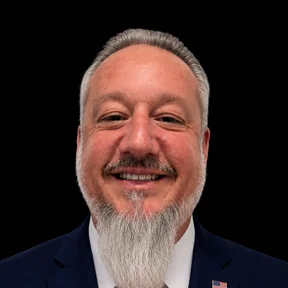
About Victor J. Rosario
Victor J. Rosario is the Residents-First candidate for Miami-Dade County Mayor 2028. A U.S. Coast Guard veteran, entrepreneur, technologist, and artist, Victor brings a track record of building real solutions — from AI tools to campaign policy — that serve Miami-Dade's 2.8 million residents.
Learn More About Victor