
By Victor J. Rosario, Future Mayor of Miami-Dade County (2028)
Why this policy exists
Miami-Dade deserves a government that works for residents—not a system where anyone in power can pressure employees, vendors, or the public to “play politics” just to keep their job, keep their contract, or avoid retaliation.
If you’ve ever felt like government operations get twisted by pressure campaigns, intimidation, or back-room political pressure, here’s the standard under my administration:
County workplaces will be politically neutral. Public resources will not be used as campaign machinery. Coercion and retaliation will be treated as a major violation—every time.
Florida already prohibits public officers and employees from using official authority or influence to interfere with elections or to coerce or influence another person’s vote. My administration will enforce that principle aggressively and consistently. (Florida Legislature)
The big idea: “County-First enforcement”
A lot of residents are tired of systems that feel circular: “the same circles investigate each other.”
So my model is simple:
- Miami-Dade investigates first (independent County process)
- Miami-Dade takes immediate administrative action when supported by evidence
- Miami-Dade cuts off contracts and access for vendors who pressure people politically
- If criminal conduct is indicated, it goes to court through lawful prosecution—because jail can only happen through due process, not politics
This is what I mean by County-First: Miami-Dade does not wait to protect you.
What is banned under my administration
Here’s the practical standard—no legal jargon needed.
1) Political coercion at work
No supervisor, manager, director, official, or vendor can:
- Pressure you to support a candidate or party
- Ask for political favors tied to your job
- Threaten you, punish you, or block promotions because you won’t participate
2) Retaliation
If you report coercion—or refuse to participate—retaliation becomes its own major violation.
3) Misuse of County resources
No campaigning using:
- County email, phones, devices, vehicles
- County facilities, uniforms, logos, lists
- County work time or staff labor
4) Vendor/contractor pressure
Vendors don’t get to “buy influence” by pressuring workers or residents. If they do, they risk:
- contract termination
- removal from County sites
- debarment recommendations
The enforcement pipeline residents can actually understand
This is the part that matters: what happens after a report.
Step 1: You report it
We keep reporting pathways visible and easy to access, including established oversight options like Ethics guidance and Inspector General reporting. (Miami-Dade Ethics Commission)
Step 2: We protect the reporter
Immediately, we focus on stopping retaliation:
- separating parties when needed
- protecting schedules, assignments, and access
- documenting any retaliation attempts as a major violation
Step 3: Evidence gets preserved first
We preserve the receipts:
- emails, messages, meeting invites/calendars
- access logs and system records (where lawful)
- witness statements
- contract records and facility access records
Step 4: Investigation + findings
A standardized investigative packet is created:
- timeline
- evidence index
- witness statements
- findings
- recommended actions
Step 5: Immediate action when supported by evidence
Depending on severity and proof:
- reassignment
- administrative leave
- suspension
- termination
- vendor removal / termination / debarment pathway
Step 6: Criminal conduct goes to court, not politics
If an investigation indicates potential criminal violations (for example, election interference through misuse of official authority), the matter is packaged and referred through lawful channels.
And this must be said clearly:
No one gets “put in jail” by the Mayor.
Jail only happens through lawful arrest, prosecution, and conviction in court.
Florida law already addresses election coercion and misuse of authority standards. (Florida Legislature)
Executive Order: County-First Political
Neutrality & Anti-Coercion
Enforcement
Executive Order No. 2028-XX Miami-Dade County Office of the Mayor Issued by Victor J. Rosario, Future Mayor of Miami-Dade County (2028)
Why an Executive Order?
Before any ordinance reaches the Board, the Mayor can act immediately.
This Executive Order establishes how Miami-Dade County will operate on Day One under my administration:
- How investigations start
- How retaliation is stopped immediately
- How evidence is preserved
- How employees and vendors are disciplined fast
- And how criminal conduct is referred only through lawful court process
This EO makes it clear: Miami-Dade will not wait for outside agencies to protect residents.
Executive Order No. 2028-XX(DRAFT)
Political Neutrality, Anti-Coercion, and Abuse-of-Authority Enforcement
(County-First | Zero Tolerance | Due Process Protected)
WHEREAS
Miami-Dade County must protect residents, employees, and contractors from political coercion, retaliation, and the misuse of public authority; and
WHEREAS
Florida law prohibits public officers and employees from using official authority or influence to interfere with elections or coerce votes; and
WHEREAS
Public trust requires County workplaces to remain politically neutral and free from intimidation, pressure campaigns, and retaliation;
NOW, THEREFORE, I ORDER THE FOLLOWING:
Section 1. County-First Enforcement Policy
Miami-Dade County shall operate under a County-First enforcement model, meaning:
- The County investigates misconduct independently
- The County takes immediate administrative action when evidence supports it
- County resources, contracts, and access are cut off from violators
- Any criminal exposure proceeds only through lawful court process
Section 2. Zero-Tolerance Prohibited Conduct
The following conduct is prohibited across all County operations:
- Using official authority to influence elections
- Pressuring employees, contractors, or residents to support or oppose candidates
- Retaliating against anyone who refuses political activity or reports misconduct
- Using County time, systems, vehicles, facilities, uniforms, or titles for partisan politics
- Vendors or contractors leveraging County access to apply political pressure
Section 3. Immediate Protection Against Retaliation
Upon receipt of a credible allegation:
- Retaliation is presumed prohibited
- County leadership may immediately separate parties
- Work schedules, assignments, and access are protected
- Any retaliation becomes a separate major violation
Section 4. Evidence Preservation Comes First
Miami-Dade County shall immediately preserve relevant evidence, including:
- Emails, messages, calendars, meeting invites
- System access logs and badge records (where lawful)
- Contract records and facility access logs
- Witness statements
This prevents cover-ups and ensures cases survive court scrutiny.
Section 5. Administrative Consequences (Immediate)
When supported by evidence and due process, the County may impose:
- Reassignment
- Administrative leave
- Suspension
- Demotion
- Termination
For vendors and contractors:
- Contract termination for cause
- Removal from County property
- Debarment recommendations
Section 6. Criminal Conduct Goes to Court — Not Politics
This Executive Order does not jail anyone.
If evidence indicates potential criminal violations (such as election interference or abuse of office):
- The County prepares a formal referral
- Law enforcement and prosecutors handle the case
- Arrest, detention, or jail occurs only through court proceedings
No political arrests. No executive detention. No abuse of power.
Section 7. Transparency
Miami-Dade County shall publish quarterly aggregated reports showing:
- Number of complaints received
- Number investigated
- Number substantiated
- Administrative actions taken
- Vendor actions taken
- Criminal referrals (aggregate only)
No names. No leaks. Just accountability.
Section 8. Companion Ordinance
Within the first 100 days, this Executive Order is paired with a County ordinance to make political coercion violations enforceable County law with court-recognized penalties and due-process protections.
Section 9. Effective Date
This Executive Order takes effect immediately upon my assumption of office as Mayor of Miami-Dade County.
Signed,
Victor J. Rosario Mayor, Miami-Dade County Date: __________ Future Mayor of Miami-Dade County (2028)
What This Means for Residents (Plain English)
- You don’t have to wait for federal agencies
- You don’t get ignored because of politics
- You don’t get punished for refusing political pressure
- And nobody gets jailed without a judge and a courtroom
This is firm enforcement without tyranny.
NEW: The Ordinance That Makes This
Enforceable Countywide
Executive Orders set direction. Ordinances create enforceable County law. That’s why my administration will push a companion Board of County Commissioners ordinance:
The “Miami-Dade Political Neutrality & Anti-Coercion Ordinance”
This ordinance is built as a more-stringent County standards-of-conduct law under Florida Statute 112.326. That matters because Florida law explicitly allows local governments to adopt additional or more stringent standards—but requires due-process safeguards for the noncriminal complaint procedure. (Florida Legislature)
What the ordinance bans (the County-law version)
The ordinance locks into County code that no County employee, official, vendor, grantee, or County-connected operator can:
- use official authority to interfere with elections or coerce votes
- pressure workers/residents to support a candidate or party
- retaliate for refusal to participate or for reporting
- use County resources for partisan political activity
This is consistent with Florida’s election integrity restrictions on using official authority to interfere with elections. (Florida Legislature)
How residents can file (and why we require “sworn” complaints for formal action)
To prevent fake accusations and keep this system courtroom-strong, Florida law requires safeguards when a local government creates more stringent standards.
Under 112.326, any formal noncriminal complaint procedure must require:
- the complaint be written and signed under oath/affirmation, and
- be based on personal knowledge or information other than hearsay (Florida Legislature)
What this means in real life
- You can still report concerns quickly (including tips and referrals).
- But when it’s time for a formal noncriminal standards-of-conduct case, we use a sworn complaint so the process is legitimate, defensible, and not weaponized.
This is how we stop political coercion without creating a new tool for political harassment.
What penalties can look like (and the court-only reality)
People ask: “What happens if someone violates it?”
Here are the three layers:
1) Immediate administrative consequences (fast)
- suspension, demotion, termination
- removal from supervisory authority
- loss of access to County systems/sites
2) Vendor/contract consequences (fast)
- termination for cause
- removal from County sites
- debarment recommendations
3) Court consequences (only after due process)
Florida law authorizes counties to set penalties for ordinance violations—and it also allows enhanced penalties for a county standards-of-conduct ordinance adopted under 112.326, including up to $1,000 fine and/or up to 1 year in county jail—but only through the court process. (Florida Legislature)
Translation: This ordinance creates jail-eligible exposure only after lawful prosecution and conviction.
No one gets detained because of “politics.” This is court-only accountability.
A special note about law enforcement and corrections complaints
Florida law limits what a political subdivision can do by local ordinance regarding the receipt/processing/investigation of complaints of misconduct by law enforcement or correctional officers (and certain forms of civilian oversight). (Florida Legislature)
So our administration will:
- enforce political neutrality rules across the County, and
- for law enforcement/corrections complaint pathways, follow Florida law and required agency procedures while still preserving evidence and ensuring accountability.
That means: strong enforcement without writing an ordinance that gets struck down.
“What about the Hatch Act?”
The Hatch Act is a federal administrative enforcement scheme for certain covered roles tied to federally funded programs. Miami-Dade will not rely on that system to protect residents.
Here’s our stance:
- Miami-Dade enforces locally first.
- We take immediate County action where we have authority.
- Any outside administrative processes (federal or otherwise) are separate—Miami-Dade’s job is to keep our workplaces clean and residents protected.
What changes in the first 100 days of my administration
Day 1–30
- Launch County-First Political Neutrality Enforcement (uniform rules + training)
- Publish “What’s Banned” in plain English
- Require supervisor acknowledgments
Day 31–60
- Standardize evidence preservation + investigation packets
- Add Political Neutrality clauses to County contracts, grants, and facility use agreements
Day 61–100
- Push the Companion Ordinance through the BCC process so this becomes enforceable County law with clear procedures and penalties
Transparency: how residents will verify this is real
Under my administration, I won’t ask residents to “trust me.”
We will publish aggregated quarterly metrics:
- number of complaints
- number investigated
- number substantiated
- actions taken
- vendor actions taken
- referrals (in aggregate)
No personal data. No rumor mill. Just measurable accountability.
Call to action
If you want a Miami-Dade where:
- government employees don’t get pressured,
- vendors don’t bully residents,
- public resources don’t become campaign weapons, and
- accountability is measurable and enforced,
then I want you involved.
Book a meeting with me, share this policy, and help me build a County that enforces fairness—without fear.
Victor J. Rosario Future Mayor of Miami-Dade County (2028) #UnleashingMiamiDadeCounty #VictorImpactWrench #AllSystemsOnline #TeamVictor
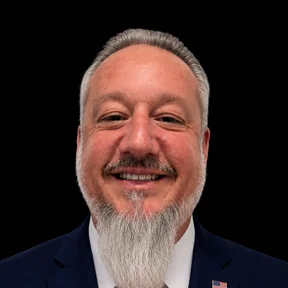
About Victor J. Rosario
Victor J. Rosario is the Residents-First candidate for Miami-Dade County Mayor 2028. A U.S. Coast Guard veteran, entrepreneur, technologist, and artist, Victor brings a track record of building real solutions — from AI tools to campaign policy — that serve Miami-Dade's 2.8 million residents.
Learn More About Victor