
By Victor J. Rosario Candidate for Mayor, Miami‑Dade County | Future Mayor of Miami‑Dade County
The Quiet Part Out Loud: When the County Says the Words
Sometimes the truth doesn’t need an investigator. It needs a highlighter.
Here’s what caught my eye:
“Chairman Bowdre will lead a distinguished delegation as part of a formal crypto policy exchange…” — from the Miami‑Dade Digital Commission (MDDC) public material. (mddc.miami)
And here’s what the MDDC also says it is—directly:
“EDUCATION | LEGISLATION | INTEGRATION” and a coalition focused on educating politicians, legislating policy, and integrating “Government Fourth Generation Technology (G4GT) such as Artificial Intelligence, Blockchain… Crypto Currency…” (mddc.miami)
Chairman Bowdre is eager to participate in as many sessions as feasible, sharing insight into the groundbreaking crypto policy, legislation, and government-technology integrations currently being initiated in Miami-Dade County.
As Miami-Dade enters its next phase toward mass adoption, the County is actively pioneering the integration of blockchain, crypto, AI, and digital assets across public-sector applications, creating an unprecedented expansion of opportunity and institutional capability.
www.linkedin.com/feed/update/urn:li:activity:7420576119327715328/
Now read that again—slow.
Education. Legislation. Integration.
That’s not a hobby. That’s a pipeline.
So when I watch my Truth Ledger framework, my public‑sector tech roadmap, and my transparency‑first narrative get echoed—first in Tallahassee conversations, then in Miami‑Dade messaging—here’s what I say:
Good.
Because if they’re repeating my themes, they’re admitting they’re behind.
But here’s the part I refuse to accept: copying the headline while skipping the work.
Miami‑Dade residents don’t need more “innovation theater.” They need execution.
The Roast (Respectfully): Miami‑Dade’s Favorite Programming Language is Ctrl+C
Let me translate what happens in modern government:
- Someone with real technical competence publishes a blueprint.
- A few weeks later, an official press release shows up with the same nouns (AI! Blockchain! Innovation!)
- The press release has no architecture, no governance model, no procurement controls, no audit trail, and no deliverables.
- They call that “leadership.”
That’s not leadership.
That’s copy‑paste with a seal on the letterhead.
And Miami‑Dade has gotten way too comfortable living inside a world where:
- A PDF is considered a product.
- A slogan is considered a system.
- A photo op is considered a rollout.
The funniest part?
They still don’t understand that tech is measurable.
You can’t fake shipping.
The Real Point: If Miami‑Dade Wants “Mass Adoption,” We Need a Public Tech Standard
You said it best in your own words:
“As Miami‑Dade enters its next phase toward mass adoption, the County is actively pioneering the integration of blockchain, crypto, AI, and digital assets across public‑sector applications…”
I agree with the direction.
But I’m going to be crystal clear:
Mass adoption isn’t a speech. It’s a standard.
What “mass adoption” actually requires
Mass adoption in government means:
- A trusted identity layer (residents and vendors must be verified)
- Transparent procurement (so contracts don’t become magic tricks)
- Auditability by design (not “we’ll look into it later”)
- Public data integrity (no back‑editing what the public already saw)
- Clear controls over vendors (so outside companies don’t own the county)
If you can’t answer these questions, you don’t have mass adoption—you have marketing.
1) Who controls the keys? 2) Who audits the models? 3) Who owns the infrastructure? 4) Who can change records—and how is that tracked?
This is why I built the Truth Ledger concept in the first place: the county needs a system where the public can verify what was promised, what was built, and who authored it.
Truth Ledger: The Anti Copy‑Paste Accountability Engine
Truth Ledger is simple in concept and powerful in effect:
1) Provenance (Who authored what, and when?)
If a policy idea shows up later under a different logo, the public should be able to see:
- Original author
- Timestamp
- Version history
- Public comments
- Final adoption
2) Public receipts (So residents don’t get gaslit)
A modern county should not run on “trust me, bro.”
Truth Ledger makes it possible to track:
- contracts
- amendments
- change orders
- performance milestones
- service‑level agreements
- vendor access logs
3) Real transparency (Not performative transparency)
Transparency isn’t “we posted a PDF.” Transparency is “we posted the evidence trail.”
The Mayor Problem: Government Isn’t a Tech Startup—But It Still Needs Tech Leadership
Let’s talk about the current reality:
Miami‑Dade’s current Mayor is Daniella Levine Cava. (miamidade.gov)
She has a long public‑service background (the county’s own bio highlights decades of public service and leadership). (miamidade.gov)
But here’s the roast—focused strictly on technology leadership, not personal attacks:
Miami‑Dade has been governed like tech is a press release, not an operating system.
When you don’t have hands‑on technology experience, what happens?
- You outsource the thinking.
- You inherit whatever the last vendor sold you.
- You repeat buzzwords without building the controls.
And that’s how you get a county full of shiny initiatives that don’t connect—no unified architecture, no shared audit model, no single source of truth.
In other words: Miami‑Dade is running on “ideas provided by others,” not original innovation.
And residents can tell.
Chairman Bowdre, MDDC, and the Public Signal: The County is Talking Tech Loudly
MDDC publicly presents itself as an organization focused on educating politicians, legislating policy, and integrating advanced tech into government. (mddc.miami)
It also publicly promotes a “Global Crypto Delegation,” describing participation in a policy exchange tied to Bitcoin Asia and related international engagements. (mddc.miami)
And public reporting has identified Elijah John Bowdre as Executive Director of the Miami‑Dade Digital Commission. (local10.com)
So yes—Miami‑Dade is in a period where people are talking loudly about AI, blockchain, crypto, and digital governance.
That’s not the problem.
The problem is the county’s habit of copying the nouns and skipping the verbs.
Because nouns are easy:
- AI
- Blockchain
- Innovation
- Smart City
But verbs require competence:
- architect
- secure
- deploy
- audit
- govern
- maintain
How the Copy‑Paste Game Works (Tallahassee → County → Press Release)
Here’s the pattern I’ve watched in real time:
- I publish a blueprint (public, detailed, resident‑first).
- The same theme shows up in someone else’s messaging.
- The public is expected to forget step 1 ever happened.
- The county acts like the idea came from “the process.”
This isn’t about ego.
This is about governance integrity.
When authorship is blurred, accountability dies.
Truth Ledger fixes that.
What Miami‑Dade Needs Next: A 90‑Day “Ship It” Plan
If I’m leading Miami‑Dade, this is how we stop living in buzzwords and start living in outcomes.
Day 1–30: County Digital Integrity Stack
- Establish a Digital Integrity Office (small, elite, accountable)
- Define an open architecture standard for all new systems
- Require audit logs by default for every vendor integration
Day 31–60: Truth Ledger Pilot
- Start with high‑impact modules:
- procurement
- grants
- contract amendments
- project milestones
- Publish a public dashboard residents can actually understand
Day 61–90: Scale the Standard
- Adopt a County AI Governance Policy
- Create a secure sandbox for testing models and vendors
- Mandate data minimization and access controls
No magic. No hype.
Just shipping.
How Residents Can Spot “Innovation Theater” in 10 Seconds
Here’s a quick resident test:
If a tech announcement doesn’t include these items, it’s probably copy‑paste:
- Owner (department + accountable lead)
- Timeline (dates, not seasons)
- Budget (numbers, not adjectives)
- Vendor controls (who can access what)
- Audit method (how the public verifies)
- Milestones (what success looks like)
If it’s missing those?
It’s not a project.
It’s a headline.
Key Names Referenced (For Context)
Current Mayor (Miami‑Dade County)
- Daniella Levine Cava — Mayor, Miami‑Dade County. (miamidade.gov)
MDDC / Crypto Policy Community
- Chairman Bowdre — referenced on MDDC public pages as leading the Global Crypto Delegation. (mddc.miami)
- Elijah John Bowdre — identified in reporting as Executive Director of the Miami‑Dade Digital Commission. (local10.com)
MDDC “About” Page Leadership Roster (as displayed)
- Leadership: Chairman Bowdre
- https://www.linkedin.com/in/chairman-bowdre-28122a35/

Members: Esther Bryce (President), Lianne Wilson (Treasurer), Jaden Smith (Marketing), Jessica Kim (Sergeant at Arms). (mddc.miami)
A Very Clear Message to Miami-Dade Leadership: This Didn’t Happen Overnight
I want to be very clear to the leadership of Miami-Dade County — the Mayor, the Commissioners, department leadership, and everyone in between — about something that cannot be spun, rebranded, or erased.
What you’re seeing right now — the language, the frameworks, the architecture, the roadmaps, the technology governance concepts, the transparency standards — did not appear in one day.
This is not a “trend.” This is not a “committee discovery.” This is not something you wake up and decide to copy into a press release.
These ideas are built — the same way real systems are built.
They come from:
- years of thinking
- real-world problem-solving
- designing frameworks that survive politics
- architecting systems that reduce waste
- mapping execution timelines that can actually be delivered
I’ve been thinking about how to solve Miami-Dade’s problems for more than two years — and that matters because it’s the difference between talking about modernization and actually delivering modernization.
Why the Current Administration Can’t Solve It (And Why Residents Keep Losing)
Let’s address the real issue.
The reason the current administration keeps struggling to solve major countywide problems is simple:
It was never built into their campaign promises.
It was never the north star. It was never their architecture. It was never their system.
So now, when solutions show up publicly — when residents see a real framework and a real plan — the machine does what the machine always does:
- it copies the language
- it borrows the structure
- it rebrands the intent
- and it pretends it’s leadership
But Miami-Dade residents can feel the truth in their daily life.
Today, residents are not winning.
They are losing every day — losing time, losing money, losing confidence in local government, losing patience with slow systems and expensive outcomes.
And that loss is not an accident.
It’s the result of failed leadership — leadership that reacts instead of architects, that manages headlines instead of building systems, and that relies on outside narratives instead of resident-first execution.
My Difference Is Simple: Everything Is a Campaign Promise — And I’m Already Ready
Contrary to the current administration, my work is not random. My work is not convenient. My work is not seasonal.
Everything I publish is a campaign promise.
And I don’t publish promises without a roadmap.
That’s why I’m already prepared with exactly what happens in:
- the first 30 days
- the first 60 days
- the first 90 days
- the first 120 days
Because I’m not waiting until after an election to “figure it out.”
I already figured it out.
Why?
Because I’m the creator.
I’m the one thinking day after day about how to solve problems for:
- the government of Miami-Dade County
- the 34 municipalities
- and most importantly — the residents of Miami-Dade County
Under my administration, residents will start winning daily — not someday, not after another study, not after another committee, not after another vendor contract.
Daily.
Closing: If They’re Copying the Ideas, They’re Admitting the Ideas Work
Miami-Dade is entering an era where tech will decide:
- how fast we deliver services
- how clean procurement is
- how transparent public records remain
- how much waste we eliminate
- how much value we return to residents
So I’m not surprised the “idea economy” is heating up.
But I’m not here to play copy-paste politics.
I’m here to build & Lead Miami Dade County
.
Truth Ledger is how we lock in transparency, authorship, and measurable performance—countywide.
If you’re tired of government that speaks in buzzwords and delivers in excuses:
- Share this
- Read the Truth Ledger blueprint on my site
- And stay locked in—because Miami-Dade is about to get real tech leadership.
—
Victor J. Rosario aka Guilty Trex Candidate for Mayor, Miami-Dade County Future Mayor of Miami-Dade County
Links::
https://victormiamidadecountymayor.com/blog/f/truth-ledger-blockchain-transparency-for-all-miami-dade
https://victormayormiamibeach.com/victor-blog-1/f/miami-beach-blockchain-ledger-framework-hashable-transparent
https://victormayormiamibeach.com/victor-blog-1/f/miami-beach-2035-smarter-government-stronger-city
About Victor J. Rosario
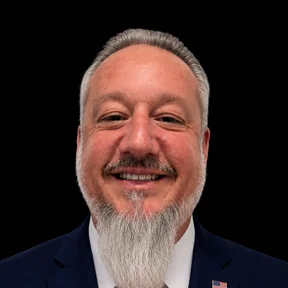
Victor J. Rosario is the Residents-First candidate for Miami-Dade County Mayor 2028. A U.S. Coast Guard veteran, entrepreneur, technologist, and artist, Victor brings a track record of building real solutions — from AI tools to campaign policy — that serve Miami-Dade's 2.8 million residents.
Learn More About Victor