By Victor J. Rosario, candidate for Miami-Dade County Mayor · November 12, 2026
On Tuesday, November 17, 2026, the Miami-Dade County Commission is scheduled to hold the final vote on an ordinance that would put delivery robots on our sidewalks under a permit system. Here is where I stand, and why.
What the County is voting on
The County's own record for the ordinance (File No. 261932, Agenda Item 7C, sponsored by Commissioner Micky Steinberg) says this:
- Delivery robot operators would have to get a permit. In unincorporated areas the permit comes from the County. Inside a city, it comes from that city. A permit can last up to one year.
- The speed limit would be 8 miles per hour on sidewalks, 6 miles per hour in busy pedestrian areas, and 10 miles per hour in crosswalks.
- A robot could sit idle on a sidewalk for up to 30 minutes, with longer-stay zones allowed.
- Robots would have to yield to pedestrians and could not block curb ramps, transit stops or accessible parking.
- Fines would be up to $500, and the ordinance takes effect 10 days after passage unless the Mayor vetoes it.
You can read the County's file yourself: File No. 261932 on the County's legislative site (opens in a new tab). Check the County's agenda for the final listing before the meeting.
The sidewalks were made for people
Let me say this again. The sidewalks in all of the United States, and around the world, were made for people to walk safely. Now there are robots driving by, and it is not one or two. There are hundreds of them, spread everywhere.
Under my administration, I am okay with robots. If you want to deliver, go to the street. Get a license plate. Follow the rules out there. But do not come onto the sidewalks and make residents go around you. That is not right.
A vehicle with four wheels belongs in the street. It has been that way since I was born. Now we want vehicles with four wheels driving themselves on the sidewalks. The only cart with four wheels that belongs on a sidewalk is a baby stroller.
Under my administration, I am going to look for a way to completely remove them from the sidewalks. They want to be on the street? Fine. Be on the street.
Residents paid for every sidewalk
I have a problem with corporations coming into Miami-Dade and saying, "This is now our place of doing business," while people have to walk around them.
Sidewalks were built for people to be safe while vehicles drive in the street. In the old days it was horses and carriages. The idea has always been the same: people on the sidewalk, vehicles in the street.
So I ask: who paid for the streets? Who paid for the sidewalks? Who is paying for them today? All of the residents. The County and the cities paid for everything, and the money came from the residents. The residents were here first. The humans were here first, and the humans built the sidewalks.
A study of what our sidewalks are worth
When I am mayor, I will order a study of the value of every sidewalk in Miami-Dade County. We will measure it. How much concrete was put there? How many people walk on it? How much did the residents of Miami-Dade County pay for their sidewalks?
Corporations that have not paid for any of it now want to own the space, get permits, and run their operations on what they call their own streets. That is absurd. It is completely out of place.
If you want the sidewalk, pay for it
A sidewalk is real estate, and real estate has a cost. The County and the cities paid that cost, and the residents paid it through their taxes. If a company wants to use our sidewalks, it has to pay, and pay heavy.
You cannot just pay for a permit and call it done. A permit fee does not repay what residents have already paid.
Robots and the jobs of residents
Robots take jobs from the residents of Miami-Dade County. You can see how many people are moving away from this county. This is part of a continuing problem: a few people think they can take away people's jobs and face no consequences.
My first 24 hours
As mayor, I will cancel those permits in my first 24 hours. No more permits.
People can argue. People can have a different opinion, and I am fine with that. But this is how I see it, and things have to change. The sidewalks belong to the residents of Miami-Dade County.
Victor J. Rosario
Candidate for Mayor of Miami-Dade County
victormiamidadecountymayor.com
OFFICE OF THE MAYOR — MIAMI-DADE COUNTY, FLORIDA
PROPOSED EXECUTIVE ORDER NO. 2029-___
Ending Sidewalk Delivery Robot Permits and Protecting Residents' Sidewalks
Status: Proposed draft for legal review and execution after taking office; not enacted.
Proponent: Victor J. Rosario, Candidate for Mayor of Miami-Dade County.
WHEREAS
WHEREAS, the sidewalks of Miami-Dade County were built and are maintained with public money paid by the residents of the County and its municipalities, so that people can walk safely while vehicles use the street; and
WHEREAS, delivery robots now operate on County sidewalks in large numbers, and pedestrians, including seniors, children and people with disabilities, are forced to go around them; and
WHEREAS, the Board of County Commissioners has considered an ordinance (Legislative File No. 261932) that would regulate personal delivery devices and mobile carriers through a permit system; and
WHEREAS, the companies that operate these devices did not pay for the sidewalks they use for their business; and
WHEREAS, sidewalks are public real estate that has a real cost, and residents are entitled to know what it is worth and to be paid fairly when a private company uses it for profit; and
WHEREAS, the County Mayor administers County permits through the executive departments of the County;
NOW THEREFORE, subject to the County Charter, the County Code and Florida law, the following is proposed:
Section 1. Purpose
Protect the right of residents to use County sidewalks safely, and end County permits for commercial delivery robots on sidewalks.
Section 2. No permits: the first 24 hours
Within 24 hours of taking office, the Department of Transportation and Public Works shall (a) stop accepting applications and stop issuing any new permit for personal delivery devices or mobile carriers to operate on sidewalks; and (b) begin the lawful process to revoke, suspend or decline to renew every permit the County has issued, including giving any notice or hearing the County Code requires.
Section 3. Applicability and the 34 municipalities
This order applies to permits issued by the County and to every County department. Cities issue their own permits inside their borders. The Mayor shall invite each of Miami-Dade's 34 municipalities to adopt the same policy, and shall offer model language and technical help.
Section 4. The street, not the sidewalk
This order does not ban delivery by robots on the street. A delivery vehicle that wants to operate on a road must follow the same rules as any road vehicle, including registration, a license plate and traffic law, to the extent state law allows.
Section 5. Sidewalk Value Study
Within 180 days, the Department of Transportation and Public Works, with the Property Appraiser, the Finance Department and the Office of Management and Budget, shall publish a report that measures: the total miles and area of sidewalks in the County; how much concrete and material was used; what it cost to build and maintain; how much of that cost was paid by the County and the municipalities with resident taxes; how many people walk on the sidewalks; and the replacement value of the sidewalk network. The data shall be published in an open, downloadable format.
Section 6. Fair charge for commercial use
Within 90 days after the study is published, the Mayor shall recommend to the Board of County Commissioners a schedule of charges for any commercial use of public sidewalks, based on the value of the asset and the cost that residents have already paid. No permit or charge shall be treated as a right to use the sidewalk.
Section 7. Jobs review
Within 180 days, the Mayor's Office, with the County's economic development and workforce offices, shall report on how delivery robots affect the jobs of Miami-Dade residents, and recommend protections.
Section 8. Legal review and compliance
The County Attorney shall, within 10 days, advise on the steps in this order, including any limits in state law and in the County Code. Every action shall follow the law. If any part of this order is found invalid, the rest shall remain in effect.
Section 9. Transparency
The County shall publish on its website the list of permits ended or not renewed under this order, and the Sidewalk Value Study.
Section 10. Effective date
Effective only upon lawful execution by the Mayor after assumption of office.
Execution
This order is a proposal. It has no legal effect until it is signed by the Mayor after taking office and approved as the law requires.
Signed by the Mayor upon assumption of office
Victor J. Rosario, Mayor of Miami-Dade County
Signature: ______________________________ Date: ________________
Reviewed for legal form and sufficiency
Office of the County Attorney
Signature: ______________________________ Date: ________________
Executive Order No. 2029-______ (number assigned at signing)
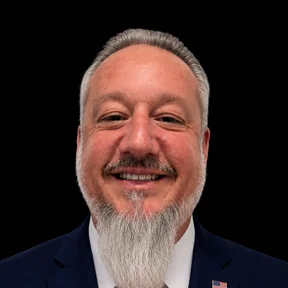
About Victor J. Rosario
Victor J. Rosario is the Residents-First candidate for Miami-Dade County Mayor 2028. A U.S. Coast Guard veteran, entrepreneur, technologist, and artist, Victor brings a track record of building real solutions — from AI tools to campaign policy — that serve Miami-Dade's 2.8 million residents.
Learn More About Victor