By Victor J. Rosario, candidate for Miami-Dade County Mayor · November 12, 2026
If you have an idea that would make your block, your school, your park or your small business better, there is a real way to ask the State of Florida to help pay for it. It is not a form you fill out and mail to Tallahassee. It is a path, with people to call, dates to hit and a one-page project summary to prepare. Most residents never learn the path, so most good ideas never get asked for.
I am Victor J. Rosario, a candidate for Mayor of Miami-Dade County. I am not an elected official today, and nothing in this guide is a promise that any project will be funded. This guide is information. It is built from public records, and it tells you what each program is, who can use it, what to prepare, and what to do between now and the start of the 2027 legislative session on March 2, 2027. That is a little over 15 weeks away.
The honest answer first
Florida has no single grant program for a Miami-Dade resident to apply to. State money reaches communities in four ways:
- Formulas. Money paid to counties and cities by law, with no application. Nothing for you to file, but you can see what your city gets and ask how it is spent.
- Legislative member projects. One-time local projects written into the state budget after a State Representative or Senator carries your request.
- Competitive grants. Project grants that an agency chooses. Only governments, colleges and similar organizations can apply.
- Rural and small-county programs. Road and infrastructure money. These are written for small and rural counties, so they are not aimed at Miami-Dade.
Here is what that means for you. The programs researched for this guide pay governments, colleges and organizations. They do not pay individuals. A resident or a neighborhood group gets in by putting a specific project in front of a legislator, the Miami-Dade Legislative Delegation, or a city or county government before the 2027 session opens. That is the whole game, and the rest of this guide shows you how to play it well.
Do these five things this week
- Find your two legislators. Every address has one Florida House member and one Florida Senator. Look yours up at flsenate.gov/Senators/Find (opens in a new tab). The page also points to the district numbers printed on your voter registration card. You can also use "Find Your Representative" at flhouse.gov.
- Call both offices. Ask three questions: Are you filing project requests for 2027? What is your deadline? Which form do you use?
- Pick one project. One specific project, with a named place, a named group that would receive the money, and a dollar amount.
- Write a one-page summary. The template is below.
- Tell your city or county commissioner. Ask if your project can ride along in their request to the state.
Why this week? In the 2026 cycle, the Florida House's deadline for members' project request forms was November 21, 2025, about seven weeks before the session opened. I could not find the 2027 deadlines yet. If this year follows the same pattern, the window for the March 2027 session is closing now. The only way to know is to call and ask.
How state money reaches Miami-Dade
The table shows the four channels, with the 2026-27 amounts as published. A "Who acts" column tells you who does the applying.
| Channel | What it is | 2026-27 size | Who acts |
|---|---|---|---|
| Formula distributions | Half-cent sales tax and other payments set by law | Half-cent about $2.85 billion statewide for the local fiscal year ending Sept. 30, 2027 | Nobody files for the half-cent |
| Legislative member projects | One-time local projects written into the budget | About 2,000 projects worth $2.7 billion in the budget | A House member or Senator files the request for you |
| Rural and small-county programs | Road, infrastructure and wastewater money | Rural Infrastructure Fund $27 million; small-county road programs $81.8 million and $25.85 million | County and city governments |
| Competitive state grants | Project grants chosen by an agency | Job Growth Grant Fund $40 million; Resilient Florida $160 million | Local governments; state colleges and technical centers |
What Miami-Dade already gets from the state
The half-cent sales tax: no application
The Legislature's Office of Economic and Demographic Research prints the estimate for the local fiscal year ending September 30, 2027. Miami-Dade's countywide total is $376,398,415. The County Commission receives $221,671,169 of that, and the 34 cities share about $154.7 million. Miami-Dade gets only the ordinary distribution, with no emergency, supplemental or fiscally constrained share. These are estimates from the Department of Revenue dated August 18, 2026 (EDR (opens in a new tab)).
Why should a resident care about money that arrives without an application? Because it is *your* city's money, and your city council decides how to spend it. Look up your city, then go to a council meeting and ask what part of it could fund your project.
| City | Estimated distribution |
|---|---|
| Miami | $46,350,101 |
| Hialeah | $22,623,878 |
| Miami Gardens | $11,318,807 |
| Homestead | $8,339,963 |
| Doral | $8,158,090 |
| Miami Beach | $8,151,466 |
| North Miami | $5,978,436 |
| Coral Gables | $4,953,829 |
| Cutler Bay | $4,418,827 |
| North Miami Beach | $4,321,802 |
| Aventura | $3,913,245 |
| Miami Lakes | $3,052,197 |
| Palmetto Bay | $2,456,506 |
| Hialeah Gardens | $2,296,746 |
| Sunny Isles Beach | $2,221,152 |
| Sweetwater | $2,089,935 |
| Pinecrest | $1,773,532 |
| Florida City | $1,770,512 |
| Opa-locka | $1,613,090 |
| Key Biscayne | $1,427,417 |
| Miami Springs | $1,350,557 |
| South Miami | $1,206,578 |
| Miami Shores | $1,119,490 |
| North Bay Village | $774,057 |
| West Miami | $706,744 |
| Bay Harbor Islands | $566,466 |
| Surfside | $525,942 |
| Biscayne Park | $297,992 |
| Bal Harbour | $293,218 |
| Virginia Gardens | $231,068 |
| El Portal | $221,813 |
| Medley | $102,188 |
| Golden Beach | $92,836 |
| Indian Creek | $8,767 |
Flood and stormwater projects: competitive grants
The state's FY2026-27 Statewide Resilience Plan lists five projects with a Miami-Dade County or Miami-Dade city grantee, $15,137,500 in all (Florida DEP (opens in a new tab)):
| Project | Grantee | State award |
|---|---|---|
| Zone 1 Stormwater Improvements | Village of Key Biscayne | $10,000,000 |
| Biscayne Gardens Pump Station Retrofit and Improvement Project | Miami-Dade County | $3,112,500 |
| Northeast 26 Ave. Pump Station Improvement Project | Miami-Dade County | $1,500,000 |
| Local Stormwater Drainage Improvement Project for Northeast 15th St. | Miami-Dade County | $300,000 |
| Local Stormwater Drainage Improvement Project for Grand Ave. from Brooker St. to Jefferson St. | Miami-Dade County | $225,000 |
Notice what these have in common. Each one has a named place, a named government that receives the money and a dollar amount. That is the standard you want your own project to meet.
What the governor's vetoes removed
A project can be approved by the Legislature and still lose its money. The governor's June 29, 2026 line-item vetoes totaled $1.7 billion statewide, nearly $810 million of it line items, and most of what was vetoed were member projects, according to Florida TaxWatch (opens in a new tab). CBS News Miami reports the vetoes cost Miami-Dade $55.3 million. The items it names include $15 million for Catholic school security, $12.3 million for flood mitigation and water and sewer projects, nearly $2 million for a Homestead emergency operations center and $1.5 million for a roller hockey rink at Palmetto Golf Course (CBS News Miami, July 12, 2026 (opens in a new tab)). That is one news report, and it gives no sponsors.
The lesson: getting into the budget is only part of the race. A project that serves many people, has matching money and is ready to build gives the reviewers fewer reasons to cut it. That is a judgment, not a rule. But it is why the preparation below matters.
Three ways in
1. Your own State Representative and Senator
A member project needs a legislator to carry it. You cannot apply to the state for one yourself. The request then has to survive the budget conference and the governor's veto. Start with the two offices you found above.
One thing to check first: the Senate holds its organizational session on November 17 to install new officers, and new members were elected on November 3. Confirm who holds your seat before you call (Florida Bar News (opens in a new tab)). The County's directory of the Delegation covers 2024-2026, so it may be out of date.
2. The Miami-Dade Legislative Delegation public hearing
The Delegation is 22 legislators: six Senators and 16 Representatives. Each year it holds a public hearing where residents, governments and community groups can ask for help with projects and issues. It builds its priority list from those hearings and from what the County submits, then votes on the list in the first week of the session (Miami-Dade County (opens in a new tab)).
I could not find the 2027 hearing date. The last cycle shows what to expect (memo (opens in a new tab), presentation form (opens in a new tab)):
| Item | The 2026-session cycle |
|---|---|
| Hearing notice sent | October 10, 2025 |
| Hearing | Monday, December 15, 2025, 10 a.m. to 4 p.m., Miami Dade College Padron Campus, Building 6, 16th Floor, 627 SW 27th Ave, Miami |
| Request to present due | December 10, 2025, by email to MDDHearings@miamidade.gov |
| Time per presenter | Two minutes; a one-page handout could be attached, or information emailed instead of speaking |
| Subjects offered | State/County Institutions; Municipal Entities/Taxing Districts; Health & Human Resources; Children/Families; Mental Health; Economic Development; Education; Environmental & Natural Resources; Criminal Justice |
For the 2027 date, call the County's Intergovernmental Affairs office at 305-375-5600 (Stephen P. Clark Center, 111 NW 1st Street, Suite 1032). The Delegation's page lists Senator Ana Maria Rodriguez as chair and Representative Kevin Chambliss as vice chair, who serve one-year terms, so confirm the current officers.
Two minutes is short. That is why your one-page summary matters: it is your handout, and it is what a staff member reads after you leave the room.
3. Your city or the County
Governments file their own requests. If your project serves a neighborhood, ask your city or county commissioner whether it can ride in their request, as the Miami-Dade items listed below do. A request from a government carries weight that a single resident's does not, and a commissioner can tell you whether the same idea is already in the pipeline.
Prepare your one-page project summary
The Florida Senate's Local Funding Initiative Request form has 24 numbered questions (form (opens in a new tab)). The ones that decide whether a project looks ready are these. Answer each in one or two sentences and you have your summary.
The project
- What is it? Describe it in plain words, as you would to a neighbor.
- Is the ask recurring (every year) or nonrecurring (one time)?
- Who receives the money? Name the group. Is it a for-profit, a 501(c)(3), or a local government?
The money
- What is the total cost?
- How much is matching money from federal, state, local or other sources?
- Has the project had state funding before?
- Which state agency would receive and administer the money, and have you contacted that agency?
The readiness
- For construction: what phase is it in, is it permitted ("shovel-ready"), and what are the start and finish dates?
- How will the project be paid to operate after it is built?
The results
- What is the spending breakdown by category?
- How many people will it serve?
- How will you measure whether it worked?
The contact
- Who is the contact person? Include a lobbyist only if you use one.
Write it, then ask someone who does not know your project to read it. If they cannot tell what you want, the summary is not ready.
Fill-in template
Copy this into an email or a one-page document:
- Project name: ______
- What it is, in two sentences: ______
- Where it is (address or neighborhood): ______
- Who receives the money (name and type): ______
- Total cost: $______ Money we have or are asking others for: $______
- State agency that would administer it, and who I spoke with: ______
- Recurring or one-time: ______
- Ready to build? (permits, dates): ______
- People served: ______
- How we will measure results: ______
- Contact (name, phone, email): ______
What to say when you call
You do not need a speech. You need a clear ask. Try this, and fill in the blanks:
"Hello, I live in [your neighborhood or city], in [Representative or Senator ___'s] district. I have a project that would [one sentence about what it does and who it helps]. I would like to know if your office is accepting funding requests for the 2027 session, what your deadline is, and which form I should use. May I email you a one-page summary?"
Then write down the name of the person you spoke with, the date, and what they said. If you do not hear back in a week, call again.
Your calendar, from now to March 2
| When | What to do or watch for |
|---|---|
| This week | Find your two legislators and call both offices. Ask for the 2027 deadlines. |
| Nov. 15, 2026 | Fiscally constrained counties' offset applications are due to the Department of Revenue. It is a Sunday this year, so the form's own note extends it to the next working day. This does not apply to Miami-Dade. |
| Nov. 17, 2026 | The Senate holds its organizational session and installs new officers. Confirm who holds your seat. |
| By the end of November | Write your one-page project summary. |
| Nov. 30 to Dec. 3, 2026 | First interim committee week at the Legislature. |
| Late November to mid-December | Watch for the Delegation's hearing notice, and send a request to present. Last cycle the notice went out October 10, requests were due five days before the hearing and the hearing was December 15. |
| December to February | Take the project to your city or county commissioner. |
| Jan. 4-7 and Jan. 11-14, 2027 | Interim committee weeks. |
| Jan. 5, 2027 | $20 million of the Job Growth Grant Fund is held in reserve until after this date. |
| Jan. and Feb. 2027 | Check that your request is public. The Senate posts the requests a Senator sponsors. In the 2026 cycle the House published its forms on January 9. |
| Feb. 1-4, Feb. 8-11 and Feb. 15-18, 2027 | Final interim committee weeks. |
| March 2, 2027 | The 2027 Regular Session convenes. The Delegation votes its priority list in the first week. |
| After the session | In 2026 the budget passed on May 29, the governor's vetoes came June 29, and the new budget year started July 1. The same order of events should repeat in 2027, but dates will shift with a March start. This part is unconfirmed. |
| Summer 2027 | Likely windows for Resilient Florida (2026's ran July 1 to Sept. 1) and the Rural Infrastructure Fund (2026's was announced June 12). A pattern, not confirmed. |
Committee dates come from the Florida Bar News (opens in a new tab).
What Miami-Dade County is asking Tallahassee for
The County has its own requests in the 2027 state legislative package on the County Commission's October 20, 2026 agenda (item 11(A)(6)). I did not confirm that the Board adopted it as drafted (County memo (opens in a new tab)). Why look at it? Because if your project fits one of these areas, your commissioner may be able to connect it to a request that is already moving.
| Request | Department | Amount |
|---|---|---|
| Helen Sawyer Assisted Living Facility operations | Housing and Community Development | $3,000,000 |
| Technology modernization for housing programs | Housing and Community Development | $3,000,000 |
| RISE Miami-Dade Loan Fund, a small business loan fund | Finance | $2,000,000 |
| Mobile Command Unit | Emergency Management | $1,000,000 |
| All-Hazards Emergency Support Trailer | Fire Rescue | $625,000 |
| Two regional training towers | Fire Rescue | $600,000 |
| Free spay and neuter services, matched from the department's budget | Animal Services | $500,000 |
| Bridge Employment Program (CP Works) | Homeless Trust | $500,000 |
| Bridge housing for homeless persons with special needs | Homeless Trust | $275,000 |
| Project Lazarus specialized outreach | Homeless Trust | $90,000 |
Other items in the package name no request amount: a $2 million situational-awareness LED board, $8.7 million of IT hardware for a new emergency operations center and $1.2 million for fixed-wing drone operations (all total project costs); more State Aid to Libraries and library construction grants; state money toward PortMiami's ship-to-shore gantry cranes, which the memo says have risen from about $12 million to as much as $40 million each; a request for the Miami-Dade Spaceport Territory; and full FY2027-28 funding for the waste-to-energy program, whose original annual appropriation was $100 million.
Which programs fit Miami-Dade
Member projects are the main route for neighborhood, nonprofit and community projects. They need a legislator to sponsor them.
Resilient Florida takes applications from counties and municipalities for flood and sea-level projects. The 2026 window for implementation projects ran July 1 to September 1. Implementation applicants first need a vulnerability assessment. Ask your city whether it has one and whether your flooding problem is in it. Applications go through the Department of Environmental Protection's grant portal; questions go to Resilience@FloridaDEP.gov (DEP (opens in a new tab)).
Florida Job Growth Grant Fund pays for public infrastructure and for workforce programs at state colleges and technical centers. It is never for the exclusive benefit of one company (Florida Statutes s. 288.101 (opens in a new tab)). The 2026-27 amount is $40 million, down from $50 million. The window is not confirmed.
Budget lines named for this area include $20 million for Biscayne Bay septic-to-sewer and wastewater work, about $20 million in Homeless Challenge Grants and $165.7 million for SHIP, the state housing program. Application steps for these were not researched.
Not aimed at Miami-Dade: the Rural Infrastructure Fund, the Small County Outreach Program, the Small County Road Assistance Program and the fiscally constrained county offset are written for small, rural or fiscally constrained counties. If you read about a neighbor county winning one of these, that is why Miami-Dade does not.
Amounts for the competitive programs come from the Florida Association of Counties' summary (opens in a new tab) of the budget as passed on May 29, 2026. The June 29 vetoes may have changed some lines.
Help for households, not just projects
The state programs above pay governments and organizations. Two programs that residents often ask about pay or help individual households. I did not research their 2026-27 details to the same standard as the rest of this guide, so treat what follows as a starting point and confirm with the official source.
Down payment help for first-time homebuyers. Miami-Dade County's Public Housing and Community Development department runs a Homebuyer Down Payment Assistance Program, funded in part through the state's SHIP program. The County's housing page lists the office at 701 NW 1st Court, 16th Floor, Miami, and the phone number 786-469-4100. Amounts, income limits and application dates change, so call and ask before you plan around any number you see online. Several cities, such as Miami Beach, run their own SHIP-funded programs with their own rules (County down payment assistance page (opens in a new tab)).
My Safe Florida Home. This state program has offered free wind inspections and matching grants for approved hurricane-strengthening improvements to a home. News reports from August 2025 described a reopening with $280 million in funding, and say it works as a reimbursement, so the homeowner pays first. I could not confirm whether applications are open now or what the 2026-27 rules are. Check the official site, mysafeflhome.com, for current dates and eligibility (Florida Politics report (opens in a new tab)).
Mistakes that sink good projects
- Asking for "a program" instead of a project. "More youth sports" is an idea. "Resurfacing the two courts at ______ Park, owned by the City of ______, for $______" is a request.
- No named recipient. Someone legally has to receive and spend the money.
- No matching money and no plan to pay for operations. The form asks about both.
- Not talking to the state agency first. The form asks whether you have contacted the agency that would administer the money.
- Waiting for the session to open. By then the deadlines have passed.
- Asking only once. Staff members change, emails get buried. A polite follow-up is normal.
- Forgetting the veto. After the budget passes, check the governor's veto list. A request that is cut can be asked again next year.
Questions residents ask
Can I apply for this money as an individual? Not for member projects or the grants described above. A legislator carries member projects, and the competitive grants go to governments, colleges and similar organizations. Your route is to bring a specific project to a legislator, the Delegation or your city or county.
Do I need a nonprofit? The Senate form asks for the recipient's type: for-profit, 501(c)(3), local entity and others. Ask your legislator's office which recipient type works for your project. If your project serves the public, a city or a nonprofit partner is often the natural recipient.
Do I need a lobbyist? The form asks for a lobbyist's contact information "if one is used," so it is not required. The rules about lobbying and ethics for people who request member projects were not researched for this guide, so ask the legislator's office, and do not guess.
Can I ask more than one legislator? The form carries one sponsoring legislator's name, so each request is filed by one member. Start with the two who represent you, and ask each what they need.
What is "shovel-ready"? For construction, it means the project is permitted and can start. The form asks for your current phase, whether it is permitted, and the start and finish dates.
Where can I see which requests were filed? The Senate posts the requests a Senator sponsors on its local funding requests page (opens in a new tab), which goes back to 2017-18. In the 2026 cycle the House published its forms on January 9.
What if my project is vetoed or not funded? It can be asked again in the next cycle. Keep your one-page summary up to date, and keep the contacts you made.
Where can I find numbers for my county or city? Several state sources are open to the public. The Legislature's EDR (opens in a new tab) posts county and city revenue estimates each summer. The Department of Revenue posts monthly distributions in its data portal (opens in a new tab). The CFO's transparency site (opens in a new tab) lists state grant and contract amounts by recipient and year. DEP has a grants dashboard (opens in a new tab) for Resilient Florida awards.
What could not be verified
I want you to know where the edges of this guide are:
- The 2027 member-project deadlines. Only the 2026-cycle House memo was found. Confirm 2027 dates with each member's office.
- The 2027 Delegation hearing. Its date, location and request deadline are unconfirmed.
- Who holds each Miami-Dade seat. The County's directory covers 2024-2026. Members elected November 3 were not verified.
- The County's 2027 package. I read the October 20, 2026 agenda item, not the Board's vote.
- Application steps and windows for the Rural Infrastructure Fund, the Job Growth Grant Fund and the small-county road programs. They rest on press releases and statute, so confirm with the agency.
- Budget amounts come from a summary of the budget as passed, before the June 29 vetoes.
- The vetoes and projects named for Miami-Dade come from one news article that names no sponsors.
- Not covered: parks grants (FRDAP), other DEP water-quality grants, Competitive Florida, Community Planning Technical Assistance, Triumph Gulf Coast, SSBCI, SHIP application steps, and the lobbying and ethics rules for people who request member projects.
This guide is a research summary, not legal advice.
Move together into 2027
Here is the short version of the whole guide. The money exists. It reaches Miami-Dade through formulas, competitive grants and legislator-carried projects. Residents get in by arriving early with a specific, ready project and by asking the right people at the right time.
This week, find your two legislators and call both. By the end of November, write your one-page summary. In December, watch for the Delegation's hearing notice, and ask to present. Bring your commissioner in. Keep notes. Follow up.
If you do one thing after reading this, make it the phone call. Then tell a neighbor to make theirs. A hundred well-prepared residents asking for a hundred specific projects will do more than any slogan.
Victor J. Rosario
Candidate for Mayor of Miami-Dade County
victormiamidadecountymayor.com
Sources
- Florida Association of Counties, SFY 2026-27 General Appropriations Act summary (opens in a new tab)
- EDR, Local Government Half-Cent Sales Tax estimates, FY2026-27 (opens in a new tab)
- Florida DEP, FY2026-27 Statewide Resilience Plan (opens in a new tab)
- Florida DEP, Resilient Florida Program applicants (opens in a new tab)
- Florida Senate, local funding requests, FY2026-27 (opens in a new tab) and request form (opens in a new tab)
- Florida Senate, Find Your Legislators (opens in a new tab)
- Florida Statutes, s. 288.101 (2024) (opens in a new tab)
- Florida House Speaker's memo on 2026 deadlines, August 5, 2025 (opens in a new tab)
- Florida TaxWatch statement on the 2026-27 vetoes (opens in a new tab)
- CBS News Miami, July 12, 2026 (opens in a new tab)
- Florida Bar News, August 7, 2026 (opens in a new tab)
- Miami-Dade County Legislative Delegation page (opens in a new tab), 2026 hearing memo (opens in a new tab) and presentation form (opens in a new tab)
- Miami-Dade County Commission, 2027 state legislative package, October 20, 2026 (opens in a new tab)
- Miami-Dade County, Homebuyer Down Payment Assistance (opens in a new tab)
- Florida Politics, My Safe Florida Home reopening (opens in a new tab)
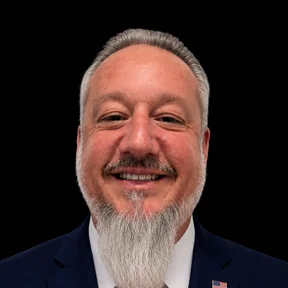
About Victor J. Rosario
Victor J. Rosario is the Residents-First candidate for Miami-Dade County Mayor 2028. A U.S. Coast Guard veteran, entrepreneur, technologist, and artist, Victor brings a track record of building real solutions — from AI tools to campaign policy — that serve Miami-Dade's 2.8 million residents.
Learn More About Victor