
By Victor J. Rosario, candidate for Miami-Dade County Mayor · June 22, 2026
Miami-Dade County cannot walk into the era of automation and artificial intelligence using yesterday’s economic assumptions. That is the blunt truth. The old promise was simple: work hard, get paid, buy a home, support your family, save something for the future, and hope the economy keeps expanding in a way that leaves room for everyone. But the next era is not going to move under that same formula. More systems will become automated. More workflows will be compressed. More profits will concentrate around platforms, infrastructure, data, logistics, and control of operating systems. Fewer people will be needed to produce the same output. A county that does not prepare for this change will eventually discover that the jobs disappeared first, the bargaining power disappeared second, and the dignity of the resident disappeared third.
That is why I am putting forward a different framework for Miami-Dade County. Not a Wall Street instrument. Not a stock offering. Not a federal program. Not a gimmick. What I am describing is a county-only public-benefit framework called Project Victor J. Rosario, a.k.a. Project Fund. Its purpose is straightforward: build lawful county-controlled and resident-benefit economic engines, keep more value inside Miami-Dade County, pay the real costs of running those engines, and distribute verified surplus to eligible Miami-Dade County residents under lawful county rules. That is the core of it. That is the structure. That is the future-facing answer.
This conversation matters because Miami-Dade County is not a tiny jurisdiction operating on the margins. The county’s official 2024 GDP was about $260.84 billion, the Census estimates its July 1, 2025 population at 2,802,029, and Census profile data shows roughly 1,900 square miles of land area. That means Miami-Dade is operating at a scale large enough to justify serious structural thinking about public enterprise, economic retention, and resident benefit in the age of AI. This is not a theoretical sandbox. This is one of the biggest local economic systems in the country. FRED (opens in a new tab)
The point of this blog is not to pretend that money appears from nowhere. The point is to explain why Miami-Dade County needs a new governing model that treats automation and artificial intelligence not just as private-sector tools, but as forces that will reshape labor, ownership, mobility, logistics, hospitality, land use, and the distribution of local wealth. If the county keeps doing business as usual while the private world automates around it, then residents will be pushed into a future where they are expected to consume but not own, participate but not benefit, live here but not meaningfully share in the value produced here. I reject that future. I am proposing a resident-first future instead.
Why Miami-Dade County Needs a New Economic Direction
There are moments when policy has to stop being defensive and start being architectural. That is where we are. A county government can spend all of its time reacting to potholes, approvals, permits, contracts, and scandals, or it can step back and ask a deeper question: in the next ten to twenty years, who is going to own the engines that produce the value of daily life? Who owns the transportation layer? Who owns the mobility app? Who owns the hotel asset? Who owns the concessions? Who owns the fuel margin? Who owns the logistics margin? Who owns the property management flow? Who owns the booking system? Who owns the service platform? Who owns the data? Who owns the local supply chain? Who owns the county’s future?
That is the right question because automation does not simply eliminate repetitive work. It shifts the center of gravity of the economy toward the operator of the system. The system owner gets leverage. The system owner gets data. The system owner gets recurring revenue. The system owner gets the right to reduce labor intensity while maintaining output. The system owner gets the scale. If Miami-Dade County residents remain outside those systems, then the county will become a place where value is extracted, not retained. Residents will continue doing the work of keeping the place alive while someone else holds the operating layer and the residual cash flow.
I do not accept the idea that county government should be a spectator while this happens. I do not accept the idea that the only role of local leadership is to cut ribbons, issue statements, and hope private enterprise will benevolently solve the future of work. Miami-Dade County has too much scale, too much population, too much strategic geography, too much tourism, too much movement, too much real estate, too much transportation intensity, too much hospitality volume, and too much entrepreneurial energy to stay trapped in old assumptions. If the county is large enough to generate enormous economic activity, then it is large enough to build lawful resident-benefit structures around that activity.
That does not mean the county seizes everything. It does not mean the county pretends to override every legal framework in Florida. It does not mean the county can magically replace professional licensing, constitutional rules, or state statutes. It means something much more serious and much more defensible: Miami-Dade County can organize lawful public-benefit systems that create and operate county-controlled engines, use licensed professionals where required, and structure those engines to keep more local value in local hands. That is the governing lane. That is the lane I am defining.
The Legal Foundation: Home Rule, County Programs, and State Licensing Limits
Any real public framework has to start with a legal foundation. Otherwise it is just theater. Miami-Dade’s Home Rule Charter is the key starting point because it establishes the rules by which the county operates and gives the county broad authority over county government and county affairs. That gives Miami-Dade room to design county programs, organize administrative structures, and manage public initiatives in a serious way. But home rule is not a magic wand. It exists subject to applicable state and federal law. That is an important distinction because strength without discipline becomes an easy lawsuit. Miami-Dade County (opens in a new tab)
That is exactly why the refined Executive Order matters. It does not pretend that Miami-Dade County can erase Florida’s professional licensing system. Florida regulates real-estate brokers, sales associates, schools, and appraisers under Chapter 475. If a county program touches real-estate brokerage or related professional services, those activities must still be handled through duly licensed persons or entities where the law requires it. In other words, the right move is not to wage a fake war against the statute. The right move is to design the county’s system so that the county controls the platform, the purpose, the public-benefit structure, and the resident-first rules, while licensed professionals perform the licensed functions the law reserves to them. That is how you build something durable instead of something theatrical. Online Sunshine (opens in a new tab)
This is one of the most important evolutions that came out of the policy work behind this blog. The cleaner model is not, “the county replaces all private licensing.” The cleaner model is, “the county creates lawful resident-benefit systems and uses properly licensed professionals inside those systems wherever Florida law requires them.” That is stronger. It is cleaner. It is harder to attack. It is also more practical because it recognizes how real implementation works. A serious administration does not confuse vision with sloppiness. A serious administration frames the vision in a way that can actually be administered.
The same principle applies to every other part of Project Fund. If a profession is regulated, you respect the licensing lane. If a benefit is distributed, you respect due process and neutral eligibility rules. If a person is disqualified, you tie the disqualification to final findings of misconduct, not to vague allegations or employer identity. If an enterprise is launched, you account for payroll, maintenance, reserves, insurance, legal exposure, and replacement planning before you promise any resident payment at all. That is not weakness. That is the difference between a real executive architecture and a slogan.
What Project Fund Actually Is
Project Victor J. Rosario, a.k.a. Project Fund, should be understood as a county public-benefit framework. That phrase matters because it clarifies what the system is and what it is not. It is not a security. It is not a bond. It is not a partnership unit. It is not a stock. It is not a Wall Street product. It is not a federal entitlement. It is not a speculative token. It is not something designed to be sold to outsiders. It is a county-run, resident-first system whose purpose is to generate lawful local income through county-controlled and resident-benefit operations, pay the real expenses of those operations, and direct verified surplus to eligible Miami-Dade County residents.
The public conversation has to be disciplined here. GDP is not a cash drawer. Market size is not the same as profit. Asset value is not the same as annual revenue. Gross transaction volume is not the same as distributable surplus. Those categories are different and must remain different. That is why the clean fiscal rule for Project Fund is essential: the county does not distribute fantasy money, gross projections, or theoretical scale. The county distributes only verified surplus after payroll, operations, maintenance, compliance, reserves, legal obligations, and replacement planning are paid. That distinction protects the public, protects the county, and protects the seriousness of the program.
A lot of public policy fails because leaders skip the middle. They jump from big numbers to emotional promises without respecting the operating chain in between. That is exactly what I do not want to do. The purpose of Project Fund is not to confuse residents. The purpose is to build a machine that is real, legal, audit-ready, and resident-centered. If the machine is real, then benefits can be real. If the machine is fake, then the benefits are fake too. I am not interested in fake.
This is why I describe Project Fund as a system that starts at zero. That is not a weakness. It is a statement of discipline. It says: we do not pretend to have money we have not earned; we do not pretend to have revenue we have not generated; we do not pretend to have surplus we have not verified; and we do not pretend that a county government can build a new era of prosperity by ignoring accounting. Instead, we create the engines, operate them lawfully, verify their performance, and then send out benefits from actual surplus. That is a public-benefit model worthy of trust.
Why the Automation and AI Era Changes Everything
Automation and artificial intelligence are not just another innovation wave. They are a restructuring wave. They are changing the ratio between labor and output, between management and execution, between platform ownership and worker dependency. They are changing how decisions get made, how demand gets forecast, how routes get optimized, how bookings get handled, how service gets priced, how inventory gets moved, how fraud gets detected, how workflows get orchestrated, and how customer interaction gets compressed into fewer people and more software. This is not limited to software companies. It reaches transportation, logistics, hospitality, retail, real estate, manufacturing, warehousing, administration, customer service, dispatching, maintenance planning, procurement analysis, food systems, and local public operations.
That means the old assumption that “jobs will naturally absorb everyone” is no longer sufficient as a county-level strategy. Some jobs will remain. New categories will appear. But the direction of travel is clear: a smaller number of system operators will be able to coordinate a larger share of the economy with fewer human touch points. When that happens, value does not disappear. It shifts. The question is whether residents have a stake in the systems doing the shifting.
That is why I keep coming back to ownership, control, and local benefit. In the AI era, dignity will increasingly be linked to access to systems, access to surplus, access to local wealth generation, and access to public structures that prevent total dependence on outside operators. A county that prepares for this future can create resident stability. A county that refuses to prepare will eventually tell people to “learn to code” while the code itself is doing the replacing.
So what is the answer? The answer is not to fear technology. The answer is to claim public leverage inside technology-driven economies. That means Miami-Dade County should not simply consume AI tools from the outside. It should use AI and automation to lower operating costs inside its own resident-benefit systems. It should use technology to run smarter fleets, schedule smarter routes, price smarter services, detect waste faster, manage inventory better, audit systems more aggressively, and shrink avoidable overhead. If AI is going to change the economy, then the county should use AI to strengthen its residents, not just to watch private platforms get stronger at residents’ expense.
This is why Project Fund is not just an economic program. It is an adaptation strategy. It is a survival strategy. It is a dignity strategy. It is Miami-Dade County saying: if the future is going to be more automated, then we are going to build local engines that keep residents inside the value chain rather than outside of it.
The Resident-First Economic Engines Behind the Framework
The strength of Project Fund is that it is not supposed to rely on a single revenue source. The future will not be won by one initiative. It will be built by multiple engines operating together. That is why the framework is intentionally multi-engine.
One engine is real-estate services and market-integrity infrastructure. Miami-Dade County’s real-estate market is large enough that even a county-controlled platform focused on county-controlled inventory, county-assisted housing, redevelopment pathways, and voluntary county-managed services can create significant public value. But here again, the refined version matters. The county does not need to pretend it can abolish state licensing or force every private transaction through one public funnel. The stronger strategy is to become the lead public platform where county authority is strongest, where county inventory is real, where county data can support transparency, and where licensed professionals can work inside a resident-benefit system instead of outside of it. Miami-Dade’s size, population, and market activity justify taking that lane seriously. Census.gov (opens in a new tab)
Another engine is mobility. Transportation is not just movement; it is recurring demand. Every day, people need to get to work, get home, reach the airport, move between districts, access services, and connect to local destinations. A county-controlled rideshare or mobility platform can become more than a convenience layer. It can become a resident-benefit platform, a data platform, a service platform, and a recurring revenue platform. The same logic extends to fleet systems, shuttle systems, airport-adjacent service networks, and on-demand local transportation. When a county controls mobility, it controls one of the daily arteries of economic life. That matters enormously in the AI era because routing, dispatch, optimization, and demand balancing are exactly the kinds of systems automation strengthens.
Hospitality is another obvious engine. Miami-Dade already lives inside an ecosystem of hotels, tourism, events, beaches, nightlife, conventions, entertainment, and movement. The question is not whether hospitality matters. The question is whether Miami-Dade residents should continue to sit mostly on the labor side of hospitality while external operators and capital structures hold so much of the residual margin. County-controlled hospitality assets, concessions, event venues, structured parking, local food operations, and linked service networks can all be designed to generate lawful public benefit. Hospitality is not a side idea in Miami-Dade County. It is one of the natural places where resident-benefit architecture should exist.
Fuel and logistics also matter more than many people admit. Movement does not run on speeches. It runs on supply chains, storage, operations, materials, service intervals, consumables, access, and throughput. A resident-benefit framework that ignores fuel, warehousing, logistics support, distribution, and industrial systems will always remain partially dependent on other people’s pipes. Miami-Dade County should not accept that by default. If the county is serious about long-range resident stability, then it has to think in terms of operating systems, not just visible amenities.
Food systems, poultry, cattle, agriculture, cold storage, processing, fertilizer recovery, and related production systems belong in the same conversation. They may sound different from rideshare or real estate, but they are not different at the level that matters most. They are engines. They are recurring demand systems. They are places where ownership and control determine who benefits from the flow of everyday life. A county that cannot think across food, mobility, housing, hospitality, and production will never fully understand how to build a resident-benefit economy. A county that does think across them has a chance to produce a real public machine.
Why Neutral Eligibility Rules Matter
One of the most important legal and strategic corrections in this policy work is the shift from employer-based exclusion to neutral eligibility rules. That change matters because a public-benefit system becomes much easier to defend when eligibility is tied to neutral county criteria like verified Miami-Dade residency, domicile, duration of residency, and program compliance. Miami-Dade already uses county-specific eligibility standards in county programs. That is the safer and more durable pattern to follow. Census.gov (opens in a new tab)
This is not about weakness. It is about precision. If the county wants to help residents, then the program should be written around lawful resident eligibility. If the county wants to protect residents from abuse, then the program should be written around misconduct-based disqualification supported by final findings, not around broad employer categories. These distinctions are not cosmetic. They are the difference between a framework that can be defended and a framework that invites the first easy injunction.
The residents of Miami-Dade County should not be asked to choose between passion and legality. They deserve both. They deserve a government strong enough to act and disciplined enough to survive legal scrutiny. That is why the polished version of Project Fund says what it is, what it is not, who it is for, how eligibility works, and how disqualification works. Ambiguity is not power. Clear drafting is power.
What that means in plain language is simple: if you are an eligible Miami-Dade resident under neutral county rules, you are inside the framework. If you are finally found responsible for serious misconduct against residents or the county, you can be disqualified. If you are accused but not finally found responsible, the county still has to use process. That is what separates a public-benefit system from a vendetta.
No Reward for Proven Misconduct
A resident-first framework does not have to be soft. In fact, it should not be soft. It should simply be lawful. Florida law already contains categories like bribery, unlawful compensation or reward for official behavior, official misconduct, and misuse of public office. Those categories matter because they provide an existing legal vocabulary for wrongdoing by public actors and others. Miami-Dade’s own ethics procedures also show the value of notice, hearing structures, and documented process. That means the county does not need to invent reckless language to be strong. It can be strong using recognized legal standards. Online Sunshine (opens in a new tab)
That is why the clean rule is this: Miami-Dade County will not reward proven abusers of residents. No payment, credit, or benefit should be issued to someone who has been the subject of a final criminal conviction, final civil judgment, or final administrative order establishing fraud, corruption, official misconduct, civil-rights violations, unlawful surveillance, or other unlawful conduct that harmed Miami-Dade County residents or the county itself. That is firm. That is serious. That is not decorative language. It is also much harder to attack than a rule based on rumor, category, or rage.
This matters not just legally, but morally. Residents deserve protection from wrongdoing, but they also deserve a government that acts with discipline. A county that denies benefits based on allegations alone will eventually damage itself. A county that waits for final findings, documents the record, gives notice, and provides a process is operating like a government, not like an online comment section.
The Fifth Amendment and broader due-process principles are not inconveniences to be resented. They are guardrails that keep the county from becoming what it says it opposes. Due process means the government must use lawful procedure before depriving a person of protected interests. That is not a loophole. It is one of the basic conditions that distinguishes lawful public action from arbitrary power. Congress.gov (opens in a new tab)
So the resident-first message becomes stronger, not weaker, when it is written this way: Miami-Dade County will not reward proven abusers of residents, and any denial or disqualification will rest on final documented findings with notice and an opportunity to be heard. That sentence holds up. That sentence sounds like government. That sentence is what adults write when they intend to govern and not merely posture.
Why This Is Not Wall Street and Not a Federal Program
Another major refinement that came out of this work is the repeated clarification that Project Fund is not a financial instrument. That language matters because the public should understand exactly what the system is. It is not a unit sold to investors. It is not a security traded by outsiders. It is not a speculative asset whose value depends on market hype. It is a county public-benefit system. The county creates and operates lawful engines. Those engines produce revenue. The county pays real costs. The county maintains reserves. The county verifies surplus. The county may then distribute benefits according to law. That is the chain.
Why is that distinction important? Because once a public concept is described sloppily, opponents can mischaracterize it. If you speak like a hedge fund, they will frame you like one. If you speak like a county public-benefit system, the discussion changes. A public-benefit framework says: we are not inviting outside capital into a speculative structure; we are not promising private returns; we are not turning residents into holders of an instrument; we are creating county-administered benefit pathways tied to real local operations. That is a much cleaner and more defensible lane.
The same goes for the relationship to the federal government. Project Fund is not a federal program. It is not dependent on Congress as a conceptual matter. It is not built as a request for federal permission to imagine resident benefit. It is a county initiative. That does not mean the county is above federal law. It means the county is defining its own public-benefit framework within the legal space available to it. Miami-Dade should not have to apologize for wanting a resident-first economy. It should simply draft that economy carefully enough to survive contact with reality.
This is also why the final language avoids treating GDP as if it were a literal pool of distributable cash. Miami-Dade’s economy is huge. The official GDP figure proves that. But GDP is an economic measure, not a checking account. The mature version of this proposal uses GDP as a scale indicator, not as a promise. It says: Miami-Dade County operates at a scale large enough to support bold public-enterprise thinking. Then it says: benefits will come from verified surplus, not from rhetorical shortcuts. That is how you move from fantasy to institution.
How the Program Should Be Explained to Residents
A blog like this has to do more than explain structure. It has to explain purpose in human terms. Residents do not wake up in the morning thinking about statutory architecture or surplus verification. They think about whether they can pay rent or a mortgage, whether they can raise their kids with dignity, whether they can afford to eat out once in a while, whether they can take a ride somewhere without getting squeezed, whether they can open a business, whether they can keep their home, whether they can survive a transition in the economy without becoming disposable.
That is exactly why this framework exists. It exists because the transition to automation will not feel abstract when it hits. It will feel personal. It will feel like shifts getting cut, contracts disappearing, routes being optimized away, white-collar work being compressed, service work being algorithmically managed, and profits concentrating in fewer systems. A resident-first county cannot wait until that future is fully visible. It has to begin building the counterweight before the full force of the transition arrives.
So how should residents understand Project Fund? They should understand it as a public machine built for their side of the equation. A machine designed to create local engines instead of permanent dependency. A machine designed to keep Miami-Dade value inside Miami-Dade. A machine designed to support resident stability, resident ownership pathways, local enterprise growth, and lawful recurring public benefit. A machine that does not ask them to be passive spectators while the next economy is assembled around them.
They should also understand that this is not a promise that everything changes overnight. It is a promise that the county will stop behaving like the future belongs only to private platforms and outside capital. It is a promise that the county will build. Build the systems. Build the controls. Build the engines. Build the audit structures. Build the administrative rules. Build the protections. Build the local benefit pathways. Build the discipline. Then, from that buildout, the county can produce something residents can actually rely on.
How the Numbers Should Be Spoken About
Public numbers can help a proposal or destroy it. They help when they are disciplined. They destroy when they are waved around carelessly. The clean way to speak about the numbers is to say that Miami-Dade County is already operating at extraordinary economic scale, as shown by its official GDP and population base, and that this justifies a serious county discussion about resident-benefit enterprise design. That is factual. That is responsible. That is grounded. FRED (opens in a new tab)
The next step is to say that Project Fund is meant to create lawful recurring income streams from county-controlled and resident-benefit operations, but that benefits must be tied to verified surplus after real costs and obligations. That is the critical phrase: verified surplus. Once you keep using that phrase, you protect the integrity of the concept. You remind the public that government is not conjuring money. It is building engines.
The wrong way to speak about the numbers is to blur GDP, gross volume, asset value, market share, cash flow, and distributable payments into one giant rhetorical number. That might sound exciting for a minute, but it gives every critic the opening they need. Serious policy separates categories. It says: this is the scale of the economy, this is the category of assets we aim to create, this is the revenue those assets produce, this is what operations cost, this is what reserves require, and this is what remains for public benefit. Once you speak that way, the whole framework becomes harder to caricature.
That is especially important if the long-range aspiration is large. Large visions survive only when their internal accounting is honest. The resident-first case for Project Fund does not need fake precision. It needs structural seriousness. It needs the county to say: our ambition is large, our methods are disciplined, and our benefits will be based on what the machine actually produces.
Implementation: From Executive Order to Working System
No public-benefit framework becomes real because a title sounds good. It becomes real when it is translated into governance, administration, budgeting, audit structures, procurement, and implementation. That is why the Executive Order matters. It creates the governing architecture. It defines what Project Fund is. It defines how it should be spoken about. It defines the fiscal rules. It defines neutral eligibility. It defines misconduct-based disqualification. It defines that licensed work stays with licensed professionals. It defines that benefits come from verified surplus.
From there, the county has to do the real work. Governance first. Which departments, offices, or administrative units are responsible? Which engines launch first? Which require ordinance support? Which require procurement? Which require outside licensed panels? Which require technology buildout? Which require reserve policy? Which require compliance review? Which require public reporting? Which can start quickly and which need a longer runway? Those are implementation questions, not ideological questions. Serious administrations answer them.
The first phase should be design and discipline: governance, legal review, audit rules, reserve rules, and engine prioritization. The second phase should be targeted launch: early engines that can generate measurable revenue and operational learning without taking on unnecessary complexity all at once. The third phase should be scaling: more engines, more coordination, stronger resident participation pathways, stronger local vendor pathways, stronger data and reporting. The fourth phase should be maturation: recurring benefit issuance from verified surplus, continued reserves, and ongoing annual public reporting.
That annual reporting piece matters a lot. Residents should know what the system owns, what it operates, what it earned, what it spent, what it reserved, what it distributed, and how the framework is evolving. Without that transparency, a resident-benefit system risks becoming just another slogan. With that transparency, it becomes something residents can judge and improve.
Why This Matters for the 34 Municipalities and the Whole County
Miami-Dade County is not a single neighborhood with a single economic profile. It is a county of 34 municipalities plus the unincorporated area, layered over a large landmass, multiple transportation corridors, international gateways, tourism flows, and highly uneven wealth patterns. That diversity is one reason the resident-first framework matters. A county public-benefit system can create a common base of support even in a county where different areas experience the economy in very different ways. Census Data (opens in a new tab)
Some residents are tied to tourism. Some are tied to logistics. Some are tied to public employment. Some are tied to hospitality. Some are tied to retail and services. Some are tied to construction. Some are tied to housing pressures. Some are tied to airport or port activity. Some are tied to municipal operations. Some live closer to county government and others feel completely ignored by it. A resident-first framework creates a language through which the county can say: regardless of where you are in the county, we are building systems meant to retain value here and support residents here.
That is also why I reject the idea that local government should be permanently reactive. Reactive government only responds to the next complaint. Architectural government creates the conditions under which fewer residents are trapped by the same complaint in the first place. If transportation is more resident-centered, mobility gets easier. If hospitality revenue is more locally retained, local benefit gets stronger. If county-controlled engines exist, local fiscal resilience gets stronger. If resident benefit exists, the county has more tools to support people through disruption.
This is not anti-business. It is pro-local power. It is not anti-growth. It is pro-resident participation in growth. It is not anti-technology. It is pro-public leverage in a technological economy. It is not anti-future. It is an attempt to make sure the future does not belong only to the people who already hold the systems.
The Moral Argument Behind the Framework
Every serious policy has a moral architecture beneath its legal architecture. The moral architecture here is simple: if a county is large enough to generate immense value, then the residents whose lives make that value possible should not be treated as disposable inputs. They should not simply be workers of last resort, renters of last resort, commuters of last resort, and consumers of last resort. They should have a place in the value chain.
That does not mean everyone becomes rich overnight. It means local government stops accepting a structure in which residents bear the risks of modern economic change without receiving a meaningful share of the benefits. It means Miami-Dade County says that the age of AI must not become an age of total local dependence. It means county leadership takes responsibility for building institutions that can support human dignity when the old assumptions weaken.
That is why this proposal is ultimately about more than checks. Yes, checks matter. Income matters. Spendable money matters. The ability to take your family somewhere, build a business, invest in your education, move with less fear, and live with more dignity matters. But the deeper point is that a resident-benefit framework changes the county’s posture toward its own people. It says: we are not governing you only as taxpayers, permit applicants, or service consumers. We are building systems meant to make your life more stable in the next economic era.
That is a bigger statement than many people realize. It is a statement that Miami-Dade County is willing to think like an owner, an operator, and a protector at the same time.
Conclusion: Build the Machine, Protect the Resident, Keep the Benefit Local
Miami-Dade County is too large, too strategic, too populated, too active, and too economically significant to drift into the AI era without a resident-first plan. The county’s scale alone proves the stakes. The official GDP figure proves the size of the system. The population figure proves how many people are exposed to whatever happens next. The legal framework proves that the county has room to act, as long as it acts with discipline. FRED (opens in a new tab)
Project Victor J. Rosario, a.k.a. Project Fund, is my answer to that moment. Not as a Wall Street instrument. Not as a speculative promise. Not as a rhetorical trick. As a county-only public-benefit framework. A system that starts at zero. A system that builds lawful engines. A system that pays real costs. A system that maintains reserves. A system that verifies surplus. A system that benefits eligible Miami-Dade County residents under lawful county rules. A system that refuses to reward proven misconduct against residents. A system designed for the era of automation and artificial intelligence, not the era we are leaving behind.
The choice in front of Miami-Dade is not whether change is coming. Change is already here. The choice is whether residents will simply endure it, or whether county leadership will build the structures necessary to turn that change into local strength. I am choosing to build. I am choosing to define a resident-first lane. I am choosing to create a county public-benefit machine that protects residents, retains value, and gives Miami-Dade County a serious answer to the next era.
That is the project. That is the purpose. That is the policy direction.
Victor J Rosario aka Guilty Trex Future Mayor Of Miami dade county
COMMISSIONER PACKAGE
PROJECT VICTOR J. ROSARIO, A.K.A. PROJECT FUND
MIAMI-DADE COUNTY RESIDENT PUBLIC-BENEFIT FRAMEWORK FOR THE ERA OF AUTOMATION AND ARTIFICIAL INTELLIGENCE
Package Purpose
This package is designed to present a formal county policy concept for the creation of Project Victor J. Rosario, a.k.a. Project Fund, as a county-only public-benefit framework intended to help Miami-Dade County residents transition into the era of automation and artificial intelligence through lawful county-controlled and resident-benefit economic engines. The purpose of this package is not to describe a speculative financial product, not to create a Wall Street instrument, and not to promise unrealistic distributions unsupported by operations. Its purpose is to establish a serious policy architecture that allows Miami-Dade County to build lawful engines, generate lawful income, pay lawful costs, maintain reserves and controls, and distribute verified surplus to eligible residents under County law.
The package is written in a format suitable for commissioner review, board discussion, policy circulation, and public explanation. It is intentionally operational, resident-first, and implementation-minded. It reflects the revised legal and policy guardrails developed in prior drafting, especially the need to avoid employer-based exclusions, to use neutral County eligibility rules, to tie disqualification to final findings of misconduct rather than unsupported accusation, and to ensure that all regulated professional work remains inside Florida’s state licensing framework where applicable.
Item Summary for Commissioners
This item proposes the establishment of Project Victor J. Rosario, a.k.a. Project Fund, as a Miami-Dade County public-benefit framework designed to create, coordinate, and expand county-controlled and resident-benefit economic engines for eligible County residents in response to the long-term effects of automation, artificial intelligence, and economic concentration. The framework is intended to create a resident-first system that retains more locally generated value inside Miami-Dade County, supports local work and enterprise formation, and provides a lawful structure through which verified surplus may be distributed to eligible County residents after operating expenses, reserves, legal obligations, and compliance costs are paid.
The item does not create a security, does not create a private investment product, and does not purport to override state professional licensing rules. Instead, it directs the County to treat Project Fund as a public-benefit administrative system. Under the proposed structure, the County may build or coordinate lawful economic engines in categories such as real-estate services using licensed professionals where required, hospitality, mobility, transportation, logistics, food systems, agriculture, manufacturing, and public technology systems. Resident benefits, if any, would be issued only from audited recurring net surplus and only under neutral County eligibility rules adopted by law.
The item further establishes a resident-protection principle: Miami-Dade County will not reward proven misconduct against residents. Accordingly, it includes a misconduct-based disqualification framework tied to final criminal convictions, final civil judgments, or final administrative orders establishing serious wrongdoing that harmed Miami-Dade County residents or the County itself. The item does not authorize blanket exclusion based on employer identity, and it requires notice, hearing, and administrative process before denial, suspension, or recoupment of benefits.
Executive Summary
Miami-Dade County is entering a period in which automation, artificial intelligence, platform economics, and operational consolidation will likely reshape labor demand, local enterprise structures, service delivery, mobility, hospitality, logistics, and the way value is captured inside the local economy. The old local-government model assumed that if the private economy expanded, residents would naturally benefit through jobs, wages, and gradual upward mobility. That assumption is becoming weaker. In the coming era, the ownership and control of systems may matter as much as, or more than, the number of people directly employed inside those systems.
Project Fund is proposed as Miami-Dade County’s resident-first answer to that shift. The framework is designed to allow the County to create and administer lawful public-benefit engines that keep more value inside the County and make it possible for residents to receive direct benefit from county-controlled and resident-benefit operations. This is not drafted as a speculative mechanism. It is drafted as a public-administration mechanism. It begins from zero, builds real operating systems, verifies actual revenue, pays actual costs, and distributes only verified surplus.
The package is also designed to be more legally durable than a raw political concept. It deliberately avoids the most exposed legal problems. It does not rely on employer-based exclusions. It does not rest on unproven allegations. It does not collapse GDP, market size, revenue, and distributable surplus into one rhetorical number. It treats home-rule authority seriously without pretending that home rule overrides everything else. It uses licensed professionals where the State of Florida requires licensure. It applies disqualification only where there is a final documented finding of serious misconduct. It uses neutral residency-based eligibility. It requires administrative process. In short, it tries to give the County a framework that is strong, resident-first, and harder to attack.
At its core, this item asks commissioners to recognize that Miami-Dade County needs a local wealth-retention strategy for the AI era. If the County does not build one, more value will continue to be extracted outward while residents absorb the disruption inward. Project Fund is intended to reverse that posture. It is a County decision to stop behaving like a spectator and start behaving like an operator, builder, and protector of resident economic stability.
Proposed Board Action
The Board of County Commissioners is asked to support the creation of a County public-benefit framework known as Project Victor J. Rosario, a.k.a. Project Fund, and to direct the Mayor or Mayor’s designee, in coordination with the County Attorney and relevant departments, to prepare the legal, fiscal, administrative, audit, and implementation structures necessary to bring the framework into operation in phases.
The Board is also asked to recognize the following principles as policy direction. First, the County should pursue lawful county-controlled and resident-benefit economic engines as a strategic response to automation and artificial intelligence. Second, any benefits issued to residents must be funded from verified surplus after all lawful costs and obligations are satisfied. Third, eligibility must be based on neutral County rules. Fourth, no person should receive Project Fund benefits if that person has been finally found responsible for serious unlawful conduct that harmed residents or the County. Fifth, all regulated professional work must remain compliant with state licensing requirements. Sixth, annual public reporting, auditing, reserve rules, and administrative due process must be incorporated from the beginning.
Policy Problem the Package Addresses
Miami-Dade County currently operates inside an economy in which enormous value is generated locally, yet a large share of the durable control over systems, platforms, margins, and residual benefits remains outside direct resident ownership or County-controlled public-benefit structures. Residents work, commute, rent, buy, travel, serve, clean, dispatch, maintain, and produce inside this economic environment, but too often they do so without meaningful participation in the retained value of the systems around them.
This problem becomes more serious as automation and artificial intelligence increase the productivity of platforms and reduce the human labor needed to coordinate many kinds of economic activity. The result can be a county in which the work becomes thinner, the leverage becomes more concentrated, and the resident becomes more economically fragile even while the overall economy remains large. This item is meant to address that structural weakness. It says that Miami-Dade County should not wait passively for disruption to deepen. It should build resident-benefit engines that allow the County to retain more local value and create more direct resident support.
The package also addresses a second problem: public policy often confuses rhetoric with structure. People talk about large economic figures, but do not separate market size, asset value, operating revenue, and distributable surplus. That creates unrealistic expectations and weakens public credibility. This package corrects that by establishing strict fiscal language. GDP is not treated as cash. Gross volume is not treated as profit. Benefits are tied to audited net recurring surplus only. That correction is not cosmetic. It is central to whether the framework can be defended in public and in court.
How the Model Works
The Project Fund model is conceptually simple even if its implementation is complex. Miami-Dade County creates or coordinates lawful economic engines. Those engines produce revenue. The County pays payroll, maintenance, compliance, insurance, operating expense, capital needs, and reserve requirements. If, after all lawful obligations are paid, a verified surplus remains, that surplus can be used for resident-first benefits according to County law.
This model means the County is not pretending to distribute money it has not earned. It is also not treating the public as investors. Instead, the County is operating a public-benefit system. The engines underneath the system can vary. Some may be closer to county property and county-controlled inventory. Some may involve hospitality or concessions. Some may involve mobility, fleet systems, or transportation services. Some may involve food systems, agriculture, livestock, logistics, warehousing, or other local operations. Some may involve technology-enabled systems that reduce cost and improve efficiency. What connects them is not their industry label but their public-benefit architecture: they are designed to support resident benefit and County resilience.
The reason this structure matters is that it allows Miami-Dade County to think beyond one-off grants, one-off subsidies, or one-time budget gestures. Instead, it creates a framework for recurring value production. The County becomes more than a spender; it becomes a strategic operator. Residents become more than service recipients; they become participants in a local public-benefit economy.
Legal and Governance Framework
The legal structure of this package is built around restraint as much as ambition. Miami-Dade’s home-rule authority provides room for the County to organize its own programs, create administrative structures, and develop county public-benefit systems, but that authority still operates subject to state and federal law. That is why this package does not attempt to erase Florida’s state-level licensing structure for real-estate and other regulated professions. Instead, it requires licensed professionals where the law requires them. That choice is deliberate because it reduces avoidable legal exposure while preserving the County’s ability to control the platform and the public-benefit purpose.
The governance structure is also designed to avoid arbitrary enforcement. Benefits must be tied to neutral eligibility rules. Disqualification must be tied to final adjudicated misconduct. Any denial, suspension, or recoupment requires notice and an opportunity to be heard. That is not softness. That is disciplined government. A County that wants to build a durable resident-benefit structure must be capable of showing courts, auditors, residents, and commissioners that it acts through rules, records, hearings, and verifiable standards rather than through impulse.
The governance model also preserves County control as the operating principle. Outside contracting can occur where needed, but it must be subordinate to County authority and resident benefit. This package is not trying to create another externalized system where local residents do the work and outside actors keep the margin. The governance principle is clear: county-only, resident-first, operationally serious.
Resident Eligibility and Resident Protection
The resident eligibility rule is one of the most important features of the package. Benefits are for eligible Miami-Dade County residents under lawful neutral County rules. The purpose of that rule is to define the program as a County resident-benefit system and to avoid the legal vulnerability created by employer-based exclusions. Neutral eligibility can include verified domicile, primary residence, duration of residency, and compliance with program requirements. The County has wide room to define those rules lawfully so long as it does so neutrally and consistently.
At the same time, the package makes clear that Miami-Dade County should not reward proven abuse of residents. That protection is handled through a conduct-based disqualification rule. If a person has been finally found responsible through a criminal conviction, civil judgment, or administrative order for serious wrongdoing that harmed residents or the County, that person can be disqualified. This is the right balance. It is strong against proven misconduct, but it avoids turning the program into a category ban or an allegation-based blacklist.
This section is critical for commissioners because it represents the difference between a policy that is emotionally satisfying for a minute and a policy that can survive. The package preserves the moral core — no reward for proven abuse — while stripping away the drafting choices most likely to trigger immediate challenge.
Fiscal and Operational Considerations
The package intentionally rejects sloppy fiscal language. It does not say GDP is cash. It does not say gross market size is available for immediate distribution. It does not say county engines automatically produce billions in net surplus on day one. Instead, it creates a framework in which each engine must be separately analyzed for startup cost, operating cost, reserve need, capital requirement, legal exposure, and expected income.
This means the County must operate with annual reporting that separates asset value, gross revenue, operating expense, debt service, reserve commitments, and distributable net surplus. It also means that no resident payment amount should be represented as guaranteed unless it is supported by verified recurring net results and lawfully appropriated funds. That protects both the residents and the credibility of the County.
Operationally, the County should view Project Fund as a phased buildout. Not every engine will launch at once. Some categories will be faster to stand up than others. Some may require ordinances. Some may require procurement. Some may require technology procurement, reserve rules, licensed professional panels, or detailed audit controls. That is expected. The framework is designed to coordinate this complexity, not deny it.
Recommended Implementation Framework
The recommended implementation framework begins with a foundational phase. In that phase, the County should finalize legal drafting, governance structure, fiscal rules, reserve rules, reporting structure, and initial engine selection. The first phase is where the administration determines what can launch quickly, what requires more review, and what needs separate board action.
The second phase should focus on early engines that can generate measurable public value and revenue without excessive startup complexity. These early engines are important because they provide proof of concept, operational data, and public confidence. The third phase should focus on scale, meaning broader integration of additional engines, stronger interdepartmental coordination, and clearer resident participation pathways. The fourth phase should focus on mature resident-benefit administration, with quarterly or periodic resident-first benefits issued only from verified surplus and supported by audited records.
This implementation framework allows commissioners to support the policy direction now without pretending every operational detail must be final on day one. It creates a path from concept to institution.
Department Head and Administrative Responsibilities
The Mayor or Mayor’s designee should coordinate implementation in collaboration with the County Attorney, Finance, Procurement, Information Technology, Internal Services, Housing and Community Development, Transportation and Public Works, and any other department or office whose operational role becomes necessary based on engine selection.
The County Attorney should review legal structure, eligibility rules, disqualification procedures, and any required ordinances or administrative rules. Finance should establish fiscal controls, reserve policy, and annual reporting standards. Procurement should design any necessary contracting lanes for licensed professionals or operational support. Information Technology should assist with system architecture, recordkeeping, auditability, and resident-benefit administration tools. Operational departments should define how specific engines would be launched, staffed, and monitored. This cross-functional structure is necessary if the County wants the program to be real rather than rhetorical.
Fiscal/Operational Risk Statement
Commissioners should understand that this package creates a framework, not a guarantee of immediate large distributions. The long-term success of Project Fund depends on lawful engine selection, operational discipline, cost control, reserve management, and the ability to scale without undermining public confidence or legal defensibility.
The principal risks include poor fiscal framing, underestimating startup costs, blurring the difference between gross revenue and net surplus, launching too many engines too quickly, or failing to incorporate due process and auditing from the beginning. This package is intended to reduce those risks by embedding legal guardrails, neutral eligibility, licensing compliance, annual reporting, and misconduct-based disqualification procedures into the framework at the start.
Board Discussion Framing
The Board should frame this item as a long-range structural response to the future of work and the future of local ownership. Commissioners are not being asked to endorse a slogan. They are being asked to consider whether Miami-Dade County should remain a passive jurisdiction in the face of automation or whether it should begin building lawful resident-benefit systems of its own.
The Board may also frame this item as an economic sovereignty question. If more value is generated in Miami-Dade County than residents meaningfully retain, then the County has a legitimate interest in designing public-benefit mechanisms that retain more of that value locally. The question is not whether the County can control everything. The question is whether the County can strategically control enough lawful local engines to build resident resilience in the next era. This package answers yes.
Commissioner Talking Points
Talking Point 1: This is a county public-benefit system, not a Wall Street product.
Project Fund is being presented as a county-only public-benefit framework. It is not a security, not an investment contract, and not a speculative instrument. It is a County structure designed to generate lawful local income, pay lawful costs, and distribute verified surplus to eligible residents under County rules.
Talking Point 2: This package is about preparing Miami-Dade for automation and AI.
The future economy will reward ownership and control of systems, not just participation in labor markets. Miami-Dade County needs a resident-first structure that allows local residents to share in the value produced inside the County as automation and artificial intelligence change traditional employment patterns.
Talking Point 3: The County is not pretending GDP is cash.
This package intentionally separates GDP, market size, revenue, asset value, and distributable surplus. That makes it more serious, more credible, and more fiscally responsible than loose rhetoric about big numbers.
Talking Point 4: Benefits will come only from verified surplus.
The County must first build and operate lawful engines. After payroll, expenses, reserves, and legal obligations are paid, any verified net surplus can be directed toward resident benefit. This is a build-operate-verify-distribute model.
Talking Point 5: The package is legally cleaner than a raw political concept.
The framework uses neutral residency eligibility rather than employer-based exclusion. It uses licensed professionals where state law requires licensure. It uses due process and final findings for misconduct-based disqualification. That makes the package harder to challenge.
Talking Point 6: Miami-Dade will not reward proven abuse of residents.
This package preserves a strong resident-protection principle. It says the County will not issue Project Fund benefits to persons who have been finally found responsible for serious unlawful conduct that harmed residents or the County.
Talking Point 7: This is a long-range resident stability strategy.
The package should be understood as part of a larger shift toward local value retention, stronger County resilience, and more direct resident participation in the County’s future economy.
Frequently Asked Questions
Is this a stock, bond, or investment fund?
No. The package explicitly states that Project Fund is not a security, not an investment contract, and not a Wall Street-linked instrument. It is a county public-benefit system administered under County law.
Does this package try to override Florida licensing laws?
No. The package specifically states that any activity requiring professional licensure under Florida law must be performed through duly licensed persons or entities. It does not attempt to erase the State’s licensing system.
Who is eligible for benefits?
Eligible Miami-Dade County residents meeting neutral County criteria such as verified domicile, residency duration, and program compliance. The package is written to avoid employer-based exclusions and to keep the eligibility framework neutral and more defensible.
Can someone be denied benefits for misconduct?
Yes, but only through a final criminal conviction, final civil judgment, or final administrative order establishing serious misconduct that harmed residents or the County. The County must also provide notice and an opportunity to contest the proposed action.
Will residents automatically receive large payments immediately?
No. The package is built around verified surplus after real costs and obligations are paid. It does not guarantee large immediate distributions. It creates the legal and administrative architecture for a resident-benefit system that must be built and operated responsibly.
Why is this being tied to automation and artificial intelligence?
Because automation and AI are expected to change labor demand, ownership leverage, and economic concentration. A resident-first County policy must account for that shift rather than pretend the old economic assumptions will simply continue unchanged.
Draft Cover Memo to Commissioners
To: Members, Board of County Commissioners
From: Victor J. Rosario
Re: Project Victor J. Rosario, a.k.a. Project Fund — Resident Public-Benefit Framework for the AI Era
Commissioners,
Miami-Dade County is large enough, important enough, and economically active enough that we can no longer afford to discuss the future of automation, artificial intelligence, mobility, hospitality, logistics, real estate, and local value retention as if these were private-sector issues only. They are public-governance issues. They are resident-stability issues. They are County-resilience issues.
Project Victor J. Rosario, a.k.a. Project Fund, is presented to you as a county-only public-benefit framework intended to create lawful county-controlled and resident-benefit economic engines whose verified surplus may support eligible Miami-Dade County residents over time. This package does not ask the Board to endorse a speculative product or a slogan. It asks the Board to consider a serious policy structure for building a resident-first economic machine for the age of automation.
The framework is intentionally drafted to reduce avoidable legal exposure. It respects state licensing requirements where they apply. It uses neutral residency eligibility. It disqualifies only proven misconduct through final documented findings. It requires notice and process. It separates fiscal categories and rejects careless promises. Most importantly, it gives Miami-Dade County a path toward retaining more of the value created inside its own boundaries for the benefit of its own residents.
I respectfully submit this package for your review and discussion.
Public Benefit Statement
This package is rooted in a simple principle: if Miami-Dade County is large enough to generate extraordinary economic value, then the people who live here should not remain permanently outside the value chain. County government should not merely react to disruption. It should build systems that protect residents from being left behind by the next era of economic change. Project Fund is intended to be one of those systems.
The public benefit is not only the possibility of future resident payments. The public benefit is also stronger County control, stronger local value retention, stronger enterprise formation pathways, more resident participation in local engines, better audit discipline, more serious preparation for the AI era, and a County government willing to operate like a builder rather than a spectator.
Fairness and Accountability Section
This package is designed around fairness in two directions. First, fairness to residents means creating a public-benefit system that is actually for residents and not merely for outside extraction. Second, fairness under law means using neutral eligibility rules, documented standards, and due process rather than arbitrary categories or unsupported accusation.
Accountability is built into the package through audit controls, annual reporting, reserve rules, notice and hearing procedures, licensing compliance, and misconduct-based disqualification tied to final findings. That accountability structure is what distinguishes a lawful resident-benefit framework from a vague political promise. It is also what makes the package more credible to residents, commissioners, and courts.
Conclusion
Project Victor J. Rosario, a.k.a. Project Fund, is a proposal for Miami-Dade County to begin acting like a jurisdiction that understands the future. It recognizes that automation and artificial intelligence will alter the economy whether local government is ready or not. It recognizes that residents need more than speeches about innovation. They need structures that keep more local value inside Miami-Dade County and put more of that value back into resident life.
This commissioner package therefore presents a practical and legally cleaner framework: County-controlled and resident-benefit engines, neutral resident eligibility, misconduct-based disqualification, licensed-professional compliance, verified-surplus distribution, phased implementation, annual reporting, and a resident-first governing philosophy. It is not the final end of the conversation. It is the beginning of a serious County architecture for the next era.
Victor J Rosario aka Guilty Trex Future Mayor Of Miami dade county
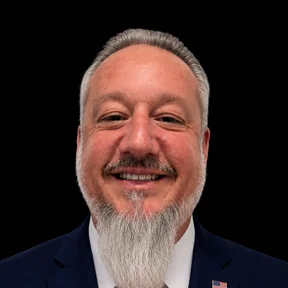
About Victor J. Rosario
Victor J. Rosario is the Residents-First candidate for Miami-Dade County Mayor 2028. A U.S. Coast Guard veteran, entrepreneur, technologist, and artist, Victor brings a track record of building real solutions — from AI tools to campaign policy — that serve Miami-Dade's 2.8 million residents.
Learn More About Victor