By Victor J. Rosario, candidate for Miami-Dade County Mayor · October 24, 2026
Miami-Dade County does not need another administration that reacts late, outsources its thinking, rents its future to outside vendors, and leaves residents exposed while powerful institutions harvest data, influence systems, and profit from the digital weakness of local government. Miami-Dade County needs a complete reset in how public technology is imagined, governed, secured, and monetized for the benefit of the people who actually live here. Under my administration, we will not treat technology as a side issue, a procurement memo, or a photo opportunity. We will treat it as infrastructure. We will treat it as sovereignty. We will treat it as economic power. And we will treat it as one of the most important fronts in protecting county operations, resident privacy, local commerce, and the future of Miami-Dade County itself.
That is why one of the boldest initiatives of my administration will be the creation of a county-built, county-controlled digital ecosystem centered around a Miami-Dade OS, a Miami-Dade browser environment, and a secure layer of county-owned applications and services designed to serve government, residents, and businesses under one disciplined framework. This is not a gimmick. This is not fantasy. This is the next chapter of local government done correctly. For too long, counties and cities have allowed their data, communications, workflows, and even their digital identity to depend on third-party systems they do not own, do not fully understand, and cannot fully control. That is not resilience. That is exposure. That is dependency dressed up as convenience. Under my administration, Miami-Dade County will move in the opposite direction. We will build systems that are secure by design, controlled locally, architected for redundancy, and aligned with the direct interests of our residents.
When I talk about a Miami-Dade OS, I am talking about more than a piece of software. I am talking about a platform standard for county operations and resident participation. I am talking about a disciplined environment where county workers, public systems, authorized local businesses, and participating residents can operate within a hardened ecosystem that reduces outside intrusion, reduces unnecessary data leakage, reduces platform dependency, and raises the standard for what public cybersecurity should look like in the United States of America. We are not going to keep letting outsiders define the rails of our digital life while Miami-Dade County merely rents access. We are going to build our own rails. We are going to control them. We are going to secure them. And we are going to make sure the value generated by those rails benefits the residents of this county.
The same goes for the browser. Most people think of a browser as a simple tool that opens websites. I do not. I see a browser as a gateway, a gatekeeper, a behavioral pipeline, a data channel, a transaction layer, and an economic platform. Whoever controls the browser environment influences how traffic moves, how ads are delivered, how behavior is measured, how preferences are shaped, how businesses compete, and how money flows. Under the old model, global corporations build the browser, collect the data, sell the access, and send the profits somewhere else. Under my model, Miami-Dade County begins designing a private browser environment and secure application framework centered around resident protection, county operations, and local economic control. That changes the conversation completely. It means Miami-Dade County stops being only a customer in the digital economy and starts becoming an owner, operator, and beneficiary.
The security implications alone are enormous. Today, government institutions everywhere are vulnerable because they operate on fragmented software stacks, exposed third-party services, overlapping vendor relationships, outsourced cloud dependencies, and procurement decisions driven more by habit than by architecture. The result is a patchwork environment where nobody truly has end-to-end control and everybody pretends that compliance equals security. It does not. Real security is not a binder. It is not a checkbox. It is not a press release after a breach. Real security is architecture. Real security is hard boundaries. Real security is system ownership. Real security is layered redundancy, verified identity, compartmentalized operations, controlled updates, disciplined access management, local governance, and the ability to know exactly what is running, why it is running, who approved it, and what it can touch. That is the mindset my administration will bring to Miami-Dade County.
We are going to build a secure county model that says clearly: Miami-Dade County will no longer accept weak digital assumptions. We will no longer be casual about resident data. We will no longer treat cybersecurity as an afterthought while more sophisticated actors probe local systems, exploit weak procurement, and capitalize on local dependency. We will design a hardened operational environment where county communications, resident-facing workflows, and approved digital commerce are protected by county standards, county architecture, and county oversight. We will move toward an environment where unnecessary outside compatibility is not the default goal. Security, integrity, and resident benefit will be the goal.
This vision also sends a strong message to Tallahassee and to every other layer of government that has underestimated what a serious county can build. Miami-Dade County can be the model for the future of public-sector cybersecurity, artificial intelligence governance, and local digital infrastructure. We can show that a county does not have to accept the old script. We can show that public technology can be stronger, cleaner, more disciplined, and more economically intelligent than what the country has settled for. We can show that residents are not just taxpayers underwriting systems they do not own. They can become participants in a new county economy built on secure digital infrastructure, responsible innovation, and disciplined monetization.
That is where Project Fund comes in. I do not believe innovation should stop at the level of protection. Protection is essential, but protection alone is not enough. We must also create upside. We must build systems that generate value, capture value, and return value to the people. My administration will structure this digital ecosystem so that residents are not merely shielded from outside intrusion, but positioned to benefit from the platform economy built inside Miami-Dade County. If the county builds a secure browser environment, approved applications, and a protected channel for commerce, information, and services, then that environment becomes more than a security layer. It becomes an economic engine. It becomes a digital main street. It becomes a place where businesses pay for visibility, placement, access, integration, and transaction opportunities under county rules that protect the people rather than exploit them.
Think about what that means in practical terms. Airlines, hotels, local tourism operators, restaurants, transportation providers, entertainment venues, healthcare networks, legal services, education platforms, and consumer brands all compete for attention every single day. Right now, they pay massive private platforms for access to people. Under my administration, Miami-Dade County will examine how to build a resident-first digital marketplace where approved businesses can place offers, messages, promotions, public-interest campaigns, and service integrations within a county-controlled ecosystem. Instead of all that value being extracted upward and outward, a meaningful share of that value can be captured locally and redirected toward resident benefits, system upkeep, county innovation, and Project Fund distributions. That changes everything. It means that when residents are using county-built tools and county-protected environments, the digital activity generated inside that ecosystem can help fund resident returns and county growth rather than enriching distant corporate structures alone.
This is how you move from dependency to ownership. This is how you move from vulnerability to leverage. This is how you move from being a data source for outsiders to being a platform builder for your own people. It is also how you create a new category of county-owned industry. I have said repeatedly that Miami-Dade County should not be afraid to build industries where the public interest and economic upside can be aligned. This initiative belongs in that larger family of county-owned solutions. Just as we should think seriously about county-owned transportation systems, county-owned strategic infrastructure, and county-owned service platforms where appropriate, we should also think seriously about county-owned digital infrastructure. The 21st century county that refuses to build technology capacity is choosing dependence. The county that builds wisely can create jobs, create resilience, create bargaining power, and create resident wealth.
The resident component of this vision is one of the most exciting parts. My residents are not a passive audience. They are not spectators waiting for somebody else to build the future for them. They are the future. They are workers, technicians, operators, salespeople, designers, administrators, customer service professionals, community educators, digital ambassadors, marketers, testers, and entrepreneurs. A Miami-Dade OS and browser ecosystem opens the door to training pathways, certification pathways, distribution pathways, support pathways, and commercial pathways that can connect residents directly to the operation and expansion of this system. Residents can help distribute county-approved services. Residents can help onboard businesses. Residents can help support adoption. Residents can help build a culture of secure digital participation. Residents can become part of a local technology economy that is not based only on coding from a distance, but on operating, selling, maintaining, teaching, and growing the infrastructure of the county.
This matters because the future economy will reward those who control systems, not just those who consume them. Too many people are still thinking in terms of yesterday’s labor model while artificial intelligence, automation, and platform concentration are reshaping everything. I am not going to lie to residents and tell them the future will look like the past. It will not. The digital economy is changing quickly. AI is accelerating. Automation is accelerating. Platform leverage is accelerating. Local governments that fail to adapt will become increasingly exposed, increasingly dependent, and increasingly irrelevant in the face of systems they do not control. My administration will do the opposite. We will build a future-ready county where residents are not displaced from value creation, but brought closer to it through county-controlled systems that protect them and position them to win.
Under this model, online advertising is no longer just something that happens somewhere else. It becomes part of a local economic architecture. If businesses want access to the Miami-Dade ecosystem, they do business with the county under rules that reflect resident priorities. If they want preferred visibility, placement, or integration, they pay into a system designed to circulate value locally. If tourism businesses want to reach local users, if airlines want direct exposure, if hotels want bookings, if service providers want traffic, then they engage through a county-governed environment where resident benefit is built into the model. The people of Miami-Dade County should not be ashamed to build systems that make money. They should demand that their government finally builds systems that make money for the right people.
And let me be clear: when I say residents will make bank, I am not speaking loosely. I am speaking about a philosophy of economic design. Miami-Dade County is full of value. Our people generate value. Our location generates value. Our tourism generates value. Our logistics generate value. Our digital behavior generates value. Our businesses generate value. Our attention generates value. The problem is not the absence of value. The problem is the absence of structures that capture enough of that value for the people who create it. That is what my administration is about. Building structures. Building systems. Building channels. Building operations. Building industries. Building frameworks that allow residents to stop leaking value outward and start retaining more of it here in Miami-Dade County.
A project like this must also be governed properly. I am not interested in creating a digital free-for-all. I am interested in creating a disciplined, lawful, and professionally governed operating environment. That means clear eligibility rules, clear resident protections, clear data rules, clear procurement controls, clear advertising standards, clear technical review, clear auditability, and clear separation between authorized county operations and unauthorized access. It means independent security testing. It means staged deployment. It means hardened update channels. It means strict identity verification. It means device trust rules. It means cryptographic discipline. It means local oversight with teeth. And it means a technology governance posture that is serious enough to withstand political pressure, vendor pressure, and outside influence.
My administration will also bring a principle that has been missing from far too much public technology: we will build what we can control, and we will control what we build. That sounds simple, but it is revolutionary in an era where many public entities no longer understand their own stack. We are going to know our systems. We are going to know our dependencies. We are going to know our security assumptions. We are going to know what data leaves and why. We are going to know which services are mission-critical and which ones are dead weight. We are going to reduce unnecessary sprawl. We are going to reduce avoidable exposure. And we are going to stop pretending that convenience purchased from outside vendors is equivalent to local resilience. It is not.
This project is also about dignity. Residents deserve the dignity of being protected. County workers deserve the dignity of using systems that are built seriously. Local businesses deserve the dignity of participating in a local platform economy that does not force them to surrender every advantage to giant intermediaries. And Miami-Dade County deserves the dignity of governing itself with modern competence. We should not be the kind of county that waits for the future to happen somewhere else and then imports a weaker copy at a higher cost. We should be the county that defines what the future of public digital infrastructure can look like.
That is why I also believe this initiative belongs within the broader resident-first architecture of Project Fund. Project Fund is not just about checks. It is not just about economics in the narrow sense. It is about building a system where county-owned innovation, county-owned industry, and county-owned strategic assets generate continuous value that can be returned to the people. A Miami-Dade OS and browser ecosystem fits that mission because it transforms technology from a cost center into a strategic asset. It transforms resident attention from something exploited elsewhere into something that can be monetized more fairly. It transforms local commerce from scattered transactions into an integrated channel. And it transforms cybersecurity from a defensive expense into a pillar of sovereignty, growth, and resident return.
I also want to say something directly about political integrity and original work. Between October 10, 2025, and November 7, 2025, I created and published a blog post laying out transportation and mobility concepts that I believe were later interfered with after that content was removed from my blog. I have called for the State of Florida to investigate the deletion of that work, the disappearance of six blog posts from my servers, and whether elements of my ideas, structure, and organization were later reflected in actions taken by the current administration. Those are allegations I believe deserve serious review because the public deserves to know whether original policy work was disrupted instead of respected. MetroConnect in Miami-Dade
That issue matters here because leadership is not only about who talks the loudest. Leadership is about who builds first, who thinks first, who architects the model, and who has the discipline to carry a vision from concept to implementation. Miami-Dade County does not need weak imitation. It needs original architecture. It needs serious execution. It needs a mayor who understands systems, understands inputs and outputs, understands infrastructure, understands security, understands economics, and understands how to convert vision into operational reality. I am not running to decorate the office. I am running to redesign the county.
The truth is that the residents of Miami-Dade County are already surrounded by opportunity. They are not lacking in talent. They are not lacking in energy. They are not lacking in entrepreneurial capacity. What they have lacked for too long is a public architecture strong enough to convert that raw capacity into organized, recurring, scalable benefits. My administration will change that. We will build systems that are beautiful because they are disciplined. We will build systems that are secure because they are controlled. We will build systems that are profitable because they are intelligently designed. And we will build systems that are worthy of Miami-Dade County because they are resident-first from the ground up.
When people hear a vision like this, some will say it is too big. I say Miami-Dade County has suffered for too long from people who think too small. Some will say government should not build like this. I say government has been too comfortable spending without owning, renting without controlling, and outsourcing without understanding. Some will say the future is uncertain. I say that is exactly why we must build now. Because the counties that prepare will lead, and the counties that hesitate will become customers of someone else’s future.
Under my administration, Miami-Dade County will move with confidence into that future. We will secure our operations. We will protect our residents. We will design new digital infrastructure. We will create new county-owned economic channels. We will build systems with redundancy, discipline, and purpose. We will make clear that this county is not open for digital exploitation. And we will prove that local government, when led by original thinking and real execution, can do far more than manage decline. It can build prosperity.
The residents of Miami-Dade County are not ordinary. They are the direct heirs to one of the most dynamic counties in America. They deserve a government that matches their ambition. They deserve systems that respect their data, reward their participation, and protect their future. They deserve leadership that sees technology not as decoration, but as one of the central engines of county security, county wealth, and county independence. That is the future I am building. That is the model I am fighting for. And that is how, under my administration, Miami-Dade County will make history.
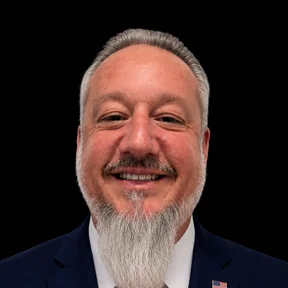
About Victor J. Rosario
Victor J. Rosario is the Residents-First candidate for Miami-Dade County Mayor 2028. A U.S. Coast Guard veteran, entrepreneur, technologist, and artist, Victor brings a track record of building real solutions — from AI tools to campaign policy — that serve Miami-Dade's 2.8 million residents.
Learn More About Victor